What was announced and why it matters
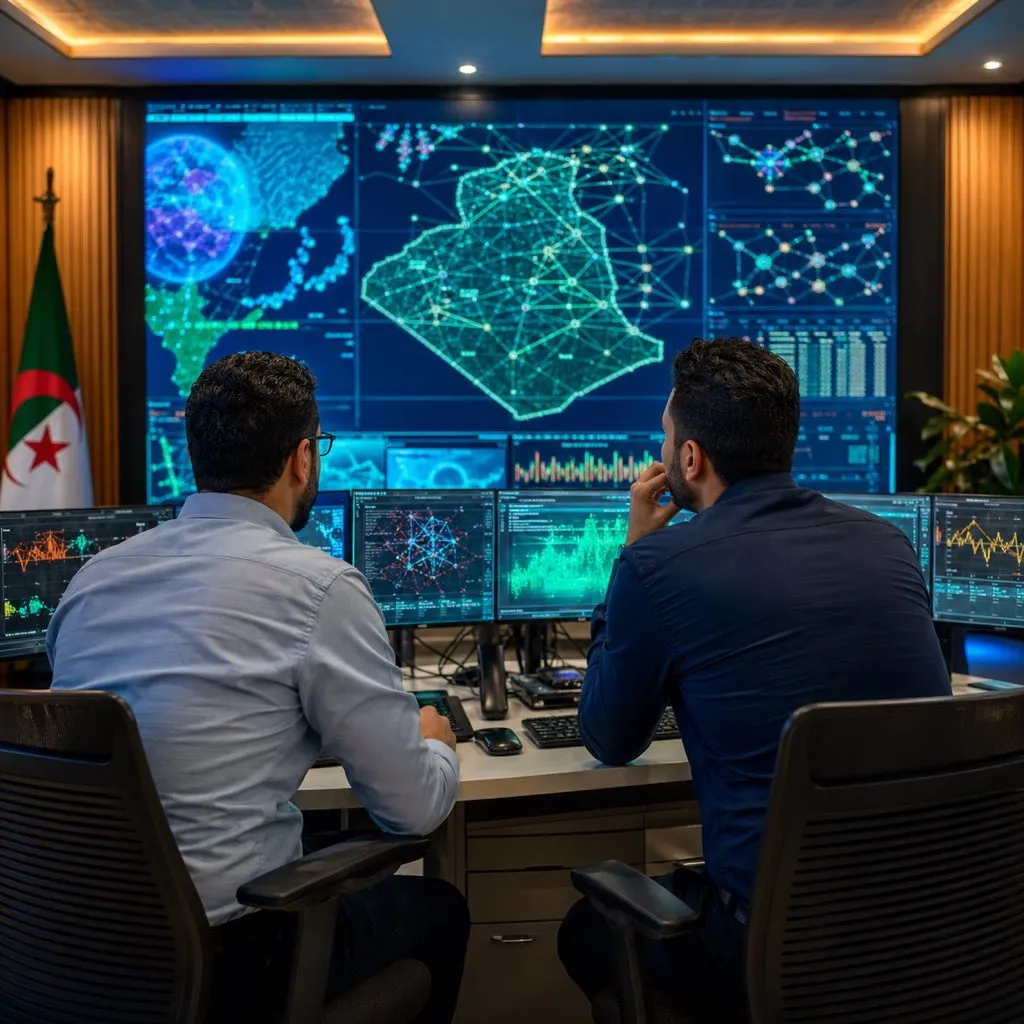
The April 15, 2026 Huawei-MCEPE meeting, reported by APS and AL24, did not stop at a generic friendship statement. The two sides specifically discussed acquiring specialized AI computing equipment, including GPUs, and examined how local technology development could support large language model demand. That is a notably more granular agenda than the connectivity-led narrative that has framed most past Algeria-Huawei cooperation, including the 400G WDM national backbone partnership Huawei signed with Algeria Telecom in February 2025.
Djezzy’s April 22 announcement of a strategic partnership with INATEL, the state-affiliated industrial group, runs along a parallel track. The three named priorities are technological innovation through smart, market-specific digital solutions, economic sovereignty through national expertise and reduced dependence on foreign suppliers, and improved user experience through more integrated services. None of these priorities is about coverage. All of them are about what gets built on top of a network once it is in place.
Together with the May 2024 Algeria-China digital economy agreement that scheduled vocational training in cloud computing, cybersecurity, and AI starting September 2026, the recent announcements point to the same shift: from how widely connectivity reaches to how deeply it is used.
Coverage was the entry ticket. The new conversation is about capability.
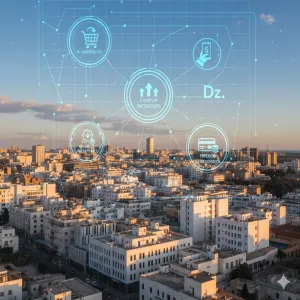
For more than a decade, Algeria’s digital-economy debate was dominated by access. Mobile penetration, fixed broadband coverage, fiber rollout, and most recently 5G launches with Mobilis, Djezzy, and Ooredoo were the primary measures of progress. Those measures still matter and they are still moving. But coverage on its own does not generate enterprise software adoption, startup formation, or productivity gains. It only creates the conditions in which those things can happen.
The Huawei meeting’s focus on GPUs and large language models is significant precisely because it engages the higher-value layer. AI workloads need compute infrastructure that goes well beyond standard data center provisioning, and the question of where Algerian companies and researchers can access that compute is becoming a direct economic-policy question. The Djezzy-INATEL framing, with its emphasis on integrated digital services and reduced supplier dependency, sits in the same higher layer. Both signal that the bottleneck conversation has moved up the stack.
The commercial layer is where economic value compounds
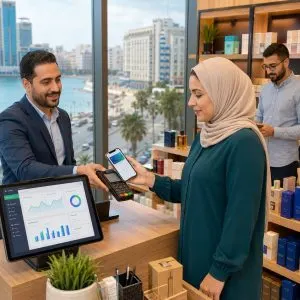
A digital economy is more than network rails. It depends on payment systems, enterprise software, cloud services, public platforms, and sector-specific tools that businesses use every day. That commercial layer is where economic activity actually happens. A factory using a modern ERP, a logistics company using fleet-management software, a bank using cloud-based core banking, and a startup serving small merchants with payment tooling all rely on that layer working well. The network connectivity is necessary, but the operational software is what produces revenue, jobs, and tax receipts.
For Algeria, the gap between network reach and commercial-layer maturity is the most strategic question on the digital economy agenda. Operator partnerships matter to the extent that they help close that gap with concrete deliverables: real GPU capacity available to Algerian customers, real AI workloads run by Algerian enterprises, real startup pathways that move from accelerator demo days to revenue-generating businesses, and real enterprise tools that small and mid-sized firms can adopt without building from scratch.
Advertisement
What execution would actually look like
The useful test over the next year is not how many cooperation declarations are signed. It is whether specific outputs become visible. A few examples that would qualify as real progress: AI-capable compute capacity that Algerian universities, research centers, and startups can access at predictable prices, even at modest scale to start. Enterprise SaaS products in Arabic and French that meaningfully simplify financial operations, customer support, or supply-chain management for Algerian SMEs. Stronger commercial relationships between operators and the local startup ecosystem so that Djezzy, Mobilis, and Ooredoo become distribution and integration partners for promising local software companies, not only network providers.
Public-sector buyers also matter here. When ministries purchase software, they shape the local market. Procurement that favors interoperable, documented, locally supported platforms pulls the commercial layer forward in a way that no operator partnership alone can match. The new wave of public digital platforms launched in 2026, from AAPI’s investor portal to MCEPE’s import-intentions platform, creates exactly that demand-side opportunity if it is used well.
Reading the next twelve months
The honest evaluation is that Algeria has improved its digital-economy narrative, with more specific language, named workstreams, and clearer industrial intent. What 2026 does not yet show is the second-derivative evidence: more enterprise software adoption per firm, more startups crossing from pilot to recurring revenue, and more visible AI workloads running on infrastructure with Algerian touchpoints. Those metrics are harder to produce than press conferences. They are also the ones that decide whether the digital economy actually grows.
If the Huawei, INATEL-Djezzy, and ministerial announcements translate into measurable execution by mid-2027, this will look like the year the conversation matured. If they do not, the country will still have better networks than ever, with the harder commercial-layer work waiting for the next cycle.
What Algerian Digital-Economy Leaders Should Do Now
The shift from connectivity to capability is not automatic. It requires deliberate action from operators, founders, enterprise buyers, and digital-economy officials. The following five moves are the most direct levers available in 2026 to convert the April partnership announcements into measurable commercial-layer outcomes.
1. Operators: Open Formal Startup Distribution Programs Before Year-End
Djezzy, Mobilis, and Ooredoo should each publish a formal startup partnership program — not an accelerator, but a distribution agreement — that gives revenue-generating local software companies access to the operator’s billing infrastructure, customer communication channels, and SME sales force. The precedent exists: Safaricom’s M-Pesa ecosystem in Kenya became Africa’s densest fintech infrastructure partly because the operator opened its payment rails to third-party developers. A similar move by Algerian operators would convert the Djezzy-INATEL partnership framing into a commercial reality that startups can build on.
2. MCEPE: Commit to GPU Access Pricing by Q3 2026
The Huawei discussion mentioned GPUs and LLM use cases, but compute is only useful at a known price. The Ministry of Knowledge Economy and Digital Transformation should publish, before July 2026, a pricing framework for AI compute access at Algerian data centers — whether through Huawei, Algeria Telecom, or a public-private cloud arrangement. Without a published price, Algerian researchers, startups, and universities cannot budget for GPU workloads. Singapore’s IMDA published its AI compute access framework in 2021 before its compute investment landed; Algeria needs the same sequencing.
3. Enterprise Buyers: Include Local SaaS in Procurement Requirements
When ministries and state-owned firms issue tenders for digital services in 2026, procurement specifications should explicitly require bidders to demonstrate local support capability — in Arabic and French, with Algerian-based technical staff. This one procurement rule would pull the commercial layer forward faster than any partnership announcement. The public platforms launched in 2026 — the AAPI investor portal, the MCEPE import-intentions platform — should also be required to integrate with at least one locally supported software tool before the end of the year, creating visible demand-side pull.
4. Startup Founders: Target the Operator as a Customer, Not a Bystander
The highest-leverage commercial move for an Algerian B2B software startup in 2026 is to sell directly to Djezzy, Mobilis, Ooredoo, or Algeria Telecom — not to use them as infrastructure and find other buyers. Each operator has customer-service platforms, field-force management software, SME onboarding tools, and data-analytics pipelines that are currently served by foreign vendors. A founder who displaces a foreign SaaS vendor inside one Algerian telco gains a reference customer, a revenue anchor, and a distribution channel simultaneously.
5. Ministry of Vocational Training: Accelerate the September 2026 AI Cohort to Include Enterprise Use Cases
The May 2024 Algeria-China vocational training agreement for cloud, cybersecurity, and AI starting September 2026 should explicitly include enterprise deployment use cases — not only technical fundamentals. Training workers to configure a cloud virtual machine is useful; training them to operate a company’s cloud infrastructure against a real SLA is what operators and enterprise buyers actually need. The Huawei vocational diploma track (covering cloud, cybersecurity, and applied AI) announced separately should be synchronized with the enterprise demand signals coming from the April 2026 operator partnerships.
Where This Fits in Algeria’s 2026 Digital Economy
The April 2026 partnership announcements belong inside a wider pattern that has been visible since 2024: Algeria is moving the digital economy conversation up the value stack, from network coverage to compute capacity, from connectivity agreements to enterprise tooling, from training pledges to named workstreams. The Huawei GPU and LLM discussion and the Djezzy-INATEL sovereignty framing both sit at the top of that stack. So does the MCEPE import-intentions platform and the AAPI investor portal. These are not isolated announcements — they are multiple institutions reaching the same frontier simultaneously.
What makes 2026 a genuine inflection point rather than another announcement cycle is that Algeria’s connectivity baseline is now solid enough that the infrastructure excuse is losing credibility. Mobilis, Djezzy, and Ooredoo have delivered 5G rollouts. Algeria Telecom’s 400G WDM backbone is in place. The argument for delayed commercial-layer development — “we need to finish the network first” — runs out of runway this year. What replaces it is a test of institutional coordination: whether operators and ministries can translate partnership language into observable outputs before the current window closes. The September 2026 vocational training cohort, the GPU pricing framework the Ministry should publish before July, and the Djezzy-INATEL distribution program that should be operational by year-end are the three most concrete milestones to watch. If all three land with evidence of execution rather than announcements, 2026 will mark the year Algeria crossed from infrastructure buildout into commercial digital-economy development. If they slip, the next cycle starts from the same point.
Frequently Asked Questions
Why is “execution” becoming more important than connectivity alone?
Because networks create potential, but value compounds when firms and institutions use those networks to run real commercial and operational systems. The April 2026 Huawei discussion of GPUs and LLM use cases, and the Djezzy-INATEL focus on integrated digital services, are both above the connectivity layer.
What does the “commercial layer” include in this context?
It includes payment flows, enterprise software, cloud and AI services, public platforms, and sector-specific tools that businesses use every day. These are the systems that turn connectivity into measurable economic activity, jobs, and productivity.
How should Algeria measure whether this shift is working?
By looking for concrete outputs: AI-capable compute that local startups and researchers can actually use, Arabic and French enterprise SaaS adoption among SMEs, operator-startup distribution partnerships with revenue, and public procurement that pulls the local commercial layer forward.
Sources & Further Reading
- Ouadah, Huawei officials explore ways to foster digital economy cooperation — APS
- Algeria Explores Stronger Digital Economy Cooperation with Huawei — AL24 News
- Djezzy and INATEL Forge Strategic Partnership to Accelerate Algeria’s Digital Transformation — TechAfrica News
- Algeria Telecom Partners with Huawei to Deliver 400G WDM National Backbone Network — Huawei
- Algeria to get 5G as Mobilis, Djezzy and Ooredoo commence rollouts — Developing Telecoms