What was proposed and where it sits in the AU process
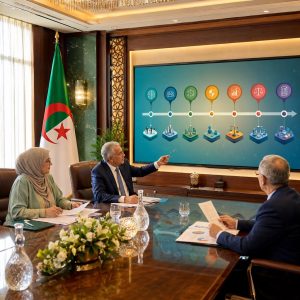
On April 17, 2026, at the African Union Peace and Security Council, Minister Ouadah advocated for the development of an integrated continental framework for AI governance. He presented this in the context of Algeria’s own AI initiatives, including the National AI Strategy adopted by the AI Council on December 8, 2024, and the launch of the country’s first AI and cybersecurity startup cluster in Sidi Abdellah on April 18, 2026.
The proposal does not arrive in a vacuum. The African Union Executive Council endorsed the Continental Artificial Intelligence Strategy in July 2024, with Phase I covering 2025-2026 and focused on four areas: governance frameworks, national AI strategies, resource mobilisation, and capacity building. Algeria is one of the AU member states that has already published a national AI strategy, alongside Benin, Egypt, Mauritius, Nigeria, and Senegal. The Peace and Security Council itself convened its 1339th session in April 2026 specifically on “Artificial Intelligence: Governance, Peace and Security in Africa,” receiving briefings from the Director General of the Ethiopian Artificial Intelligence Institute and the AU Advisory Group on Artificial Intelligence.
The Algerian intervention therefore lands inside an active AU policy track, not as an isolated speech. That matters for how seriously the proposal will be taken in capitals weighing whether to invest political capital in AU-level AI rules versus bilateral arrangements with hyperscalers and external partners.
Why a regional frame solves practical problems
AI systems do not respect neat policy boundaries. Data flows, cloud dependencies, model-training pipelines, procurement models, and security concerns all cut across jurisdictions. For a continent of 55 AU member states, a purely fragmented approach has obvious costs: duplicated standards work, weaker negotiating positions in global forums, and gaps that bad actors can exploit by routing operations through whichever jurisdiction has the lightest oversight at any given moment.
A regional framework can do four things that national frameworks individually cannot. It can create mutual-recognition pathways for AI risk assessments, so a system audited once does not need to be re-audited 55 times. It can pool capacity-building resources, which matters because most AU member states cannot fund standalone AI safety institutes. It can present a coherent African position in global negotiations, including the UN AI dialogues that Algeria has engaged through Special Envoy Amandeep Singh Gill’s office. And it can establish cross-border data-flow rules that align with existing AU instruments such as the Malabo Convention on cybersecurity and personal data protection.
For Algeria specifically, taking a visible role in the conversation fits its wider policy direction. Minister Ouadah’s office has paired the AU-level message with concrete domestic moves: the Sidi Abdellah cluster, the High-Performance Computing Centre breaking ground in Oran on March 16, 2025, the May 2025 AI ecosystem stakeholder convening, and the April 2026 meeting with the UN Special Envoy on Digital and Emerging Technologies at Algeria Venture.
The implementation path is where this gets hard
Governance frameworks become useful only when they are concrete enough to guide procurement decisions, risk assessments, accountability mechanisms, and cross-border coordination. The AU Continental AI Strategy is currently strong on principles and weaker on operational details. Phase I deliverables are still being developed across 2025-2026, and member states will need to decide how much sovereignty they cede to a continental body.
Three practical questions will determine whether the April 17, 2026 proposal becomes operational policy. The first is institutional anchoring: which body within the AU structure will own the framework? Options include the AU Commission itself, the African Continental Free Trade Area Secretariat, or a new specialised agency. Each has different procurement leverage and different capacity profiles.
The second question is risk classification. The OECD’s February 2026 Due Diligence Guidance for Responsible AI offers one taxonomy, the EU AI Act offers another, and various national frameworks differ on what counts as a high-risk system. A continental framework will need to choose, because procurement rules cannot reference vague categories.
The third question is enforcement. Continental rules without enforcement teeth become reference documents. Enforcement options range from soft mechanisms like peer review and capacity-building incentives to harder ones like procurement conditionality on AU-funded projects. The choice is partly technical and partly diplomatic.
Advertisement
What Algerian stakeholders should track
For Algerian startups, universities, and public agencies, the practical implication is that AI governance requirements will increasingly become part of funding, procurement, and deployment decisions. Three things are worth tracking over the next 12 months.
First, watch the formal output of the AU Peace and Security Council’s April 2026 session, which will indicate whether the African policy track is moving toward a binding instrument or staying at recommendation level. Second, monitor any operational guidance from the Algerian AI Council that translates the December 2024 National AI Strategy into procurement and risk-assessment rules. Third, follow how the new Sidi Abdellah cluster handles data governance, since cluster-level practices on data sharing and model evaluation often become the de facto national standard before formal rules catch up.
If Algeria can pair its regional advocacy with credible domestic implementation, the April 2026 positioning will look prescient. The diplomatic message and the operational delivery need to move together for the proposal to carry weight inside the AU process and inside Algerian institutions.
A Three-Point Action Plan for Algerian Institutions
The April 2026 AU intervention creates a narrow but real window. Algerian public agencies, research institutions, and startups that act now position themselves ahead of any formal framework. The window is not infinite: once the AU process advances to binding instruments, late movers will face compliance retrofits rather than design-stage input.
1. Build Internal AI Inventories Before the Framework Arrives
The most underrated near-term action is documentation. According to the EU AI Act Service Desk — the most operationally mature AI governance toolkit currently in the public domain — organizations that enter a regulatory process without a catalogue of deployed AI systems spend twice as long in compliance preparation as those that maintain continuous inventories. Algerian public agencies should not wait for the AU framework text to begin cataloguing their AI use cases, data sources, and third-party model dependencies. A simple internal register — system name, vendor, data type, affected population, decision weight — is achievable in 30 days and positions each institution to contribute meaningfully to any national consultation process. It also creates the baseline for risk classification when the AU framework’s categories are finalized.
2. Engage the AU Process Through MESRS and the AI Council
Algeria’s Innovative Researcher ecosystem and the Sidi Abdellah cluster are the country’s most credible points of contact with continental AI policy. The Ministry of Higher Education and Scientific Research (MESRS) and the National AI Council should nominate specific technical representatives to AU working groups and to the OECD’s AI Policy Observatory, which feeds into AU deliberations. The AU Continental AI Strategy Phase I explicitly calls for capacity-building resource pooling across member states — a mechanism that could direct training funding, shared audit tools, and technical assistance directly to Algerian institutions if Algeria stakes a visible technical seat at the table. Diplomatic advocacy without technical participation risks producing a framework that maps to other countries’ infrastructure realities rather than Algeria’s.
3. Use the Sidi Abdellah Cluster as a Governance Laboratory
The Sidi Abdellah AI and cybersecurity cluster, launched April 18, 2026, is uniquely positioned to become a governance proof-of-concept rather than purely a technology hub. Cluster-level experiments in data sharing protocols, AI model evaluation standards, and cross-border research agreements are exactly the kind of concrete evidence that AU policy processes need to move from principles to operational rules. The Ethiopian Artificial Intelligence Institute — whose Director General briefed the AU’s 1339th session alongside Algeria — has already used its national mandate to pilot governance instruments that informed regional discussions. Algeria can replicate that approach through Sidi Abdellah: define data-classification standards for cluster participants, publish model-evaluation results, and contribute those findings to AU working groups by the Phase I deadline in late 2026.
The Bigger Picture
Algeria’s April 2026 intervention at the AU Peace and Security Council is not only a diplomatic gesture — it is a structural bet on how AI governance will be distributed across the African continent over the next decade. By acting while the AU Continental AI Strategy is still in Phase I, Algeria has a genuine window to influence the categories, risk thresholds, and enforcement mechanisms that will eventually govern AI procurement, data flows, and security requirements for 55 member states. The Ethiopian Artificial Intelligence Institute took a comparable path in East Africa: it used early engagement with AU working groups to shape the technical vocabulary of the continental framework rather than accepting it wholesale after the fact.
The domestic pairing matters as much as the diplomatic message. The Sidi Abdellah cluster, launched on April 18, 2026 — one day after Minister Ouadah’s intervention — represents the operational counterpart to the regional advocacy. If Algeria can produce documented governance experiments at Sidi Abdellah, including data-classification protocols, model evaluation standards, and cross-border research agreements, those outputs become concrete evidence that the April 17 proposal is backed by implementation capacity. Continental policy processes reward this kind of anchored advocacy: it is harder for other AU member states to reframe Algeria’s contribution as purely aspirational when the country can point to a live governance laboratory.
The window is not permanent. Phase I deliverables are due by late 2026. Markets that contribute to the framework text during that window will see their infrastructure realities reflected in the operational rules; markets that wait for the final document will face compliance retrofits built around someone else’s assumptions.
Frequently Asked Questions
Why does Algeria’s AI governance proposal matter beyond diplomacy?
It matters because AI governance affects data flows, procurement, security, accountability, and public-sector use. Minister Ouadah’s April 17, 2026 call at the AU Peace and Security Council for an integrated continental framework signals that Algeria wants to help shape regional rules instead of only adopting external standards later, and aligns with Phase I of the AU Continental AI Strategy.
What would make an African AI governance framework useful in practice?
A useful framework needs concrete guidance on risk classification, public procurement conditions, accountability mechanisms, data governance, and cross-border coordination. It also needs an institutional owner inside the AU structure and a credible enforcement mechanism. Without those operational details, the framework would remain reference material rather than a tool institutions can apply.
How should Algerian technology stakeholders respond?
Algerian startups, universities, and public agencies should prepare for AI governance requirements becoming part of funding, procurement, and deployment decisions. They should document AI use cases, identify risk controls, follow the AU Peace and Security Council outputs, and monitor any operational guidance from the AI Council that translates the December 2024 National AI Strategy into procurement and risk-assessment rules.
Sources & Further Reading
- Algeria calls for continent-wide AI governance framework – APS
- Continental Artificial Intelligence Strategy – African Union
- Artificial Intelligence: Governance, Peace and Security in Africa – Amani Africa
- AI Watch: Global regulatory tracker – African Union – White & Case
- Algeria, UN hold high-level meeting on digital, emerging technologies – APS