The Problem the Mandate Is Solving
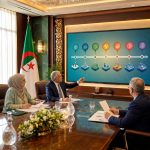
The announcement by Minister Noureddine Ouadah during his March 10, 2026 visit to Médéa was direct: current dominant AI models were trained primarily on foreign data and do not account for African and Arab cultural, linguistic, or administrative specificities. For Algeria, this creates practical underperformance in every domain where local context matters.
This is not an abstract critique. Algeria ranks 89th globally on AI preparedness with a score of 42.05 out of 100, below the MENA regional average of 45.51. A significant factor in this ranking is the absence of large-scale, structured Algerian datasets — in Darija and Tamazight for NLP applications, in Algerian agricultural soil and climate conditions for yield modeling, and in Algerian-specific network traffic patterns for cybersecurity threat detection.
The mandate’s logic is therefore both sovereign and practical: AI built on Algerian realities will outperform foreign models in Algerian use cases, and that performance differential is the commercial and public-sector moat that Algerian founders can actually own.
Why These Three Sectors Were Chosen
The selection of healthcare, agriculture, and cybersecurity as priority sectors is not arbitrary. Each represents a domain where:
- Foreign AI models carry documented performance gaps due to local specificity
- Algeria has existing government data infrastructure that could form a training dataset foundation
- Algerian public institutions create a built-in first customer for locally-built solutions
Healthcare: Algeria’s public healthcare system generates significant patient data, but it has not been systematically structured for AI training. Diagnostic AI tools built on French or U.S. hospital data consistently underperform on Algerian patient populations — different disease prevalence rates, different genetic backgrounds, different imaging equipment standards. A locally-trained diagnostic AI, even at modest accuracy improvements of 5-8%, translates directly into better patient outcomes at scale. Algeria’s national AI strategy, adopted in December 2024, identified healthcare as one of six sector-specific AI implementation pillars.
Agriculture: An intelligent irrigation network already operational in Blida has demonstrated water savings of 15-20% through smart irrigation management — built on local soil, climate, and crop data. The mandate signals government intent to replicate and scale this model. Algeria’s agricultural diversity (Saharan date farming, Mediterranean cereal crops, highland livestock) makes generalized models particularly unreliable; locally-trained models capture seasonal and geographic variance that global tools miss entirely.
Cybersecurity: Algeria recorded over 70 million cyberattacks in 2024, ranking 17th globally among most-targeted countries. According to reporting on Algeria’s 2025-2029 cybersecurity strategy, AI-powered defenses were repelling 65% of cyberattacks against government departments by 2024, up from 50% the prior year. The mandate pushes to institutionalize this improvement — building locally-trained threat intelligence models that reflect Algerian attack patterns rather than relying on European or U.S. threat databases. The January 2026 presidential decree No. 26-07 further requires all public institutions to establish cybersecurity monitoring structures, creating a permanent demand signal for locally-built security AI.
Advertisement
What Algerian Startups and Researchers Should Do
1. Build Data Collection Into Your Product From Day One
The most valuable asset for locally-designed AI is locally-sourced, locally-structured training data. Algerian startups working in any of the three priority sectors should design their product architecture to collect and label data as a core product function — not as an afterthought. A health-tech startup collecting diagnostic imaging data from Algerian clinics, properly anonymized and structured, is simultaneously building a product and a proprietary dataset that no foreign competitor can replicate. The Algérie Télécom 1.5 billion dinar ($11 million) AI and robotics startup fund specifically targets applications in healthcare diagnostics, agritech yield modeling, and cybersecurity — data-first architectures are the profiles most likely to be funded.
2. Engage Universities and CERIST as Institutional Partners
The mandate explicitly names universities and research centers alongside startups as mobilized stakeholders. Algeria’s Centre for Research on Scientific and Technical Information (CERIST) is the anchor institution for AI research in the country and has existing relationships with international research networks. Startups that formalize a university or CERIST partnership gain three things: access to annotated academic datasets, academic credibility that strengthens grant applications, and a talent pipeline of AI researchers who are trained on Algerian problems. Government grant programs consistently favor academic-industry consortia over solo startup applicants.
3. Apply for the DGRSDT Research Grants Before Q4 2026
Algeria’s General Directorate of Scientific Research and Technological Development (DGRSDT) operates grant cycles specifically for technology research aligned with national strategic priorities. Healthcare, agriculture, and cybersecurity AI have all been identified as strategic priorities in the National AI Strategy adopted in December 2024. Research teams and startup-academic partnerships working in these sectors should prepare competitive grant applications for the Q4 2026 cycle. Successful DGRSDT grants typically range from 5 to 30 million dinars per project — meaningful seed funding for a dataset-collection and model-training program.
4. Position for Public Sector Pilot Contracts
The fastest commercial validation path for locally-designed AI in these sectors is a public institution pilot. The Ministry of Health has expressed interest in AI-assisted diagnostic tools; the Ministry of Agriculture has funded precision agriculture pilot programs in Blida and Adrar; CERT-DZ has an established framework for evaluating AI security tools against government infrastructure standards. Startups with a working proof-of-concept in any of the three sectors should seek introductions through the Ministry of Knowledge Economy’s startup engagement unit — the same unit that organized the Médéa ministerial visit in March 2026.
The Structural Opportunity: First-Mover Timing
The mandate creates a defined market window that closes as competition grows. Currently, the number of Algerian AI startups with production-ready solutions specifically designed for Algerian healthcare, agriculture, or cybersecurity contexts is in the low dozens. The government has signaled funding, partnership, and procurement intent — but has not yet created a formal procurement vehicle or certification framework that would lock in incumbents.
The next 18-24 months represent the open window: startups that build, pilot, and demonstrate results within government or semi-public institutions during this period will become the reference implementations that future policy is written around. This is how Algeria’s fintech incumbents were established — early positioning during regulatory formation, not entry after regulations solidified.
For the AI sector in these three domains, that formation period is now.
Frequently Asked Questions
What specific AI applications qualify as “locally designed” under the Algerian mandate?
A locally-designed AI solution, in the context of Minister Ouadah’s March 2026 announcement, refers to AI systems trained on Algerian data — Darija and Tamazight language corpora, Algerian patient records, local agricultural sensor data, or Algerian network traffic patterns — and designed to solve problems specific to Algeria’s administrative, cultural, or geographic context. There is no formal certification standard yet for “locally designed” status, but practical markers include: primary training data sourced in Algeria, development team based in Algeria, and deployment architecture compliant with Algerian data localization rules under Law 18-07.
How does Algeria’s AI ranking compare to regional peers, and what does this mean for startups?
Algeria scores 42.05 out of 100 on global AI preparedness rankings, sitting below the MENA regional average of 45.51 and behind leading regional peers. The primary gaps are in structured AI-ready datasets, AI researcher density, and AI-specialized computing infrastructure. For startups, this ranking is an opportunity map: the gaps are well-identified and the government has expressed intent to close them. Startups that directly address one of the three identified gaps — data, talent, or compute — are well-positioned for government partnership.
Is there funding available for Algerian startups developing AI in these priority sectors?
Yes. The primary vehicle is Algérie Télécom’s 1.5 billion dinar ($11 million) AI, cybersecurity, and robotics startup fund (2025), which targets exactly the profiles described in the mandate — healthcare diagnostics, agritech yield modeling, and cybersecurity tools. DGRSDT grant cycles also fund academic-startup research consortia in strategic technology areas. Startups interested in both funding streams should prepare a data-architecture document and a pilot partnership proposal alongside their funding applications — evaluators weight demonstrated institutional traction heavily.
Sources & Further Reading
- Algerian Authorities Seek to Accelerate Development of Locally-Designed AI — Ecomnewsmed
- AI in Algeria: Insights and Practical Implementation Strategy — TechaHub
- Artificial Intelligence in Algeria: Between Reality and Ambition — ASJP/CERIST
- Why Algeria Is Positioned to Become North Africa’s AI Leader — New Lines Institute
- Algeria Traces Its Path in Artificial Intelligence — M2I Services
- Algeria: National Artificial Intelligence Strategy — Digital Policy Alert
🔗 Related Intelligence
Algeria’s Emerging AI Regulation: Balancing Innovation with Accountability

Algeria’s Six-Pillar AI Programme: Sector Roadmap for Builders
Algeria’s National AI Strategy 2024-2030: The Governance Roadmap Taking Shape in 2026

Algeria’s National AI Strategy: What the 2025-2030 Roadmap Really Means for Tech Companies