How the Partnership Was Forged: AFIC12 and the Algiers Signal
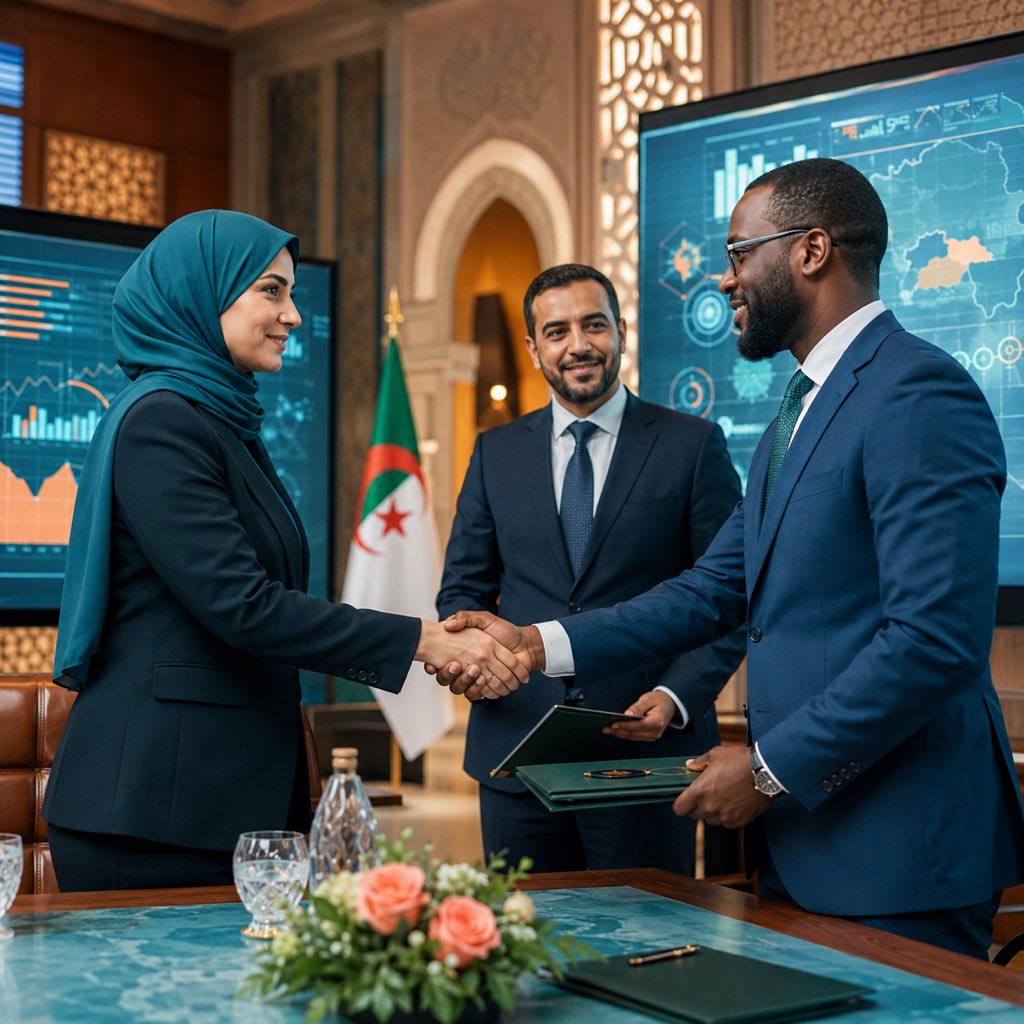
The agreement was sealed at the Africa Investment and Trade Forum (AFIC12), held in Algiers on May 9–10, 2026. AfCFTA Secretary-General Wamkele Mene and Algeria’s Minister of Knowledge Economy, Start-Ups and Micro-enterprises, Noureddine Ouadah, signed a memorandum of understanding to co-convene the Africa Start-up Conference in December 2026.
According to the BFT Online’s report on the partnership, Mene emphasised that the AfCFTA is “transitioning from negotiations to implementation” — a phrase that carries significant weight for startups. The negotiation phase produced the framework agreement covering 54 African Union member states and over 1.3 billion people. The implementation phase is where market access rules, cross-border payment systems, and sector-specific protocols actually reach business operators.
Algeria’s selection as host is not coincidental. The country previously hosted the Intra-African Trade Fair (IATF) 2025, which was formally reviewed during the AFIC12 discussions. Algeria has been building its profile as a convener of pan-African economic dialogue, and the AfCFTA Secretariat’s choice to partner on a flagship startup conference — rather than with Ghana (where the Secretariat is headquartered), Rwanda, or South Africa — signals a deliberate strategic shift.
What the December Conference Will Deliver
The Africa Start-up Conference, scheduled for December 5–7, 2026 in Algiers, is structured around three operational objectives that are directly relevant to Algerian founders.
Market access frameworks: The conference will explore AfCFTA’s protocols for goods and services, with particular attention to digital services, which are currently being negotiated under the Protocol on E-Commerce. For Algerian SaaS companies, logistics platforms, and fintech startups, the e-commerce protocol — once finalised — would be the legal instrument enabling them to serve customers in 53 other African markets with regulatory certainty rather than country-by-country negotiation.
Investment facilitation: Tech Review Africa’s coverage of the summit notes that the conference targets “entrepreneurs, innovators, investors, policymakers, and development partners from across Africa.” For Algerian startups, this is a concentrated investor access event — the kind of convening that regional ecosystems use to attract diaspora capital and pan-African venture funds that do not typically have Algeria on their primary investment map.
Regional value chains: The partnership explicitly focuses on “scaling African enterprises and strengthening regional value chains” under the AfCFTA framework. This is operational language: it refers to the supply chain integration that allows an Algerian manufacturer to source inputs from Côte d’Ivoire and sell finished goods to Kenya without facing the full stack of tariffs that currently apply. For tech-enabled manufacturing and agritech startups, value chain integration is the structural opportunity.
Advertisement
Algeria’s Regulatory Positioning for African Market Expansion
Algeria’s emerging role as a continental regulatory broker reflects a specific strategic asset: it sits at the intersection of three overlapping geographies — North Africa, the Sahel, and the Mediterranean — and has accumulated regulatory relationships with both African Union bodies and European institutions that few other African capitals can match.
Global South Opportunities’ analysis of the AfCFTA partnership notes that the conference will focus on SME-specific support mechanisms, including improved market access and enhanced competitiveness. For Algerian companies, the most actionable of these mechanisms is the AfCFTA’s planned SME facility — a technical assistance programme designed to help small companies navigate cross-border paperwork, customs procedures, and sector-specific regulations that currently make intra-African trade prohibitively complex for anyone without a dedicated trade compliance team.
Algeria’s legal and regulatory environment is also evolving in ways that complement the AfCFTA agenda. The 2025 data protection reform (Law 25-11) and the draft digital trust services law create a framework for digital trade that is more compatible with AfCFTA’s e-commerce protocol than Algeria’s previous legislative baseline. Companies building on these legal foundations are better positioned to argue for their inclusion in regional digital value chains.
What Algerian Founders and Policymakers Should Do Now
1. Register for and Prepare for the December Summit
The Africa Start-up Conference is an institutional event, not a public pitch competition. Getting a seat at the table requires active engagement with the Ministry of Knowledge Economy and the national startup ecosystem institutions (DGRSDT, Nexgen, DDIP) that are likely to coordinate Algeria’s delegation and exhibitor programme. Founders in sectors with clear AfCFTA relevance — logistics, fintech, agritech, SaaS — should identify which regional value chain discussions their business directly addresses and prepare a one-page investment case framed around pan-African scalability.
The December 5–7 timeline is 6 months away, giving Algerian companies sufficient runway to prepare materials, identify international counterparts to meet, and align their product roadmaps with the market access opportunities the conference will highlight.
2. Map Your Business Against AfCFTA Protocol Opportunities
The AfCFTA framework is not monolithic — it operates through sector-specific protocols that are being ratified and implemented at different speeds. The Protocol on Trade in Goods (tariff reduction schedule) and the Protocol on Trade in Services (sector-specific commitments) are the most advanced. The Protocol on E-Commerce is the most relevant for Algerian tech companies but is still being negotiated.
Techweez’s coverage of the Africa Forward Summit Declaration highlights that the continental tech sector is converging on shared infrastructure standards as a prerequisite for AfCFTA’s digital services commitments. Algerian companies should audit which protocols currently apply to their sector and what regulatory changes — at the Algerian national level — would be required to fully activate those protocols for their market entry strategy.
3. Build the Regional Network Before the Summit Opens
The highest-value outcomes from institutional conferences come from bilateral relationships established before the formal agenda begins. Algerian startup ecosystem actors should identify their counterparts in Kenya, Nigeria, Senegal, and Morocco — the four African markets with the most active startup ecosystems outside Algeria — and initiate contact now. LinkedIn outreach, attendance at pre-summit regional events, and direct applications to AfCFTA’s startup exchange programmes are all viable approaches.
The AfCFTA Secretariat’s SME-focused programmes already running at national and regional levels provide a structured entry point: Algerian companies that enrol in these programmes before December will arrive at the conference with an existing relationship with Secretariat staff rather than as cold-contact attendees.
The Bigger Picture: Algeria as Continental Convener
Algeria’s willingness to host the Africa Start-up Conference reflects a broader policy shift from regional observer to active participant in African economic integration. The government’s strategic logic is straightforward: continental trade frameworks create the policy infrastructure that Algerian companies need to compete across 54 African markets rather than building country-by-country market access from scratch.
The AfCFTA implementation phase, which Mene characterised as the current priority at AFIC12, is estimated to require a decade of institutional capacity building at both the Secretariat and member-state level. Algeria’s participation — as host, convener, and policy contributor — positions the country to shape how that infrastructure is built, rather than simply adapting to frameworks designed elsewhere. For Algerian founders, that distinction matters: markets where Algerian regulatory models influence the framework are markets where Algerian companies enter with a home-field advantage.
Frequently Asked Questions
What is the AfCFTA and why does hosting a conference matter for Algeria?
The African Continental Free Trade Area (AfCFTA) is a free trade agreement covering 54 of the 55 African Union member states, representing a market of over 1.3 billion people and a combined GDP of approximately $3.4 trillion. It aims to reduce tariffs on goods, liberalise trade in services, and create common rules for investment and e-commerce across the continent. Hosting the Africa Start-up Conference positions Algeria as an active participant in AfCFTA’s implementation — giving Algerian companies early access to the market access frameworks, investor networks, and regulatory partnerships that the agreement is progressively activating.
Who will attend the December 2026 Africa Start-up Conference in Algiers?
The conference targets entrepreneurs, innovators, investors, policymakers, and development partners from across Africa. Confirmed conveners are the AfCFTA Secretariat and Algeria’s Ministry of Knowledge Economy, Start-Ups and Micro-enterprises. The event runs December 5–7, 2026. Specific speaker announcements and registration details are expected from the Ministry of Knowledge Economy in the coming months.
How can Algerian startups access AfCFTA market frameworks before the conference?
Algerian startups can engage with AfCFTA’s existing SME support programmes, which provide technical assistance for cross-border trade, market entry guidance, and regulatory navigation in specific sectors. The Secretariat also runs sector-specific working groups on digital trade and e-commerce that are open to private sector participation. Enrolling in these programmes now provides both practical market access support and an institutional relationship with the Secretariat that will be valuable at the December conference.
—
Sources & Further Reading
- AfCFTA Secretariat and Algeria Strengthen Partnership to Support African Start-Ups and SMEs — BFT Online
- AfCFTA Secretariat Algeria Partner on Africa Start-up Conference 2026 — Tech Review Africa
- AfCFTA Algeria Partnership Overview — Global South Opportunities
- Tech Ambitions: Inside Africa Forward Summit Declaration — Techweez
🔗 Related Intelligence

Accelerate Africa 2026: Up to $500K Investment Open to Algerian Founders Until July 25
Pan-African Expansion: How Algerian B2B Startups Are Winning Contracts Across Africa

AFCFTA’s Digital Trade Protocol: The Gateway Algerian SaaS Startups Need to Enter Africa

ASC Algiers December 2026: How Algerian Startups Should Prepare for Africa’s Biggest Startup Gathering