Why 2026 Is the GTM Inflection Point for Algerian SaaS
The challenge for Algerian B2B software founders targeting African enterprise clients has never been primarily product quality. It has been commercial infrastructure: how do you sign a contract with a Senegalese bank, receive payment from a Rwandan logistics company, and transfer data across borders without establishing a local legal entity in each country — an exercise that typically costs $15,000–40,000 per market in legal fees alone?
The AfCFTA’s Digital Trade Protocol is beginning to answer that question at the regulatory layer. Its eight annexes, adopted by the African Union in February 2025, address the four barriers that have historically made cross-border software sales in Africa slower and more expensive than in other emerging-market blocs: digital identity recognition, cross-border payment facilitation, data transfer frameworks, and mutual recognition of electronic signatures.
This matters practically because the AfCFTA framework does not require a startup to understand 54 different legal systems. It creates a set of continental baseline rules that, where member states have implemented them, allow software contracts, electronic invoicing, and data processing to flow without market-specific legal infrastructure.
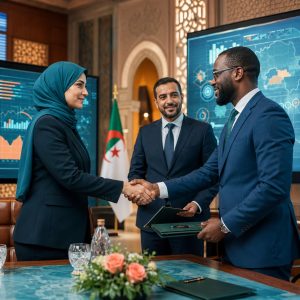
Algeria’s position within this framework is structurally advantageous. The country ratified AfCFTA in 2021 and hosted the IATF 2025 trade fair in Algiers, which closed $48.3 billion in signed deals — with Algeria capturing $11.4 billion of that total. Senior government officials from across the continent attended, and Algerian startups with enterprise products had a concentrated opportunity to initiate enterprise relationships that would have otherwise required months of outbound prospecting.
The GTM opportunity is real. The question is execution.
Advertisement
The Four Pillars of an Africa-Ready B2B SaaS GTM for Algerian Founders
1. Lead with the Arabic-French bilingual advantage into Francophone West Africa and North Africa first
The most defensible first market for an Algerian SaaS founder is not the continent’s largest tech hub (Lagos or Nairobi) — it is the Francophone belt: Senegal, Côte d’Ivoire, Morocco, Tunisia, Cameroon, and the Maghreb. These markets share French as the operating language of enterprise contracts, which removes the translation overhead that Anglophone competitors face entering them.
Algerian SaaS products that are already bilingual in Arabic and French have a structural advantage in markets like Mauritania, Libya, and Egypt where Arabic-language enterprise software is genuinely scarce. According to Partech Africa’s 2025 data, Francophone Africa attracted $603 million in startup investment in 2025 — the fastest-growing regional subset on the continent — but remains underpenetrated by enterprise software vendors. The language moat is real and underexploited.
Practical implication: before building a new sales function for English-speaking East Africa, run a 90-day pilot with three Senegalese or Ivorian enterprise prospects using your existing French product. If you close one, you have validated the motion; if you do not, the feedback is typically not product-related but distribution-related — and that is fixable.
2. Use IATF and IATF-adjacent events as the enterprise pipeline accelerator, not a brand exercise
The IATF 2025 in Algiers generated $48.3 billion in signed business deals. The next IATF event in the cycle represents the most concentrated opportunity for an Algerian B2B founder to meet procurement officers from across the continent without a travel budget. According to Afreximbank, which organizes IATF, the 2025 edition attracted buyers and sellers from all 54 AfCFTA member states.
Algerian startups that treated IATF 2025 as a brand exercise — staffing a booth, handing out brochures — missed the GTM function. The founders who reported closing contracts used a different approach: pre-scheduled one-on-one meetings with procurement leads from target enterprises in their vertical, structured around a specific problem statement, with a proposal ready to sign before the event ended.
For IATF-adjacent events (African Development Bank Annual Meetings, Africa CEO Forum, Gitex Africa in Marrakech), the same logic applies. These are not networking events — they are compressed sales cycles. An Algerian SaaS founder who arrives with a six-month pipeline of warm leads, converts three to demos at the event, and follows up within five business days will consistently outperform the founder who arrives hoping to discover opportunities.
3. Sequence contract structure to minimize legal entity requirements in the first 12 months
The AfCFTA digital services annex, once implemented by member states, allows cross-border software contracts without mandatory local entity establishment. In practice, implementation is uneven: some markets have adopted the AfCFTA electronic signature frameworks; others have not yet transposed them into domestic law.
For Algerian SaaS founders, the lowest-risk sequence is: sign master service agreements governed by Algerian law first, targeting markets where the counterparty’s in-house legal team is comfortable with Francophone civil law traditions (Senegal, Morocco, Cameroon). Reserve common-law markets (Nigeria, Kenya, Ghana) for phase two, when you have the revenue to justify local counsel. Use the AfCFTA payment facilitation frameworks — particularly the Pan-African Payment and Settlement System (PAPSS), which processes cross-border payments in local currencies — to receive revenue without SWIFT fees or USD conversion costs.
PAPSS currently connects central banks in Nigeria, Ghana, Liberia, Sierra Leone, and The Gambia, with ongoing expansion. For Algerian SaaS companies with monthly contract values above $2,000, PAPSS integration reduces payment friction by eliminating the 3–5% correspondent banking fee on cross-border Africa transactions.
4. Build a reference customer in each regional cluster before scaling
The enterprise sales motion in African markets is reference-driven to an extent that differs from European or American enterprise cycles. A signed contract with one Senegalese bank opens the door to three more — because the sector is small enough that procurement officers know each other, and pilots travel by word of mouth within a country faster than any outbound campaign.
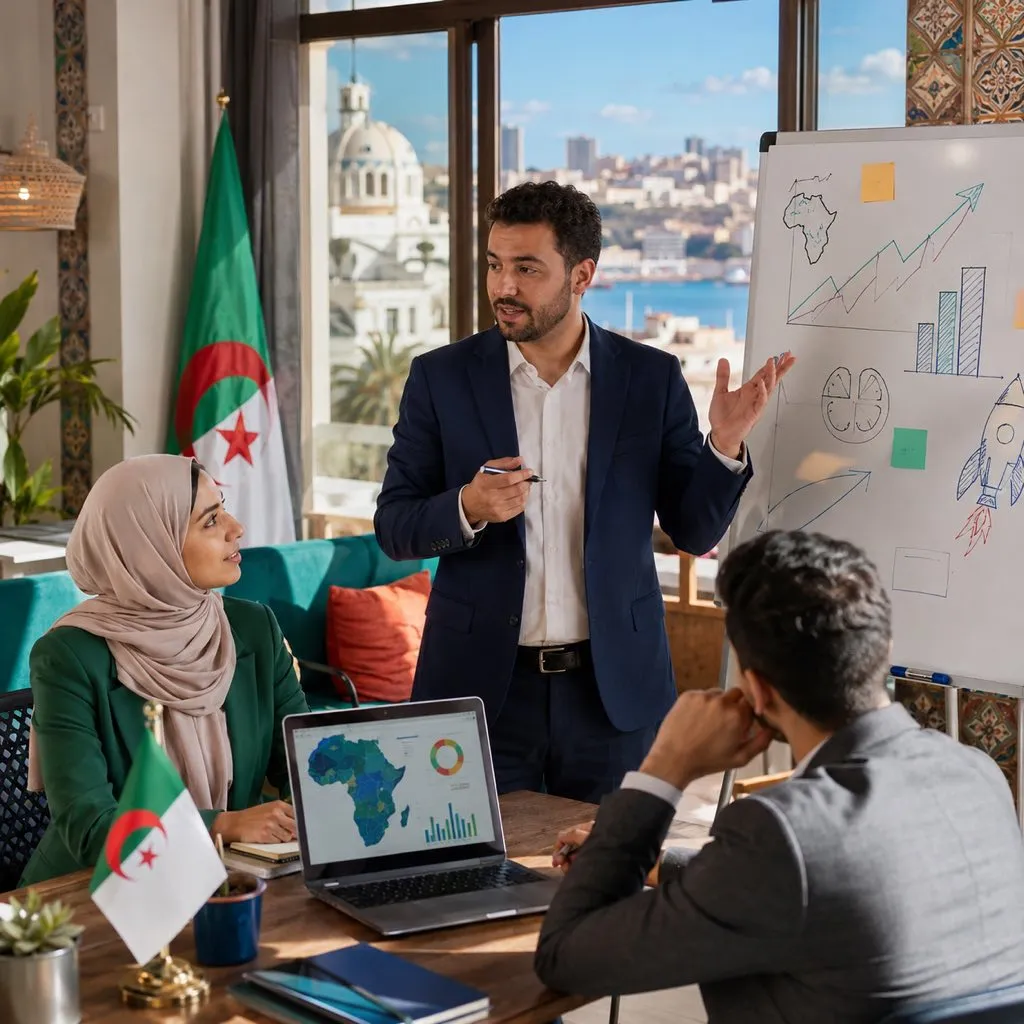
Algerian SaaS founders should target one anchor client per cluster — one in Francophone West Africa, one in North Africa outside Algeria, one in East Africa — and invest disproportionately in their success. Reference customers are not just case studies; they are the distribution channel. In a continental enterprise market where trust is the primary purchase criterion, the fastest GTM is the one built on the back of a client who will answer a phone call from a prospect and confirm that the software works.
Where This Fits in 2026’s Ecosystem
The AfCFTA opportunity for Algerian SaaS is not theoretical — it is already partially realized. Yassir’s acquisition of Kawarizmi (a Paris-based adtech firm) in March 2026 extended Yassir’s software capabilities across its North African and sub-Saharan merchant base, demonstrating that Algerian tech companies can now operate software products at continental scale. LabLabee raised $3.4 million in 2024 to bring AI-cloud lab infrastructure to telecom operators across Africa. Legal Doctrine is targeting 12 African countries with a legislative aggregation platform.
These are early signals of a larger pattern. The Algerian ecosystem ranks 111th globally (StartupBlink 2025) — but the AfCFTA framework, Algeria’s central geography between Arab and African markets, and the Arabic-French bilingual operating advantage position Algerian SaaS founders to move faster in continental enterprise markets than their ecosystem ranking would suggest.
The window is not unlimited. Moroccan SaaS operators, Egyptian fintech platforms, and Senegalese B2B marketplaces are running parallel GTM strategies. The founders who establish reference customers across three to four African market clusters by the end of 2026 will hold structural advantages — in brand, in data, and in contractual relationships — that will be difficult to displace.
Frequently Asked Questions
What exactly does the AfCFTA Digital Trade Protocol cover for software companies?
The protocol’s eight annexes — adopted in February 2025 — address digital identity recognition (so electronic contracts signed in Algeria are valid in member states), cross-border data transfer frameworks, electronic payment facilitation, and mutual recognition of e-signatures. Practically, this reduces the legal cost of signing enterprise software contracts across member states that have transposed the annexes into domestic law. Implementation varies by country, and founders should verify the specific legal status in each target market before assuming full protocol coverage.
Which African markets are most accessible for Algerian B2B SaaS first?
Francophone West Africa (Senegal, Côte d’Ivoire, Cameroon) and North Africa (Morocco, Tunisia, Egypt) are the most accessible first markets — shared French operating language reduces legal and sales friction, and these markets have reasonably active enterprise software procurement functions. East African markets (Kenya, Rwanda, Ethiopia) are commercially attractive but require English-language product capabilities and common-law contract structures that add complexity in the first 12 months.
How does PAPSS help Algerian SaaS companies get paid from African clients?
The Pan-African Payment and Settlement System (PAPSS) allows cross-border transactions between member countries to be settled in local currencies, bypassing the correspondent banking system that typically charges 3–5% on Africa-to-Africa transfers. For Algerian SaaS companies with monthly contract values above $2,000, PAPSS integration — typically done through a participating commercial bank — can materially reduce the cost of receiving payments from Nigerian, Ghanaian, or other West African clients.
Sources & Further Reading
- Will H1 2026 Cross the $1B Mark? Funding Hits $887M Despite Deal Slump — TechCabal
- Algerian Startups Eye African Markets via AfCFTA — AlgeriaTech
- AfCFTA Digital Trade Protocol: What It Means for Algeria’s Tech Services — AlgeriaTech
- African Startup Deal Tracker — LaunchBase Africa
- Algeria Startup Ecosystem — Wamda