The Ethical Reversal
Five years ago, a prominent venture capitalist investing in defense technology would have faced protests from their own employees, op-eds in major publications, and quiet conversations with limited partners expressing concern. Google’s 2018 withdrawal from Project Maven — a Pentagon AI program that drew internal employee protests — established the template: defense work was ethically toxic, a reputational risk that no amount of revenue could justify.
That era is over. Defense technology venture capital reached $49.1 billion in 2025, nearly doubling from $27.2 billion the previous year. The number of venture firms actively investing in the sector rose 41%. And the money is not coming from niche defense-focused funds — it is flowing from the same Sand Hill Road institutions that once considered the Department of Defense a client to be avoided.
The reversal has multiple causes, but two dominate. First, Russia’s invasion of Ukraine demonstrated that conventional military conflict between nation-states was not a relic of the 20th century but an ongoing reality that demanded technological solutions. Second, the economic returns proved irresistible. Defense contracts offer predictable, long-term revenue from a customer — the US government — with effectively unlimited purchasing power and no risk of bankruptcy.
The Billion-Dollar Leaders
Anduril Industries, founded in 2017 by Palmer Luckey after his departure from Facebook following its acquisition of Oculus VR, has become the sector’s poster child. The company’s $2.5 billion funding round in late 2025 valued it at $30.5 billion, placing it among the most valuable private companies in America. Anduril’s Lattice platform — an AI-powered command and control system — has secured contracts across all branches of the US military, with deployed systems tracking drones, submarines, and ground threats in real operational environments.
What separates Anduril from traditional defense contractors is its development methodology. Rather than building to government specifications in multi-year procurement cycles, Anduril develops products on its own capital and then sells finished systems to the military. This Silicon Valley approach — build it, then sell it — compresses timelines from years to months and produces technology that actually works before the government commits funding.
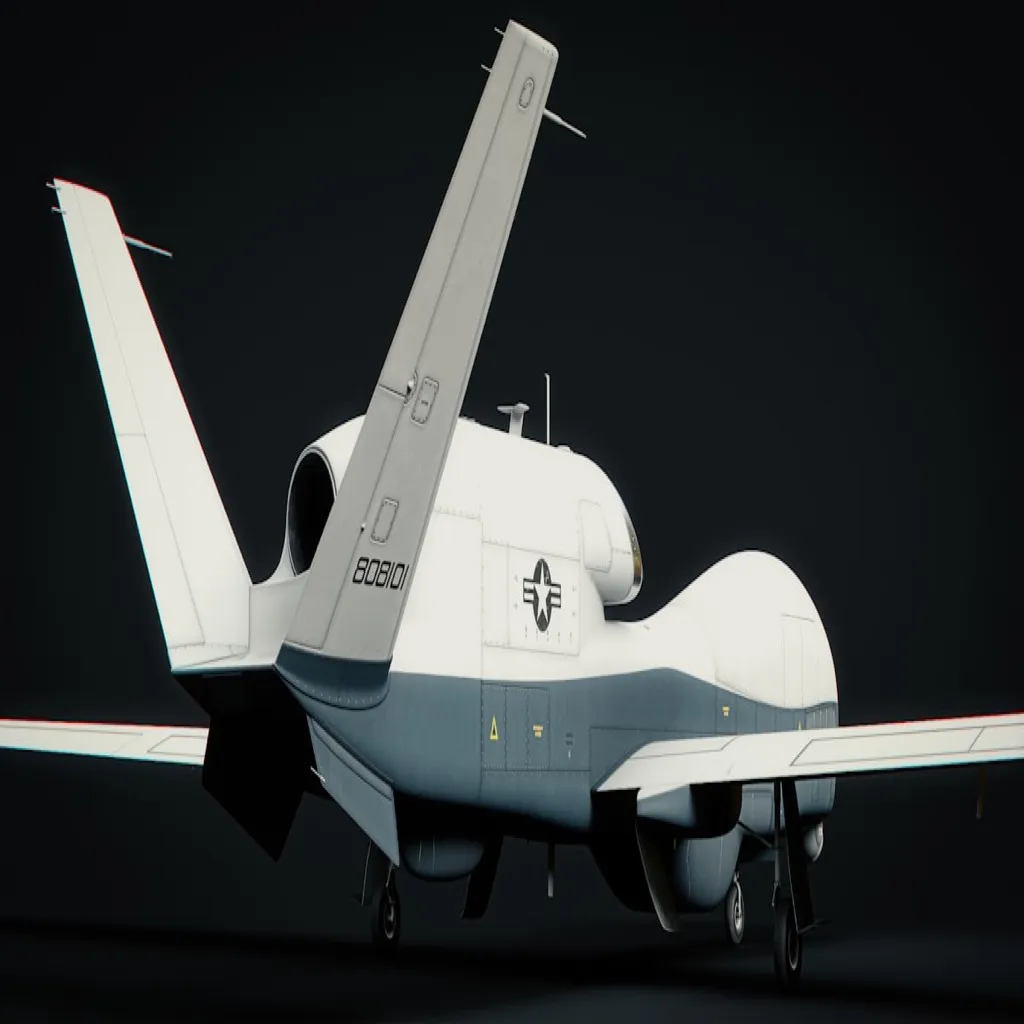
Shield AI, valued at $5.3 billion, has taken a different path. The company’s Hivemind autonomy stack enables drones and aircraft to operate without GPS, communications, or even a human pilot. In contested environments where adversaries jam GPS and communications — precisely the conditions of modern warfare — Shield AI’s systems continue to function. The company has deployed its Nova drone in active combat zones and is developing autonomous capabilities for the F-16 fighter jet under a US Air Force contract.
The gap between these leaders and the next tier is substantial. Companies like Rebellion Defense ($450M raised), Epirus ($390M for directed-energy weapons), and Saronic ($275M for autonomous naval vessels) are well-funded but have not yet achieved the scale or contract base of the top two. The sector’s concentration mirrors the broader startup ecosystem: a small number of winners capture most of the value.
From Fundraising to Production
The most significant shift in defense tech during 2025-2026 is the transition from fundraising and prototyping to manufacturing and production. Early defense tech startups could raise hundreds of millions on PowerPoint slides and prototype demonstrations. The market has matured to the point where investors and government customers demand production capability.
Manufacturing-focused investment rose to $4.7 billion, reflecting this maturation. Anduril’s investment in its Arsenal-1 manufacturing facility in Ohio — designed to produce autonomous systems at commercial-electronics scale — represents the clearest example. The facility uses commercial manufacturing techniques adapted for defense products, aiming to produce military hardware at a fraction of the cost and time of traditional defense contractors like Lockheed Martin or Raytheon.
This manufacturing challenge is where many defense tech startups may stumble. Software companies can scale with minimal capital expenditure. Hardware companies that sell to the military must navigate export controls, security clearances, supply chain restrictions, and manufacturing complexities that have no parallel in the consumer technology world. The transition from venture-funded prototype to production-ready system delivered at scale is the defense tech equivalent of the startup valley of death.
Several startups are addressing this gap directly. Hadrian, which raised $225 million for AI-powered precision manufacturing of defense components, is building automated factories that can produce complex machined parts with minimal human intervention. The company argues that the US defense industrial base has atrophied to the point where the bottleneck is not technology design but manufacturing capacity — and that AI-driven automation is the only path to rebuilding it fast enough to meet current threats.
Advertisement
Ukraine as the Proving Ground
Ukraine’s defense against Russian aggression has served as the most consequential technology validation environment since the early internet era. The conflict has demonstrated, in real combat conditions, which technologies work and which fail under the stress of actual warfare.
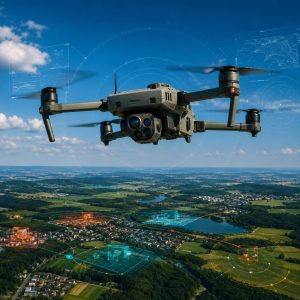
Autonomous drones have been the breakout technology. Both sides deploy thousands of semi-autonomous and autonomous drones daily for reconnaissance, strike missions, and electronic warfare. The conflict has validated the core thesis of companies like Shield AI and Anduril: that autonomous systems can operate effectively in GPS-denied, communications-degraded environments where traditional military platforms struggle.
The conflict has also exposed the limitations of legacy defense platforms. Expensive crewed aircraft, traditional armored vehicles, and conventional artillery — the mainstays of Western military procurement — have proven vulnerable to low-cost autonomous threats. A $500 drone can destroy a $10 million tank, an asymmetry that fundamentally changes the economics of military procurement.
For defense tech investors, Ukraine provides something that no amount of testing or simulation can replicate: proof of concept in combat. Startups whose technologies have been deployed and proven effective in Ukraine carry a credibility that no pitch deck can match. This combat validation has accelerated procurement timelines, with the US Department of Defense launching the Replicator initiative specifically to acquire autonomous systems at commercial speed and scale.
The Mainstream VC Migration
The most culturally significant aspect of the defense tech boom is the migration of mainstream venture capital firms into the sector. Firms that five years ago would not have taken a meeting with a defense startup now have dedicated defense tech partners and thesis documents.
The reasons are partly philosophical and partly financial. The philosophical shift reflects a broader reckoning with the naive techno-utopianism of the 2010s. The idea that technology exists in a moral vacuum — that building software is inherently neutral — has been replaced by a more pragmatic worldview in which national defense is a legitimate and even noble application of technology talent.
The financial case is equally compelling. Traditional SaaS investing, the bread and butter of Silicon Valley venture capital for two decades, has become hypercompetitive with compressed returns. Defense technology offers a different profile: longer sales cycles but more durable revenue, higher barriers to entry once established, and a customer whose budget is measured in hundreds of billions annually with bipartisan political support for increased spending.
Several prominent funds have made the transition explicitly. Andreessen Horowitz launched its American Dynamism practice specifically to invest in defense and government technology. Founders Fund, Lux Capital, and General Catalyst have all increased their defense exposure. Even traditionally risk-averse firms like Sequoia and Benchmark have participated in defense tech rounds.
The employee resistance that once constrained defense investment has largely dissipated. Younger engineers, shaped by a different geopolitical environment than their predecessors, are less likely to view defense work as ethically compromised. Recruiting firms report that defense tech companies no longer face the talent penalty they experienced in 2018-2020, with top engineering graduates actively seeking positions at companies like Anduril and Shield AI.
What Comes Next
The defense tech sector faces a critical test in 2026-2027: converting venture-funded momentum into sustained government revenue at scale. The US defense budget exceeds $800 billion annually, but the procurement system remains dominated by incumbent contractors with decades of relationships, lobbyists, and institutional knowledge.
Startups have won initial contracts and demonstrated capability. The question is whether they can navigate the full acquisition lifecycle — from prototype to production to sustainment — without losing the speed and innovation that differentiated them in the first place. History suggests this is where most defense technology ventures fail: not in building the technology but in surviving the bureaucratic process of selling it to the government.
The $49.1 billion in venture funding provides a substantial runway. But unlike software companies that can sustain losses while growing revenue, defense hardware companies face capital-intensive scaling requirements. Anduril’s manufacturing investments, Shield AI’s F-16 program, and the sector’s collective transition from prototype to production will determine whether defense tech’s venture gold rush produces lasting companies or another cycle of overpromise and underdelivery.
The geopolitical environment favors continued investment. Tensions across multiple theaters — Europe, the Pacific, the Middle East — create sustained demand for the autonomous systems, AI-powered intelligence platforms, and advanced manufacturing capabilities that define the new defense technology sector. For venture investors, the question is no longer whether defense tech is a legitimate category. It is whether the current generation of startups can build the enduring companies that the category demands.
Frequently Asked Questions
What is defense tech’s venture gold rush?
Defense Tech’s Venture Gold Rush: From Ethical Taboo to $49 Billion Sector covers the essential aspects of this topic, examining current trends, key players, and practical implications for professionals and organizations in 2026.
Why does defense tech’s venture gold rush matter?
This topic matters because it directly impacts how organizations plan their technology strategy, allocate resources, and position themselves in a rapidly evolving landscape. The article provides actionable analysis to help decision-makers navigate these changes.
How does the billion-dollar leaders work?
The article examines this through the lens of the billion-dollar leaders, providing detailed analysis of the mechanisms, trade-offs, and practical implications for stakeholders.
Sources & Further Reading
- Defense Tech VC Reached $49.1 Billion in 2025 — PitchBook
- Anduril Raises $2.5B at $30.5B Valuation — Reuters
- Shield AI Hits $5.3B Valuation with Hivemind Autonomy — Bloomberg
- The Replicator Initiative: Pentagon’s Push for Autonomous Systems — Defense One
- From Taboo to Trillion: How VCs Learned to Love Defense — The Information