From Garage Startup to $12.7 Billion Defense Giant
Shield AI has raised $2 billion in new funding, more than doubling its valuation from $5.3 billion to $12.7 billion in just twelve months. The round represents one of the largest private raises in defense technology history and reflects a fundamental shift in how the Pentagon and its allies think about air combat.
The Series G was co-led by Advent International and the Strategic Investment Group of JPMorganChase’s Security and Resiliency Initiative, which together anchored $1.5 billion. Funds managed by Blackstone contributed an additional $500 million in preferred equity financing, along with a $250 million delayed draw facility. Advent’s Chairman David Mussafer joins Shield AI’s board, while JPMorgan Chase’s Todd Combs serves as a board observer.
Hivemind: Combat-Proven in Ukraine
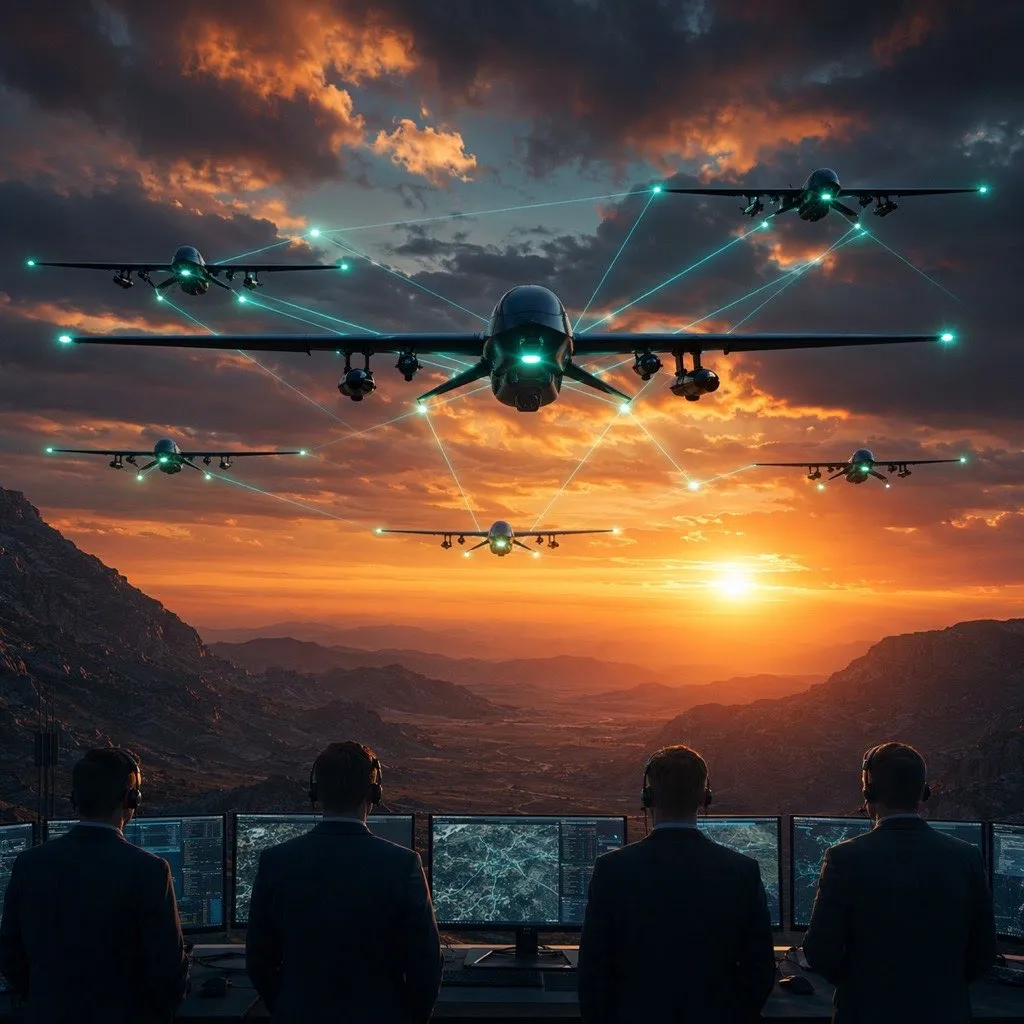
At the center of Shield AI’s pitch is Hivemind, its flagship AI autonomy platform. The software enables autonomous operation of drones and aircraft in GPS-denied environments — exactly the conditions that define modern electronic warfare.
In Ukraine, Shield AI’s V-BAT drones powered by Hivemind have logged more than 130 combat sorties in hostile, GPS-jammed airspace where conventional drones frequently fail. In 2025 alone, the drones executed over 35 missions and identified more than 200 Russian targets. In one documented engagement, Ukrainian forces used V-BAT to locate a Russian SA-11 Buk-M1 mobile air defense system despite pervasive electronic warfare, then destroyed the target using HIMARS precision rockets.
The combat record matters because it transforms Hivemind from a promising technology demo into a validated autonomous combat system. The software has been tested on the modified F-16 (X-62A VISTA) and is deployed on the U.S. Air Force’s Collaborative Combat Aircraft program, which aims to pair autonomous wingmen with manned fighter jets.
Advertisement
The Aechelon Acquisition and Simulation Strategy
A significant portion of the proceeds will fund Shield AI’s acquisition of Aechelon Technology, a Sagewind Capital portfolio company that produces high-fidelity flight simulation software used by the U.S. military. CEO Gary Steele stated that the acquisition “will accelerate the work we are doing with Hivemind, particularly in simulation like the Department of War’s JSE.”
The simulation angle is strategically critical. Training autonomous combat pilots requires millions of simulated flight hours across thousands of scenarios — weather conditions, electronic warfare environments, adversary tactics. Owning the simulation stack gives Shield AI a closed loop between real-world combat data from Ukraine and synthetic training environments.
Revenue Trajectory and Market Position
Shield AI is projecting more than $540 million in revenue for 2026, positioning it among the fastest-growing defense technology companies globally. Founded in 2015 in San Diego by Brandon Tseng and Ryan Tseng — former Navy SEALs who saw firsthand the limitations of human-piloted reconnaissance — the company has evolved from a small-drone startup into a full-spectrum autonomous warfare platform.
The defense AI market is entering a consolidation phase. With $2 billion in fresh capital and combat-proven technology, Shield AI is positioned to become the default autonomy layer for Western military aviation, much as Palantir became the default data analytics platform for intelligence agencies.
Frequently Asked Questions
What makes Shield AI’s Hivemind different from other military drone software?
Hivemind is designed to operate autonomously without GPS, constant communication, or a human pilot. Most military drones rely on GPS for navigation and continuous operator links for control. In Ukraine’s contested electromagnetic environment, where GPS jamming is pervasive, conventional drones frequently fail. Hivemind’s ability to navigate, identify targets, and complete missions independently in these conditions sets it apart.
Why did Shield AI’s valuation more than double in just one year?
The jump from $5.3 billion to $12.7 billion reflects three factors: combat-proven performance in Ukraine (130+ sorties), a revenue trajectory heading toward $540 million in 2026, and growing Pentagon commitment to autonomous combat aircraft programs. The Collaborative Combat Aircraft program alone represents tens of billions in future procurement, and Shield AI’s Hivemind is a leading contender for the autonomy layer.
How does the Aechelon acquisition strengthen Shield AI’s competitive position?
Aechelon produces high-fidelity flight simulation software already used by the U.S. military. Acquiring it gives Shield AI a closed loop between real-world combat data from Ukraine and synthetic training environments. Training autonomous combat pilots requires millions of simulated flight hours, and owning the simulation stack accelerates AI learning while reducing dependence on expensive live flight testing.
Sources & Further Reading
- Shield AI to Acquire Aechelon and Raise $2B at $12.7B Valuation — Shield AI
- Shield AI Surpasses 130 V-BAT Sorties in Ukraine — Shield AI
- Shield AI Projecting More Than $540M in Revenue — Fortune
- Shield AI Raises $2B to Scale Hivemind AI Pilot — The Next Web
- Shield AI Announces $2B in Funding — The AI Insider