What just shifted in the Algerian ecosystem
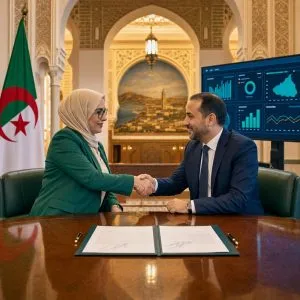
Most national startup conversations have spent years on the supply side: incubators, accelerators, hackathons, fellowships, branding. March 2026 produced a different signal. On March 26, the Société des Eaux et de l’Assainissement d’Alger (SEAAL) and the public accelerator Algeria Venture signed a protocol agreement to launch a joint acceleration program for startups working on innovative public water and sanitation projects. The signature came from SEAAL General Manager Reda Boudab and Algeria Venture General Manager Lyes Abdoun, and it was timed to World Water Day.
The first pilot under that protocol is concrete: a remote-management system for a hydraulic site, developed in partnership with a startup. That kind of pilot is the difference between an accelerator and a procurement runway. SEAAL is the operator, the problem is real (network telemetry, remote oversight of a hydraulic site, integration with existing operations), and the startup is being given an environment in which to prove reliability rather than to demo on a stage.
The protocol matters more in context. On March 18, the Ministry of Knowledge Economy and Startups launched a national water innovation call in collaboration with the Ministry of Water Resources and Water Security and the Ministry of Higher Education and Scientific Research, asking innovators, startups, scale-ups, micro-enterprises, incubators, university researchers, and Algerian talent abroad to build solutions in leakage reduction, desalination energy efficiency, smart irrigation, AI, and IoT. On March 12, Huawei Algeria closed the first Tech4Connect 2026 hackathon, where more than 200 students worked in teams of three (an AI specialist, a domain expert, and a design lead) on AgriTech and Smart Cities prototypes using AI, 5G, and Huawei Cloud. The same week, Algeria’s first AI and cybersecurity startup cluster was announced, and the country held a high-level meeting with the United Nations on digital and emerging technologies.
Together, those moves describe a pipeline. Demand-side calls and operator pilots on one end, hackathons and a startup cluster on the other, a public accelerator in the middle stitching them together.
Why this is different from typical accelerator design
Most accelerator programs optimize for founder coaching, investor readiness, and demo days. Those are useful but not sufficient. The harder constraint in emerging markets is access to serious customers willing to pilot and procure. Public-sector accelerators that begin with an operator like SEAAL flip the order. The accelerator becomes a structured way to pair startups with a buyer who already owns a problem, has a budget, and has operational complexity that filters out shallow solutions.
Algeria Venture itself is a public accelerator with an explicit goal of accelerating the growth of startups, particularly those needing financing, while connecting them with economic operators. Its leadership has signaled the SEAAL model is the start, not the endpoint, with intent to extend the same logic to other domains, including artificial intelligence. That sequencing is important: build credibility on water (a politically critical, operationally complex sector), then transfer the playbook to AI, agriculture, energy, and urban services.
The most useful comparison is not other accelerators. It is procurement. Public-sector acceleration done well is a structured procurement front-end. It defines the problem, hosts the pilot, evaluates against operator-relevant criteria, and ends in a contract or a clear no-go. Done badly, it is theater that wastes founder time and public budget.
Where the model can fail
Pilot theater is the recurring failure mode. Demonstrations get scheduled, prototypes get presented, and nothing gets procured. The structural reason is usually that procurement rules, operator decision rights, and legal pathways were not aligned with the program at design time. By the time a successful pilot ends, the path from pilot result to operational deployment runs into procurement code, vendor lock-in concerns, integration cost on legacy supervisory systems, and budget cycles that were never coordinated.
The way to avoid that is unromantic. Define the pilot environment, the evaluation criteria, the data-access protocol, the success thresholds, and the post-pilot procurement pathway before the cohort opens. SEAAL knows how its supervisory systems work, what a deployable solution looks like under field conditions, and what its procurement constraints are. If those are encoded into the program design, founders self-select into building real products. If they are not, founders self-select into building demos.
A second failure mode is generic AI language. The Algerian water sector has measurable problems: piping losses up to 50 percent in the country’s network, a national plan to lift desalination from roughly 18 percent to 60 percent of drinking water by 2030, 900,000 cubic meters of new daily desalination capacity coming online from Tlemcen, Mostaganem, and Chlef plants, and a 1 billion dollar drought-response push reported by Bloomberg in February 2026. Proposals targeting a specific leakage-reduction figure, energy-per-cubic-meter improvement, or field-response time gain are easier to evaluate, contract, and scale than proposals that promise to apply AI to water.
Advertisement
Why this scales beyond water
If the SEAAL pilot framework produces a successful operational deployment, the institutional muscle generalizes. The same template (named operator, defined problem, structured pilot, evaluation criteria, procurement pathway) applies to road authorities, port operators, energy utilities, telecom infrastructure managers, hospital networks, and large public agencies that need software-driven workflow improvements. The SEAAL pilot is not just a water story. It is a credibility story for public-procurement-led acceleration in Algeria.
International parallels reinforce the logic. Singapore’s IMDA paired infrastructure investment with applied skills programs in April 2026, anchoring AI workforce strategy on real institutional users. Japan’s Microsoft package the same month bundled compute with Sakura Internet and SoftBank, embedding sovereignty and operational partnerships in the contract. The connecting thread is that durable tech ecosystems form when supply meets institutional demand, not when supply is pushed at a generic market.
What founders should do now
For Algerian founders, the practical move is to read the public-sector accelerator landscape as a procurement signal, not a marketing channel. Pick one operator. Pick one measurable problem. Build the workflow that survives field conditions and integrates with what the operator already runs. Apply to programs whose problem statement matches what your team can actually deliver, and avoid programs whose evaluation criteria are vague.
For Algeria Venture and its operator partners, the move is to publish enough about pilot environments and procurement pathways that founders can self-select credibly. The reputation question is whether pilots end in contracts more often than they end in slide decks. If March 2026 is the start of a serious answer to that question, public-sector acceleration becomes the strongest demand engine the Algerian startup ecosystem has had to date.
What Algerian Founders Should Do Before Applying to Public-Sector Accelerators
The SEAAL-Algeria Venture program and the national water innovation call are demand-side signals. Founders who treat them as branding opportunities will lose to founders who treat them as procurement conversations. The following actions distinguish the two approaches.
1. Map the Operator’s Measurable Problem Before Writing a Proposal
Algeria’s national water plan has published targets: lift desalination capacity from roughly 18 percent to 60 percent of drinking water by 2030, 900,000 cubic meters of new daily desalination capacity from Tlemcen, Mostaganem, and Chlef plants. The Bloomberg-cited $1 billion drought-response push and the documented 50 percent piping-loss rate on urban networks are both measurable entry points. A proposal that says “apply AI to leakage reduction on the Algiers-Est distribution segment, targeting a 12 percent loss reduction in 18 months” is evaluable; a proposal that says “AI-powered water management solution” is not. Map the specific operational unit, the specific metric, and the specific improvement threshold before the application window opens.
2. Verify Field Compatibility Before Demo Day
SEAAL’s first pilot — a remote-management system for a hydraulic site — set the right precedent. But the failure mode is submitting a cloud-based dashboard that requires stable 4G coverage to a site that has intermittent connectivity and legacy SCADA integration constraints. Before any demo, confirm: what is the communication protocol between field sensors and the management layer? What are the constraints on the existing supervisory system the operator uses? What is the data-access agreement for live operational data? Huawei’s Tech4Connect 2026 hackathon required three-person teams (AI specialist, domain expert, design lead) precisely because domain compatibility — not AI capability — is the gate that kills most AgriTech and smart-infrastructure proposals in field conditions.
3. Build the Post-Pilot Procurement Pathway Into the Design
Public-procurement rules in Algeria require competitive tender above certain thresholds. Founders who design their solution for a single-operator deployment, with proprietary integration hooks that only they can maintain, create a procurement problem the operator cannot legally work around. Design for interoperability: open APIs, documented data formats, and a handover protocol that a third-party integrator could follow. Algeria Venture’s mandate explicitly includes connecting startups with economic operators; the startups that earn multi-year contracts are the ones whose technical architecture makes procurement compliance straightforward, not the ones whose demo was most impressive on stage.
Where This Fits in Algeria’s 2026 Ecosystem
The SEAAL-Algeria Venture framework is the most concrete evidence yet that Algeria’s startup conversation is shifting from supply-side celebration to demand-side discipline. That is the right direction. Singapore’s IMDA-anchored model and Japan’s Sakura-SoftBank-Microsoft bundle — both announced in April 2026 — demonstrate the same principle at national scale: durable tech ecosystems form when institutional buyers are embedded in the startup pipeline from the beginning, not invited in after a demo day.
For Algeria, the water sector is the proving ground. Water is politically significant, operationally complex, and has documented measurable problems — 50 percent piping losses in urban networks, a national target to reach 60 percent desalination capacity by 2030, 900,000 cubic meters of new daily capacity in the pipeline. If a startup emerges from the SEAAL pilot with a verifiable operational result — a recorded reduction in leakage on a defined network segment, an energy-per-cubic-meter improvement at a desalination sub-site — that result becomes the template for the next operator engagement, whether in energy, ports, or hospital networks.
The reputational stakes for Algeria Venture are also real. Public accelerators in emerging markets are littered with programs that ran three cohorts, produced impressive graduation ceremonies, and closed without a single operational deployment. The program’s leadership has signaled intent to extend the SEAAL model to AI and other domains. That extension will be credible only if the first pilot produces a contract and a public result, not just a handshake photo. The next 12 months are the test.
Frequently Asked Questions
What is the SEAAL-Algeria Venture program?
On March 26, 2026, SEAAL and Algeria Venture signed a protocol agreement to launch a joint acceleration program for startups building innovative projects in public water and sanitation services. The signing was led by SEAAL General Manager Reda Boudab and Algeria Venture General Manager Lyes Abdoun on the sidelines of World Water Day. The first pilot is a remote-management system for a hydraulic site developed in partnership with a startup.
How does this fit into Algeria’s broader 2026 startup activity?
It sits alongside the March 18 national water innovation call from the Ministry of Knowledge Economy and Startups, the March 12 close of Huawei Algeria’s first Tech4Connect 2026 hackathon (200+ students in three-person teams), the launch of the country’s first AI and cybersecurity startup cluster, and a high-level Algeria-United Nations meeting on digital and emerging technologies. Together they form a demand-and-supply pipeline.
How can Algeria avoid pilot theater?
Define the pilot environment, evaluation criteria, data-access protocol, success thresholds, and post-pilot procurement pathway before the cohort opens. Encourage proposals that target measurable operator problems (a specific leakage-reduction figure on a defined network section, an energy-per-cubic-meter improvement at a desalination plant) rather than generic AI language.
Sources & Further Reading
- SEAAL and Algeria Venture launch public-service innovation acceleration program – APS
- Innovation Acceleration Program in Public Services Between SEAAL and Algeria Venture – Algerian Radio
- Algeria launches national initiative for technological solutions in water sector – APS
- Huawei Algeria rewards winning student teams at Tech4Connect 2026 – APS
- Algeria Venture Overview – Startup Algeria