
🧭 Decision Radar
Relevance for Algeria
Medium
▾
Infrastructure Ready?
Partial
▾
Skills Available?
Partial
▾
Action Timeline
Monitor only
▾
Ministry of Energy, Sonatrach, Sonelgaz, MPT, Algeria Venture
Decision Type
Educational
▾
Quick Take: Do not read this as a call for nuclear power in Algeria. Read it as a template for asking power questions early: who funds development, who buys the output, and when a final investment decision is due. Planners of Algerian data-centre projects should put those questions first.
A Feasibility Study for 12 Small Reactors
On 19 October 2026, AEP, through its subsidiary Indiana Michigan Power, signed a joint development agreement with X-energy, while Amazon signed a funding agreement, to evaluate the feasibility of a 960 MW advanced nuclear project in Indiana.
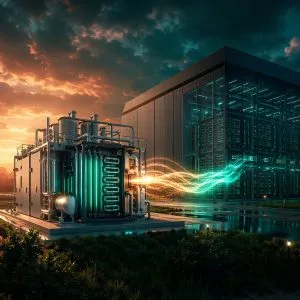
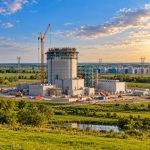
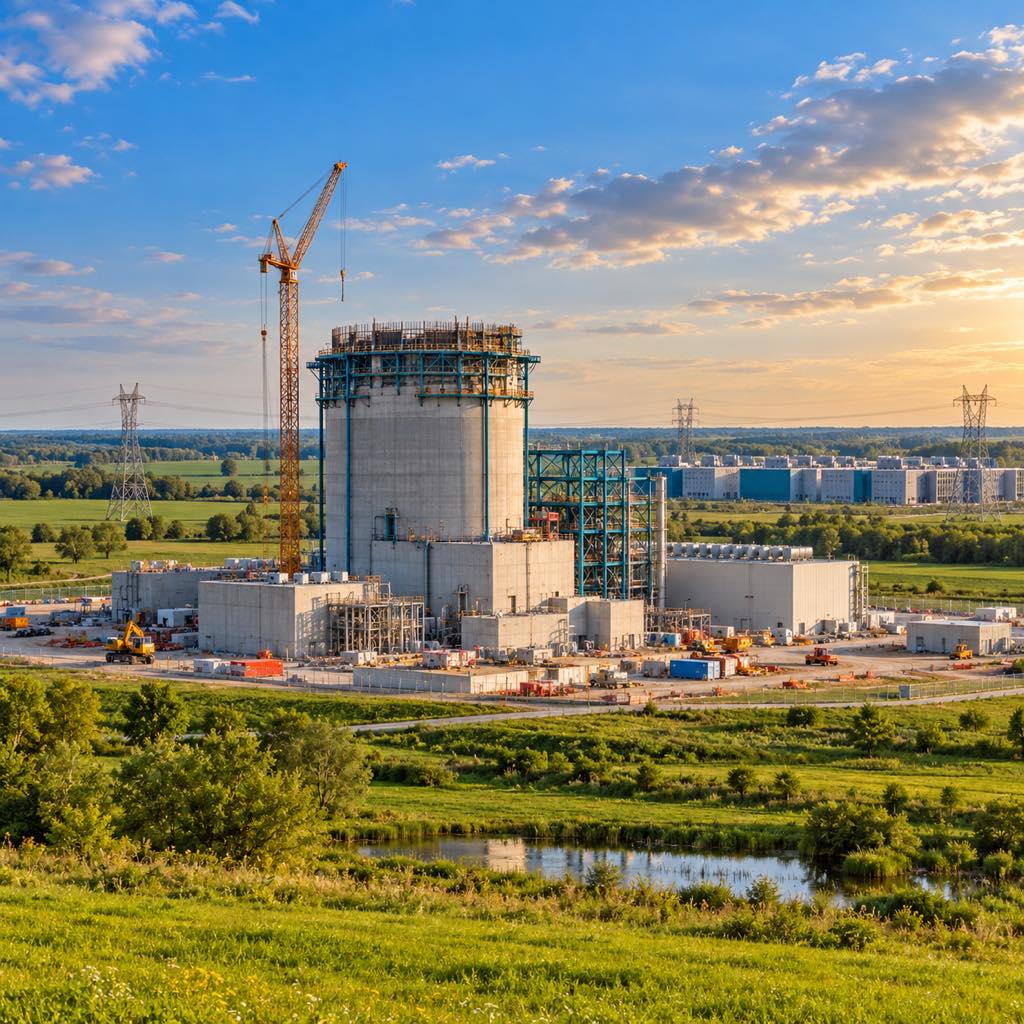
The proposed plant would use 12 X-energy Xe-100 small modular reactors of 80 MW each, arranged in three groups of four. The site is the retired Breed Generating Station, an AEP-owned former coal plant in Sullivan County, Indiana.
Reusing a coal-plant site is the notable choice here. Amazon’s Josh Weissman said the company is looking to develop nearly a gigawatt of carbon-free power for the regional grid.
Who Pays, Who Buys, and What Is Still Undecided
The deal structure matters as much as the reactors. Amazon would fund development and, if the plant is built, buy its output under a long-term power purchase agreement covering the facility’s costs and operations. In other words, the buyer carries the early risk.
Nothing is committed yet. Construction would proceed only after a final investment decision, and the project is still at the evaluation stage. If it is built, it is expected to create about 1,000 construction jobs and 100 permanent jobs.
The Indiana plan is also part of a larger programme. It is the second project under an Amazon–X-energy collaboration that targets more than 5 GW of new US nuclear capacity by 2039; the first is the Cascade Advanced Energy Facility in Washington state.
Advertisement
What This Means for Algeria
The Algeria hook is indirect. Nothing in this announcement involves Algeria, and small modular reactors are not an option anyone can assume for the near term. The transferable point is how a large buyer treats electricity: as something to secure, fund and contract for years ahead.
1. Treat firm power as the first line of any data-centre business case
A hyperscaler is now financing generation studies before a site is built. Any Algerian operator or public body planning compute capacity should ask where firm, abundant electricity will come from before choosing the building or the chips.
2. Compare gas, solar and nuclear on the same terms
The Indiana project pairs a technology with a contract. Algerian planners can ask the same question of every option on the table: who funds development, who buys the output, and what happens if a final investment decision never comes.
3. Learn from long-term purchase contracts, not only from technology
The long-term power purchase agreement is what turns a study into a bankable plan. Understanding that structure is useful whether the generation is nuclear, gas or solar.
The Bigger Picture
The announcement is a feasibility study, not a power plant. What it shows is a company with the balance sheet to commit funding at the evaluation stage and to promise to buy the output. For countries that want to host AI infrastructure, the competition is increasingly about who can offer reliable power on predictable terms.
Frequently Asked Questions
What exactly did Amazon, AEP and X-energy announce?
On 19 October 2026 they agreed to evaluate the feasibility of a 960 MW advanced nuclear project in Indiana, built from 12 Xe-100 reactors of 80 MW each. Amazon would fund development and, if the plant is built, buy its output. It is not yet a construction decision.
Where would the plant be built?
At the retired Breed Generating Station, an AEP-owned former coal plant in Sullivan County, Indiana. If built, it is expected to create about 1,000 construction jobs and 100 permanent jobs.
What can Algeria learn from it?
Mainly the sequencing: secure and contract firm power early, and be clear about who carries the risk before a final investment decision. The project is a US case, so the lesson is about method, not about copying the technology.
Sources & Further Reading
🔗 Related Intelligence
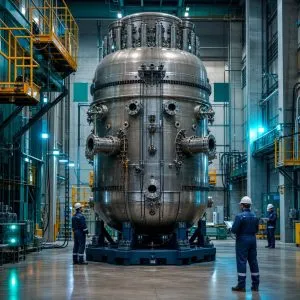
SMR Pipeline: How Big Tech’s Nuclear Bets Are Reshaping Cloud Power Strategy
Nuclear-Powered Data Centers: Microsoft, Google, and the AI Energy Gamble
Grid Transformer Shortage: The 5-Year Bottleneck Stalling AI Data Centers in 2026

The Gas Turbine Has Become AI’s Hardest Bottleneck: Order One Today, Get It in 2031