🧭 Decision Radar
Relevance for Algeria
Medium
▾
Infrastructure Ready?
Partial
▾
Skills Available?
Partial
▾
Action Timeline
12-24 months
▾
Algérie Télécom, ARPT, MPT, Sonatrach (for any energy-linked infrastructure), telecom operators
Decision Type
Strategic
▾
Quick Take: Milan’s growing data center investment reinforces the Mediterranean’s importance as a connectivity corridor between Europe, North Africa, and beyond — a trend Algeria benefits from indirectly through improved regional network capacity, even without being a direct participant in the investment itself.
The Announcement
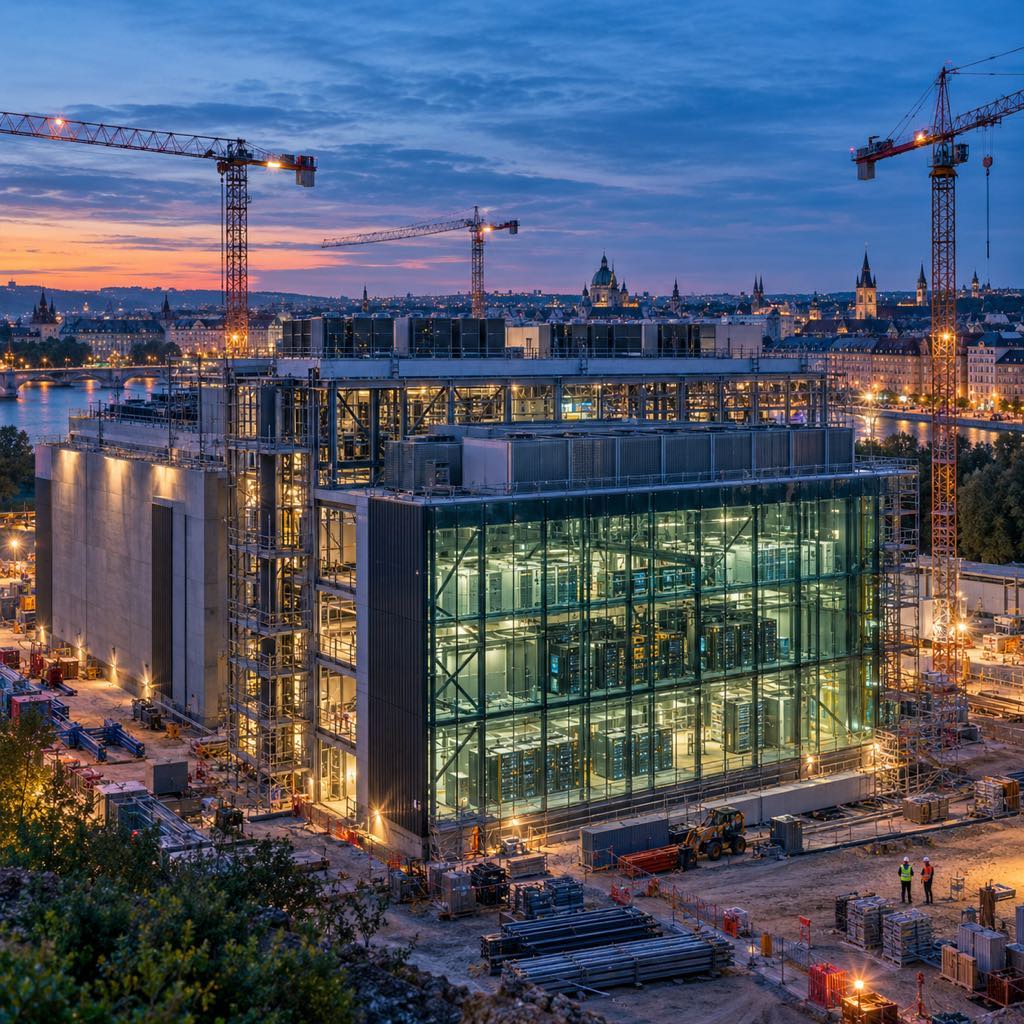
The €360 million Milan data center investment from Greenfield and Finsbury Infrastructure was reported as part of DataXConnect’s weekly roundup of European data center news covering the week of September 11, 2026, appearing alongside a broader slate of European data center activity that week. The investment is planned over three years and will fund a 36MW IT data center, with Greenfield having already secured 80MW of power capacity for the site — providing headroom beyond the facility’s initial IT load.
Milan sits outside the FLAP-D cluster — Frankfurt, London, Amsterdam, Paris, and Dublin — that has historically concentrated the large majority of Europe’s data center capacity and interconnection density. Italy’s data center market has been growing steadily, driven by demand from cloud providers, enterprise digitalization, and increasingly AI workloads that need capacity closer to Southern European and Mediterranean customers than the traditional northern European hubs provide.
Why Milan, and Why Now
Milan’s positioning as a data center location draws on several structural advantages: it is Italy’s financial and business capital, has strong fiber connectivity through Italy’s national and international network backbones, and offers proximity to Mediterranean subsea cable routes that connect Europe to North Africa and the Middle East. For operators looking to serve Southern European markets without routing traffic north to Frankfurt or Amsterdam, Milan increasingly functions as a natural regional hub.
The €360 million figure, while smaller than some of the multi-billion-euro hyperscaler campuses announced elsewhere in Europe in 2026, is consistent with a mid-scale colocation or regional cloud facility rather than a hyperscale AI training campus — the kind of investment that expands regional capacity and redundancy rather than adding a new frontier-scale compute hub. The facility is designed to serve customers across artificial intelligence, cloud computing, and enterprise applications, and the project marks Finsbury’s first investment in Italy.
Advertisement
The Broader European Pattern
This investment lands alongside a wider 2026 trend of data center capital moving beyond the FLAP-D cluster as land, power, and interconnection capacity in those established hubs become harder and more expensive to secure. Secondary European markets — Milan, Madrid, Warsaw, and others — are increasingly attracting investment from infrastructure funds and operators looking for lower land costs, available grid capacity, and growing local demand, without the multi-year interconnection queues that now characterize the most saturated FLAP-D markets.
For Europe’s overall AI infrastructure build-out, this diversification matters because it distributes both capacity and risk. A more geographically spread network of data centers reduces the concentration risk of having the bulk of European digital infrastructure clustered in a handful of markets, while also bringing compute physically closer to Southern European users and enterprises.
What to Watch Next
With the 36MW capacity, 80MW power reservation, and three-year investment window now public, the practical remaining question — whether tenant demand skews toward AI, cloud, or enterprise colocation — remains to be confirmed as the project moves from announcement to construction. What is clear from the pattern is that Milan is now firmly part of the conversation about where Europe’s next wave of data center capacity gets built, alongside — not instead of — the established FLAP-D hubs.
Frequently Asked Questions
How much are Greenfield and Finsbury Infrastructure investing in the Milan data center?
Greenfield and Finsbury Infrastructure announced a €360 million investment in a new data center in Milan, Italy, according to DataXConnect’s weekly European data center news roundup.
Why is Milan attracting data center investment outside the traditional FLAP-D hubs?
Milan offers strong fiber connectivity, proximity to Mediterranean subsea cable routes, and a natural role as a regional hub for Southern European markets, as land, power, and interconnection capacity become harder to secure in Frankfurt, London, Amsterdam, Paris, and Dublin.
What capacity or type of facility is planned for the Milan data center?
The project is planned as a 36MW IT data center, with Greenfield having already secured 80MW of power capacity for the site, and is designed to serve AI, cloud computing, and enterprise workloads.
Sources & Further Reading
🔗 Related Intelligence
Publicly Announced Data Center Projects Now Top $1 Trillion and 68 Gigawatts of Connected Load

Data Centers Hit $1 Trillion a Year by 2030: What CFOs Need to Model
Constantine’s Data Centers: Expanding Enterprise Cloud Beyond Algiers
Australia’s NEXTDC Raises $795 Million to Fund AI Data Center Buildout