🧭 Decision Radar
Relevance for Algeria
Medium
▾
Infrastructure Ready?
Partial
▾
Skills Available?
Partial
▾
Action Timeline
12-24 months
▾
Sonelgaz, Sonatrach, Algeria Invest, MPT, Ministry of Energy and Mines, port authorities (Algiers, Oran, Annaba)
Decision Type
Strategic
▾
Quick Take: ByteDance’s $38.4 billion bet on Brazil’s Pecém port shows that hyperscalers are now actively scouting renewable-rich, port-connected regions outside their traditional hubs — a pattern Algeria’s own coastal and solar-generation assets make it a plausible, if currently unprepared, candidate for, pending a dedicated push on power purchase agreements and investment-promotion infrastructure.
The Project
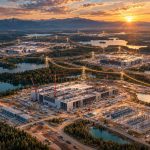
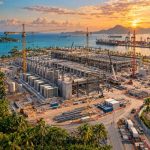
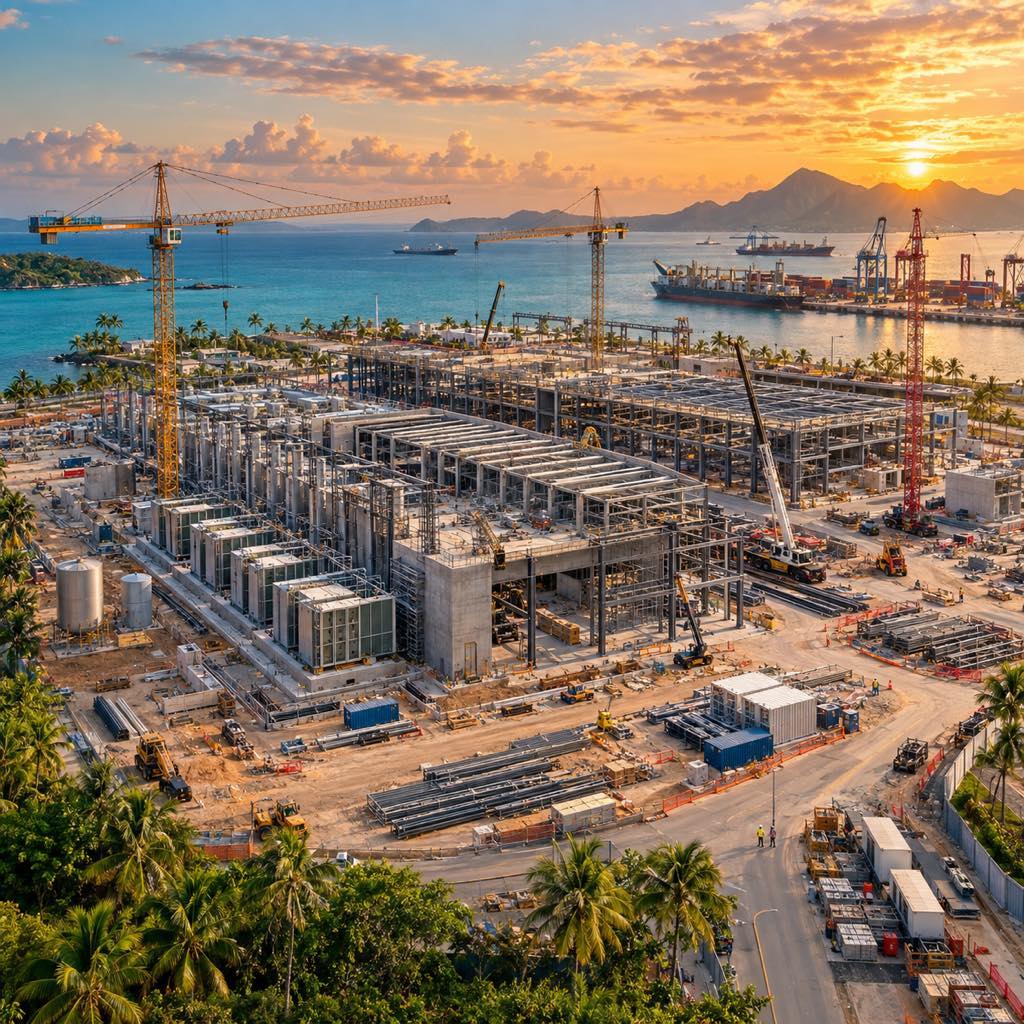
ByteDance’s data center at Pecém, a deep-water port complex on Brazil’s northeastern coast in the state of Ceará, is reported to represent a $38.4 billion investment, beginning at an initial capacity of 200 megawatts with a stated potential to expand toward nearly 1 gigawatt over time. If the full expansion is realized, the facility would become ByteDance’s largest facility outside China, and one of the largest single hyperscaler AI infrastructure investments announced anywhere outside the United States and China so far in 2026.
Pecém was already established as an industrial and logistics hub before this announcement, home to a deep-water port, an industrial and export processing zone, and existing power infrastructure that made it attractive for large-scale energy-intensive projects. Northeastern Brazil more broadly has been positioning itself as a renewable-energy-rich region — 89% of Brazil’s electricity came from low-carbon sources in 2025, with significant wind and solar generation capacity — which matters directly for a facility whose primary long-run operating cost is electricity.
Why Geography Is the Story Here
The scale of the investment matters, but the location matters just as much. ByteDance, along with the rest of the hyperscaler and AI infrastructure industry, has spent the past two years running into the same two constraints in its traditional build-out markets: available electrical power and available land near existing grid capacity. The US, in particular, has seen data center construction increasingly gated by interconnection queues and local grid capacity rather than by capital availability.
Brazil’s Pecém siting fits a broader 2026 pattern of hyperscalers diversifying where they build, specifically toward regions with underused renewable generation capacity and available land, rather than concentrating exclusively in established markets like Northern Virginia, Dublin, or Singapore. For a company like ByteDance that needs data center capacity to support AI workloads (including for TikTok and its other consumer platforms) across Latin America and adjacent markets, a facility of this scale in Brazil also reduces latency for the region’s user base compared with routing traffic to US or Asian facilities.
Advertisement
What “Nearly 1 GW” Actually Means
The initial 200 MW figure with potential expansion toward nearly 1 GW is itself substantial — enough to power a mid-sized city — but the stated potential to scale toward nearly 1 GW would put the facility in the same capacity tier as the largest hyperscaler campuses being built anywhere in the world. Reaching that scale would require securing power purchase agreements or direct generation capacity well beyond the region’s current committed renewable output, along with the transmission infrastructure to move that power reliably to the site.
The gap between an initial construction phase and a fully built-out gigawatt-scale campus is typically measured in years, not months, and is contingent on securing power at each expansion stage — a pattern that has slowed or reshaped similarly ambitious data center announcements elsewhere in 2026.
The Broader Investment Pattern
ByteDance’s Pecém project sits alongside a wider wave of 2026 data center announcements that are moving hyperscaler capital toward new geographies for power and land access — a shift that matters for how the global AI infrastructure build-out is distributed, rather than concentrated in a handful of saturated markets. For Brazil specifically, landing an investment of this scale signals that the country’s renewable generation base and port infrastructure are now being weighed seriously against more traditional data center hubs by companies making multi-decade infrastructure commitments.
Frequently Asked Questions
How much is ByteDance reportedly investing in its Brazil data center?
ByteDance is reported to be investing $38.4 billion in a data center complex at the Pecém port in Ceará, Brazil, according to Data Center Knowledge’s coverage of new 2026 data center developments.
What is the initial and potential capacity of the ByteDance Pecém data center?
The facility reportedly starts at 200 megawatts of capacity with potential expansion toward nearly 1 gigawatt, according to the same reporting.
Why did ByteDance choose Pecém, Brazil for this data center?
Pecém offers a deep-water port, existing industrial infrastructure, and access to northeastern Brazil’s renewable energy generation capacity — factors that matter increasingly as hyperscalers face power and land constraints in traditional data center hubs.
Sources & Further Reading
🔗 Related Intelligence
The Data Center Capacity Mirage: Why Committed Gigawatts Aren’t Getting Built
Publicly Announced Data Center Projects Now Top $1 Trillion and 68 Gigawatts of Connected Load
Côte d’Ivoire’s $170M EXIM Deal: A New US Model for African Digital Sovereignty