The 939-Billion-Dinar Backbone Most Algerians Never See
Every time a shopper taps a card at a bakery in Oran, pays an electricity bill online from Constantine, or transfers money between two banks from a phone in Algiers, the transaction almost certainly passes through SATIM. The Société d’Automatisation des Transactions Interbancaires et de Monétique, created in 1995 by the banking community and owned by Algeria’s banks, is the country’s single interbank electronic-payment switch — the invisible layer that lets a card issued by one bank work at a terminal connected to another.
That layer is now carrying real volume. According to Algérie Éco, electronic payments in Algeria totalled 939 billion dinars in 2025 — a 46% increase over the 643.8 billion recorded in 2024. Internet payments alone jumped 179% to 145 billion dinars across some 27 million transactions, while the base of e-commerce merchants integrated with the payment gateway grew to 644 by year-end.
The card base has kept pace. As reported by We Are Tech Africa, Algeria passed 22 million payment cards in circulation by the end of March 2026, and the terminal fleet climbed past 104,000 points of sale, up from roughly 68,000 at the end of 2024. Cash still dominates day-to-day commerce, which means the runway ahead is large — and every new user makes the reliability and security of the switch matter more, not less.
What SATIM’s Modernization Roadmap Actually Covers
Scaling a payment network is not only about adding cards and terminals. It is about making sure that as volume rises, trust rises with it. A fintech-policy analysis of the national switch lays out the direction SATIM is taking, and four building blocks stand out.
The first is AI and machine-learning fraud detection — models that score transactions in real time and flag anomalous patterns before they clear, rather than after a customer disputes a charge. The second is tokenization, which replaces a card’s sensitive primary account number (PAN) with a surrogate token, so that even if a merchant or app is compromised, the real card credentials are never exposed. Tokenization is the same technique that underpins mobile-wallet payments worldwide, and it is being layered onto SATIM’s interoperable instant-payment system.
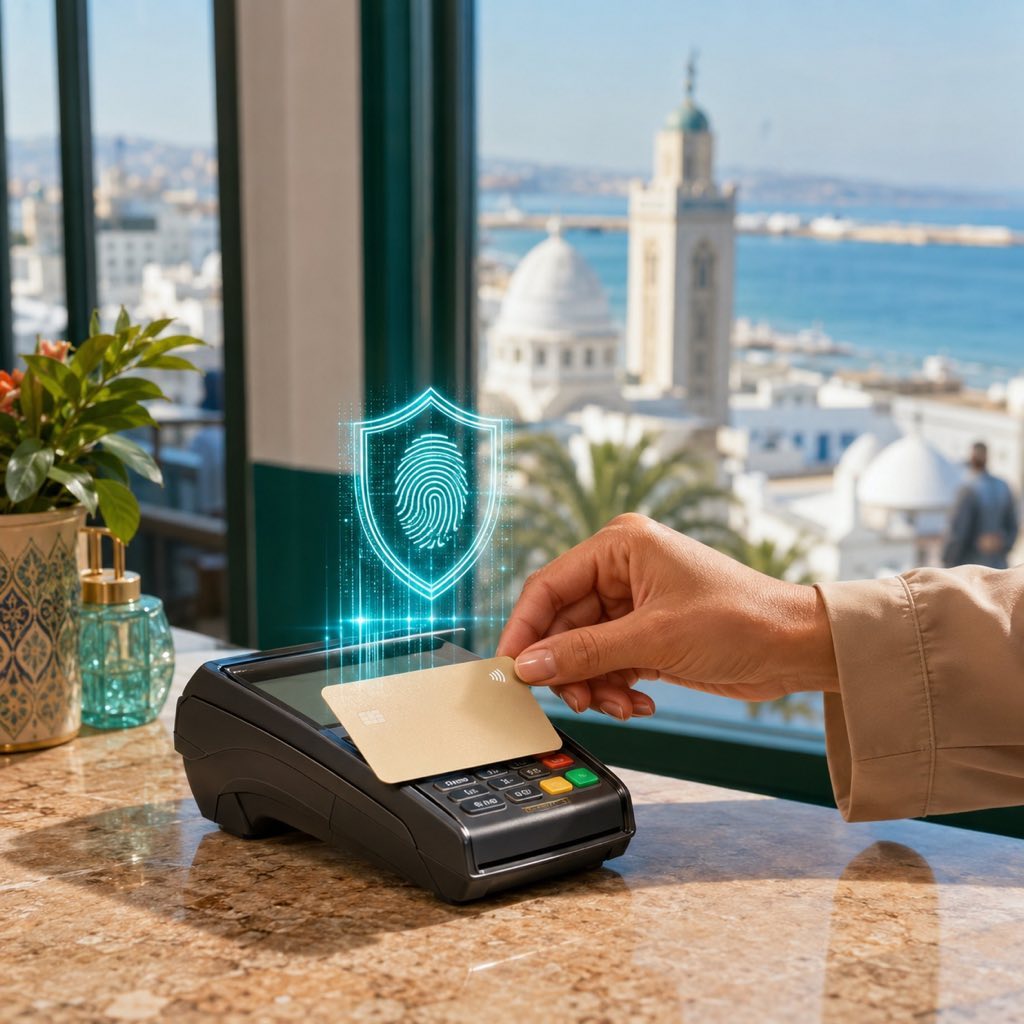
The third block is biometrics — using fingerprint or face verification to authenticate high-value or high-risk transactions, adding a factor that a stolen card number alone cannot satisfy. The fourth is open APIs and real-time connections, which let banks, fintechs and public services plug into the switch cleanly instead of building bespoke integrations. Together these four elements form a coherent trust layer: detection, protection, authentication and connectivity.
Advertisement
Why the Trust Layer Is the Real Growth Lever
It is tempting to treat SATIM as plumbing — necessary but unglamorous. The more accurate way to see it is as the confidence engine of the whole cashless transition. A merchant will only abandon cash if settlements are reliable and disputes are rare. A shopper will only store a card in an app if they believe the number cannot be siphoned. A fintech will only build on the rails if it can connect through a documented, stable interface.
Every hardening measure therefore compounds. When SATIM was designated by the Bank of Algeria as the national mobile switch, it took on responsibility for making mobile payments interoperable across banks — with the interoperability network expanding toward 15 banks in 2026. Tokenization makes that mobile layer safe to expand; AI fraud scoring keeps losses low as transaction counts climb into the tens of millions; open APIs let the ecosystem grow without each new entrant re-inventing the connection. The trust layer is what converts raw payment capacity into durable adoption.
What Algerian Banks, Merchants, and Fintechs Should Do
The switch is modernizing, but the benefits only land if the institutions around it move in step. Here is where banks, merchants and fintechs should focus.
1. Banks: Prioritize tokenized card provisioning and instant-payment onboarding now
Do not wait for a “big bang” migration. Banks connected to SATIM should sequence tokenization into their card-on-file and wallet flows first, because that is where credential exposure is highest and customer anxiety greatest. Pair it with onboarding to the interoperable instant-payment system so that account-to-account transfers settle in real time. The GIE Monétique data already shows P2P transfers and QR payments growing at double-digit rates; banks that make those flows both instant and tokenized will capture the users who are still testing whether digital payment is trustworthy. Treat security posture as an acquisition feature, not a compliance cost.
2. Merchants: Adopt terminals and web checkout, and advertise the protection
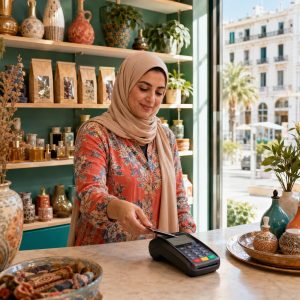
With the terminal fleet past 104,000 units but the majority of retailers still cash-only, the opportunity is in the un-equipped middle. Merchants should not just install a terminal or a payment gateway — they should surface the trust signals customers now look for: tokenized checkout, no card number stored on the merchant side, instant confirmation. A bakery or pharmacy that visibly accepts CIB cards and mobile payment removes friction for the 22 million cardholders who would rather not carry cash. The named action here is concrete: enrol with your acquiring bank, request a tokenized web-payment integration, and display accepted-payment badges at the point of sale.
3. Fintechs: Build on the open APIs instead of around them
The historical pattern in Algerian fintech was to route around gaps with custom integrations. The open-API direction changes that calculus. Fintechs should design products to consume SATIM’s real-time interfaces directly — instant transfers, tokenized card handling, mobile interoperability — rather than maintaining fragile bilateral links to individual banks. This is also the path that keeps a product license-ready: building on the sanctioned rails aligns with the Bank of Algeria’s payment-services framework. Don’t over-engineer a parallel switch; the leverage is in composing new experiences on top of a hardened shared backbone.
4. All three: Treat fraud analytics as a shared, not solo, discipline
AI fraud scoring at the switch level works best when institutions feed it clean signals and act on its alerts. Banks should integrate SATIM’s risk flags into their own authorization decisions; merchants should honour step-up authentication prompts even when they add a few seconds to checkout; fintechs should design flows that expect biometric or one-time-code challenges rather than treating them as edge cases. Fraud prevention is a network property — the switch provides the shared intelligence, but the members determine how much of it converts into actually-blocked losses.
The Bigger Picture
Algeria’s payment story is often told in headline numbers — 939 billion dinars, 22 million cards, 104,000 terminals. Those figures matter, but they describe the surface. What determines whether the cashless transition sticks is whether the underlying rails stay trustworthy as they scale, and that is precisely the work SATIM’s roadmap is doing: pushing fraud detection into real time, wrapping card credentials in tokens, adding biometric authentication, and opening the switch to an ecosystem through documented APIs.
The strategic lesson for the wider economy is that infrastructure investment in trust is not a cost centre — it is the precondition for growth. A country can hand out cards and install terminals quickly, but adoption only compounds when users, merchants and builders each conclude that the system is safe to rely on. If the modernization roadmap keeps pace with the volume — and 2025’s numbers suggest volume is arriving fast — Algeria’s interbank switch becomes not just plumbing but the confidence backbone of a genuinely digital economy. That is a modernization worth watching, and, for banks, merchants and fintechs, worth building on now.
Frequently Asked Questions
What is SATIM and what does it do?
SATIM (Société d’Automatisation des Transactions Interbancaires et de Monétique) is Algeria’s national interbank payment switch, created in 1995 and owned by the country’s banks. It is the single operator that connects card issuers, terminals, ATMs and e-commerce merchants, making a card from one bank usable across the whole network. The Bank of Algeria has also designated SATIM as the national mobile switch responsible for interoperable mobile payments.
How large is Algeria’s electronic payment market?
Electronic payments totalled 939 billion dinars in 2025, up 46% from 643.8 billion in 2024. Internet payments alone reached 145 billion dinars across roughly 27 million transactions. By end-March 2026 there were more than 22 million payment cards in circulation and over 104,000 point-of-sale terminals, though cash still dominates everyday retail — leaving substantial room to grow.
What is tokenization and why does it matter for payment security?
Tokenization replaces a card’s sensitive primary account number (PAN) with a surrogate “token” that has no value if stolen. It is the same technique that secures mobile wallets globally. For Algeria, layering tokenization onto SATIM’s rails means that even if a merchant or app is compromised, the real card credentials are never exposed — a core part of making stored-card and mobile payments safe to expand.
Sources & Further Reading
- Algérie : le montant des paiements électroniques s’est élevé à 939 milliards de dinars en 2025 (+46%) — Algérie Éco
- Algérie : le paiement électronique franchit le cap des 22 millions de cartes — We Are Tech Africa
- Algérie : le switch national de paiement SATIM, enjeux et perspectives pour l’inclusion financière — Fintech Policies
- SATIM — Société d’Automatisation des Transactions Interbancaires et de Monétique (site officiel)
- GIE Monétique — Groupement d’Intérêt Économique de la Monétique
- Digital Payment Services Regulation and Consumer Rights in Algeria — ALGERIATECH
🔗 Related Intelligence
From 95% COD to Digital Trust: How Algerian Platforms Are Shifting Payments
The COD Trap: Why Algeria’s Ecommerce Trust Problem Is a Logistics Problem Too

Algeria’s Digital Trust Law: What the eIDAS-Aligned Framework Means for Business
Algeria’s War on Cash: 939 Billion Dinars in E-Payments and the SoftPos Revolution Coming by 2028