The Postal Wallet That Became Algeria’s Default Payment Rail
One number reframes how cashless payment actually works in Algeria: according to figures presented by the Minister of Post and Telecommunications and reported by EcoTimes DZ, roughly 70% of all electronic payments tied to the Edahabia card now pass through the BaridiMob application — about 60 million transactions a year. The wallet has crossed 5 million subscribers, and it is pulling an ever-larger share of digital spending onto a single rail operated by Algerie Poste.
That concentration did not happen in isolation. The Edahabia card base itself has tripled in five years, rising from 5 million cards in 2020 to more than 15 million today. As the card spread, the app became the path of least resistance for using it: mobile top-ups, Algerie Telecom bills, water and electricity settlements, and account-to-account transfers all live inside one interface. For a growing slice of Algerian households, “paying digitally” and “opening BaridiMob” are now the same action.
For merchants, e-commerce operators, and fintech founders, this is the single most important structural fact in Algeria’s payment market. When one wallet carries the majority of a country’s card-linked digital volume, it stops being one channel among many and becomes the channel you design around. The question is no longer whether to accept BaridiMob-based payments — it is how quickly you can build your checkout, settlement, and loyalty logic around the rail that already reaches your customers.
Barid Pay and the 2026 Virtual-Card Roadmap
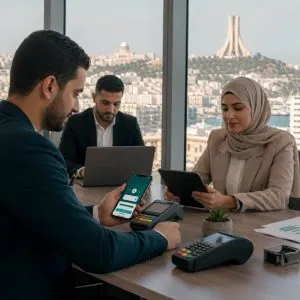
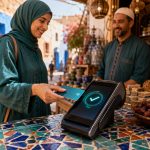
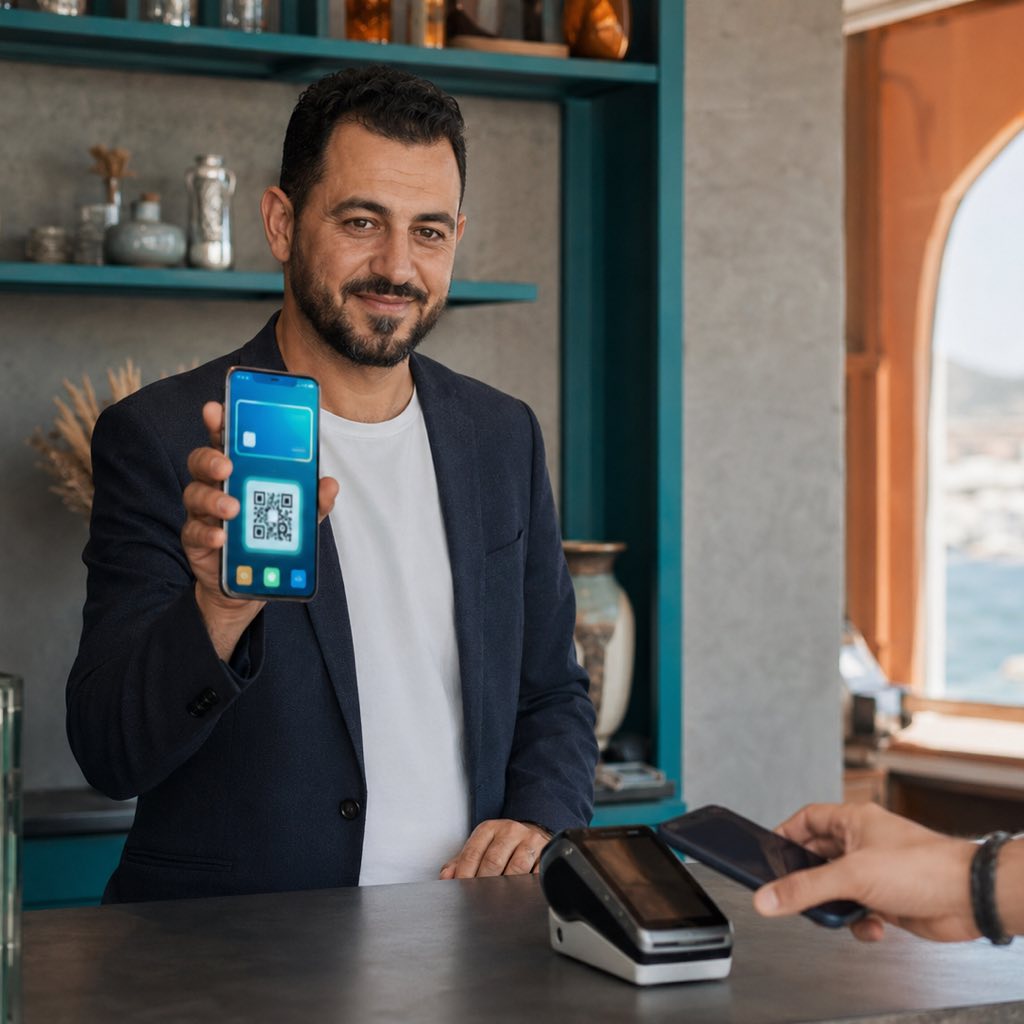
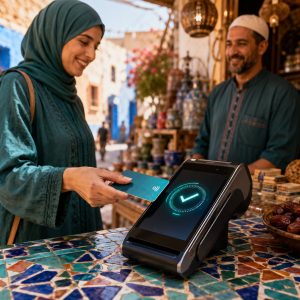
The consolidation is accelerating on two fronts. The first is Barid Pay, a QR-code payment service layered onto BaridiMob. As Observalgerie reported, a customer scans a QR code displayed at the merchant, then confirms the transaction with a code received by SMS; the merchant is credited immediately and notified in real time. Crucially, the buyer pays without physically presenting an Edahabia card and the merchant collects without a physical card terminal — the two frictions that have slowed in-store card acceptance for years. To use it, a customer needs a CCP account linked to an Edahabia card and a phone number registered with Algerie Poste.
The second front is a 2026 roadmap that turns the app into a full wallet. Speaking before the National People’s Assembly, the minister confirmed that BaridiMob will integrate, starting in 2026, a virtual payment card embedded directly in the app and a fully digital virtual POS terminal (TPE), alongside cashless merchant accounts. The framing was blunt: as L’Algérie Aujourd’hui reported, the minister said a merchant “will no longer have an excuse tied to the lack of a terminal, and the client can no longer be blocked by having forgotten their card — everything will be in the phone.”
Put together, Barid Pay plus the virtual card and virtual TPE describe a super-wallet: identity, card, terminal, and settlement collapsed into one mobile app. That is a meaningful upgrade in what a single piece of software can do at the point of sale, and it lands on a base that already dominates the market.
Advertisement
Why BaridiMob’s Concentration Reshapes the Merchant Landscape
The scale behind these features is real and growing. The minister has said that 150 million operations were carried out with the Edahabia card in 2025, and — per figures relayed by Algérie 360 — more than 8.8 million online purchases were recorded in April 2026 alone, plus over one million payments through physical card terminals in the same month. The trend line points one way: up and to the right, with the app absorbing most of the incremental volume.
Concentration cuts both ways for the ecosystem. On the upside, a dominant rail means merchants can reach a majority of digital payers by integrating with one platform rather than stitching together fragmented acceptance. Standardized QR acceptance — the same pattern popularized across emerging markets and described by Maghreb Émergent — lowers the hardware barrier that kept small shops on cash. A corner grocer who could never justify a POS terminal can now print a static QR code and start collecting digital payments the same day.
On the other side, a rail that carries 70% of card-linked volume raises the stakes on reliability and on where independent fintech players add value. Building a payment product in Algeria increasingly means building with the postal rail, not around it — and the smart move is to treat BaridiMob as core infrastructure and compete on the experiences layered on top: reconciliation, analytics, loyalty, and vertical checkout flows the base app does not specialize in.
What Merchants and Fintech Players Should Do About It
1. Register for Barid Pay before demanding a physical POS terminal
The old reflex — “I can’t accept cards because I don’t have a TPE” — is dissolving. Any merchant with a CCP account linked to an Edahabia card and a registered phone number can enable QR acceptance and be credited in real time, with SMS confirmation on the customer side. Do not wait for a hardware terminal that may take weeks to provision; start with a QR sticker at the counter and route customers through the flow they already use daily. For a small retailer, the first cashless sale can happen this week, not next quarter, and every early transaction builds the habit loop that keeps buyers returning to your checkout.
2. Design checkout flows around QR-plus-SMS, not the card swipe
The interaction model for Algerian in-store digital payment is now scan-then-confirm, not insert-and-PIN. Merchants and the developers building their point-of-sale software should optimize for that reality: a clearly displayed QR code, a fast confirmation screen, and a receipt tied to the immediate merchant notification. E-commerce operators should mirror it online with a BaridiMob-first checkout path rather than burying it behind a generic card form. The friction you remove is real — no forgotten card, no missing terminal — but only if the flow is built for QR from the start instead of bolted on as an afterthought.
3. Build loyalty, reconciliation, and settlement tooling on top of the rail
BaridiMob handles the payment; it does not handle your business logic. That gap is the opportunity for fintech founders. Around 60 million annual transactions flow through the rail, but the merchant-facing layer — daily reconciliation, multi-branch settlement views, loyalty points, subscription billing, refund workflows — is where independent products can win. Rather than trying to compete with a wallet that already owns 70% of volume, build the analytics and back-office tools that a national payment app cannot tailor to every vertical. The winning posture is complementary infrastructure, not a rival wallet.
4. Prepare now for the 2026 virtual-card and virtual-TPE rollout
The in-app virtual card and virtual POS are on a near-term timeline, so architect for them today. Merchants should plan for a world where any smartphone becomes an acceptance device — meaning your staff onboarding, fraud checks, and end-of-day settlement need to work without dedicated hardware. Fintech teams should design APIs and data models that assume a virtual TPE and virtual card exist, so integration is a configuration change rather than a rebuild when the features ship. Waiting until launch day to react means rebuilding under pressure; assuming the roadmap now means you flip a switch when it arrives.
Where This Fits in Algeria’s 2026 Cashless Push
BaridiMob’s rise is the clearest expression of a broader national shift toward digital payments — one that pairs a widening Edahabia card base with a mobile-first acceptance model designed for how Algerians actually transact. The super-wallet direction, folding card, terminal, and settlement into one app, is well matched to a market where smartphone penetration far outpaces legacy POS hardware, and where reaching customers through the app they already trust beats waiting for terminals to arrive.
For the ecosystem, the strategic reading is straightforward. A single dominant rail lowers the cost of reaching digital payers and raises the value of everything built on top of it. The merchants who move first — enabling QR acceptance, designing for scan-and-confirm, and planning around the 2026 virtual card — will compound an early advantage as volume keeps climbing from 60 million transactions a year toward the sector’s larger ambitions. The opportunity is not to out-scale the postal wallet; it is to become indispensable to the millions of transactions already flowing through it.
Frequently Asked Questions
What is Barid Pay and how does it work?
Barid Pay is a QR-code payment service inside the BaridiMob app launched by Algerie Poste. The customer scans a QR code displayed at the merchant, then validates the payment with a confirmation code received by SMS; the merchant is credited immediately. It lets buyers pay without physically presenting an Edahabia card and merchants collect without a physical card terminal. Users need a CCP account linked to an Edahabia card and a phone number registered with Algerie Poste.
How dominant is BaridiMob in Algeria’s digital payments?
According to figures from the Minister of Post and Telecommunications, about 70% of all electronic payments made with the Edahabia card now pass through BaridiMob — roughly 60 million transactions a year. The app has more than 5 million subscribers, and the Edahabia card base has tripled from 5 million cards in 2020 to over 15 million today, feeding steadily more volume onto the wallet.
What should Algerian merchants do to accept BaridiMob payments?
Merchants with a CCP account linked to an Edahabia card and a registered phone number can enable Barid Pay QR acceptance and be credited in real time — no physical POS terminal required. The practical first step is to display a QR code at the point of sale and route customers through the scan-and-confirm flow they already use. Businesses should also prepare for the 2026 virtual card and virtual POS features, which will let any smartphone act as an acceptance device.
Sources & Further Reading
- E-Paiement : 70% des transactions Edahabia via Baridi Mob — EcoTimes DZ
- Payer sans carte et encaisser sans TPE : la promesse d’Algérie Poste pour 2026 — L’Algérie Aujourd’hui
- Algérie Poste : le paiement par QR Code arrive — Observalgerie
- Algérie Poste : Zerrouki annonce de nouveaux services numériques — Algérie 360
- Paiement mobile par QR code via BaridiMob — Maghreb Émergent
🔗 Related Intelligence
BaridiMob and Edahabia Beat the Banks: Why Postal Rails Dominate Algeria’s Digital Payments Mix
Algeria’s 46% Payment Surge: How SMEs Can Capture the Digital Revenue Wave
From 95% COD to Digital Trust: How Algerian Platforms Are Shifting Payments
Algeria’s 22 Million Payment Cards, 104K POS & 46% Surge: The Fintech Runway Mapped