The Power Base Algeria’s Cloud Story Has Been Waiting For
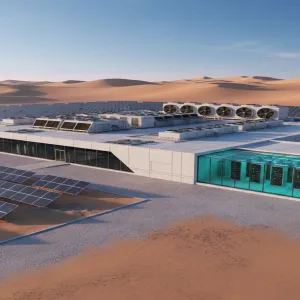
For Algerian data center investors, cloud-platform builders, and enterprise IT teams sketching multi-megawatt facilities, the single most important variable has always been the grid. Capex models, leasing offers, hyperscale partnerships, and sovereign-cloud roadmaps all depend on one question: can the national grid deliver clean, monitored, contractually firm power at the scale a modern data hall needs?
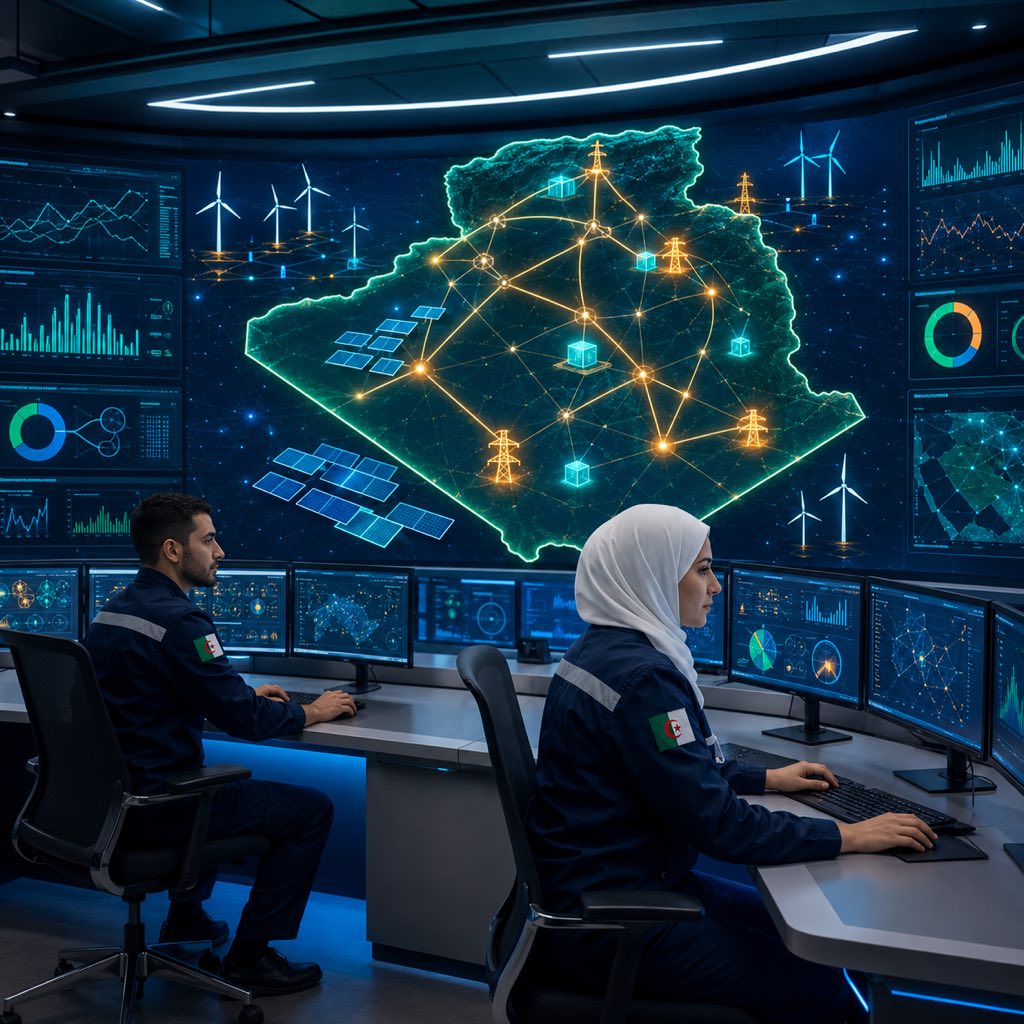
The answer in 2026 is shifting decisively. According to the Ecofin Agency’s coverage of Energy Minister Mourad Adjal’s announcement, Sonelgaz will overhaul the national electricity monitoring and control system — the SCADA backbone that supervises generation, transmission, and dispatch across the country — starting in 2026. The work covers modernized communication equipment, upgraded regional control centers, and tighter real-time visibility into how electricity flows from plants to industrial customers and substations.
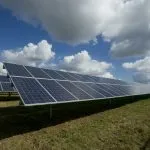
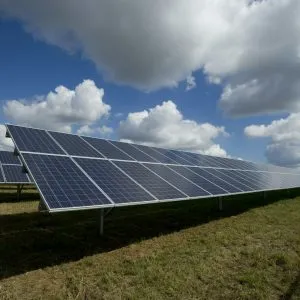
That control-system upgrade is one of three power-side changes converging this year. ESI-Africa reports that nine photovoltaic power plants totaling 1,480 MW are scheduled to come online by August 2026, contributing to the first phase of a national programme targeting 3,200 MW of renewable capacity. In parallel, the long-awaited 1,260 MW Djelfa combined-cycle gas plant is on the same August commissioning track, finally clearing a multi-year construction reset that Sonelgaz had taken through international arbitration. Three power milestones — modernized control, large solar, large dispatchable gas — landing inside the same calendar window is the kind of step-change that data center planners can actually underwrite.
What the National Electricity Control System Overhaul Actually Changes
A SCADA overhaul sounds abstract until you map it to data center contracts. Hyperscale and colocation tenants do not buy raw megawatts — they buy a service-level commitment around availability, reactive power quality, and operator visibility. Each of those depends on how well the utility can see and steer its own grid in real time.
The 2026 programme upgrades the digital nerve system that Sonelgaz uses to dispatch power across Algeria’s expanding generation fleet. Modernizing the communication equipment between regional control centers and the national dispatch room means faster fault localization, finer-grained load balancing as new solar plants come online intermittently, and better coordination between traditional gas generation and the new variable renewables. Minister Adjal framed the goal as improving “the public electricity service” — and for industrial buyers, “service” is exactly the right word.
For data center planners, that translates into three concrete things. First, more deterministic power quality at substation level, which lowers the design margin needed on UPS and battery sizing. Second, better Sonelgaz capacity to honor firm-power commitments to large industrial customers as the generation mix diversifies. Third, a credible grid-modernization narrative that investors, hyperscale partners, and sovereign-cloud customers can reference when underwriting Algerian sites against alternatives elsewhere on the continent.
1,480 MW of Solar Plus a 1,260 MW Gas Plant: The Capacity Story
The control-system upgrade matters more because it lands alongside real capacity additions. The nine-plant solar wave coming online by August 2026 represents the largest single-year renewable rollout in Algerian history, more than tripling the country’s installed photovoltaic base from the roughly 436.8 MW reported by pv magazine in late 2024. Two of the plants alone — at 200 MW each — are sized in the range that international colocation operators would consider as anchor renewable PPAs.
The Djelfa combined-cycle plant adds 1,260 MW of dispatchable, firm capacity. Combined-cycle gas remains the workhorse for any grid that wants to layer in solar without compromising reliability — it is the dispatchable baseload that keeps 24/7 data halls online when irradiance dips. The Spanish contractor’s original construction had stalled, Sonelgaz won an arbitration award, and the 2026 retender brings the plant back on the August commissioning calendar. Together, the solar wave and Djelfa add roughly 2.74 GW of new capacity to the national grid in a single year — a meaningful inflection point for an industrial-power planner who has historically modeled Algeria as supply-constrained.
That capacity story sits inside a broader continental context. The African Energy Chamber notes that Africa’s data center footprint needs roughly 2 GW of dedicated power capacity by 2030 across a market growing at 11.79% CAGR to USD 6.81 billion. Africa hosts 223 data centers across 38 countries as of mid-2025 — South Africa leads with 56, Kenya with 19, Nigeria with 17 — and North Africa is the next inflection zone. Algeria entering that conversation with a modernized control system, large new solar, and firm dispatchable gas is materially different from Algeria entering it with capacity rumors and headline-only megaprojects.
Advertisement
What This Means for Cloud Builders and Multi-Megawatt Data Hall Plans
For the audience that actually has to make build-or-wait decisions — data center developers, sovereign-cloud platform leads, telco infrastructure teams, and enterprise CIOs sizing private regional facilities — the 2026 power story translates into a planning opportunity rather than a constraint. The capex math that previously penciled Algeria as a “watch only” market starts to pencil differently when grid visibility, solar PPAs, and firm gas capacity are all visibly maturing in the same year.
The opportunity is also a timing window. Power-side projects compress fast: solar plants commission, gas plants enter dispatch, control systems go live, and the contractual frameworks around firm power and PPAs settle within a 12-18 month cycle. Operators who use this window to lock substation positions, file early connection requests, and pre-negotiate clean-power blends will be on the inside curve when hyperscale and regional cloud demand crystallizes. Operators who wait will be queuing for capacity behind those who moved early.
What data center investors and cloud operators should do
1. Pre-position substation connection requests against the 2026 grid map, not the 2024 one
The Sonelgaz control-system overhaul, the Djelfa 1,260 MW plant, and the 1,480 MW solar fleet redraw which substations have firm headroom and which are still constrained. Site-selection work done against an older grid model will quietly anchor your project to the wrong substation. Re-run substation availability analysis using the post-August 2026 capacity baseline before you commit to a parcel. Ask Sonelgaz formally for a power availability letter referencing the 2026 commissioning plan, not generic “future capacity.” Operators who submitted connection requests early into the Constantine and Oran corridors have already locked anchor positions; the 2026 window opens equivalent positioning around Djelfa-adjacent industrial zones and the substations downstream of the new solar plants. Treat the next two quarters as a substation-mapping exercise, not a passive wait.
2. Negotiate firm-power plus solar PPA blends now — single-source procurement is the wrong frame
The combined arrival of 1,260 MW of dispatchable gas and 1,480 MW of solar gives Sonelgaz commercial flexibility it didn’t have a year ago. Multi-megawatt data center tenants should structure power procurement as a blend: a firm-power contract anchored on combined-cycle capacity, layered with a solar-PPA component sized to your sustainability commitments. This mirrors the Africa Data Centres and Distributed Power Africa solar pairing in South Africa, where a 12 MW solar farm sits alongside firm grid power. The single-source procurement frame — either all grid or all solar — leaves both reliability margin and ESG positioning on the table. Open the conversation with CREG and Sonelgaz commercial teams referencing both the renewable PPA framework and the firm dispatchable capacity that Djelfa unlocks. The blended structure is what hyperscale and sovereign-cloud customers expect.
3. Build the operational telemetry that proves your facility runs on a modernized grid
A modernized SCADA backbone is only useful to your customers if you can prove how your facility consumes its output. Specify telemetry contracts with Sonelgaz that give you real-time visibility into substation feeder quality, frequency stability, and the renewable-versus-thermal mix powering your inbound feed. Build that telemetry into your customer-facing dashboards — colocation tenants, sovereign-cloud customers, and ESG-reporting enterprises increasingly want the same observability for power that they already have for compute. The 2026 control-system upgrade gives you raw signal; turning that signal into a marketable operational data layer is what differentiates a data hall plugged into a modernized grid from one merely co-located near one. Engineers should start scoping the integration architecture now so it is ready for day-one customer onboarding.
The Infrastructure Window Now Open
The three power milestones converging on August 2026 — the SCADA overhaul, 1,480 MW of solar, and 1,260 MW of dispatchable gas at Djelfa — are not isolated press releases. Read together, they form a coherent build-out signal: Sonelgaz is upgrading the grid’s visibility, expanding its generation mix, and adding firm capacity inside a single 12-month window. For Algerian data center operators, cloud platform teams, and the enterprise IT leaders sizing the next wave of regional facilities, that is the planning baseline that the market has been waiting on.
The window is open now, but it is also competitive. Africa’s data center market is heading toward USD 6.81 billion by 2030 with the next 2 GW of capacity already in pipeline conversations across the continent. Algerian operators who pre-position substation positions, lock blended firm-plus-solar PPAs, and build telemetry hooks into the modernized grid will be the ones who convert the 2026 power inflection into multi-megawatt projects on the ground. The next chapter of Algeria’s cloud story does not depend on whether the power is coming — it is coming. It depends on which operators are ready to plug into it.
Frequently Asked Questions
Q: What is Sonelgaz’s 2026 electricity control system overhaul, and why does it matter for data centers?
Sonelgaz is modernizing Algeria’s national SCADA (Supervisory Control and Data Acquisition) infrastructure — the digital system that supervises generation, transmission, and dispatch across the grid. Energy Minister Mourad Adjal announced the project in late 2025 and work begins in 2026, covering upgraded communication equipment and modernized regional control centers. For data center operators, the upgrade matters because it improves real-time grid visibility, lowers the design margin needed on backup systems, and strengthens Sonelgaz’s ability to honor firm-power commitments — all prerequisites for hyperscale and colocation contracts.
Q: How much new generation capacity is Algeria adding in 2026?
By August 2026, Algeria expects to commission roughly 2.74 GW of new capacity: 1,480 MW from nine photovoltaic plants (with two 200 MW anchor solar projects), plus 1,260 MW from the long-delayed Djelfa combined-cycle gas plant. The solar wave is part of a first-phase national programme targeting 3,200 MW of renewables, and Djelfa adds firm dispatchable baseload to balance the new variable solar. Together, this is the largest single-year capacity addition in recent Algerian power history.
Q: What should data center investors and cloud operators do in the next six months?
Three priority actions: (1) re-run substation connection analysis against the post-August 2026 grid map, not the 2024 one, and request formal power-availability letters from Sonelgaz that reference the 2026 commissioning calendar; (2) negotiate blended firm-power plus solar-PPA contracts rather than single-source procurement, in conversation with CREG and Sonelgaz commercial teams; (3) scope the operational telemetry that turns the modernized SCADA signal into customer-facing observability for colocation tenants and sovereign-cloud customers.
Sources & Further Reading
- Algeria Plans 2026 Overhaul of National Electricity Control System — Ecofin Agency
- Algeria to Commission 1.48 GW of Solar Capacity by August — ESI-Africa
- Data Centers Could Be the Spark Africa’s Power Sector Needs — African Energy Chamber
- Algeria’s PV Capacity Tops 436.8 MW — pv magazine
- Algeria: 1,480 MW of Solar Plants Expected in 2026 — Now Solar
🔗 Related Intelligence

Algeria’s 1.48 GW Solar Wave: What It Means for Data Center Power Supply

Algeria Data Centers: Solar PPAs as the Backbone of a Clean Cloud Strategy
Algeria’s 1,480MW Solar Push: Nine Plants Powering the Digital Economy

Algeria’s Gas Advantage: Powering the AI Data Center Boom in Africa