Why Medusa Changes the Calculus for Algerian Enterprises
For nearly a decade, Algeria’s international connectivity bottleneck was one of the most stubborn constraints on cloud adoption. Enterprises running latency-sensitive workloads — financial trading systems, video conferencing at scale, real-time ERP synchronization — faced a hard ceiling imposed by the country’s five existing submarine cables and a total installed capacity of 10.2 terabits per second, of which 5,390 Gbps was already actively utilized.
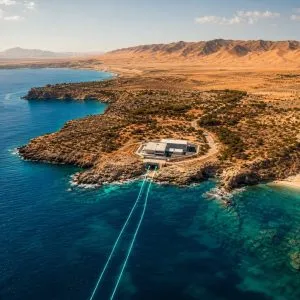
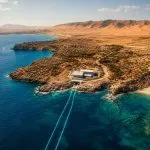
That ceiling is about to lift. According to reporting by Ecofina Agency, the Medusa project — announced formally by Minister of Posts and Telecommunications Sid Ali Zerrougui in December 2025 — will deliver up to 20 Tbps per fiber pair in its first phase alone, with the system supporting up to 24 fiber pairs at full build-out. The cable is scheduled for first-phase completion in 2026.
When combined with the Africa-1 cable (adding an estimated 200–300 Gbps), Algeria’s sub-sea bandwidth portfolio will expand dramatically in a single year. For CTOs and IT directors, this is not simply a telecom procurement story — it is a structural shift in what cloud architectures become economically viable.
Historically, enterprises in Algeria relying on hyperscaler regions in Europe (Paris, Frankfurt, London) faced round-trip latencies of 40–70 ms on good days, spiking unpredictably during cable congestion events. Multi-cloud strategies were theoretically sound but practically constrained: cross-region data replication, failover to European zones, and content delivery at scale were all compromised by limited international bandwidth. Medusa fundamentally rewrites those constraints.
The Current Connectivity Landscape and Its Gaps
Algeria currently operates across five submarine cables: TE North/TGN-Eurasia/SEACOM/Alexandros/Medex, SeaMeWe-4, the Oran-Valencia link, Med Cable Network, and Alpal-2. These cables were engineered for an era of voice and early broadband traffic — not petabyte-scale cloud workloads or AI inference at the edge.
The structural problem is not just total capacity but concentration. Multiple cables share overlapping geographic routes and termination points, which means that a single fault event — a ship anchor drag, a seismic incident — can simultaneously degrade multiple links. Algeria’s enterprise sector has experienced exactly this: corridor-level outages that simultaneously affected multiple cables, forcing businesses to throttle cloud workloads for hours or days.
Algeria Telecom, which is concurrently rolling out 5G fixed wireless access (5G FWA) targeting a 2027 residential launch as ordered by the minister, has been working to expand national fiber coverage. The country currently counts 2.9 million fiber optic subscribers — expected to surpass 3 million shortly — against a backdrop of 6.82 million total fixed internet subscribers as of September 2025. The upstream international bandwidth that Medusa provides is the logical complement to this domestic fiber buildout: high-speed domestic fiber to homes and businesses is only as useful as the international gateway capacity behind it.
For the enterprise segment, this gap between domestic capability and international throughput has forced awkward workarounds: private MPLS circuits to European hubs, expensive dedicated leased lines, or simply accepting degraded cloud performance as the cost of doing business in Algiers.
Advertisement
What This Means for Algerian CTOs and IT Directors
1. Front-load your cloud migration planning for H2 2026
The window between Medusa’s go-live and the market’s full repricing of transit capacity is where early movers win. International bandwidth pricing in Algeria, like in most emerging markets, follows a predictable arc: high prices before new cables, a lag of six to eighteen months post-activation as ISPs and transit operators renegotiate peering agreements, then a structural price drop.
Enterprises that have already conducted a workload assessment — identifying which applications are latency-sensitive, which are bandwidth-intensive, and which are currently bottlenecked by international connectivity — will be positioned to migrate workloads and renegotiate cloud commitments in that repricing window. Organizations that start the assessment after Medusa goes live will spend six to twelve months simply catching up on internal planning before they see any benefit.
Practical starting point: Map every business-critical application against its current measured latency to the nearest hyperscaler region (typically Google Cloud europe-west9 in Paris or AWS eu-west-3). Applications with latency above 80ms round-trip are primary candidates for architecture review. Applications with latency between 40–80ms should be reassessed once Medusa’s actual performance characteristics are published by transit operators.
2. Negotiate cloud contracts with bandwidth expansion clauses, not fixed tiers
Most enterprise cloud contracts signed before 2025 in Algeria were structured around conservative bandwidth assumptions. Data egress charges, inter-region transfer fees, and committed use discounts were all sized to a world where 10.2 Tbps was Algeria’s effective ceiling.
With Medusa entering service, enterprises should be inserting bandwidth expansion clauses into new cloud contract renewals — provisions that allow workload scaling without re-triggering full commitment reviews. This is particularly important for AWS, Azure, and Google Cloud customers who have negotiated enterprise discount programs (EDPs or CUDs): those agreements may implicitly cap inter-region data transfer in ways that become disadvantageous once Medusa reduces the cost of moving data internationally.
Legal and procurement teams should flag this now. The negotiation leverage shifts slightly toward buyers in bandwidth-abundant environments, and organizations with upcoming contract renewals in Q3–Q4 2026 should time those negotiations to coincide with — or just after — Medusa’s confirmed go-live.
3. Redesign disaster recovery architectures around cross-Mediterranean failover
Algeria’s current DR strategies are largely constrained to domestic replicas or expensive, high-latency European failover with long recovery time objectives. Medusa changes the math on active-active architectures across the Mediterranean corridor.
With 20 Tbps per fiber pair available, synchronous database replication to European cloud regions becomes viable for workloads that previously could only afford asynchronous replication due to latency constraints. This means recovery point objectives (RPOs) that were previously measured in hours can be redesigned toward minutes or seconds — a critical improvement for financial services, healthcare, and government digital services.
The redesign is not free: it requires application refactoring, updated runbooks, and coordination with cloud providers on region-specific SLAs. But it is achievable for the first time in Algeria’s infrastructure history, and organizations that implement it will have a genuine business resilience advantage over those still operating on pre-Medusa DR models.
The Structural Lesson: Infrastructure Windows Don’t Repeat
Algeria’s submarine cable history offers a cautionary counterpoint: the Oran-Valencia cable came online in 2012, and many enterprises spent three to four years after activation before adjusting their connectivity and cloud strategies to take advantage of the new capacity. In that interval, transit pricing dropped but architectural inertia kept many businesses on expensive MPLS circuits and low-bandwidth cloud tiers.
Medusa represents a larger and more consequential upgrade than any previous Algerian submarine infrastructure event. The 20 Tbps per fiber pair figure is not incremental — it is transformational relative to the baseline. But transformation requires intentional planning. The infrastructure window opens in 2026; the organizational window to exploit it is smaller, and organizations that miss it will face rising demand for cloud-connected talent and bandwidth-optimized applications in a market where their competitors have already retooled.
For enterprise IT leadership, the question is not whether Medusa will change Algeria’s connectivity landscape. It will. The question is whether your architecture, your contracts, and your team’s skills are positioned to capture that change before it becomes table stakes.
Frequently Asked Questions
What is the Medusa submarine cable and how does it affect Algeria’s connectivity?
The Medusa submarine cable is a new undersea fiber-optic system scheduled to enter service in Algeria in 2026. Its first phase will deliver up to 20 terabits per second per fiber pair, compared to Algeria’s current total installed sub-sea capacity of 10.2 Tbps across five existing cables. This expansion will significantly reduce international bandwidth constraints that have limited cloud adoption for Algerian enterprises.
When will enterprises in Algeria see lower cloud transit costs following Medusa’s activation?
Based on historical patterns from comparable submarine cable activations, transit pricing typically lags the physical go-live by six to eighteen months as ISPs and transit operators renegotiate peering agreements. Enterprises in Algeria should expect meaningful cost reductions to materialize in late 2026 or early 2027 — making H2 2026 the optimal window to negotiate cloud contracts with bandwidth expansion clauses.
Which types of enterprise workloads benefit most from Medusa’s added capacity?
Latency-sensitive workloads are the primary beneficiaries: real-time ERP systems, financial transaction processing, video conferencing platforms, and synchronous database replication for disaster recovery. Applications that previously relied on asynchronous replication to European cloud regions — accepting high recovery point objectives due to bandwidth constraints — can be redesigned for near-real-time RPOs once Medusa’s per-fiber-pair throughput is available.
Sources & Further Reading
- Algeria Announces New Undersea Cable Link to Meet Soaring Data Demand — Ecofina Agency
- Medusa Submarine Cable to Expand National Internet Connectivity — DispatchRisk
- Modernizing 5G Wireless Home Internet Service in Algeria — TeleinfoToday
- Medusa Project to Bridge North Africa with 8.7K Submarine Cable — SubTelForum
- Data Centre Delivery Constraints: Enterprise Cloud Strategy in 2026 — CloudComputing-News
🔗 Related Intelligence

Medusa Subsea Cable: Algeria’s International Bandwidth Upgrade and What It Means for Cloud

Algeria Dual Cable Moment: How Medusa and Africa-1 Transform Enterprise Connectivity in 2026

Medusa Lands in Algeria: The 480 Tbps Mediterranean Backbone Arrives
The Medusa Submarine Cable: How a EUR 342 Million Mediterranean Mega-Project Is Reshaping Algeria’s Connectivity