A Landmark Workforce Target in Motion
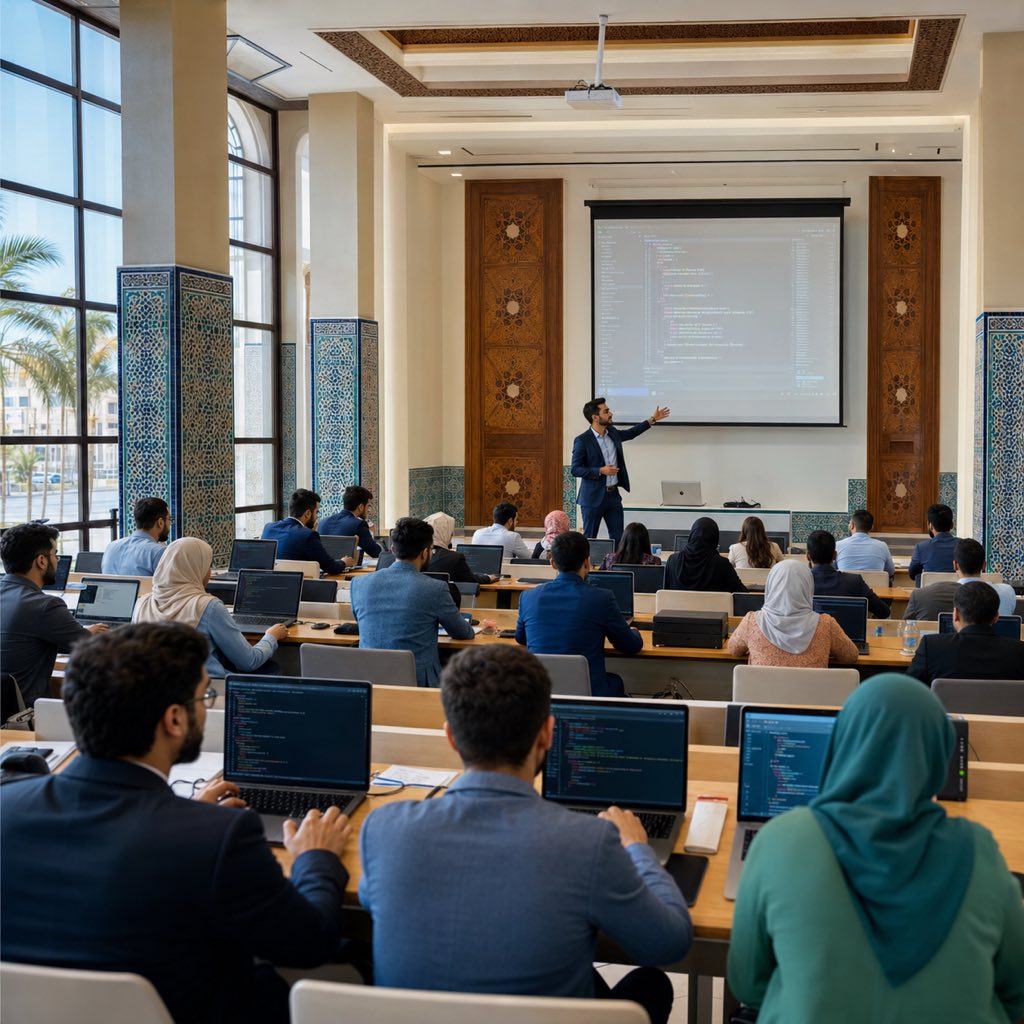
On January 15, 2026, the train-the-trainers phase of Algeria’s national ICT program launched at the El Rahmania National Specialized Vocational Training Institute in Algiers. Minister of Vocational Training Nacima Arhab and Minister of Knowledge Economy, Startups and Micro-Enterprises Noureddine Ouadah presided over an initiative that, in scale and ambition, has few precedents in the region. Tech Review Africa’s coverage of the launch described the program as the country’s most direct policy instrument for closing the skills gap between vocational training outputs and private-sector digital hiring demand.
The headline figure — 500,000 ICT specialists to be trained — is a long-range target, with a 2030 horizon and near-term milestones anchored on AI. The government’s projection that AI will contribute nearly 7% of GDP by 2027 transforms what could be read as aspirational into something more precise: a fiscal bet that the workforce investment will translate into measurable economic output within three years.
What makes this program operationally distinct from prior digital training announcements is its design. The 12-week cycle — eight weeks of intensive instruction, four weeks of applied project work with actual startups — closes the gap between curriculum and employment that has made traditional vocational training chronically misaligned with industry needs.
The Program’s Architecture and What It Produces
The program is built on four structural pillars that determine its output quality and scalability:
Pillar 1: Train-the-Trainers, Not Just Learners
The January 15, 2026 launch was explicitly a trainer-preparation phase, not a student intake. By building instructor capacity first, the program avoids the bottleneck that collapses most large-scale training initiatives: a shortage of qualified educators creates a ceiling that no amount of infrastructure investment can overcome. The train-the-trainers model means the program can scale cohort intake as trained instructors multiply — a compounding effect that accelerates toward the 500,000 target without proportional cost growth.
Pillar 2: Real-World Project Weeks with Startups
The four-week project component is not a capstone exercise — it is a structured placement in which trainees work on real business problems for operating startups. Ecofin Agency’s reporting on the program describes trainees working with “the latest artificial intelligence tools and models” on live cases. For employers, this component functions as a low-cost extended interview: startups that participate in the project weeks get 28 days to evaluate candidates before making any hiring decision. Tech founders in Algiers should be reaching out to the El Rahmania institute to register as project-week partners now.
Pillar 3: Business Incubation Embedded at the Institute
A business incubator opened at the El Rahmania institute concurrent with the program launch. This is architecturally significant: it converts the training institute from a throughput mechanism into a startup formation node. Graduates who complete the 12-week program with a viable product idea have immediate access to incubation support — advisors, workspace, and connections to Algeria’s growing venture ecosystem. The proximity of training and incubation creates a formation loop that other regional programs lack.
Pillar 4: Multi-Ministry Coordination
The program sits at the intersection of the Ministry of Vocational Training and the Ministry of Knowledge Economy, Startups and Micro-Enterprises. Dual-ministry ownership reduces the risk of program de-prioritization under budget cycles — it has two political sponsors, not one. It also means that the Huawei-Algeria partnership for vocational ICT modernization (covering cloud computing, cybersecurity, and AI through a three-protocol memorandum) feeds directly into the national program’s infrastructure, rather than operating as a parallel track.
Advertisement
What Algerian Employers and Training Providers Should Do Now
1. Register as a Project-Week Employer Partner Before Cohorts Fill
The four-week project placement is structured as a partnership between the institute and participating employers. Slots are finite per cohort. Algerian tech companies and startups that register early gain selection priority and the ability to shape the project briefs — meaning trainees work on problems directly relevant to the company’s roadmap. The cost is near-zero: companies provide a workspace, a mentor, and a problem statement. The return is 28 days of evaluated talent and first-mover hiring rights to the graduates they select.
2. Map Your 2027 Hiring Pipeline to Program Cohort Timelines
If the program runs quarterly 12-week cohorts from January 2026, the first meaningful graduate cohort at scale emerges in mid-to-late 2026. Companies with 2027 headcount plans for AI engineers, cloud specialists, or cybersecurity analysts should model against cohort graduation timelines now. An Algerian tech enterprise with a 2027 target of hiring 20 digital specialists should have its program partnership established by Q3 2026 to access the right cohort depth.
3. Offer Specialized Certification Partnerships
The program’s scope — AI, cloud, and cybersecurity — aligns with the certification tracks offered by global vendors (AWS Certified Cloud Practitioner, Microsoft Azure Fundamentals, CompTIA Security+). Algerian training providers and local HR advisory firms that position themselves as bridge institutions — helping program graduates convert their coursework into globally-recognized certifications — fill a gap the government program deliberately leaves open. The government builds foundational skills; the market can monetize the certification layer.
The Bigger Picture: Policy Coherence and Market Timing
The 500,000 ICT specialist program does not exist in isolation. It sits within a policy stack that includes:
- The National Artificial Intelligence Strategy (adopted December 2024), which identified talent development as a primary pillar among six strategic axes
- The Algérie Télécom 1.5 billion dinar ($11 million) AI and robotics startup fund (2025), which creates demand for the graduates this program produces
- The January 2026 presidential decree No. 26-07 mandating cybersecurity structures in all public institutions — creating immediate employer demand for the cybersecurity graduates from the program
This policy coherence — workforce supply, startup funding, and institutional demand aligned within 13 months — is unusual and deliberately designed. It means the program is not building talent for an abstract future market; it is addressing a documented skills shortage with a real fiscal deadline. Algeria’s broader digital transformation roadmap has set over 500 projects for completion between 2025 and 2026 across all sectors — the ICT specialist program is the human capital layer that makes those projects executable.
For private-sector training providers and EdTech companies, the window to position as government-complementary (rather than government-competing) is the next 12-18 months, while cohort structures are still being established and the government’s bandwidth for private-sector partnerships remains open. Companies that wait until the program has placed its first 50,000 graduates will find the strategic partnership slots occupied.
Frequently Asked Questions
Who is eligible to participate in Algeria’s 500,000 ICT training program?
The program is primarily targeted at vocational training institute students and early-career individuals seeking skills in AI, cloud computing, and cybersecurity. The train-the-trainers launch in January 2026 built instructor capacity across Algeria’s vocational network, meaning delivery is expanding to institutes beyond El Rahmania in Algiers. Specific eligibility criteria for each cohort are set by the Ministry of Vocational Training; prospective students should contact their nearest national specialized vocational training institute.
How does the 12-week program compare to university degree programs in ICT?
The 12-week program is explicitly designed for rapid workforce insertion, not academic credentials. It prioritizes hands-on AI tool usage, project-based learning with startups, and job-readiness over theoretical depth. University degree programs (3-5 years) provide broader foundations and are required for senior technical and research roles. The two tracks are complementary: the vocational program feeds entry-level and mid-level roles that currently have high vacancy rates; university graduates fill specialist and architect roles. Employers benefit from both pipelines.
What should private training companies do to align with this national program?
Private training providers should position their offerings as the certification layer above the government program’s foundational skills. The national program does not lead to globally-recognized vendor certifications (AWS, Microsoft, Google, CompTIA). A private provider that offers affordable certification preparation tracks — specifically designed for program graduates — can serve thousands of candidates annually. Formal partnership agreements with the Ministry of Vocational Training, even non-financial ones, provide credibility signals that accelerate student enrollment.
Sources & Further Reading
- Algeria Launches National AI Training Program to Build Digital Skills — Ecofin Agency
- Algeria Launches National AI Training Programme — Middle East AI News
- Algeria’s Ambitious Digital Transformation Plan: 500+ Projects for 2025-2026 — MeatechWatch
- Algeria and Huawei Forge Strategic Partnership to Modernize Vocational Training — SAMENA Council
- Why Algeria Is Positioned to Become North Africa’s AI Leader — New Lines Institute
- Algeria Launches AI Training Programme to Enhance Digital Skills — Tech Review Africa
🔗 Related Intelligence
500,000 ICT Specialists by 2030: Algeria’s Workforce Scaling Plan

From 7 to 77: Inside Algeria’s ‘77.7’ National Digital Empowerment Programme

Algeria’s Digital Freelance Economy: How Tech Talent Is Plugging Into Global Gig Platforms in 2026

DeepX Summit: How Algiers Became MENA’s First DeepTech Venture Factory