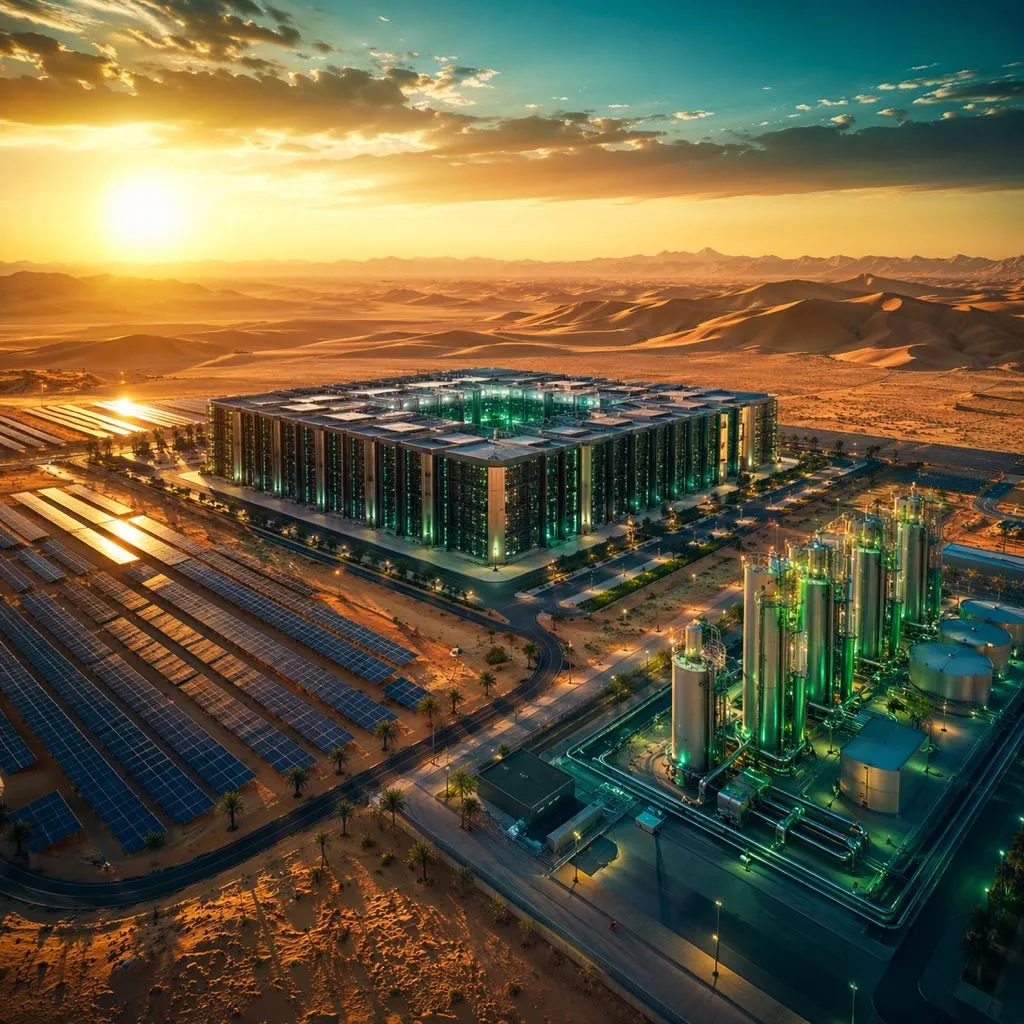
Two Infrastructure Curves That Now Bend Toward Each Other
Two large infrastructure bets are being made at the same time, one inside Algeria and one across global data center markets. Inside Algeria, the National Hydrogen Strategy introduced in March 2023 targets 40 TWh of hydrogen and derivatives annually by 2040, with roughly 10 TWh for domestic use and 30 TWh for export — enough to supply about 10 percent of Europe’s projected hydrogen demand. Enerdata values the national plan at around $25 billion with a 1 Mt/year export ambition by 2040.
Across global data center markets, AI workloads are forcing a different curve. Bloom Energy has announced more than 1 GW of fuel cell orders tied to AI data centers, including a $5 billion partnership with Brookfield and a 1 GW agreement with American Electric Power. The reason is simple: on-site solid oxide fuel cells can be deployed in about 90 days versus 18–24 months for new grid hookups, and they run on natural gas today with a path to hydrogen tomorrow.
Algeria sits at the intersection of both curves. It has the sun, the gas, the electrolysis ambitions, and a government strategy that already commits to the front half of the stack. The question is whether the back half — fuel-cell-powered data centers co-located with hydrogen production — gets built alongside it.
What the Pairing Actually Looks Like
The physical architecture is less exotic than it sounds:
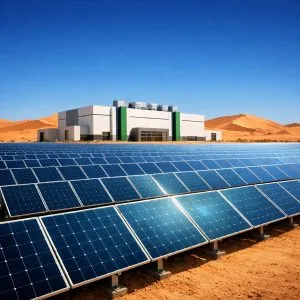
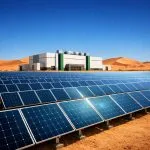
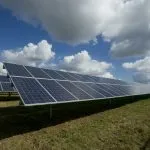
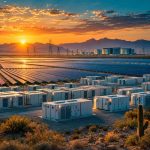
- Solar and wind farms in the Hauts Plateaux or deep Sahara feed electrolyzers that split water into green hydrogen. Algeria is already accelerating solar deployment with 3,200 MW of new capacity targeted by late 2026, and a 50 MW green hydrogen pilot is planned in Arzew with KfW financing.
- Hydrogen storage and a dedicated pipeline spur move the gas to an industrial zone that becomes the anchor site for one or more modular data centers.
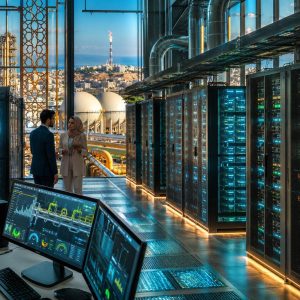
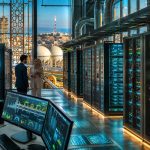
- On-site fuel cells — SOFCs or PEM stacks sized at 10–100 MW — convert hydrogen into electricity directly for the data center, bypassing the public grid and its queue times.
- Waste heat capture from fuel cells can supply district heating for co-located industrial tenants, improving total system efficiency.
This is the same pattern being built at scale outside Algeria. ECL is advancing hydrogen-powered data center designs, starting with blue hydrogen and transitioning to green. Bloom’s data-center-specific product line already delivers that form factor commercially. For Algeria, the twist is that the fuel can be produced a few kilometers from the load rather than shipped in — a material advantage on both unit economics and carbon intensity.
Advertisement
Why Algeria Has an Unusually Strong Position
Three factors combine into a rare window:
- Renewable supply density. Algeria sits in one of the world’s highest solar irradiance zones. The Sahara can host utility-scale PV and wind hybrids at levelized costs that are competitive globally — particularly for electrolysis workloads that can tolerate variability.
- Existing gas corridor. The SoutH2 Corridor pipeline plans to move up to 4 million tons of hydrogen per year to Italy, Austria, and Germany by 2030, repurposing roughly 70% of existing natural gas infrastructure. That same corridor, and the domestic network feeding it, gives Algerian data center sites preferential access to the cheapest molecule before it reaches export.
- Sovereign partnerships already in motion. Sonatrach, Sonelgaz, and European partners — Germany’s VNG, Italy’s Snam, Austria’s VERBUND Green Hydrogen — signed a feasibility MoU in October 2024. Germany and Algeria formalized a bilateral hydrogen task force in February 2024. The diplomatic and commercial scaffolding for pairing energy and compute already exists.
The missing actor in most of the public discussion is the digital side. National strategy documents talk about green steel, methanol, and ammonia as derivatives. Data centers — a comparable industrial consumer that also produces high-value digital exports — deserve the same framing.
An Investment Playbook for 2026–2030
The pairing case rests on four decisions that Algerian policymakers and prospective investors can act on within this cycle:
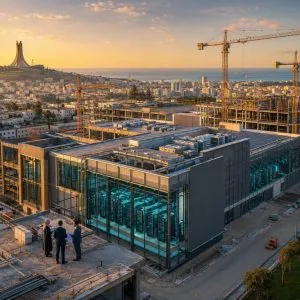
- Designate hydrogen-adjacent data center zones. A single industrial park — ideally co-located with one of the announced green hydrogen pilots (Arzew, Hassi R’Mel, or a Hauts Plateaux solar cluster) — with pre-zoned, pre-permitted pads for modular 10–50 MW data centers. Predictability is the scarce resource.
- Offer long-term hydrogen offtake contracts. Mirror the offtake structures already in place for export: a 15–20 year fixed-tariff green hydrogen supply agreement to a domestic data center developer is the equivalent of the power purchase agreements that anchor hyperscaler builds elsewhere.
- Bundle with sovereign cloud demand. A domestic anchor tenant — e-government, higher education, or banking regulator workloads — de-risks the first build and aligns with the country’s sovereign cloud direction.
- Position for AI export capacity. Once the on-site fuel cell model is running at 50+ MW, Algeria can price inference and training hours for European customers with a carbon intensity that Irish, Dutch, or German grid-bound sites cannot match. That is the compound play — exporting electrons as hydrogen and exporting compute as SaaS from the same megawatts.
Realistic Constraints to Acknowledge
Three honest caveats matter. First, green hydrogen supply will be constrained for several years globally — early Algerian data center installations may need to bridge with natural gas fuel cells and transition over time, which is acceptable as long as the site is designed for hydrogen from day one. Second, water availability in Saharan sites must be planned for carefully — electrolysis is water-intensive, and siting near the coast or using treated produced water is a real engineering choice. Third, skilled operators for fuel cell plus data center hybrid sites are scarce globally; Algerian universities and vocational programs should be brought in early.
Algeria has spent decades exporting energy in molecule form. Pairing that same molecule with fuel-cell-powered data centers turns the next energy wave into a digital infrastructure wave — one where Algerian electrons become both green hydrogen for Europe and low-carbon compute for the AI era.
Frequently Asked Questions
Why pair green hydrogen production with data centers in Algeria specifically?
Algeria has three rare advantages stacked together: world-class solar irradiance for cheap electrolysis, an existing gas pipeline network being repurposed for the SoutH2 corridor, and an already-signed diplomatic and commercial framework with Germany and EU partners. Pairing data centers with hydrogen production lets Algeria capture more value per megawatt — exporting both the molecule and the compute it can power.
How is fuel-cell power different from grid power for AI workloads?
On-site solid oxide fuel cells can be deployed in roughly 90 days versus 18–24 months for new high-voltage grid connections, and they scale modularly in 10–100 MW blocks. They also tolerate load volatility better than many grid connections, which matters for AI training workloads with sharp peaks. Bloom Energy’s 1 GW+ of AI data center orders in 2025–2026 demonstrates the commercial pattern.
What is the realistic timeline before a hydrogen-powered data center can operate in Algeria?
A first pilot paired with the Arzew 50 MW green hydrogen project is feasible in a 12–24 month window. Early installations will likely bridge with natural gas fuel cells and transition to hydrogen as electrolysis capacity scales — acceptable as long as sites are designed for hydrogen from day one. A 50+ MW site that anchors sovereign cloud demand and exports AI compute to Europe is a 3–5 year build.
Sources & Further Reading
- Algeria Country Profile — Green Hydrogen Organisation
- Algeria Details US$25bn National Hydrogen Plan — Enerdata
- Algeria Reaffirms Commitment to Green Hydrogen Through SoutH2 Corridor — Fuel Cells Works
- Algeria’s Strategic Energy Vision — Energy Capital & Power
- Germany and Algeria Set Up Hydrogen Taskforce — BMWE
- Bloom Energy’s 2026 Data Center Power Report — Hydrogen Fuel News
- How Fuel Cells Help Solve the Data Center and AI Challenge — FCHEA
- ECL Advances Hydrogen-Powered Data Centers — Data Center Frontier
- Bloom Energy — Data Center Power Solutions