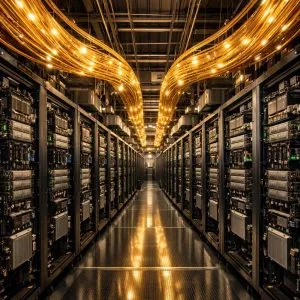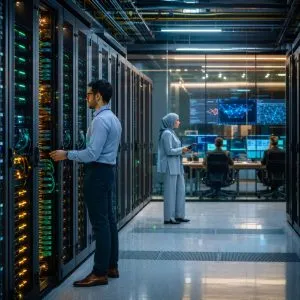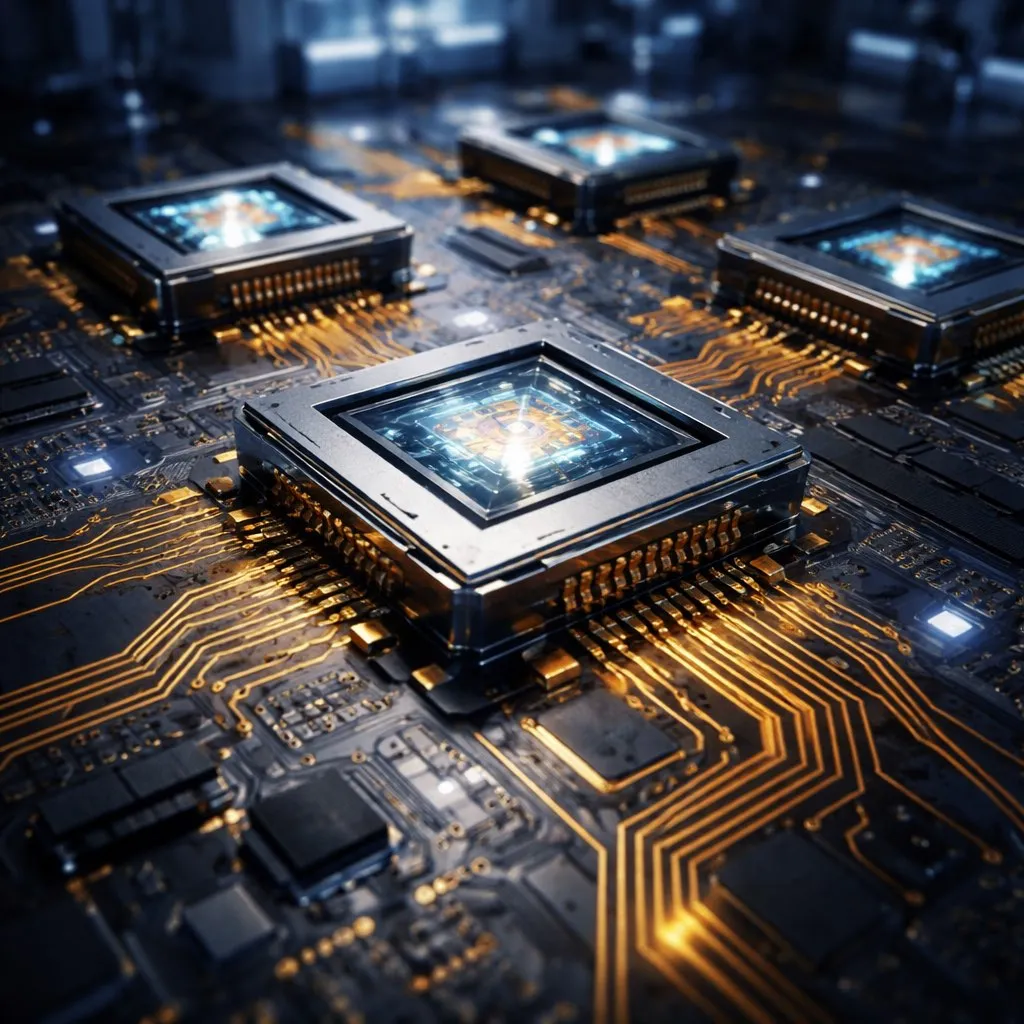
The race for AI compute is no longer measured in GPUs. It is measured in gigawatts. On April 6, 2026, Anthropic announced a landmark expansion of its partnership with Google Cloud, signing a new agreement for multiple gigawatts of next-generation TPU capacity delivered through both Google Cloud services and Broadcom-supplied, Google-designed TPUs. The capacity is expected to come online starting in 2027, supplementing the 1 GW already being deployed under the October 2025 agreement.
The Numbers Behind the Deal
The scale of this expansion is unprecedented for a single AI company’s compute procurement. One gigawatt of compute infrastructure can power roughly 100,000 to 200,000 high-end AI accelerators, depending on chip generation and cooling efficiency. Multiple gigawatts — the announced capacity — would put Anthropic’s total compute footprint among the largest of any technology company globally.
The vast majority of the new compute will be sited in the United States, extending Anthropic’s November 2025 commitment to invest $50 billion in American computing infrastructure. This domestic siting has both practical benefits (proximity to AI research teams, favorable power costs in certain regions) and strategic significance in the context of US technology competitiveness.
Broadcom’s involvement adds an important dimension. As the company supplying Google-designed TPU silicon, Broadcom’s multi-gigawatt commitment to Anthropic represents one of the largest custom AI chip supply agreements in history, demonstrating that the AI infrastructure market has matured beyond standard GPU procurement into bespoke chip-and-infrastructure deals.
Why TPUs? The Multi-Chip Strategy
Anthropic’s infrastructure strategy is deliberately multi-chip. The company trains and runs Claude on AWS Trainium, Google TPUs, and NVIDIA GPUs — matching workloads to the chips best suited for them. This approach provides better performance, cost optimization, and greater resilience through hardware diversity.
TPUs offer specific advantages for certain AI workloads. Google’s custom silicon is optimized for the large-scale matrix operations that dominate transformer training and inference. For Anthropic, TPU access through Google Cloud provides an alternative to the NVIDIA GPU supply that every other AI company is also competing for — a crucial hedge in a market where GPU availability remains constrained.
The multi-chip strategy also provides negotiating leverage. By maintaining active relationships with AWS (Trainium), Google (TPU), and NVIDIA (GPU), Anthropic avoids the vendor lock-in that could give any single supplier disproportionate pricing power.
Revenue Growth Driving Compute Demand
The compute expansion directly reflects Claude’s commercial traction. Anthropic disclosed that its run-rate revenue has surpassed $30 billion — a more than threefold increase from approximately $9 billion at the end of 2025. This acceleration is driven by enterprise adoption of Claude across industries, the growth of Anthropic’s API business, and expanding consumer subscriptions.
The revenue figures position Anthropic as one of the fastest-growing enterprise software companies in history. For context, it took Salesforce 20 years to reach $30 billion in annual revenue. Anthropic is approaching that milestone roughly three years after launching its commercial API.
This revenue growth creates a virtuous cycle: higher revenue funds more compute investment, which enables more capable models, which attract more customers, which generate more revenue. The TPU expansion is a bet that this cycle will continue accelerating through at least 2027-2028.
Advertisement
Implications for the AI Infrastructure Market
Anthropic’s deal signals several broader shifts in AI infrastructure. First, the era of commodity GPU procurement is ending. Leading AI companies are increasingly signing multi-year, multi-billion-dollar infrastructure agreements that bundle custom chips, cloud services, power supply, and physical site development. These deals look more like utility-scale energy contracts than traditional cloud computing agreements.
Second, the Google Cloud-Anthropic relationship is deepening in ways that benefit both parties. For Google Cloud, Anthropic represents one of the largest and most strategically important customers. For Anthropic, Google Cloud provides access to TPU silicon that is unavailable elsewhere, along with the infrastructure expertise to deploy it at scale.
Third, the power requirements are becoming a primary constraint. Multi-gigawatt AI compute deployments require dedicated power infrastructure — often new substations, transmission lines, and in some cases new generation capacity. The locations where this power is available, affordable, and reliable will determine where the next generation of AI infrastructure is built.
The Competitive Landscape
Anthropic’s TPU expansion occurs in a fiercely competitive environment. OpenAI, Google DeepMind, Meta AI, and xAI are all pursuing massive compute buildouts. Microsoft’s investment in OpenAI includes dedicated Azure capacity. Meta is building its own custom AI chips alongside NVIDIA GPU procurement. xAI’s Colossus cluster in Memphis represents one of the largest single-site GPU deployments.
The arms race dynamic means that any company that falls behind on compute access risks falling behind on model capabilities — and by extension, on revenue. Anthropic’s multi-gigawatt deal is as much a defensive move (ensuring sufficient compute for competitive models) as an offensive one (enabling new capabilities that attract customers).
What This Means for AI Users
For enterprises using Claude, the TPU expansion means continued improvements in model performance, reliability, and availability. More compute enables Anthropic to train larger and more capable models, run more inference capacity for peak demand, and invest in research that improves efficiency (doing more with the same compute).
The multi-chip infrastructure also improves service resilience. If NVIDIA GPU supply is constrained, Anthropic can shift workloads to TPUs and vice versa. This hardware diversity translates into higher availability SLAs for enterprise customers.
Sources & Further Reading
- Anthropic Expands Use of Google Cloud and TPUs — Anthropic
- Anthropic Expands Partnership with Google and Broadcom — Anthropic
- Anthropic’s Billion-Dollar TPU Expansion Signals Strategic Shift — AI News
- Broadcom to Supply Anthropic With 3.5 GW of Google TPU Capacity — Tom’s Hardware
- Anthropic Signs Google, Broadcom Deal for Multi-Gigawatt TPU Capacity — HPCwire
Frequently Asked Questions
How much compute is Anthropic adding?
Anthropic signed for multiple gigawatts of next-generation TPU capacity from Google and Broadcom, coming online from 2027. This adds to 1 GW already arriving in 2026 under the October 2025 agreement. One gigawatt can power roughly 100,000-200,000 AI accelerators.
Why does Anthropic use TPUs instead of only GPUs?
Anthropic deliberately uses a multi-chip strategy — AWS Trainium, Google TPUs, and NVIDIA GPUs — to match workloads to optimal hardware, avoid vendor lock-in, and ensure supply resilience. TPUs are particularly efficient for the large-scale matrix operations in transformer training and inference.
What is driving Anthropic’s revenue growth?
Anthropic’s run-rate revenue surpassed $30 billion in 2026, up from $9 billion at end of 2025, driven by enterprise Claude adoption across industries, API business growth, and consumer subscriptions. This threefold increase in roughly one year makes it one of the fastest-growing enterprise software companies in history.