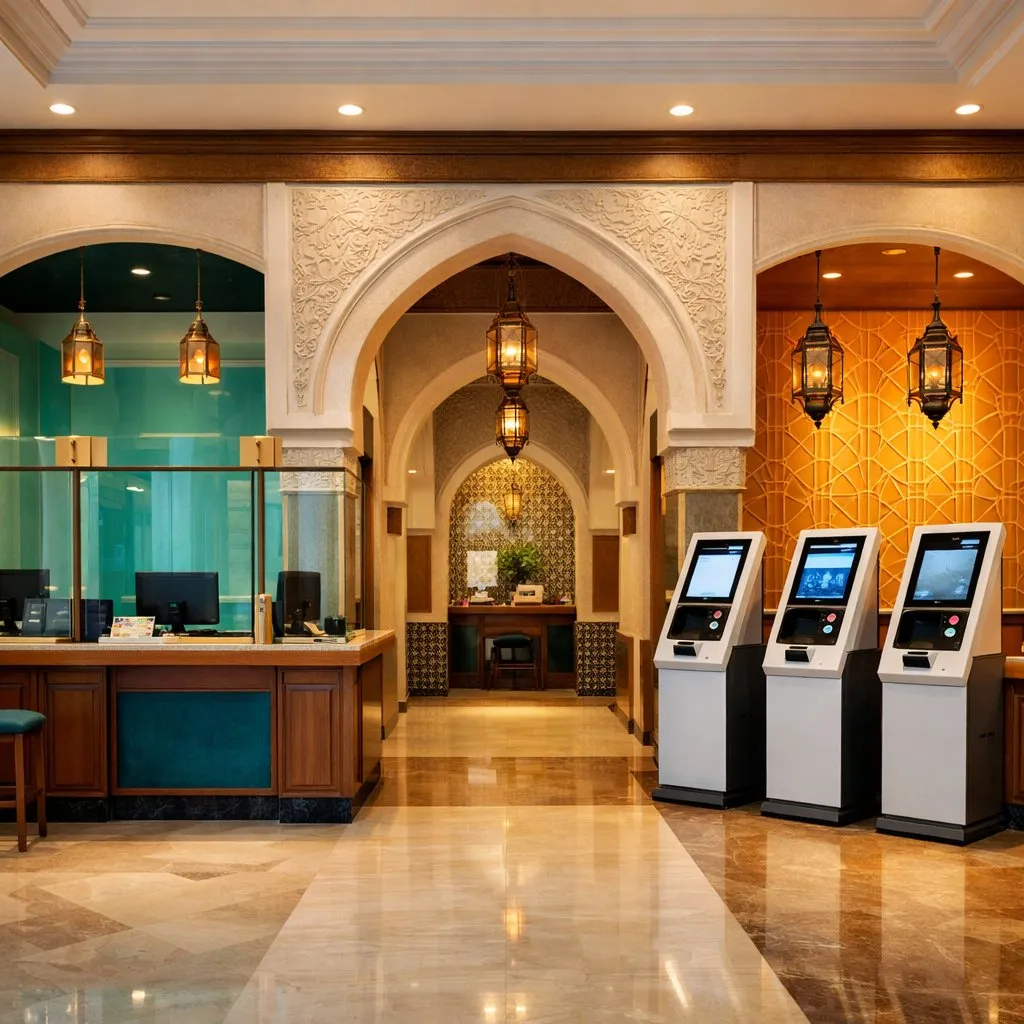
What Exactly Does the Law Prohibit?
On January 1, 2025, Algeria crossed a line that no previous regulation had dared to draw. The Finance Act 2025, published in the Official Journal on December 29, 2024, made it illegal to pay cash for real estate, vehicles, industrial equipment, pleasure boats, and mandatory insurance policies. Not discouraged. Not taxed at a higher rate. Banned outright.
Article 207 requires that these transactions be conducted exclusively through banking and financial channels: bank transfers, certified cheques, and electronic transactions. Cash is no longer an option for any of these categories, regardless of the amount.
The Chambre Nationale des Notaires has already instructed all notaries across the country to refuse any deed of sale settled in cash. Since notaries authenticate every real estate transaction in Algeria, the ban has an immediate institutional chokepoint.
For a country where an estimated 30 to 50 percent of GDP circulates through informal channels and where cash has long been the default language of commerce, this represents the most forceful digitization mandate in Algeria’s economic history.
The Carrot Alongside the Stick
The Finance Act 2025 is not purely punitive. To accelerate adoption, the government has paired the cash ban with fiscal incentives:
- Full stamp duty exemption for payments made via electronic methods. Previously, stamp duty applied universally; now, digital payers pay zero.
- Increased stamp duties on cash payments for transactions still legally permitted in cash, with the previous collection threshold of 10,000 DZD removed entirely.
For businesses processing hundreds of transactions monthly, the stamp duty differential alone makes digital adoption financially rational.
E-Payment Infrastructure: Growing Fast, Still Not Enough
The cash ban would be an empty mandate without the infrastructure to absorb the volume. The numbers suggest Algeria has been building capacity aggressively.
E-payment transactions reached 939 billion dinars in 2025, a 46% increase from 643.8 billion dinars in 2024:
- Online payment values surged 179% to 145 billion dinars, with over 27 million transactions
- Point-of-sale terminal value doubled to 89.5 billion dinars, with terminals growing from 68,140 to 78,774 units (15.6% increase)
- Mobile payments hit 58.4 million transactions worth 43.5 billion dinars in 2024, up from 39.2 million in 2023
- Online merchants reached 644 by end of 2025, a 26% increase with 134 new integrations
- ATM transactions exceeded 235 million in 2025, up 19%, served by 4,679 machines
The DZMobPay interoperable mobile payment platform, launched in January 2025, had registered 79,130 users and 11,873 merchants by November 2025. Seven banks and Algerie Poste currently offer the service, with expansion to 15 banks planned for 2026.
Yet the gap remains wide. A 2023 report found that only 3% of Algerian businesses were equipped to process digital payments. Even with aggressive terminal deployment, the merchant acceptance network needs to grow dramatically to support a genuinely cashless economy for high-value transactions.
Advertisement
SoftPos: The Game-Changer for Merchant Adoption
Perhaps the most promising development is SoftPos (Software Point of Sale) technology, which the GIE Monetique plans to launch by late 2026. SoftPos transforms any NFC-enabled smartphone into a payment terminal, eliminating the need for dedicated hardware.
This matters enormously for Algeria’s merchant landscape. Traditional POS terminals carry upfront costs that deter small vendors, informal market sellers, VTC drivers, and delivery workers. SoftPos removes that barrier entirely. If deployed successfully, SoftPos could bridge the gap between the Finance Act’s legal mandate and practical on-the-ground compliance, particularly in sectors like used vehicle sales where transactions have historically been entirely cash-based.
Who Feels the Impact Most?
The real estate sector faces the most dramatic adjustment. Algeria’s property market has long operated on a dual-pricing system: an official price declared for tax purposes and an under-the-table cash supplement. The Finance Act disrupts this practice by requiring full traceability through banking channels. For diaspora Algerians who previously converted euros to dinars on the parallel market to fund property purchases, this avenue is now formally closed.
Vehicle dealers must now route all sales through documented payment channels, introducing new compliance requirements but also bringing formal revenue recognition and cleaner accounting.
Insurance companies benefit directly, as electronic payments reduce fraud risk and improve collections on mandatory policies like auto insurance, where cash payment irregularities have been persistent.
The Cashless 2028 Ambition
The Finance Act 2025 is not an isolated measure. On October 18, 2025, Bank of Algeria Governor Salah Eddine Taleb announced a national strategy to achieve a cashless economy by 2028. The National Payments Committee, established in 2024, oversees the roadmap that includes:
- Expanding the SATIM instant payments switch across all banks
- Scaling DZMobPay to universal interoperability
- Deploying SoftPos to dramatically increase merchant acceptance points
- Exploring a central bank digital currency (CBDC) as outlined in the 2023 Monetary and Banking Law
The 2028 target is ambitious for any country; for Algeria, where banking penetration remains below regional averages and cultural preference for cash runs deep, it requires a transformation that goes far beyond legislation. But the Finance Act 2025 demonstrates that the government is willing to use regulatory force, not just incentives, to drive that transformation.
The Bigger Picture for Algeria’s Digital Economy
The cash ban is more than a payment regulation. It is a structural reform that affects property valuation transparency, tax collection efficiency, anti-money laundering compliance, and financial inclusion metrics simultaneously.
Algeria’s FATF progress reviews have highlighted informal cash flows as a persistent AML vulnerability. By forcing high-value transactions into documented channels, the Finance Act directly addresses this gap.
For Algeria’s fintech ecosystem, the law creates immediate market demand. Payment processors, mobile wallet providers, merchant onboarding platforms, and digital identity verification services all have a regulatory tailwind that did not exist before January 2025.
Frequently Asked Questions
Can I still pay cash for everyday purchases like groceries and retail goods?
Yes. The Finance Act 2025 cash ban applies specifically to real estate, vehicles sold by dealers and distributors, industrial equipment, pleasure boats, and mandatory insurance. Everyday consumer purchases, small retail transactions, and informal commerce are not covered. However, increased stamp duties on cash payments provide a financial incentive to use digital methods even for transactions where cash remains legal.
What happens if a notary processes a real estate sale paid in cash after January 2025?
The National Chamber of Notaries has instructed all notaries to refuse any deed of sale settled in cash. A notary proceeding with a cash-based real estate transaction would violate professional directives and the provisions of Article 207 of the Finance Act 2025. Buyers must present proof of payment via bank transfer, certified cheque, or electronic transaction before the sale can be authenticated.
Is Algeria’s digital payment infrastructure ready to handle the volume from banned cash transactions?
Infrastructure has grown significantly, with e-payments reaching 939 billion dinars in 2025 (up 46%) and POS terminals expanding to nearly 79,000 units. However, challenges remain: only 3% of businesses were equipped for digital payments as of 2023, and DZMobPay had about 79,000 users by late 2025. The planned SoftPos rollout in late 2026, which turns smartphones into payment terminals, is expected to dramatically expand merchant acceptance and close the infrastructure gap.
Sources & Further Reading
- Algeria Enacts 2025 Finance Law with Key Measures Applicable to Corporations — EY Global
- Real Estate, Vehicle, and Insurance Transactions: End of Cash in 2025 — Algeria Invest
- E-Payments: 939 Billion Dinars in 2025, Up 46% in One Year — Algeria Invest
- Aim Is to Go Cashless by 2028, Says Bank of Algeria Governor — APS
- Cash Payments Ban in Algeria Starting 2025: Impact on the Real Estate Sector — ElSahel Immobilier
- Mobile Payment Interoperability Expanded to 15 Banks in 2026 — Algerie Eco
- Algeria to Become Cashless Society by 2028 — Diplomatic Courier
- Algeria Set to Launch Mobile Payment System DZ MOB PAY in January 2025 — AL24 News