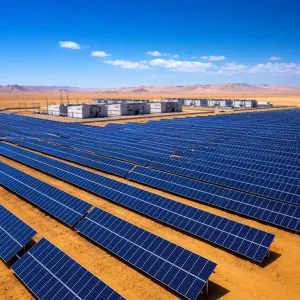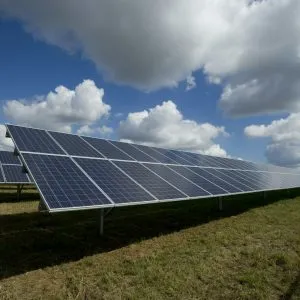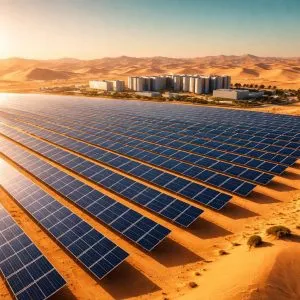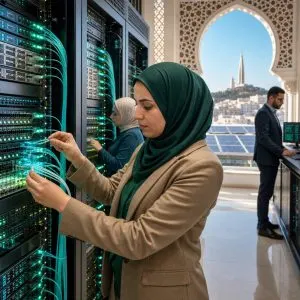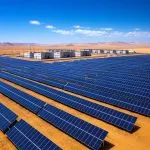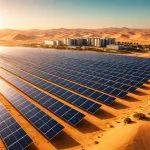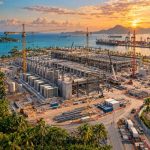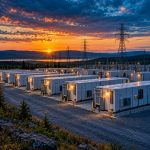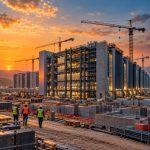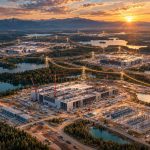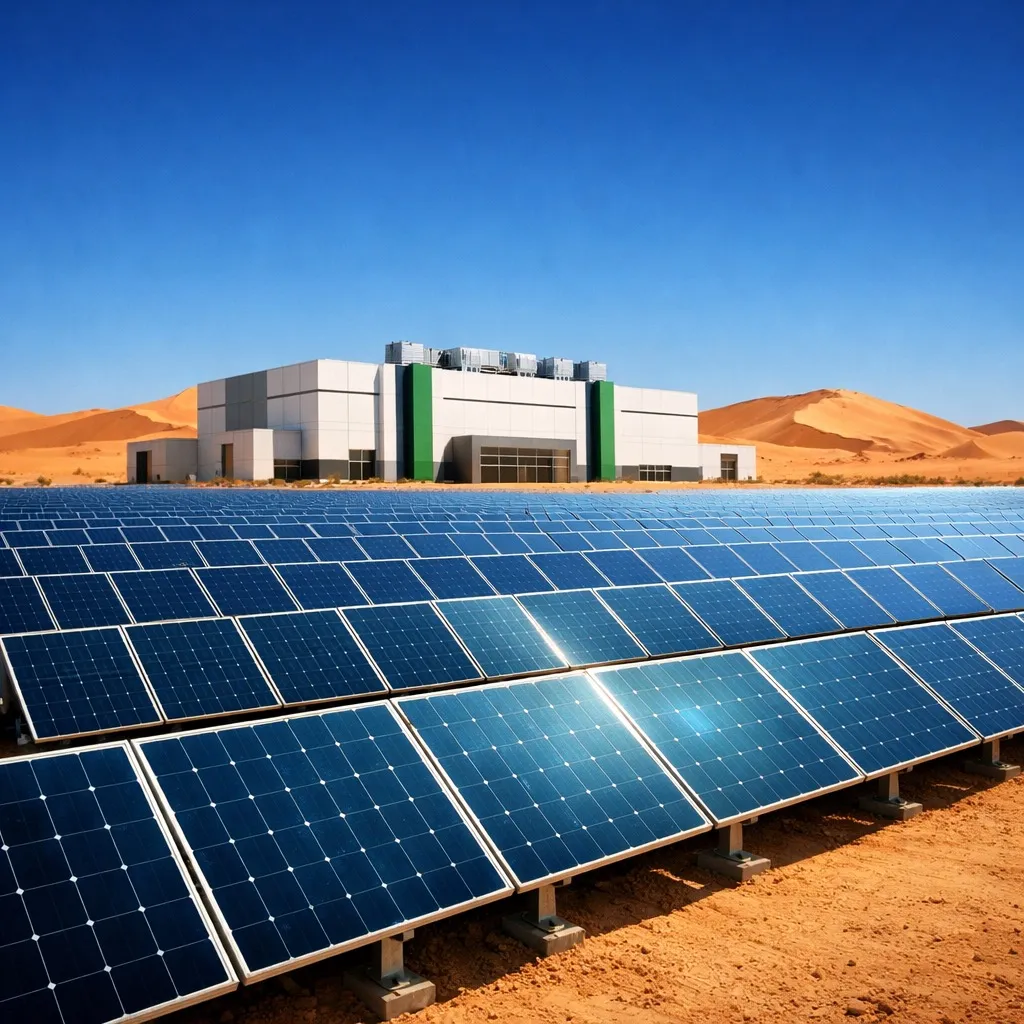
There is a quiet irony in Algeria’s energy story. The country sits atop some of the richest hydrocarbon reserves in Africa — natural gas and oil that have powered its economy for decades. Yet just above those reserves, the Sahara Desert receives more solar radiation per square meter than almost anywhere else on Earth. Algeria’s solar potential ranges from 5 to 7 kWh/m2/day across its territory, with southern regions averaging 5.5-6.5 kWh/m2/day and northern Algeria — where most population and infrastructure is concentrated — still receiving an excellent 4.5-5.5 kWh/m2/day.
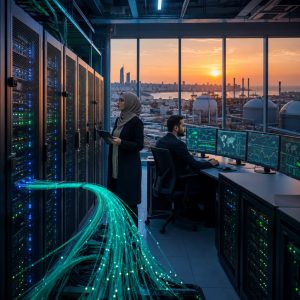
Meanwhile, the global data center industry is in the grip of an energy crisis of its own making. AI workloads are devouring electricity at unprecedented rates. Hyperscalers are signing multi-billion-dollar power purchase agreements. Microsoft, Google, and Amazon are exploring nuclear and geothermal power. Cooling alone accounts for 30-40% of a typical data center’s energy consumption.
These two realities — Algeria’s extraordinary solar resource and the world’s insatiable demand for green computing power — represent a convergence that could reshape Algeria’s economic future. But only if someone builds the infrastructure to connect them.
The Global Push for Green Data Centers
The data center industry consumed approximately 415 terawatt-hours (TWh) of electricity in 2024, roughly 1.5% of global electricity demand. That figure is growing rapidly — Gartner projects 16% growth in 2025 alone, with total consumption expected to double to around 945 TWh by 2030 according to the International Energy Agency. AI-optimized servers are the primary driver, with their electricity usage projected to rise nearly fivefold from 93 TWh in 2025 to 432 TWh by 2030.
This energy intensity has created three overlapping pressures.
Regulatory pressure. The European Union’s Energy Efficiency Directive now requires data centers above 500 kW to publicly report annual energy performance data, including Power Usage Effectiveness (PUE), water usage, and renewable energy utilization. The European Commission is preparing a Data Centre Energy Efficiency Package — planned for April 2026 — that will introduce a rating scheme and minimum performance standards. Singapore implemented a moratorium on new data center builds from 2019 to 2022 while it developed green standards, after data centers reached 7% of the city-state’s total electricity consumption. Singapore has since approved only 80 MW of new capacity under strict sustainability criteria.
Corporate pressure. Google, Microsoft, Amazon, and Meta have all committed to 100% renewable energy matching for their data center operations. Google aims for 24/7 carbon-free energy by 2030 — meaning every watt consumed must be matched by a carbon-free watt in the same grid region, at the same hour. Five of Google’s sites already operate near or above 90% carbon-free energy. In 2024 alone, Google signed contracts for approximately 8 GW of clean energy generation capacity. These commitments are driving an unprecedented search for locations with abundant renewable energy.
Economic pressure. Energy represents 40-60% of data center operating expenditure. In Northern Virginia — the world’s largest data center cluster — wholesale electricity costs have risen as much as 267% over five years, and PJM capacity market auction prices surged 833% for 2025-2026 due to data center demand. Dominion Energy forecasts peak demand rising 75% by 2039 driven primarily by data centers. Operators are actively seeking locations where energy is cheap, abundant, and renewable.
This global context creates an opening for countries that can offer what the industry desperately needs: plentiful green energy, available land, and reasonable connectivity. Algeria has all three.
Algeria’s Solar Resource: The Numbers
Algeria’s solar potential is not a vague aspiration — it is a measured, mapped, and quantified resource.
Solar irradiance. The Sahara receives 2,200-2,500 kWh/m2/year of solar energy. Average global horizontal irradiance (GHI) across southern Algeria ranges from 5.5-6.5 kWh/m2/day, compared to 3.5-4.5 kWh/m2/day in Southern Spain or 4.5-5.5 kWh/m2/day in the Arabian Peninsula’s best sites. Even northern Algeria receives 4.5-5.5 kWh/m2/day — excellent by global standards and superior to most of Europe.
Land availability. The Sahara covers approximately 2 million km2 of Algeria’s territory. Even a tiny fraction — 0.01% — would provide 200 km2 for solar installations, capable of generating tens of gigawatts of power.
Existing renewable energy framework. Algeria’s national renewable energy program targets 15 GW of renewable energy capacity by 2035, aiming for 30% renewable energy in the national electricity mix. The centerpiece is the Tafouk 1 program — an ambitious plan to build 11 solar photovoltaic plants with capacities ranging from 80 MW to 220 MW across eight regions, totaling 4 GW and backed by an estimated 1.5 billion euros in investment. The first 80 MW facility in Al-Abadla, Bechar province, is under construction with full commissioning of the program projected by 2027.
Operational solar capacity. Algeria commissioned approximately 400 MW of new solar PV capacity in 2025, bringing total installed solar capacity to roughly 446 MW. An additional 1.48 GW is expected to be commissioned by August 2026, which would represent a dramatic acceleration. Algeria now ranks among Africa’s top 10 solar markets.
The resource is there. The question is whether it can be harnessed specifically for data center power.
The Desertec Legacy — And Its Lessons
Any discussion of Saharan solar for industrial use must reckon with Desertec.
The Desertec Industrial Initiative (Dii), launched in 2009, was an audacious plan to generate solar and wind power in the Sahara and export it to Europe via high-voltage direct current (HVDC) transmission lines across the Mediterranean. Backed by major European corporations including Siemens, E.ON, Bosch, Deutsche Bank, and Munich Re, the initiative aimed to provide around 20% of Europe’s electricity by 2050 at an estimated cost of 400 billion euros. Desertec captured global imagination.
It also collapsed. Bosch and Siemens withdrew in 2012. The Desertec Foundation itself quit in 2013, citing “irresolvable disputes over future strategies.” By 2014, the initiative was effectively dissolved. The reasons were instructive:
- Political complexity. The Arab Spring of 2010-2011 destabilized North Africa and left investors without reliable political partners. Sovereignty questions emerged — why should African countries export cheap energy instead of using it domestically?
- Falling European renewable costs. Between 2010 and 2014, the cost of solar PV in Europe plummeted, making local renewable projects more attractive than imported Saharan power.
- Transmission economics. HVDC submarine cables across the Mediterranean were technically feasible but expensive, and the business case evaporated as European solar prices fell.
- Local benefit questions. North African countries questioned whether the model would benefit their populations or merely serve European demand.
Desertec’s failure taught a crucial lesson: Saharan solar makes more sense when the energy is consumed locally or regionally rather than exported to distant markets. A green data center — which locates the computing workload at the energy source rather than transmitting energy to the workload — is precisely the application Desertec was missing. Morocco’s Noor solar complex in Ouarzazate demonstrated this: a focused, 582 MW project serving domestic needs succeeded where Desertec’s continent-spanning ambition failed.
Why Data Centers at the Energy Source Makes Sense
The traditional approach to data center siting prioritizes proximity to users (low latency) and existing fiber networks. This is why data center clusters formed around cities like Ashburn (Virginia), London, Frankfurt, and Singapore.
But a significant and growing share of data center workloads are latency-insensitive:
- AI model training. Training runs last days to weeks. A 50ms latency difference is irrelevant.
- Batch processing. Data analytics, financial modeling, scientific computing — all tolerate latency.
- Content rendering and encoding. Video transcoding, image processing, and content preparation for CDNs.
- Backup and archival storage. Data that needs to be stored reliably but accessed infrequently.
For these workloads, energy cost and availability matter far more than proximity to end users. This is why Microsoft is building data centers near nuclear plants, why Google signed a geothermal power deal in Nevada, and why Nordic countries attracted data center investment with cheap hydropower and natural cooling.
Algeria could compete for these workloads by offering solar-powered data center capacity at globally competitive energy rates.
The Oran AI Data Center: Algeria’s First Step
On March 16, 2025, Minister of Post and Telecommunications Sid Ali Zerrouki laid the foundation stone for Algeria’s first AI-focused high-performance computing center in the Akid Lotfi district of Oran. The facility will be equipped with latest-generation GPUs to support AI-driven workloads, serving researchers, startups, and academic institutions.
The project aligns with President Abdelmadjid Tebboune’s vision to position Algeria as a leading player in innovation and digital technology across Africa, with a target of AI contributing 7% to GDP by 2027. Focus areas include healthcare, industry, cybersecurity, smart cities, precision agriculture, and energy resource management.
While specific capacity figures and completion timelines have not been publicly disclosed, the Oran location offers several strategic advantages:
- International connectivity. Algeria connects to multiple Mediterranean submarine cables, including the Alval/Orval system (up to 40 Tbps capacity — 20 times current needs), the Medex cable (2 Tbps via Annaba), ALPAL-2 (Algiers to Palma de Mallorca), and the SEA-ME-WE 4 system. The planned MEDUSA cable — an 8,700 km system connecting five EU countries with Algeria, Morocco, Tunisia, and Egypt — will add further capacity at 20 Tbps per fiber pair.
- Solar resource. The Oran region receives over 5 kWh/m2/day of solar irradiance.
- Existing infrastructure. Oran is Algeria’s second-largest city with an established power grid, water supply, and transport connections.
- Skilled workforce. Oran’s universities — including USTO and the University of Oran — produce engineering graduates who could staff data center operations.
Separately, Huawei has announced collaboration plans to build another data center in Algeria, while existing local operators including Icosnet, HostArts, Ayrade, and ISCONET provide colocation services. The Oran project, if executed well, could serve as a proof of concept for Algeria’s green data center potential.
Advertisement
PUE Optimization in Hot Climates: The Engineering Challenge
The most common objection to data centers in hot climates is cooling. Data centers generate enormous heat, and that heat must be removed. In cool climates (Scandinavia, Iceland, Canada), outside air can provide free cooling for much of the year. In Algeria’s climate, where summer temperatures regularly exceed 40C in northern cities and 50C in the Sahara, cooling appears to be a disadvantage.
The reality is more nuanced.
PUE explained. Power Usage Effectiveness measures data center energy efficiency. A PUE of 1.0 means all energy goes to computing. A PUE of 2.0 means half goes to computing and half to overhead (cooling, lighting, power conversion). The global average PUE is approximately 1.55. Google’s best facilities achieve around 1.10.
Hot climate strategies that work:
Direct evaporative cooling. In Algeria’s dry climate — especially in southern and highland regions where relative humidity is often below 20% — evaporative cooling is remarkably effective. Water evaporation absorbs heat, cooling intake air without mechanical refrigeration. This is the same principle behind traditional Saharan architecture that kept buildings cool for centuries. Data centers in Arizona and other hot-dry climates routinely achieve PUEs of 1.05-1.2 using evaporative cooling — in Arizona, evaporative systems consume 22 times less energy than air-cooled chillers.
Liquid cooling. Modern high-density compute (particularly AI GPU clusters) increasingly uses direct-to-chip liquid cooling or immersion cooling. Liquid cooling is far more efficient than air cooling and is largely independent of ambient air temperature. Microsoft has deployed closed-loop chip-level cooling systems that virtually eliminate water use, saving over 125 million liters per data center annually. For an AI-focused facility in Algeria, liquid cooling would be the natural choice.
Night cooling with thermal storage. Algeria’s desert climate features significant day-night temperature swings — 15-25C differences are common. Cool nighttime air (or cool water generated at night) can be stored and used for daytime cooling, reducing peak energy demand.
Elevated locations. The Algerian High Plateaus (Hauts Plateaux), at 800-1,200 meters elevation, offer significantly cooler temperatures than the coast or the deep Sahara. Cities like Djelfa, M’sila, and Batna have average summer temperatures 5-10C lower than Algiers, further reducing cooling costs while still receiving excellent solar irradiance.
With these strategies, a well-designed data center in Algeria could realistically achieve a PUE of 1.2-1.3 — competitive with facilities in much cooler climates.
The Business Case: Green Premiums and Competitive Energy
Beyond serving Algeria’s domestic computing needs, solar-powered data centers offer compelling economic advantages.
ESG Compliance and Carbon Advantages
European companies face growing pressure under the EU’s Corporate Sustainability Reporting Directive (CSRD) to disclose and reduce the carbon footprint of their operations, including cloud computing and data processing. Data centers powered by verified renewable energy carry a clear compliance advantage for European enterprises reporting their Scope 3 emissions.
A solar-powered data center in Algeria, displacing grid electricity (which is largely gas-fired), would avoid significant CO2 emissions. At current voluntary carbon credit prices of $10-30 per tonne, the carbon savings represent a meaningful additional revenue stream. The voluntary carbon market reached approximately $1.6-2.5 billion in 2025 and continues to grow, driven by record corporate credit retirements.
Competitive Energy Pricing
Solar electricity in optimal locations is now the cheapest form of new electricity generation globally. The global average LCOE (levelized cost of energy) for utility-scale solar PV stood at $43/MWh in 2024 according to IRENA, with Bloomberg NEF projecting $35/MWh in 2025 and $25/MWh by 2035. In high-irradiance regions like Algeria, solar can produce electricity at $25-40/MWh — compared to $40-60/MWh for natural gas generation and significantly higher grid electricity prices in major European data center markets.
Even accounting for battery storage to provide 24/7 power, the economics are increasingly favorable. Battery storage costs hit a record low of $65/MWh in late 2025 (outside China/US), and co-located solar-plus-storage projects delivered electricity at an average of $57/MWh globally. A solar-plus-storage configuration in Algeria, leveraging the country’s superior irradiance, could deliver electricity at $40-55/MWh — competitive with European grid prices and trending downward.
For data center operators, energy cost is the single largest operating expense. A 30-50% reduction in energy costs, sustained over a 20-year facility lifetime, represents an enormous competitive advantage.
Regional Competition: Where Algeria Stands
Algeria is not the only country in the region eyeing the green data center opportunity.
Morocco
Morocco has been more aggressive in combining renewable energy with digital infrastructure. The Noor solar complex in Ouarzazate — a 582 MW installation combining concentrated solar power (CSP) and photovoltaics — is one of the world’s largest solar facilities. Its molten salt storage enables electricity generation into the night, and it offsets 240,000 tonnes of CO2 annually. Morocco has also attracted data center investment, with several facilities operational or under construction in Casablanca and Rabat.
Morocco’s advantages: a more advanced renewable energy sector, existing free-trade agreements with the EU and US, and an established financial services industry. Algeria’s advantage: a superior solar resource in the Sahara (the highest in the Mediterranean basin) and far greater land availability.
Saudi Arabia
Saudi Arabia has pivoted significantly toward data centers. NEOM’s Oxagon industrial zone signed a $5 billion agreement with DataVolt to build a 1.5 GW data center running entirely on renewable energy, with the first phase expected operational by 2028. The kingdom is developing 4 GW of solar and wind generation capacity at NEOM, with completion targeted for mid-2026.
However, Saudi Arabia’s data center strategy serves primarily domestic and Gulf regional demand. Algeria could differentiate by serving the African and southern European markets.
Egypt
Egypt hosts 20 international submarine cables carrying over 90% of Europe-Asia internet traffic, making it a major connectivity hub. Telecom Egypt has enabled 14 cable landings across 7 major systems in five years, including the 45,000 km 2Africa cable. Egypt has attracted growing data center investment but has not yet made a strong green data center play.
Algeria’s Differentiation
Algeria’s potential competitive advantages are:
- Superior solar resource in the Sahara (highest in the Mediterranean basin)
- Massive land availability at low cost
- Strategic location between Africa and Europe, with expanding submarine cable connectivity (including the upcoming MEDUSA system)
- Natural gas for backup power — existing gas infrastructure provides reliable backup for solar intermittency
- Low seismic risk in many potential locations (important for data center reliability)
The disadvantages that must be addressed:
- Limited existing data center ecosystem — only 6 facilities from 5 operators, no hyperscaler presence, market valued at just $218 million in 2025
- Investment climate concerns — Algeria’s bureaucratic and regulatory environment has historically deterred foreign investment
- Grid infrastructure — transmitting solar power from Saharan generation sites to data center locations requires grid upgrades
- International bandwidth — while submarine cables exist and the Alval/Orval system provides 40 Tbps of capacity, redundancy and last-mile connectivity need expansion
- Skills gap — data center design, construction, and operations expertise is limited locally
A Green Data Center Strategy for Algeria
Translating potential into reality requires a deliberate strategy with clear phases.
Phase 1: Proof of Concept (2026-2028)
Complete the Oran AI computing center and develop it into a demonstration facility with dedicated solar power and battery storage, backed by natural gas for reliability. Achieve a PUE below 1.3. Attract initial tenants — starting with Algerian government workloads, Sonatrach’s computing needs, and regional AI research demand.
Simultaneously, establish the regulatory framework: streamlined permitting for data center construction, tax incentives for renewable-powered computing facilities, and data protection laws that enable international clients to store data in Algerian facilities.
Phase 2: Scale and Attract (2028-2031)
Build on the Oran proof of concept to develop a larger green data center campus. The High Plateaus region (Djelfa, M’sila, Batna) offers an ideal combination of cooler temperatures, proximity to both northern cities and southern solar resources, and available land. Target tenants:
- International cloud providers seeking green capacity for latency-insensitive workloads
- European enterprises needing data processing within Africa for the continent’s growing market
- AI training facilities seeking cheap, green electricity
- African enterprises needing regional infrastructure closer than European alternatives
Phase 3: Regional Hub (2031-2035)
Position Algeria as a green computing hub connecting Africa and Europe. Leverage the MEDUSA submarine cable and invest in additional connectivity. Develop a cluster of data center campuses across the High Plateaus and the Oran region. Establish Algeria as a recognized destination for sustainable computing — the “solar Nordic” of the Mediterranean, offering green energy where Scandinavia offers cold air.
What Needs to Happen Now
The window of opportunity is real but not indefinite. Morocco has the Noor complex and active data center development. Saudi Arabia is investing $5 billion in a single NEOM data center project. Egypt leverages its submarine cable dominance. Every year of inaction is a year of lost first-mover advantage.
The immediate priorities are:
- Execute the Oran project on time and on spec. A successful, visible proof of concept is worth more than any strategy document.
- Establish a green data center investment framework. Clear rules on land access, permitting, tax treatment, and energy pricing for data center projects.
- Invest in grid infrastructure. Solar generation in the south is only valuable if it can reliably reach data centers in the north. Grid reinforcement and dedicated transmission lines are essential.
- Accelerate the Tafouk 1 solar program. The 4 GW of solar capacity under development must be delivered on schedule. Data centers need guaranteed, long-term green power supply.
- Develop the talent pipeline. Partner with universities (USTO, University of Algiers, Constantine) to create data center engineering programs. Attract experienced professionals from the Gulf and European markets.
- Market the proposition. Algeria’s Saharan solar resource is its most valuable asset after hydrocarbons. The world needs to know it is available for computing.
The Sahara has been Algeria’s most underutilized resource. As the world searches desperately for green computing power, the desert’s sunshine could become as valuable as the gas beneath it.
Frequently Asked Questions
Can data centers really run on solar power alone?
Not without storage. Solar produces electricity only during daylight hours (roughly 10-12 hours in Algeria). A solar-powered data center needs battery storage — with costs now at record lows of $65/MWh globally — to cover nighttime operations, plus a backup power source (natural gas generators in Algeria’s case) for extended cloudy periods. With 4-6 hours of battery storage and gas backup, a facility can achieve 90%+ solar energy utilization while maintaining 99.99% uptime. Co-located solar-plus-storage projects already deliver electricity at an average of $57/MWh globally.
Would the heat in the Sahara make data center cooling impossible?
This is a common misconception. Modern data centers use liquid cooling and evaporative cooling techniques that work efficiently even in extreme heat. Algeria’s dry climate is actually advantageous for evaporative cooling — in similar hot-dry climates like Arizona, evaporative systems consume 22 times less energy than air-cooled chillers, achieving PUEs of 1.05-1.2. Additionally, the Algerian High Plateaus (Djelfa, M’sila, Batna) at 800-1,200 meters elevation offer significantly cooler temperatures while still receiving excellent solar irradiance. Microsoft’s new closed-loop chip-level cooling systems can virtually eliminate water use entirely.
How does Algeria’s data center potential compare to Nordic countries?
Nordic countries (Sweden, Finland, Norway, Iceland) attract data centers with cheap hydropower and natural cooling. Algeria would compete on cheap solar power and available land. The Nordic model serves latency-sensitive European workloads; Algeria would target latency-insensitive workloads (AI training, batch processing, archival) where energy cost matters more than proximity. The two models are complementary, not competitive.
Sources & Further Reading
- IEA — Data Center Energy Consumption Set to Double by 2030 to 945 TWh
- Algeria Launches Construction of an AI Supercomputing Center in Oran — We Are Tech Africa
- Algeria Solar Energy: Impressive Plant Expansion by 2026 — PVknowhow
- Algeria to Commission 1.48 GW of Solar Capacity by August — ESI Africa
- Global Solar Atlas — Algeria Irradiance Data
- IRENA — Global Average Solar LCOE at $0.043/kWh in 2024
- EU Energy Efficiency Directive — Energy Performance of Data Centres
- Google 24/7 Carbon-Free Energy Progress Report
- Desertec: What Went Wrong? — EcoMENA
- Battery Storage Hits $65/MWh Record Low — Electrek