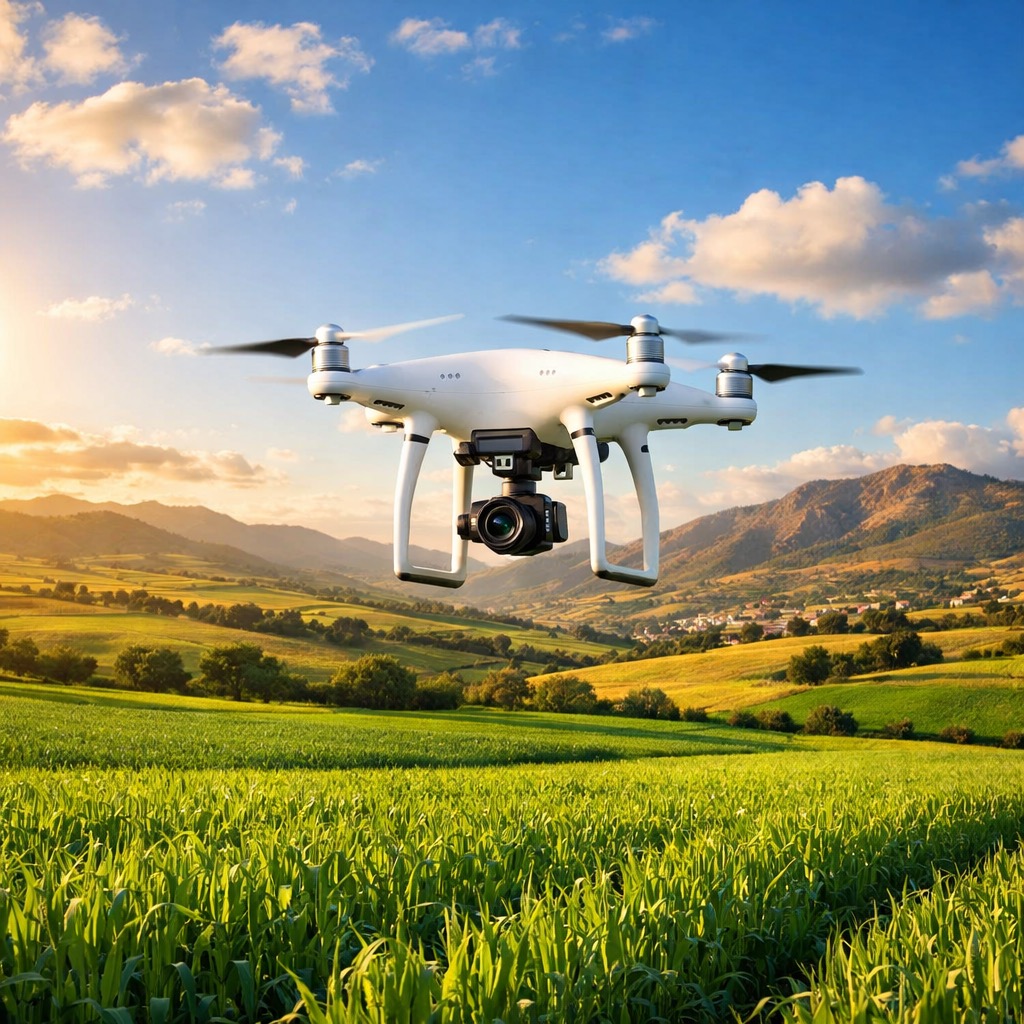
Stand in the middle of a date palm plantation in Biskra, and the problem becomes visceral. Approximately 18 million date palms stretch across Algeria’s southern oases, each one requiring manual pollination during a narrow seasonal window. Workers climb every tree — some reaching 20 meters — carrying pollen, working in extreme heat, racing against time. In the UAE, researchers at the United Arab Emirates University have demonstrated drone-assisted pollination that can cover 200 trees in a single minute. In Saudi Arabia, agricultural drone adoption is accelerating across date plantations and cereal farms. In Algeria, deploying that same technology has been, until recently, nearly impossible.
That is starting to change. After years of blanket prohibition on civilian drones, Algeria enacted a series of regulatory measures in 2025 that, for the first time, create a defined path for commercial drone operations. The framework is new, implementation is still early, and significant barriers remain. But the direction is unmistakable: Algeria is moving from “no” to “yes, with conditions.”
The New Regulatory Architecture
Understanding what changed requires knowing what existed before. Prior to 2021, Algeria had no dedicated drone legislation. Drones fell under general aviation law and military airspace restrictions, creating a de facto ban on civilian operations. The regulatory landscape has since evolved through three major instruments.
Presidential Decree 21-285 (July 2021)
The foundational piece is Presidential Decree No. 21-285, enacted July 13, 2021. This decree established the first comprehensive legal architecture specifically governing unmanned aerial systems in Algeria. It covers the manufacture, acquisition, import, export, sale, transfer, possession, and use of all civilian drones.
The decree created three weight-based categories. Category 1 covers recreational drones under 2 kilograms, which must be equipped with geo-monitoring and electronic identification systems. Category 2 covers professional-use drones up to 150 kilograms. Category 3 is reserved for state use with no weight limit.
Critically, the decree placed drone oversight under the Ministry of National Defence (MDN) rather than the civil aviation authority. This reflects Algeria’s security-first approach to airspace management, but it also means that commercial operators interact with a military institution rather than a civilian regulator.
The National Center for Unmanned Aircraft Systems (CNSAPB)
The decree mandated the creation of a dedicated registration body: the Centre National des Systemes d’Aeronefs sans Pilote a Bord (CNSAPB), operating under the MDN. The center became operational in late 2025, and in December 2025 the MDN formally instructed all drone owners to register their devices with the CNSAPB by April 30, 2026.
Registration is conducted in person, by appointment, at the center’s offices. Applicants must present ownership documentation, a prior acquisition authorization from CNSAPB, and a homologation certificate for the aircraft. Upon approval, the CNSAPB issues a five-year renewable registration certificate.
Interministerial Decree (September 2025) and Marking Requirements
An interministerial decree dated September 8, 2025 took the framework further by regulating the acquisition, import, manufacture, and commercial use of drones. For the first time, any person or company can apply for approval from the CNSAPB to conduct commercial drone operations. The decree explicitly opens a civilian sector for the manufacture, repair, rental, import, and export of drones under 150 kilograms.
A companion Defence Ministry order from August 11, 2025 established detailed marking and electronic identification requirements. Every registered drone must display permanent physical markings — engraving, adhesive labels, or permanent writing — showing the registration code, owner contact information, and payload specifications. More significantly, all drones must continuously transmit electronic identification data via Wi-Fi on the 2.4 GHz band every 30 seconds, broadcasting their unique identifier, geolocation, altitude, velocity, heading, takeoff location, and pilot position.
Existing drone owners have a six-month transition period to comply with registration and marking requirements, with non-compliance resulting in flight prohibition or equipment seizure.
What Remains Unclear
The new framework establishes registration infrastructure and opens a path for commercial use, but critical operational details remain underdeveloped. There are no published drone airspace maps showing where different categories of operations are permitted. The authorization process for specific commercial operations — how long it takes, what documentation is required beyond registration, whether licenses cover ongoing operations or require flight-by-flight approval — is not yet transparent. And while the September 2025 decree encourages civilian drone use in agriculture and firefighting, it does not create simplified pathways for these sectors comparable to what exists in the UAE or is emerging in Tunisia.
The Economic Opportunity at Stake
The gap between Algeria’s regulatory progress and the economic potential of drone technology remains substantial. Several sectors could see immediate benefits from efficient commercial drone operations.
Agriculture: Date Palms, Cereals, and Precision Farming
Algeria is the world’s third-largest date producer, harvesting approximately 1.3 million tonnes annually. Biskra Province alone accounts for over 60 percent of national output, and Deglet Nour varieties represent 90 percent of export value, which reached an estimated $180 million in 2024. Manual pollination of date palms is labor-intensive, physically dangerous, and inconsistent in quality.
Research at the United Arab Emirates University — published in Scientific Reports — has demonstrated that AI-enabled drones using object detection models can autonomously identify and pollinate date palm inflorescences. A two-year field study found drone pollination more efficient and cheaper than hand methods, with fruit yields high enough to make the technology commercially viable. Saudi Arabia’s agricultural drone market is growing at over 24 percent annually, with adoption strongest among date plantations and large-scale cereal farms.
For Algeria’s date industry, the productivity case is clear. Drone-assisted pollination could improve coverage consistency, reduce the physical risks to workers, and lower per-tree costs across millions of palms. But the technology requires a regulatory environment where agricultural operators can register, obtain authorization, and fly regularly without months-long approval cycles for each operation.
Algeria’s cereal production, spanning millions of hectares across the high plateaus and northern plains, presents a parallel opportunity. Drones equipped with multispectral cameras can survey hundreds of hectares per day, detecting water stress, nutrient deficiencies, and pest infestations before they become visible from the ground. China’s agricultural drone sector covered 173 million hectares in 2024, with more than 500,000 agricultural drones deployed globally by mid-2025. Algeria’s vast cereal-growing regions could benefit from similar precision, particularly as climate variability increases pressure on yields.
Energy: Pipeline and Infrastructure Monitoring
Sonatrach operates approximately 19,600 kilometers of pipelines across 37 routes, transporting gas, oil, and condensate through some of the most remote terrain on the continent. The company has invested in advanced monitoring — notably a partnership with Huawei unveiled at Mobile World Congress Barcelona in 2024, deploying distributed fiber optic sensing along 14,000 kilometers of optical cable for real-time pipeline surveillance.
But fiber optic sensing, while powerful for detecting ground-level disturbances along buried pipelines, does not replace the need for visual inspection of above-ground infrastructure, pump stations, valve assemblies, and pipeline right-of-way encroachments. Globally, drone inspection of pipelines costs approximately $200 to $300 per mile, compared to over $1,200 per mile for manned helicopter operations. A fixed-wing drone at cruising speed can inspect 20 miles of pipeline in 20 minutes.
Sonelgaz faces a parallel challenge with its power transmission network spanning thousands of kilometers of high-voltage lines across varied terrain, including mountainous regions where ground access for maintenance is difficult and dangerous. Drone inspection of power lines and towers is standard practice across Europe and the Gulf, reducing both cost and safety risk to personnel.
Construction, Surveying, and Emergency Response
Algeria’s infrastructure investment program includes major road, rail, housing, and dam projects. A single drone can survey a construction site in minutes that would take a ground team days, producing accurate topographic maps, volume calculations, and 3D models. Algerian construction firms competing for international contracts increasingly find drone survey capabilities expected rather than optional.
The emergency response case was underscored by the devastating July 2023 wildfires that struck northeastern Algeria. Ninety-seven blazes across 16 provinces killed at least 34 people, injured over 700, and affected 30,000 individuals. Some 7,500 firefighters battled flames in temperatures reaching 48 degrees Celsius. Drones are critical tools for wildfire response — surveying damage, monitoring fire progression, and coordinating aerial resources — yet their deployment in Algeria remains constrained by the same regulatory framework designed for peacetime operations.
How Neighbors Are Approaching It
Algeria’s regulatory evolution is happening alongside similar efforts across North Africa, though the approaches differ.
Morocco: Strict but Defined
Morocco has regulated drones since 2015 through a strict permit-based system. Tourists are entirely prohibited from importing or bringing drones into the country — any drone found in luggage at airports or borders is confiscated by customs. For commercial operators, Morocco requires an import license from the Ministry of Foreign Trade, operating authorization from relevant authorities, and temporary flight authorization from the regional Wilaya for each operation, with processing times averaging 15 days. Professional sectors eligible for authorization include film production, precision agriculture, surveying, and infrastructure monitoring. Civil liability insurance is mandatory.
Morocco’s approach is not permissive, but it is defined. Commercial operators know what is required and can plan accordingly, even if the process is onerous. The key difference from Algeria’s pre-2025 posture is that Morocco has established explicit commercial pathways rather than relying on case-by-case exceptions.
Tunisia: Agricultural Breakthrough
Tunisia’s drone landscape changed significantly on December 4, 2025, when Parliament approved Article 135 of the 2026 Finance Bill authorizing farmers to import and use drones exclusively for agricultural purposes. This was the first time any professional category in Tunisia received explicit legal rights to import, own, and operate drones.
The legislation was motivated by a six-year drought that has reduced cereal crop output and increased food-import dependence — Tunisia imports approximately $2.87 billion in agri-food products annually. Agricultural drones are authorized specifically for monitoring fields, optimizing irrigation, and improving crop-treatment operations. Beyond agriculture, Tunisia’s drone regulations remain largely uncodified, with civilian permits still extremely difficult to obtain through the Directorate General of Civil Aviation.
UAE and Saudi Arabia: Comprehensive Frameworks
The UAE, through its General Civil Aviation Authority (GCAA), operates one of the most comprehensive drone frameworks globally. All pilots must complete GCAA-approved training and security clearance. Commercial operators require an Unmanned Aircraft Operator Authorization (UOA), mandatory insurance, and security clearance for any drone carrying a camera. The GCAA publishes interactive airspace maps dividing the country into green (permitted), restricted, and prohibited zones. Dubai’s drone delivery experiments and Abu Dhabi’s agricultural drone programs operate within this framework.
Saudi Arabia has similarly established a tiered system enabling commercial operations while maintaining security controls around critical energy infrastructure. Saudi Aramco’s drone inspection programs operate under specific industrial authorizations.
Advertisement
What Algeria Still Needs
The 2025 regulatory measures are a genuine step forward. Registration, electronic identification, and commercial licensing provisions address the structural vacuum that existed before. But moving from legal framework to operational reality requires additional steps.
Published Airspace Maps
Operators need to know where they can and cannot fly before planning operations. Algeria should establish a digital platform — potentially developed in collaboration between the CNSAPB and the Algerian Space Agency (ASAL), which recently expanded its Earth observation capabilities with the launch of Alsat-3A and Alsat-3B satellites in January 2026 — that displays no-fly zones, restricted zones, altitude-limited zones, and open zones. The UAE and Morocco both provide this transparency. When operators know exactly where they can fly, compliance becomes straightforward and violations become unambiguous.
Sector-Specific Simplified Pathways
The interministerial decree mentions agriculture and firefighting as priority civilian uses, but it does not create streamlined authorization tracks for these sectors. Agricultural drones operating over farmland in Biskra or cereal fields in Setif pose fundamentally different risk profiles than drones flying over populated urban areas. A graduated approach — where low-risk agricultural operations face lighter authorization requirements than complex industrial inspections over critical infrastructure — would unlock the sectors with the highest economic return.
Pilot Training and Certification
A standardized drone pilot certification program should accompany the regulatory framework. Algeria’s network of instituts de formation professionnelle could offer drone piloting as a vocational certification. The Centre de Developpement des Technologies Avancees (CDTA) and university departments could develop advanced certifications for specialized operations like industrial inspection and precision agriculture.
Transparent Authorization Timelines
Commercial operators need predictable timelines. If registration takes five days, authorization takes three weeks, and licenses cover a defined operational period, businesses can plan. If the process is opaque and indefinite, investment will not follow. Publishing standard processing times and making application status trackable would signal that Algeria is serious about enabling commercial drone operations.
Local Manufacturing
The September 2025 decree explicitly opens a path for drone manufacture, repair, and export for aircraft under 150 kilograms. Developing domestic manufacturing capability — potentially within existing industrial zones or technoparks — would reduce import costs, create employment, and build technical expertise that supports the broader ecosystem.
Security and the Registration Advantage
Any discussion of drone liberalization in Algeria must address security directly. Algeria faces real security challenges including border management in the Sahel region, protection of critical energy infrastructure, and counter-terrorism requirements.
The 2025 regulations actually strengthen the security posture compared to the previous blanket prohibition. Mandatory registration creates an accountability framework. Electronic identification broadcasting geolocation, altitude, and velocity every 30 seconds allows authorities to identify any drone in flight. Physical marking creates a traceable equipment record. And the CNSAPB’s centralized database provides comprehensive visibility into who owns what equipment and where.
The most secure approach is not to ban drones entirely but to ensure every drone in Algerian airspace is registered, identifiable, and operating within known parameters. The pre-2025 framework, by making all civilian drone activity effectively illegal, drove operations underground where there was no systematic detection or accountability.
The April 2026 Deadline and What Comes Next
The April 30, 2026 registration deadline is a concrete milestone. It will reveal the scale of existing drone ownership in Algeria — likely larger than official records suggest — and test the CNSAPB’s capacity to process registrations at scale. How smoothly this process runs will signal whether Algeria’s drone framework can support the commercial operations the interministerial decree envisions.
The date palms in Biskra do not wait for regulatory implementation timelines. They need to be pollinated during a narrow seasonal window. The pipelines crossing the Sahara need continuous inspection. The construction sites in new cities need to be surveyed. Algeria now has the legal foundation for commercial drone operations. The question is whether implementation will match the ambition of the framework — and whether the farmers, engineers, and entrepreneurs who could put drones to productive use will find the authorization process workable in practice.
Frequently Asked Questions
Is it currently legal to fly a drone in Algeria?
Algeria now has a defined regulatory framework under Presidential Decree 21-285 (July 2021) and the September 2025 interministerial decree. All drone owners must register with the CNSAPB (National Center for Unmanned Aircraft Systems) by April 30, 2026. Recreational drones under 2 kilograms, professional drones up to 150 kilograms, and state drones are recognized as separate categories. However, operating without registration and authorization remains illegal, with penalties including equipment confiscation and flight prohibition.
What changed in Algeria’s drone regulations in 2025?
Three major developments occurred: an interministerial decree (September 8, 2025) opened commercial drone operations to any person or company approved by the CNSAPB, a Defence Ministry order (August 11, 2025) established detailed registration, marking, and electronic identification requirements, and the CNSAPB became operational with a mandatory registration deadline of April 30, 2026. Together, these measures create a civilian drone sector for the first time.
What agricultural applications could drones enable in Algeria?
The highest-impact application is date palm pollination — Algeria has 18 million date palms requiring manual pollination. UAE research has demonstrated drone pollination covering 200 trees per minute versus 30 minutes per tree manually. Additional applications include multispectral crop monitoring for cereal production across the high plateaus, precision pesticide spraying using 30 to 50 percent less product than ground methods, and field mapping for agricultural planning.
Sources & Further Reading
- Algeria Enforces Mandatory Drone Registration by April 30, 2026 — DzairTube
- Drone Registration and Marking Requirements in Algeria — Legal Doctrine
- Algeria Drone Regulatory Chapter — ERAU Drones Across the World
- AI-Enabled Drones for Date Palm Pollination — Scientific Reports (Nature)
- Sonatrach and Huawei Smart Pipeline Fiber Sensing Solution — PR Newswire
- Tunisia Moves to Modernize Farming With New Drone Legislation — Ecofin Agency
- China’s Agricultural Drones Cover 173 Million Hectares — Global Agriculture
- ICAO Unmanned Aircraft Systems Regulatory Framework
🔗 Related Intelligence

Algeria’s Emerging AI Regulation: Balancing Innovation with Accountability

Algeria’s National AI Strategy: What the 2025–2030 Roadmap Really Means for Tech Companies

Digital Algeria 2030: How the National Strategy Is Drawing Cloud Investment
Algeria’s Cloud Market Will Hit $450 Million by 2035: What’s Driving the Growth