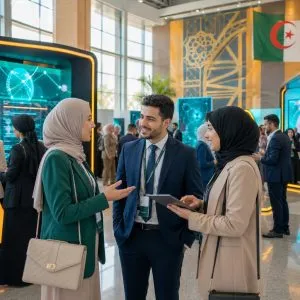
The Most Honest Portrait of Algeria’s Tech Workforce
What does Algeria’s software engineering workforce actually look like? Not through government strategy documents or investor pitch decks, but through the engineers themselves? The State of Software Engineering in Algeria, a survey of 517 developers conducted from February to March 2024, provides the most detailed portrait available.
The findings reveal a workforce increasingly connected to global markets through remote work, frustrated by domestic career limitations, and quietly building skills that position Algeria as an underestimated source of technical talent.
Who Responded
The anonymous survey captured inputs in Arabic, English, and French from Algerian software engineers both within the country and abroad, covering full-time employees, part-time workers, and freelancers. The diversity of employment arrangements reflects Algeria’s hybrid tech labor market, where the boundary between domestic and international employment has become permeable.
Algeria’s educational pipeline is selective: students must be in Mathematics, Science, or Technology tracks in high school to access university IT programs, and 93% of job postings for software developers require a formal degree.
The Technology Stack
JavaScript dominates as the most-used programming language, driven by its versatility across front-end, back-end, and mobile development. Python ranks second, reflecting global trends in data science, automation, and AI. PHP holds third place, sustained by the large installed base of PHP-powered web applications.
For mobile development, Flutter leads as the preferred cross-platform framework — a practical choice in a market where smaller teams must maximize output.
Cloud and DevOps adoption remains early-stage. Many Algerian development teams still rely on on-premises infrastructure or personal accounts on international platforms. This represents both a gap and an opportunity as Algeria builds sovereign cloud infrastructure through initiatives like Djezzy Cloud and the national data centers.
The Two-Economy Salary Picture
The compensation data tells a story of two parallel economies operating within the same country.
Domestic salaries remain substantially below international benchmarks, reflecting local cost-of-living economics. Mid-level developers at Algerian companies earn modest wages that make international opportunities compelling.
Remote work salaries follow a different trajectory:
- Entry-level and junior: Starting from approximately 500 euros per month
- Mid-level: Around 1,000 euros per month
- Senior: Top earners report salaries exceeding 60,000 euros annually
The gap between domestic and remote compensation creates a powerful gravitational pull toward international clients. For a senior developer, working remotely for a European company can mean earning five to ten times a comparable domestic salary. This dynamic shapes career decisions and talent availability in fundamental ways.
Advertisement
Remote Work as a Structural Feature
Remote work is not a perk in Algeria’s tech sector. It is a structural feature of the labor market.
29% of survey participants work for foreign companies remotely from Algeria. Among these remote workers: 46% are full-time employees, 42% are freelancers, and 12% are part-time employees. For those at Algerian companies, 60% have remote working options as a job benefit.
The remote work landscape is being formalized through ANAE (National Agency for Auto-Entrepreneurs), which offers streamlined online registration and a preferential flat-rate tax of 0.5% on turnover for self-employed tech workers. This formalization is critical: Algeria’s tech workforce has been operating in a semi-informal remote economy where payment mechanisms, tax obligations, and legal protections are ambiguous.
The Career Frustration Problem
The survey’s most sobering finding concerns career satisfaction. 43% of participants reported that lack of recognition or career growth opportunities is among their primary challenges.
Other frequently cited frustrations include insufficient government support for the tech industry, limited venture capital and startup funding, brain drain to France, Canada, and Gulf countries, and bureaucratic obstacles to starting technology businesses.
These challenges coexist with genuine progress. The government has established Algeria Venture, ANADE, and the Ministry of Knowledge Economy. The Algeria Startup Learning Expedition Program (ASEP) provides structured support. But the survey suggests these initiatives have not yet reached the critical mass needed to shift perceptions among working engineers.
The Startup Paradox
As LaunchBase Africa noted in 2025, Algeria has “more engineers than startups” — a paradox where a large technical workforce has not translated into a proportionate startup ecosystem. Algeria ranks #111 globally for startups according to StartupBlink, despite its engineering talent pool.
The survey data illuminates why. When career growth is limited, government support is perceived as insufficient, and remote work offers dramatically higher compensation, the rational choice for a skilled engineer is remote employment rather than entrepreneurial risk.
This is not a story about talent. It is a story about incentive design. The engineers are skilled, educated, and connected to global markets. The next layer to build is the ecosystem infrastructure — venture capital, regulatory simplicity, successful exit stories — that converts individual talent into company-building activity.
AI and Emerging Technologies
Python’s strong second-place ranking suggests a foundation for AI and machine learning adoption. The establishment of the Scientific Council of Artificial Intelligence at ENSIA signals institutional commitment. But AI integration into daily development workflows remains early-stage for most Algerian teams.
As AI coding assistants and LLM-powered development tools become standard globally, Algerian developers’ ability to adopt these tools will influence their competitiveness in both domestic and international markets.
Frequently Asked Questions
What are developer salaries in Algeria for remote work?
Remote work salaries range from approximately 500 euros per month for entry-level positions to over 60,000 euros annually for senior developers working for European companies. Domestic salaries are substantially lower. The gap creates a structural pull toward international clients — 29% of surveyed developers already work remotely for foreign companies.
What programming languages do Algerian developers use most?
JavaScript is the most-used language, followed by Python and PHP. Flutter leads as the preferred mobile development framework. Cloud and DevOps adoption remains early-stage, with many teams still relying on on-premises infrastructure or personal cloud accounts rather than enterprise architectures.
What is the biggest challenge for Algerian developers?
43% of survey participants cited lack of recognition or career growth opportunities as their primary frustration. Combined with insufficient government support, limited venture capital, and bureaucratic obstacles, these factors explain why Algeria has “more engineers than startups” and why 29% of developers choose remote foreign employment over domestic opportunities.
Sources & Further Reading
- The State of Software Engineering in Algeria — state-of-algeria.dev
- Salaries and Remuneration — State of Software Engineering in Algeria
- Remote Working — State of Software Engineering in Algeria
- Reported Challenges — State of Software Engineering in Algeria
- More Engineers Than Startups: Algeria’s Startup Ecosystem — LaunchBase Africa
- Launch of ANAE: Empowering Entrepreneurs in Algeria — DzairTube
- Cloud and DevOps Adoption — State of Software Engineering in Algeria