What the Five-Year Strategy Creates for the Market
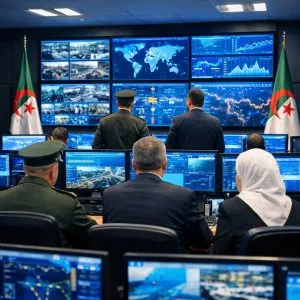
Algeria recorded over 70 million cyberattacks in 2024, ranking 17th globally among the most targeted nations. Presidential Decree 25-321, signed December 30, 2025, converts this threat reality into a formal five-year strategic mandate. The strategy is structured around five pillars: governance and institutional coordination, infrastructure protection, capacity building, international cooperation, and research and innovation. Each pillar creates distinct market demand that private-sector players can serve.
Decree 26-07, published in the Official Journal on January 21, 2026, is the operational instrument. It mandates that every public institution establish a dedicated cybersecurity unit with a qualified Chief Information Security Officer reporting directly to institutional leadership. According to EcoFinAgency, the directive applies to hundreds of ministries, public enterprises, and government bodies — creating immediate demand for security architecture design, staffing, tooling, and ongoing monitoring services.
ICT suppliers working with public institutions face mandatory security assessments before contracts can be signed. This is both a compliance barrier and a qualification moat: firms that obtain recognized security certifications first gain access to a public procurement market that their uncertified competitors cannot enter.
The Four Procurement Windows the Strategy Opens
1. Security Audit and Assessment Services
Every institution establishing a new cybersecurity unit under Decree 26-07 needs a baseline security assessment before it can define its unit’s scope and staffing requirements. This is an immediate, non-deferrable procurement need. CMS Law’s Algeria cybersecurity guide confirms that ASSI (the Algerian cybersecurity agency) provides a national reference framework against which institutional security postures are evaluated.
Algerian IT consultancies and emerging cybersecurity firms should develop a standardized “Cybersecurity Readiness Assessment” methodology aligned to the ASSI framework and the five pillars of Decree 25-321. The deliverable is a gap analysis report with a prioritized remediation roadmap — exactly the document a new institutional CISO needs to justify their unit’s first-year budget to leadership. Audit contracts for medium-sized public institutions are realistically in the 3,000,000–8,000,000 DZD range.
2. SIEM and SOC Deployment and Operation
The strategy’s infrastructure protection pillar requires real-time threat monitoring for critical national infrastructure. Institutions without an existing Security Operations Center will need either a dedicated SOC build-out or a managed SOC service provided by a qualified external vendor. Both represent multi-year recurring revenue opportunities.
Managed SOC services are particularly well-suited for smaller public institutions that cannot justify the staffing cost of an internal 24/7 operation. A managed SOC contract covering log aggregation, SIEM configuration, alert triage, and incident escalation can be structured as a per-institution monthly fee, with a single provider serving 10–30 institutions from a shared operations center. The capital investment in the SOC infrastructure is amortized across the client base; the recurring revenue per client is predictable.
3. Cybersecurity Training and Certification Programs
The strategy’s capacity-building pillar creates explicit demand for training programs aligned to national certification standards. Generisonline’s overview of Algeria’s cybersecurity regulations confirms that personnel in cybersecurity units are expected to hold recognized certifications. The practical bottleneck is not the willingness to train — it is the availability of training providers with curricula recognized by ASSI and CERT-DZ.
Algerian training providers, technical universities, and specialized schools have a genuine first-mover advantage here. An institution that negotiates with ASSI to have its cybersecurity curriculum recognized as meeting the Decree 26-07 competency requirements can market exclusively to a captive audience of newly created cybersecurity units that must train their staff. The training market for the initial wave of Decree 26-07 compliance is conservatively in the hundreds of millions of DZD over the 2026–2027 period.
4. CERT-DZ Integration and Incident Response Retainers
The strategy strengthens CERT-DZ’s role as the national coordination center for cyber incident response. Digital Policy Alert’s Algeria digest tracks the accelerating institutional activity around CERT-DZ since late 2025. Private-sector firms that establish formal relationships with CERT-DZ — through data sharing agreements, certified incident response retainers, or participation in CERT-DZ threat intelligence feeds — gain a credential that distinguishes them in public procurement evaluations.
An incident response retainer agreement with a public institution typically covers: a defined response time SLA (e.g., CERT-DZ liaison within 4 hours of notification), a named incident response team, a pre-agreed escalation protocol, and post-incident reporting. These agreements are renewable annually and create the recurring client relationships that make a cybersecurity practice predictable as a business.
Advertisement
The Certification Qualification Moat
The single most valuable action an Algerian technology company can take before the public procurement cycle for Decree 26-07 compliance fully opens is to obtain recognized security certifications. The strategy references ISO 27001 as the baseline management system standard, and ASSI’s own guidance uses it as the compliance reference. An Algerian firm with an ISO 27001 certified delivery practice is pre-qualified for a category of public contracts that non-certified competitors cannot access — regardless of price.
Secondary certifications that strengthen a procurement position include: ISO 22301 (Business Continuity), SOC 2 Type II (particularly useful for SaaS providers serving institutions that store sensitive data), and PECB-certified practitioners for DPO and CISO functions that must be filled under Law 25-11 and Decree 26-07 respectively. The certification investment — typically 500,000 to 2,000,000 DZD for an SME — pays for itself in a single qualifying contract.
What Comes Next in the Five-Year Arc
The 2025–2029 strategy is explicitly phased. The first two years (2025–2026) focus on institutional setup — creating the cybersecurity units mandated by Decree 26-07, establishing the governance structures, and deploying baseline monitoring capabilities. The middle years (2027–2028) shift to capability deepening — advanced threat intelligence, cross-sector information sharing, and national crisis simulation exercises. The final year (2029) is positioned as an evaluation and renewal phase.
For private-sector players, the implication is that the audit, assessment, and SOC deployment market is most accessible in 2026–2027 — the institutional units need to be equipped quickly. The training and certification market follows close behind, as the new CISOs need to staff up their units with qualified personnel. By 2028, the market shifts toward more sophisticated services: threat intelligence, penetration testing at national scale, and advanced incident response capabilities. Firms that enter the market in 2026 with foundational services build the client relationships and institutional knowledge that position them to deliver the higher-value services the strategy demands in its later years.
Algeria’s cybersecurity transformation is not a one-time procurement event — it is a multi-year structural market creation. The strategy’s five-year mandate ensures that the demand will be sustained, the institutional clients will be funded, and the qualification bar will be increasingly well-defined. For Algerian technology companies and managed-service providers willing to align their offerings to the CERT-DZ and ASSI framework, the next 24 months represent the best market entry window of the decade.
Frequently Asked Questions
Which specific certifications do Algerian tech firms need to qualify for cybersecurity public procurement under the new strategy?
The primary certification is ISO 27001 (information security management system), which ASSI references as the compliance baseline for institutional cybersecurity programs. Secondary qualifications that strengthen procurement positions include ISO 22301 (business continuity), PECB-certified CISO practitioners, and SOC 2 Type II for SaaS providers. Firms should contact ASSI directly for the current list of recognized certifications in the annual procurement guidelines, as the accreditation framework is expected to be formalized during 2026.
How large is the cybersecurity market opportunity created by Decree 26-07?
Decree 26-07 applies to hundreds of public institutions simultaneously — each requiring a baseline security assessment, SIEM or SOC capability, and trained personnel. Conservative estimates for the 2026–2027 first-phase procurement wave are in the range of several billion DZD across audit services, tooling contracts, and training programs. This is a structural market creation, not a one-time tender, because the five-year strategy includes phased capability deepening through 2029.
How should an Algerian MSP approach building a CERT-DZ relationship?
CERT-DZ maintains a directory of recognized incident response partners and participates in threat intelligence sharing arrangements with vetted private-sector firms. The practical approach is to: (1) document your incident response methodology in a format aligned to CERT-DZ’s published guidelines, (2) register your firm with ASSI’s vendor registry, (3) attend CERT-DZ coordination exercises or workshops when announced, and (4) propose a data-sharing pilot with a public institution client — CERT-DZ typically formalizes relationships with firms that demonstrate operational engagement rather than just applying for accreditation.
—
Sources & Further Reading
- Algeria Strengthens Cybersecurity Framework to Protect National Infrastructure — TechAfricaNews
- Algeria Orders Cybersecurity Units in Public Sector Amid Surge in Cyberattacks — EcoFinAgency
- Algeria Data Protection and Cybersecurity Laws — CMS Law
- Cybersecurity Regulations in Algeria: Compliance, Reporting, and Penalties — Generisonline
- Digital Policy Alert Algeria Digest — Digital Policy Alert
🔗 Related Intelligence

Algeria’s Cybersecurity Strategy 2025-2029: An Enterprise Compliance Readiness Guide

Algeria’s National Cybersecurity Strategy 2025-2029: A Deep-Dive Analysis

Algeria Decree 26-07: The Private Sector Compliance Playbook for Cybersecurity Units

Decree 26-07 Six Months In: How Algerian Public Bodies Are Standing Up Cybersecurity Units in 2026