The Financial Inclusion Gap That 5G Alone Cannot Close
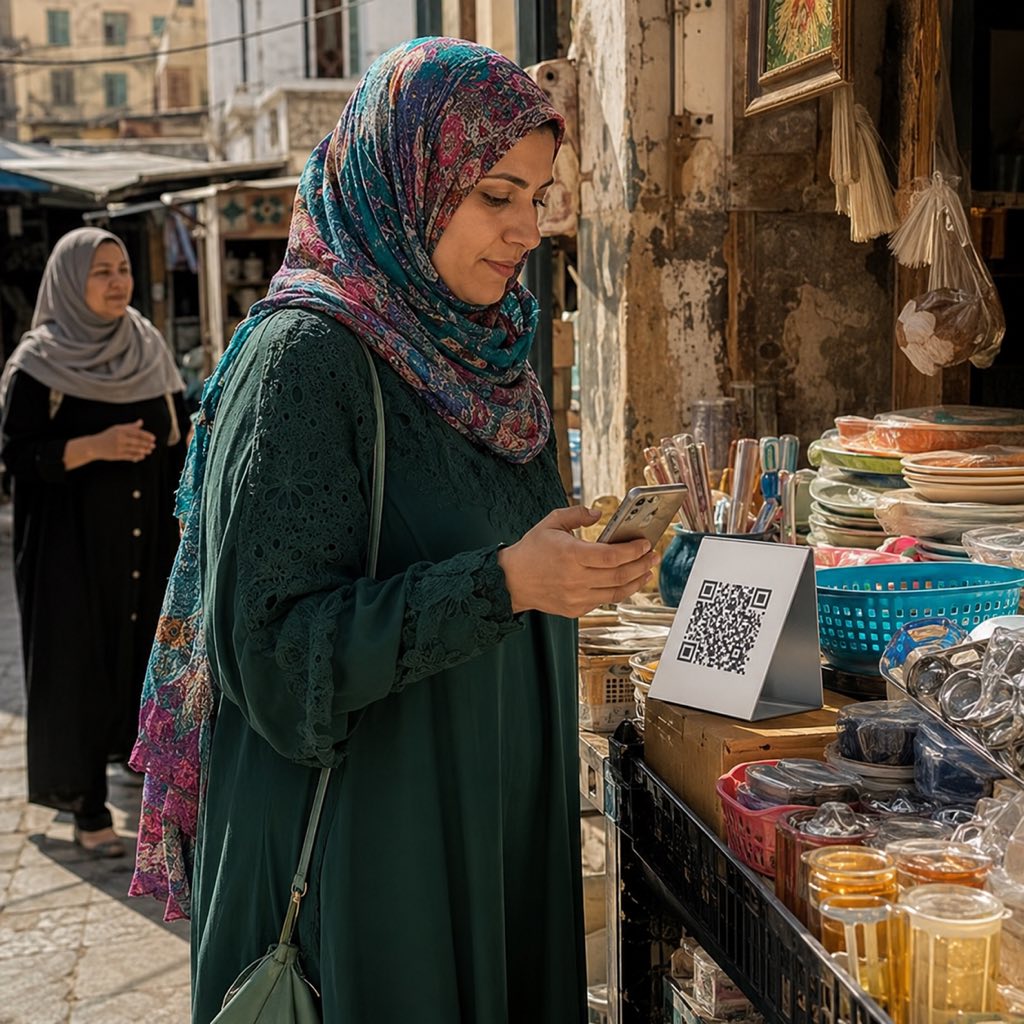
Algeria has 54.8 million active cellular connections — more than 116% of its population — yet only 16% of adults actively use digital payment methods. The arithmetic is jarring: a country with near-universal mobile coverage cannot get most citizens to pay digitally. The bottleneck is not connectivity. It is financial infrastructure, trust, and the absence of a mobile money product that meets people where they already are.
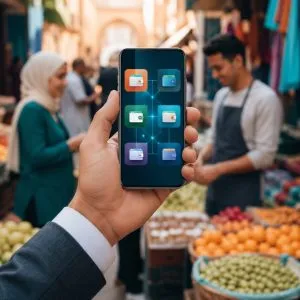
The unbanked population sits at approximately 57% of Algerian adults, according to the trade.gov digital economy guide for Algeria. That figure represents roughly 23 million adults who have no formal bank account, but almost all of them carry a mobile phone. In Q1 2024, mobile payments jumped 71% year-over-year — 12.5 million transactions recorded in a single quarter — suggesting that when the product is right, adoption moves fast. Algérie Poste’s BaridiMob app crossing 5 million downloads on Android is the clearest proof point.
The question for 2026 is whether MNOs — Djezzy, Mobilis, and Ooredoo — will be the ones to close this gap, or whether they will remain infrastructure providers while fintechs and postal institutions take the customer relationship.
Why MNOs Have a Structural Advantage No Fintech Can Replicate
Telecommunications operators have three assets that no fintech startup can buy: nationwide distribution, an existing billing relationship with every subscriber, and SIM-level identity verification that satisfies the first layer of KYC requirements. In markets where MNO-led mobile money took off — M-Pesa in Kenya, Orange Money in Senegal, MTN MoMo across West Africa — the winning formula was deploying financial services through the SIM, not through a separately downloaded app.
Algeria’s three MNOs collectively invested nearly $492 million in 5G licenses in late 2025, per reporting by Ecofin Agency: Mobilis paid approximately $170.7 million, Ooredoo paid $161.6 million, and Djezzy paid $159.2 million. This represents a massive infrastructure bet, but 5G alone does not translate into fintech revenue. The operators know this. If 12–15% of MNO revenues shifted to fintech-adjacent services — digital content, mobile wallets, B2B payments — analysts estimate that would yield $350–$440 million per year by 2030, contingent on regulatory opening.
The regulatory opening has begun. The Bank of Algeria’s Instruction No. 06-2025, published August 17, 2025, established the country’s first dedicated framework for Payment Service Providers (PSPs) — 36 articles covering digital wallets, agent networks, and consumer fund protection. For MNOs seeking to formalize mobile money products, this is the most important regulatory document in a decade. It defines the arena they would compete in.
Meanwhile, Algeria’s Fintech Strategy 2024-2030 sets an ambitious target: 50% of all transactions cashless by 2030, with a regulatory sandbox open to at least 20 fintech startups annually by 2026. MNOs are not startups, but a sandbox-first approach to mobile money licensing could be the fastest path to market.
Advertisement
The Competitive Landscape: Startups vs. MNOs vs. Algérie Poste
Algeria’s fintech ecosystem currently counts approximately 30–35 active fintech startups — including ESREF Pay, UbexPay, and Yassir (a super-app that has added financial services to its mobility and delivery core) — alongside bank-launched mobile platforms such as Banxy, the country’s first fully mobile-based banking platform. These companies are moving fast, but they face a distribution ceiling: they acquire users one download at a time, with no pre-existing billing relationship.
Algérie Poste operates the country’s deepest distribution network — post offices in every commune — and BaridiMob’s 5 million downloads give it the largest digital payments user base in the country. The “Switch Mobile” interoperability project, now operational, enables instant interbank transfers and QR-code payments across all Algerian banks and Algérie Poste. This is the infrastructure that MNO mobile money would need to plug into.
If MNOs obtain PSP licenses under the Bank of Algeria’s 2025 framework, they enter an already-crowded but underserved market. The differentiation will not come from technology — it will come from how operators structure their agent networks, whether they partner with banks or compete with them, and how aggressively they price for the unbanked segment versus the existing bank-account-holders who still prefer cash.
What Algerian Stakeholders Should Do About MNO Fintech
1. Regulators: Finalize the PSP Licensing Pathway for MNOs Before 2027
The Bank of Algeria’s Instruction No. 06-2025 created a legal basis for PSPs but did not explicitly designate MNOs as eligible applicants under a mobile money license category. The most urgent policy action is to clarify — in a follow-on circular or presidential decree — whether MNOs can hold a standalone PSP license or must partner with a licensed bank. The Senegal and Kenya models both required explicit MNO licensing mechanisms separate from bank licensing. Leaving this ambiguous will push operators toward bank partnerships that slow product innovation and keep pricing high. A 2026 or early-2027 deadline for clarity would allow operators to build products and infrastructure in parallel.
2. MNOs: Pilot Mobile Wallet Products Under the PSP Sandbox, Not Full Launch
Rather than waiting for a complete mobile money licensing framework, Djezzy, Mobilis, and Ooredoo should each apply to participate in the regulatory sandbox that Algeria’s Fintech Strategy 2024-2030 commits to opening by 2026. A sandbox pilot — limited geography, capped transaction volumes, monitored by the Bank of Algeria — accomplishes three things simultaneously: it generates the regulatory learning that the Bank needs to write a permanent mobile money framework, it lets operators refine the product for Algeria’s specific cash-dominant behavior, and it creates a competitive signal to fintech startups that the MNO lane is open. The cost of a sandbox pilot is a rounding error compared to the $159–$170 million already committed to 5G licenses.
3. Enterprise Finance Directors: Build MNO-Wallet Acceptance Into 2027 Payment Infrastructure Plans
Businesses that pay salaries, vendor invoices, or delivery fees in cash today need to act before mobile money is ubiquitous. The window to influence how MNO mobile money interoperates with business banking systems is the next 18 months — after a product launches and scales, the technical standards get locked. Companies with large unbanked workforces (construction, agriculture, retail distribution) should approach MNOs now, before products launch, to negotiate B2B salary disbursement partnerships. These conversations will determine whether MNO mobile money becomes a consumer-only product or the backbone of Algeria’s B2B payment infrastructure.
4. Fintech Startups: Position for Partnership, Not Competition
The 30–35 fintech startups active in Algeria cannot outbuild MNO distribution. The strategic response is not competition but vertical positioning: build the identity layer (eKYC), the credit scoring layer (using transaction data), or the merchant acceptance layer (POS terminals, QR codes) that MNO mobile money wallets will need to plug into. Startups that try to replicate the MNO distribution model will fail. Startups that build complementary infrastructure will become acquisition targets or platform partners. The Fintech Strategy 2024-2030’s sandbox commitment means that the regulator will be actively looking for fintech companies doing exactly this kind of infrastructure-layer work.
Where This Fits in Algeria’s 2026 Digital Economy Pivot
The MNO-fintech entry is not an isolated event — it is the predictable next step after a sequence of foundational moves: Bank of Algeria joining PAPSS for cross-border settlements in 2025, the Switch Mobile interoperability platform going live, and the PSP framework codifying who can offer digital wallets. Each step narrows the gap between “cash economy” and “digital economy” by removing one more structural obstacle.
The 71% jump in mobile payment transactions in Q1 2024 happened without MNO mobile money products in the market. It happened because Algérie Poste’s BaridiMob, SATIM’s infrastructure improvements, and the early fintech startups collectively lowered the friction enough for early adopters to shift behavior. If MNOs enter with the full weight of their distribution networks and SIM-level reach, the trajectory of adoption shifts from gradual to rapid.
For Algeria’s digital economy targets — 50% cashless transactions by 2030 — MNO participation is not optional. It is the mechanism by which the unbanked majority, not just the smartphone-owning, app-downloading minority, enters the digital financial system.
Frequently Asked Questions
What is preventing Algeria’s MNOs from launching mobile money today?
The primary barrier is regulatory clarity, not technology. While the Bank of Algeria’s Instruction No. 06-2025 created a PSP licensing framework for digital wallets, it did not explicitly designate MNOs as eligible for standalone mobile money licenses outside a bank partnership. Until the Bank of Algeria issues a follow-on directive clarifying MNO eligibility, operators must either partner with a licensed bank or wait for the sandbox framework to provide a testing pathway. The Fintech Strategy 2024-2030 commits to opening this sandbox by 2026.
How does MNO mobile money differ from Algérie Poste’s BaridiMob?
BaridiMob is a bank-backed digital wallet operated by Algérie Poste, which already holds a banking license and distributes through post offices nationwide. MNO mobile money would operate through SIM-based wallets linked to mobile numbers rather than bank accounts, and would reach users through the MNOs’ own agent networks, USSD menus, and app interfaces. The key structural difference is that MNO mobile money does not require a bank account — it uses the SIM as the account. This is what makes it potentially more powerful for the unbanked 57% who do not have a post office savings account either.
What does the Bank of Algeria joining PAPSS mean for MNO mobile money?
Algeria’s accession to the Pan-African Payment and Settlement System (PAPSS) in 2025 enables cross-border digital settlements in local currencies without routing through USD correspondent banks. For MNO mobile money products, PAPSS accession matters because it extends the settlement infrastructure to intra-African remittances — a massive use case for Algerian workers receiving money from diaspora communities and for traders paying suppliers across borders. If MNO wallets can plug into PAPSS, they become cross-border tools, not just domestic ones, which dramatically expands the commercial case for operators to invest in mobile money.
Sources & Further Reading
- Algeria’s Fintech Ecosystem in 2026: Building Momentum — The Fintech Times
- Algeria Digital Economy Guide — U.S. Commercial Service / trade.gov
- Algeria Awards 5G Licenses to Three Operators for Nearly $492 Million — Ecofin Agency
- Algeria’s New Digital Payment Law: 57% Unbanked at Stake — AlgeriaTech
- Algeria’s Payment Rails & How They Work — Transfi
🔗 Related Intelligence
Algeria’s Digital Services Export: How SMEs Earn Hard Currency via New Fintech Corridors
From 95% COD to Digital Trust: How Algerian Platforms Are Shifting Payments
Algeria’s Digital Payment Infrastructure: 78K Terminals, 644 Online Merchants, and a 46% Surge
AADL 3 and the Payment Cascade: How Government Mandates Are Accelerating Algeria’s Digital Economy