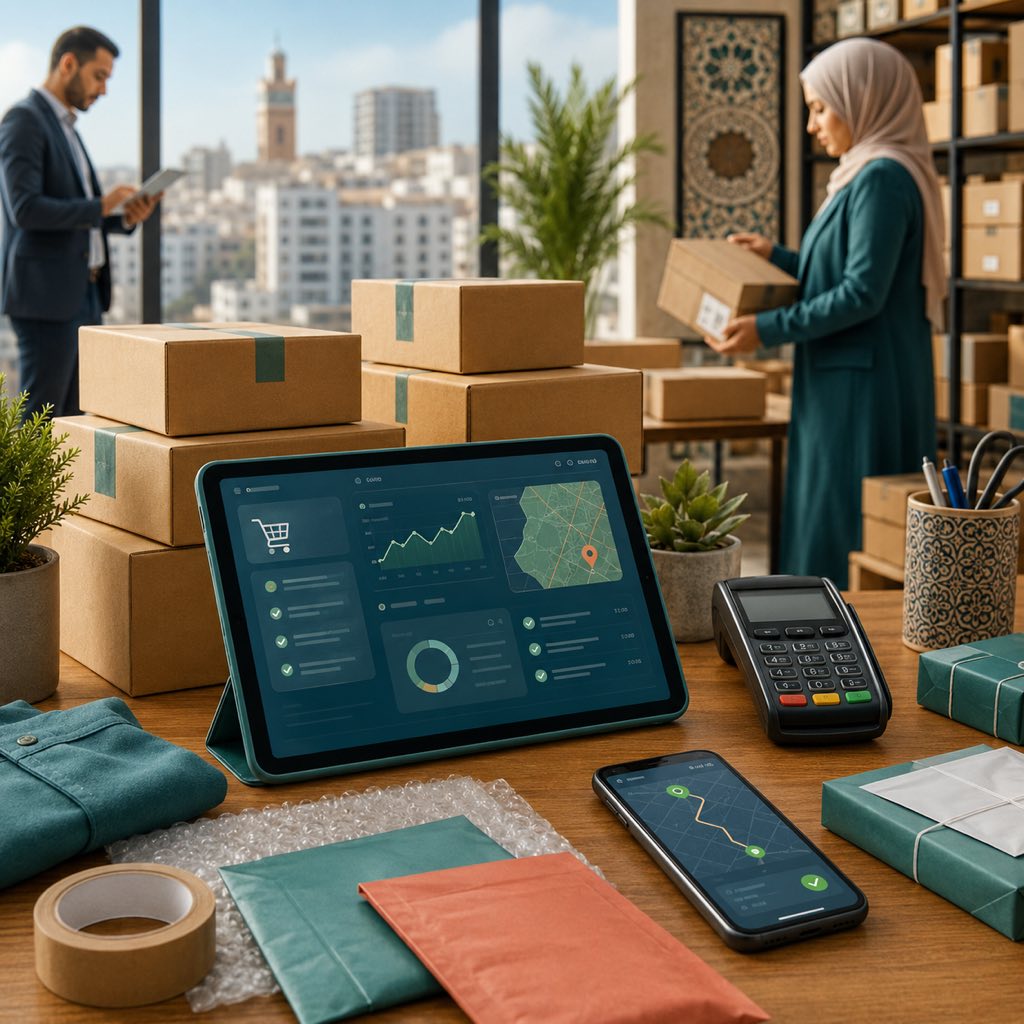
The COD Trap: When Every Sale Carries Hidden Risk
Algerian e-commerce has a structural paradox. The market is growing fast — valued at $1.9 billion in 2025 with nearly 200,000 active online merchants — yet the dominant payment method is one that can silently destroy margins. According to Easysell’s 2026 Algeria market analysis, 95% of all e-commerce orders in Algeria are still paid cash-on-delivery.
COD is not inherently bad. It eliminates buyer payment risk and extends the addressable market to the 57% of Algerians who remain unbanked or uncomfortable with card transactions. But COD transfers all the risk to the merchant: the product ships before payment is confirmed, and if the buyer refuses delivery, the merchant absorbs both the logistics cost and the holding time on unsold inventory.
The numbers are unforgiving. Easysell’s data shows return-to-origin (RTO) rates of 15–20% in major cities like Algiers, Oran, and Constantine — and rates exceeding 30% in rural and southern provinces. Couriers charge 300–600 DZD per shipment regardless of outcome, and COD collection fees run an additional 3–5% of order value. A merchant selling at a 25% gross margin with a 25% RTO rate can easily net close to zero on their COD orders before accounting for their own packaging and handling costs.
The good news: the tooling to solve this problem now exists in Algeria’s domestic ecosystem.
The Logistics Stack: What Each Layer Does
Algeria’s courier and platform ecosystem has matured significantly since 2022. Merchants now have access to a layered stack — order management, intelligent confirmation, carrier selection, and COD reimbursement — that can collectively reduce their effective RTO rate and accelerate cash cycles.
1. Lead with Yalidine for COD Reimbursement Speed
Yalidine is the largest logistics operator in Algeria with 160+ branches across 1,469 municipalities. Its primary advantage for merchants managing COD risk is daily COD reimbursement — the carrier returns collected cash to the merchant every 24 hours rather than waiting 3–7 days like most competitors. For merchants running on thin working capital, the difference between J+1 and J+5 cash cycles is meaningful: a merchant processing 50 orders per day at 3,500 DZD average order value has 875,000 DZD locked in float if reimbursement is delayed five days. Yalidine’s J+1 model cuts that float to 175,000 DZD.
Yalidine’s coverage across wilaya is also critical for reaching buyers outside the three major urban centres. Merchants who restrict delivery to Algiers, Oran, and Constantine limit their addressable market by roughly 60% of Algeria’s population. The RTO rate in secondary cities like Sétif, Annaba, or Tlemcen tends to run 5–10 points higher than Algiers — but Yalidine’s network density means a larger share of those orders are still genuinely confirmed before dispatch.
2. Use CODRocket to Filter Risky Orders Before They Ship
CODRocket is an order intelligence platform designed specifically for COD markets. Its core function is phone confirmation — an automated or human-assisted call to verify the buyer’s intent before the package is dispatched. CODRocket’s operational model scales across three phases: merchants processing 0–50 orders per day confirm manually; at 50–200 orders, they add WhatsApp automation; above 200 orders, a dedicated confirmation team handles dispatch routing across three or more carriers.
The confirmation step alone typically reduces RTO by 8–15 percentage points. A buyer who actually picks up the phone and confirms is dramatically less likely to refuse delivery than one who placed an impulsive order at 11pm. CODRocket integrates with Algeria’s major carriers for automated dispatch once an order is confirmed, reducing the administrative overhead on the merchant’s team.
3. Integrate Chargily Pay to Capture the Growing Card Segment
Not every Algerian buyer is unbanked. A growing segment — particularly urban professionals under 40 — holds CIB cards, Edahabia accounts, or uses DZ-native digital wallets. Chargily Pay is identified as the most Shopify-compatible local gateway and processes CIB, Edahabia, and cash payments in one integration.
The strategic value of Chargily Pay is not replacing COD — it’s giving the buyer a choice. Merchants who offer both COD and card payment at checkout convert their card-willing buyers (typically 5–15% of traffic, but rising) into zero-RTO orders. These buyers have already committed funds; there is no return risk. Even a small shift from COD to card meaningfully improves the blended RTO rate.
Advertisement
What This Means for Algerian Merchants
The merchants gaining sustainable margins in Algeria’s COD market are not the ones avoiding COD — they’re the ones systematically attacking each point where COD leaks value.
4. Audit Your Order Confirmation Rate First
Before adding any tool, measure your current confirmation rate: what percentage of placed orders are verbally or digitally confirmed before dispatch? If you don’t know this number, your RTO rate is telling you — anything above 20% in Algiers or 25% nationally suggests a confirmation gap. CODRocket’s dashboard surfaces this metric directly.
5. Match Carrier Selection to Wilaya, Not to Price
The cheapest carrier in a given wilaya is rarely the best choice. A carrier with limited coverage south of Sétif will have poor delivery attempt rates — and each failed attempt costs a re-delivery or an RTO. Yalidine’s wilaya-level tracking allows merchants to monitor per-province RTO rates and adjust carrier routing accordingly. Maystro and ZR Express cover complementary territories and are worth testing for specific route segments.
The Bigger Picture
The COD problem in Algerian e-commerce is not a consumer trust failure — it is an infrastructure maturity gap that is now actively closing. The platforms merchants have access to in 2026 are meaningfully better than what existed in 2022. The merchants who recognize COD management as a core operational discipline — not a logistics vendor decision — are the ones who will compound their margins as the market scales.
Algeria’s e-commerce market is projected to grow well past $2 billion in the next two years. The margin advantage will belong to the merchants who build the right stack early, confirm every order before dispatch, and use carrier data to route intelligently by wilaya. The tools exist. The edge belongs to merchants who use them.
Frequently Asked Questions
What is the typical COD return rate for Algerian e-commerce merchants?
Return-to-origin (RTO) rates in Algeria run 15–20% in major cities (Algiers, Oran, Constantine) and can exceed 30% in rural and southern provinces, according to Easysell’s 2026 market analysis. These rates vary significantly by product category — impulse-purchase fashion items run higher than planned electronics purchases.
How does Yalidine’s daily COD reimbursement help merchant cash flow?
Yalidine returns collected COD cash to merchants every 24 hours (J+1), compared to the J+3 to J+5 cycle typical among smaller carriers. For a merchant processing 50 daily orders at 3,500 DZD average value, this eliminates roughly 700,000 DZD in working capital float — critical for merchants who need to reorder inventory on short cycles.
Can Algerian merchants realistically reduce their COD reliance?
Yes, partially. Chargily Pay integration allows merchants to offer CIB card, Edahabia, and digital wallet payment alongside COD. Urban buyers under 40 increasingly prefer card payment when the option is available. Merchants who add Chargily Pay typically see 5–15% of orders shift to card — converting those from RTO-risk orders to guaranteed-payment orders and improving blended margins.
Sources & Further Reading
🔗 Related Intelligence

Algeria E-Commerce Fulfillment: The Warehouse Gap Holding Back a $7 Billion Market

The COD Trap: How Cash on Delivery Is Strangling Algeria’s E-Commerce

The COD Trap: Why Algeria’s Ecommerce Trust Problem Is a Logistics Problem Too

Algeria’s E-Commerce Pivot: From COD Dominance to Digital Payment Adoption