📚 Part of the Open Innovation in Algeria series — the complete framework for corporate-startup-university collaboration.
Agriculture is Algeria’s second-largest economic sector after hydrocarbons, contributing approximately 12% of GDP and employing a significant share of the workforce. The country has 8.5 million hectares of useful agricultural land (SAU), from the fertile Mitidja plain outside Algiers to the Saharan oases of Ghardaia, Biskra, and El Oued, where dates, tomatoes, and cereals grow under extreme conditions.
Yet Algeria spends nearly $10 billion on food imports annually — including wheat, powdered milk, sugar, and edible oils — making it Africa’s second-largest food importer after Egypt, according to UNCTAD’s 2025 data. The OAIC (Office Algérien Interprofessionnel des Céréales) alone manages imports of over 9 million tonnes of wheat per year. The gap between agricultural potential and actual production is enormous, and the primary cause is not land or labor — it is technology transfer and adoption.
Algeria has world-class agricultural research institutes (ITGC, INRAA, ENSA) that have developed innovations in drought-resistant varieties, efficient irrigation systems, and soil management techniques. It also has a nascent agritech startup scene, recently boosted by the EU-backed Agripreneurs program. What it lacks is the connective tissue — the open innovation infrastructure — that links research to farms to markets.
In October 2025, Algeria created a National Scientific Council for Food Security, bringing together 34 researchers and ministry representatives to integrate research into agricultural policy. This article maps the landscape and proposes a framework for agricultural open innovation that could reduce Algeria’s food import dependency while positioning the country as a leader in arid-zone agriculture.
The Research Side: What Algeria’s Institutes Have Developed
ITGC (Institut Technique des Grandes Cultures)
Algeria’s main cereal crops research institute, established in 1974, operates nine experimental stations distributed across the country’s different climate zones, including stations at El Khroub, Constantine, and Setif. ITGC has developed:
- Drought-resistant wheat varieties adapted to Algeria’s semi-arid conditions, tested across 18 locations in collaboration with CIMMYT and ICARDA
- Conservation agriculture techniques — no-till farming methods that improve soil health and reduce water consumption
- Integrated pest management protocols, including work on durum wheat disease resistance and genetic variation studies
INRAA (Institut National de la Recherche Agronomique d’Algérie)
Algeria’s national agricultural research institute, under the Ministry of Agriculture, covers a broad mandate:
- Date palm improvement: Research on varieties resistant to Bayoud disease, which has devastated palm groves across the Sahara. Algeria is one of the world’s largest date producers, with Biskra alone accounting for 31% of national production.
- Olive sector research: INRAA hosted the First International Symposium on the Olive Sector in the Mediterranean Basin in April 2025, signaling growing attention to olive oil quality and production optimization.
- Greenhouse cultivation: Research on greenhouse designs for Saharan conditions, where Biskra leads the country in protected crop agriculture, producing over 26% of Algeria’s greenhouse tomatoes.
ENSA (Ecole Nationale Superieure Agronomique)
Algeria’s oldest agricultural higher education institution, founded in 1905 in El Harrach, Algiers, trains agricultural engineers and conducts research across multiple areas:
- Precision irrigation models calibrated for Algerian soil types and climate zones, including research on durum wheat irrigation management in the Mitidja plain
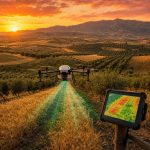
- Remote sensing for crop monitoring leveraging ASAL satellite imagery (AlSat-2A/2B provide 2.5m panchromatic resolution for agricultural monitoring)
- Agroforestry systems combining fruit trees with annual crops for soil conservation in arid zones
The Problem
These innovations exist in reports, thesis papers, and demonstration plots — but reach only a fraction of Algeria’s over one million farming households. The National Scientific Council for Food Security, created in late 2025 with 34 members led by Amar Azzioun, is a first step toward bridging this gap — but structural mechanisms for technology transfer from lab to field remain largely absent. Living Labs and Citizen Innovation proposes a model where farmers, researchers, and startups co-develop solutions in real field conditions.
The Farmer Side: Why Adoption Stalls
Small Farm Dominance
Roughly 70% of Algerian farms are under 10 hectares, with an average farm size of 8.3 hectares according to agricultural census data. These smallholders often cannot afford expensive technology, lack internet connectivity in many rural areas, and rely on generational knowledge rather than institutional research.
Trust Deficit
Farmers have seen government programs come and go. Extension services that visit once, leave pamphlets, and never return have created deep skepticism. Farmers trust neighboring farmers, not researchers in lab coats.
Missing Last Mile
Even when farmers want to adopt new techniques, the support infrastructure that would help them succeed is still being built:
- No widespread local agronomist networks to guide implementation
- No affordable equipment rental services for precision agriculture tools
- Limited digital platforms connecting farmers with research or markets
- No insurance products that de-risk trying new techniques
Language and Digital Barriers
Agricultural research is published in French and English. Most Algerian farmers speak Arabic and Tamazight. Digital tools designed for smartphone-literate urban users do not serve a 55-year-old cereal farmer in Setif province.
The Startup Side: Nascent but Growing
A small but promising agritech startup ecosystem is emerging in Algeria, recently strengthened by institutional support.
What Exists
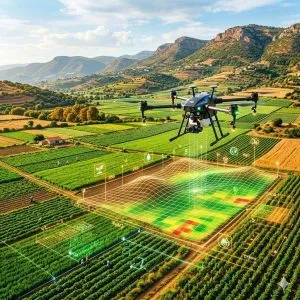
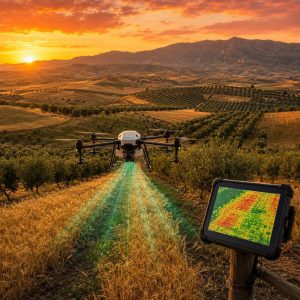
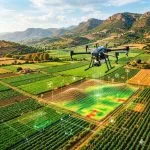
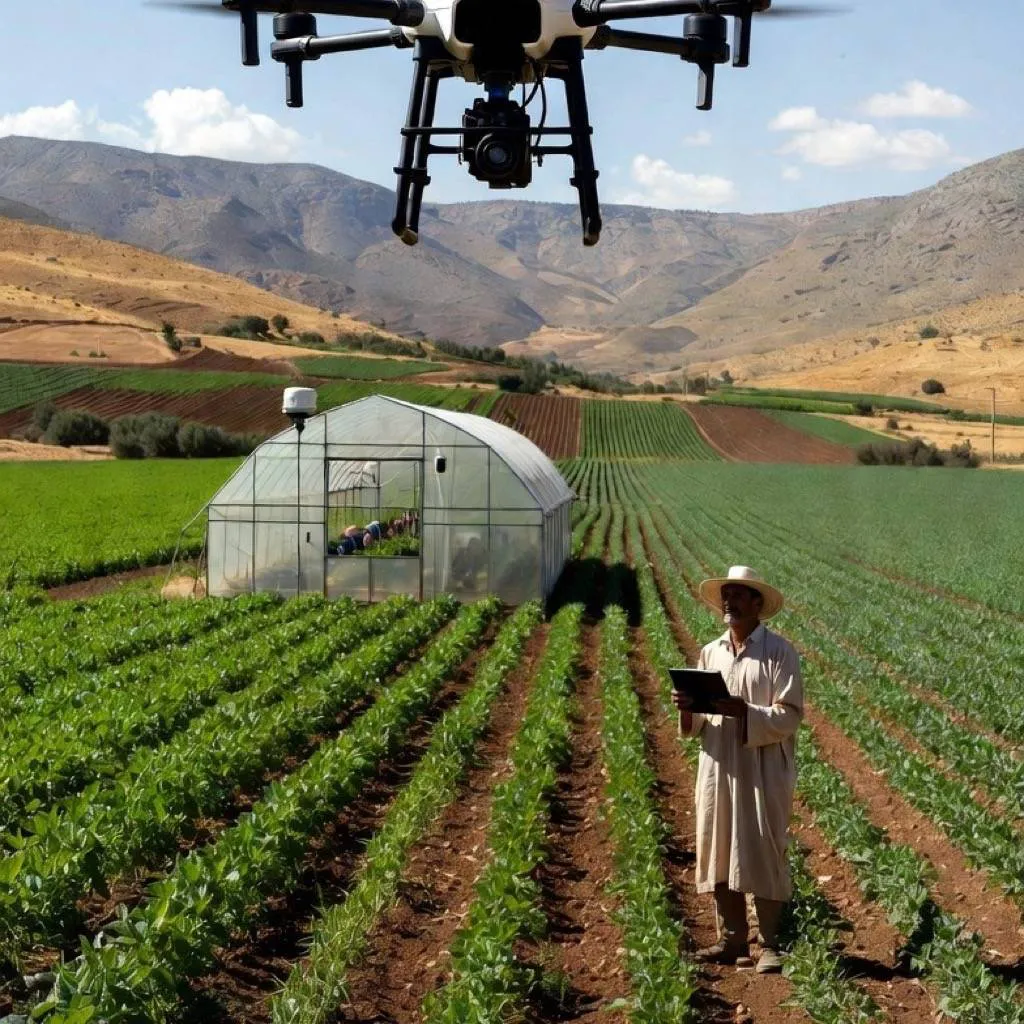
- FarmAI: An Algerian agritech startup that won second prize globally and the People’s Choice Award at Huawei’s Tech4Good competition, securing $100,000 to automate wheat rust detection using drones and AI vision systems
- AgriEdge DZ: A platform connecting farmers with markets and data-driven solutions
- HydroGreen: A startup specializing in smart irrigation systems
- Agripreneurs program: Launched in 2025, co-financed by the EU and Germany, implemented by GIZ under the Ministry of Knowledge Economy. The InnovAgro division supports startups building IoT, AI, and drone solutions for agriculture — from water optimization to crop monitoring via satellite data
What’s Missing
- AI-powered advisory at scale: No Algerian platform yet offers personalized, data-driven farming recommendations reaching thousands of farmers (common in Morocco through OCP’s Al Moutmir)
- Supply chain tech: Cold chain monitoring, quality tracking, and export compliance tools remain largely absent — contributing to estimated 20-30% post-harvest losses
- Agricultural finance: No fintech products designed for the agricultural cycle (seasonal income, crop-based lending, weather-indexed insurance)
- Data infrastructure: No aggregated agricultural data platform that startups can build on, despite ASAL’s satellite capabilities and ANM’s weather data
Advertisement
The Open Innovation Opportunity
Model 1: Research-Farmer Innovation Partnerships
Concept: Create formal, long-term partnerships between research institutes and farming cooperatives where innovation flows both ways.
How it works:
- ITGC/INRAA identifies 5-10 farming cooperatives across different climate zones as “Innovation Partners”
- Researchers spend 2-4 weeks per season embedded with partner cooperatives, understanding real field conditions
- Farmers contribute indigenous knowledge about local soil, water, and pest patterns
- New techniques are co-developed and tested on partner farms before wider dissemination
- Results (yield improvements, cost savings) are documented and shared through farmer-to-farmer networks
Why open innovation, not top-down extension: Traditional extension says: “Here is what research says; do this.” Open innovation says: “Here is what we have found; what works in your field? Let us adapt it together.” Co-developed techniques consistently see higher adoption rates than imposed ones because farmers trust solutions they helped create.
Model 2: Agritech Challenge Programs
Concept: Algeria’s large agricultural cooperatives, food processors, and government agencies issue specific technology challenges to startups and researchers.
Example challenges:
- OAIC: “Reduce post-harvest wheat losses using technology” — The state cereals office manages Algeria’s entire wheat procurement chain and loses significant volumes between farm and mill. A technology challenge with a pilot contract attached could drive real solutions.
- Cevital: “Develop a quality traceability system for olive oil from farm to export” — Algeria’s largest private agri-food processor already operates olive oil processing facilities in Bejaia and has direct commercial interest in supply chain transparency.
- Ministry of Agriculture: “Create a digital platform for crop reporting that works in Arabic on basic smartphones” — With the 2025 Agripreneurs program already supporting agritech startups, a government-backed challenge could channel that energy toward specific national priorities.
Model 3: Saharan Agriculture Innovation Hub
Concept: Build a dedicated open innovation center in the Saharan agricultural belt (Biskra, Ghardaia, or El Oued) focused on the unique challenges of desert farming.
Why the Sahara specifically:
- Saharan agriculture is Algeria’s fastest-growing agricultural zone. Biskra leads the nation in both date production (31% of national output) and greenhouse vegetables (26% of protected tomatoes).
- The challenges are unique and globally relevant: extreme heat, water scarcity, soil salinity, sandstorms
- Solutions developed here have export potential to other arid zones (MENA, Sahel, Central Asia)
- No existing innovation center serves this specific niche globally
Hub activities:
- Year-round test plots for drought-resistant varieties, precision irrigation, and greenhouse optimization
- Rotating researcher residencies (3-6 months) for national and international agricultural scientists
- Startup incubation for agritech companies focused on arid-zone challenges
- Farmer training center using co-designed curricula in Arabic
- Data collection station feeding a national agricultural data platform
Model 4: Agricultural Data Commons
Concept: Create a shared, open data platform aggregating:
- Satellite imagery of agricultural zones from ASAL (AlSat-2A/2B already provide 2.5m/10m resolution imagery used for crop monitoring)
- Weather data from ANM (Agence Nationale de Meteorologie)
- Soil surveys from BNEDER (Bureau National d’Etudes pour le Developpement Rural)
- Crop yield data from wilaya agricultural offices
- Market price data from wholesale markets
Open to: Researchers, startups, cooperatives, and government agencies under open data licensing. This data commons becomes the foundation on which the entire agritech ecosystem builds — from AI-powered advisory tools to insurance products to supply chain optimization.
International Benchmarks
Morocco: OCP Group’s Al Moutmir Program
Morocco’s OCP (the world’s largest phosphate producer) has invested heavily in agricultural open innovation through its Al Moutmir program, launched in 2018 in partnership with Mohammed VI Polytechnic University (UM6P):
- Soil mapping at scale: Over 167,400 soil analyses across 560,000 hectares using Laser Induced Breakdown Spectroscopy
- Direct farmer support: 40,000 farmers directly reached, 540,000+ through digital platforms, with 3,500 specialized fertilizer formulas developed
- Startup integration: Smart-packaging technology from UM6P startup SensThings, with over 1 million smart-packaged fertilizer bags deployed in the 2024-2025 season
- Training infrastructure: 17,500+ training sessions and the Agripedia online platform for research dissemination
Singapore: Agri-Food Innovation Park
Singapore — a country with almost no farmland — has built a substantial agritech innovation ecosystem:
- AFIP (Agri-Food Innovation Park): An 18-hectare facility bringing together high-tech farming, R&D, and talent development as part of the Northern Agri-Tech and Food Corridor
- Enterprise Singapore investment: Over S$250 million channeled into the agri-food tech industry, with additional co-investment through SEEDS Capital
- GROW accelerator: Singapore’s dedicated agri-foodtech accelerator (AgFunder + Enterprise Singapore), supporting startups in urban farming, aquaculture, and alternative proteins
Kenya: M-Farm and Mobile Agriculture
Kenya’s M-Farm demonstrates how mobile-first agritech can work in African contexts:
- SMS-based market price information (via Safaricom’s 20255 number) giving farmers real-time pricing to counter exploitative middlemen
- Direct marketplace connecting smallholder farmers with urban and export buyers
- Founded in 2011 by three Kenyan women (Jamila Abass, Linda Omwenga, Susan Oguya), proving that local founders understand local agricultural challenges better than imported solutions
The Economic Case for Algeria
Total investment: ~$4M/year — a fraction of Algeria’s annual food import bill.
Context: Algeria’s 2026 agriculture budget received a 4% increase to support irrigation efficiency, seed system improvement, rural mechanization, and agri-food processing. Dedicating even a small portion of this budget to open innovation infrastructure would generate outsized returns compared to traditional spending.
For a broader perspective on how Algeria’s largest companies are structuring their engagement with the innovation ecosystem, see Corporate Open Innovation in Algeria.
Frequently Asked Questions
What is from the sahara to the plate?
From the Sahara to the Plate: How Open Innovation Could Transform Algeria’s Agriculture covers the essential aspects of this topic, examining current trends, key players, and practical implications for professionals and organizations in 2026.
Why does from the sahara to the plate matter?
This topic matters because it directly impacts how organizations plan their technology strategy, allocate resources, and position themselves in a rapidly evolving landscape. The article provides actionable analysis to help decision-makers navigate these changes.
How does the research side: what algeria’s institutes have developed work?
The article examines this through the lens of the research side: what algeria’s institutes have developed, providing detailed analysis of the mechanisms, trade-offs, and practical implications for stakeholders.
Sources & Further Reading
- Algeria Launches Science Council to Battle Food Import Reliance — Ecofin Agency
- Algeria Unveils EU-Backed Agritech Program to Support Startups — Innovation Village
- OCP Group’s Al Moutmir: Pioneering Agricultural Innovation in Morocco — AgriFocus Africa
- Algeria to Cut $10 Billion Food Import Bill Through Science — Milling MEA
- FAO GIEWS Country Brief — Algeria
- ITGC — Institut Technique des Grandes Cultures
- INRAA — Institut National de la Recherche Agronomique d’Algerie