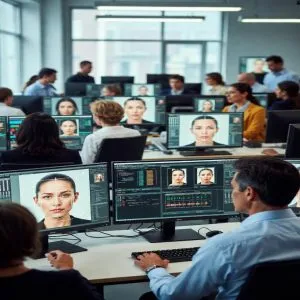
The World’s Fastest Takedown Clock
On February 10, 2026, India’s Ministry of Electronics and Information Technology (MeitY) notified amendments to the Information Technology (Intermediary Guidelines and Digital Media Ethics Code) Rules, 2021, establishing the most aggressive synthetic content regulation anywhere in the world. Effective February 20, 2026 — a mere ten-day implementation window — the amendments slash the takedown deadline for reported deepfake content from 36 hours to 3 hours for government and court orders, and from 24 hours to 2 hours for non-consensual intimate imagery. The rules also mandate visible labels on all synthetic content, require embedded metadata for provenance tracking, and introduce the first legal definition of “synthetically generated information” (SGI) in Indian law.
The amendments apply to all “significant social media intermediaries” operating in India — defined under the existing IT Rules as platforms with more than five million registered Indian users — as well as to online gaming intermediaries and any platform offering AI-powered content generation tools to Indian users. With India’s internet user base having crossed 950 million in 2025, this effectively captures every major global platform.
The speed of the regulatory response reflects the intensity of India’s deepfake crisis. Research tracking deepfake incidents showed a 280% year-over-year increase in deepfake cases in India during 2024, with particular concentrations around the general elections, where political parties spent an estimated $50 million on AI-generated content and more than 50 million AI-generated voice clone calls were made in the two months before voting began. Celebrity manipulation cases generated national outrage, and a surge in non-consensual intimate imagery affected women across the country. The political will to act was further galvanized by high-profile cases involving manipulated videos of political figures, including deepfakes depicting politicians in fabricated scenarios designed to inflame communal tensions.
For global technology platforms, the amendments create an operational challenge of unprecedented scale. Implementing a 2-to-3-hour takedown regime for a country with nearly one billion internet users, 22 official languages, and culturally specific content norms requires infrastructure and processes that most platforms do not currently possess.
What the Rules Actually Require
The IT Rules Amendment 2026 operates on three distinct regulatory layers: takedown obligations, labeling requirements, and metadata mandates. Understanding each layer is essential to grasping the amendment’s full implications.
The takedown layer introduces a tiered response system. Content deemed illegal by a court or the government must be removed within 3 hours from receipt of the order — down from 36 hours under the previous rules. For the most sensitive violations, specifically non-consensual intimate imagery including AI-generated deepfake nudity, the deadline is even shorter: 2 hours, reduced from 24 hours. General user grievances must now be resolved within 7 days, down from 15 days under the prior framework.
Critically, the takedown clocks run continuously — there is no exception for nights, weekends, or holidays. Platforms must maintain 24/7 content moderation capabilities specific to synthetic content, with response teams that can evaluate and act on complaints within the mandated windows. If a platform fails to meet the deadlines, it risks losing safe harbor protection under Section 79 of the IT Act — meaning it can be held directly liable as if it had created the illegal content. For major violations involving biometric deepfakes using facial recognition, voice cloning, or iris scanning without consent, penalties can reach up to INR 250 crore (approximately $30 million).
The labeling layer requires that all AI-generated or AI-modified content distributed through covered platforms carry a visible, persistent label identifying it as synthetic. The label must be “clearly and prominently” displayed — in the same language as the content, positioned so that it is visible without scrolling or interaction. For audio content, an audible disclosure is required. Notably, the earlier draft’s proposed 10% watermarking requirement was dropped in the final rules in favor of flexible labeling standards.
The metadata layer goes further. All synthetic content must contain embedded metadata that identifies the content as AI-generated, records the date and time of generation, identifies the tool or platform used to create it, and persists through downloading and resharing. While MeitY has left the exact technical specification open, analysts widely expect C2PA (Coalition for Content Provenance and Authenticity) standards to form the basis of compliance. The persistent provenance requirement is technically ambitious, as most existing metadata systems are easily stripped by common image processing operations, social media compression, and screenshot capture.
The First Legal Definition of “Synthetically Generated Information”
One of the amendment’s most significant contributions to global AI governance is its legal definition of “synthetically generated information” (SGI). India is among the first major jurisdictions to codify a legal definition that attempts to draw the line between AI-generated and human-created content.
The definition encompasses any audio, visual, or audiovisual content created or altered algorithmically to appear real or indistinguishable from a natural person or real-world event. This captures deepfake videos, AI-generated voice imitations, synthetic avatars, and other generative AI outputs capable of impersonation or deception.
This definition is both broader and more specific than approaches in other jurisdictions. It is broader in that it captures content “altered algorithmically” — a threshold that could include AI-enhanced photographs, voice-cloned audio, and heavily AI-modified content. It is more specific in its focus on content designed to “appear real or indistinguishable” from genuine material, which appears to exclude clearly fictional AI-generated content and obvious creative applications.
Legal analysts have identified several ambiguities. The phrase “algorithmically altered” lacks a quantitative threshold — at what point does AI-assisted editing cross from enhancement to synthetic generation? The focus on “indistinguishable” content creates questions about clearly labeled AI art or educational demonstrations. And the broad framing could potentially capture traditional software tools with increasingly sophisticated AI-powered features.
MeitY has indicated that it will issue interpretive guidance to address these ambiguities, but the guidance was not available as of the amendment’s effective date. Platforms are therefore left to make their own interpretive judgments, creating inconsistency and potential liability exposure.
Advertisement
Over-Censorship and Free Expression Risks
India’s civil society organizations and international press freedom advocates have raised significant concerns about the amendment’s potential for over-censorship.
The compressed takedown windows create enormous pressure on content moderators to err on the side of removal. When a moderator has two to three hours to evaluate a complaint about potentially synthetic content — including verifying whether the content is actually AI-generated, assessing whether it meets the legal threshold, and determining whether it depicts a real individual without consent — the rational response is to remove first and evaluate later. Internet Freedom Foundation founder Apar Gupta has warned that compressed deadlines “incentivise defensive takedowns” and that “satire, political dissent, and artistic expression may vanish before any human appeal.”
The IFF has gone further, characterizing the amendments as introducing “severe digital rights violations that fundamentally undermine constitutional protections.” The organization has called for the draft rules to be withdrawn, arguing that the combination of impossibly short timelines and harsh penalties for non-compliance creates a structural incentive for platforms to suppress speech rather than risk liability.
The amendment’s application to political content is particularly sensitive. India has a vibrant tradition of political satire, parody, and commentary that frequently involves manipulated images and videos. While the amendment includes an exception for clearly identified parody or satire, the determination of what constitutes “clearly identified” is left to platforms’ moderation teams, who may lack the cultural and linguistic context to distinguish between deceptive deepfakes and satirical political commentary across India’s diverse regional languages.
International organizations, including the Committee to Protect Journalists, have expressed concern that the amendment could be weaponized against journalists and opposition figures. A political actor who wants to suppress unfavorable content could file a synthetic content complaint, triggering the takedown clock and forcing the content offline while the platform evaluates the claim. Even if the content is restored after review, the temporary removal during a critical window could serve the complainant’s purpose.
Platform Compliance Challenges
For platforms operating in India, the amendment creates operational challenges across multiple dimensions: detection, moderation, labeling, and metadata.
Detection is the foundational challenge. To comply with the labeling and metadata requirements, platforms must deploy what MeitY describes as “reasonable and appropriate technical measures” to verify user declarations regarding synthetic content and to identify unlabeled SGI at the point of upload. Current AI detection tools — including classifiers developed by major AI labs and academic researchers — have significant limitations. Detection accuracy varies widely depending on the generation model used, the content type, and the degree of post-processing, and false positive rates remain a concern.
Moderation capacity is the operational challenge. The 2-to-3-hour takedown windows require platforms to maintain India-specific content moderation teams capable of processing complaints in real time, 24 hours a day. For platforms that currently handle India content moderation from centralized global operations, this may require establishing dedicated India-based teams with language capabilities covering Hindi, English, and multiple regional languages.
The metadata persistence requirement is the technical challenge. While MeitY has left the exact technical format open, the expectation that metadata survives downloading, screenshotting, and resharing remains an unsolved problem at scale. The C2PA standard provides a framework for embedding provenance information, but experts acknowledge that it has significant gaps: metadata can be stripped, interoperability across platforms is weak, labels can be subtle, and many AI tools — especially open-source models — lack built-in provenance capabilities.
Several platforms have reportedly approached MeitY to request a phased implementation timeline, arguing that the 10-day window between notification and enforcement was insufficient to deploy the required technical infrastructure. As of late February 2026, MeitY has not granted formal extensions but has indicated that enforcement during the initial period will focus on “egregious violations” rather than technical compliance gaps.
How India’s Approach Compares Globally
India’s amendment is part of a global trend toward synthetic content regulation, but its approach is distinctive in several respects.
The European Union’s AI Act requires labeling of AI-generated content through transparency obligations, with a Code of Practice for marking and labeling due to take effect in August 2026. However, the EU does not impose specific takedown timelines for deepfakes. The Digital Services Act framework requires “expeditious” removal of illegal content without specifying a numerical deadline, and the EU distinguishes between illegal deepfakes (which must be removed) and deceptive but lawful deepfakes (where the remedy is labeling, not removal). The EU relies on voluntary adoption of the C2PA standard rather than mandating persistent metadata.
The United States has moved faster on deepfakes than on broader AI regulation. The Take It Down Act, signed into law by President Trump on May 19, 2025, criminalizes the non-consensual publication of intimate images including deepfakes, with platforms required to establish notice-and-removal processes by May 2026. The DEFIANCE Act, which passed the Senate in January 2026, creates a federal civil right of action for survivors of non-consensual deepfakes and awaits House action. At the state level, Texas and California have enacted deepfake-specific laws, but none approaches the breadth or speed of India’s requirements.
South Korea’s deepfake law, amended in September 2024, imposes criminal penalties for creating and distributing non-consensual deepfake sexual imagery — up to seven years in prison for creation or distribution, and up to three years or a fine of 30 million won ($22,600) for possession or viewing. However, South Korea’s law addresses sexual deepfakes specifically and does not cover the broader category of synthetic content.
India’s 3-hour takedown is the most aggressive timeline anywhere in the world. For comparison, Germany’s NetzDG — previously the global standard for content takedown speed — allows 24 hours for “obviously illegal” content and seven days for content requiring evaluation. Australia’s eSafety Commissioner uses an industry code framework that applies to both real and synthetic material but is more flexible and less prescriptive than India’s rules.
The question is whether India’s approach will prove effective or whether the aggressive timelines will push synthetic content to platforms outside regulatory reach or to encrypted channels. The experience of other aggressive content regulation regimes — including India’s own IT Act enforcement — suggests that displacement effects are real and significant. Effective synthetic content governance may ultimately require international coordination rather than unilateral national action, however ambitious.
Frequently Asked Questions
What is india’s 3-hour deepfake takedown?
India’s 3-Hour Deepfake Takedown: The World’s Most Aggressive Synthetic Content Law covers the essential aspects of this topic, examining current trends, key players, and practical implications for professionals and organizations in 2026.
Why does india’s 3-hour deepfake takedown matter?
This topic matters because it directly impacts how organizations plan their technology strategy, allocate resources, and position themselves in a rapidly evolving landscape. The article provides actionable analysis to help decision-makers navigate these changes.
How does what the rules actually require work?
The article examines this through the lens of what the rules actually require, providing detailed analysis of the mechanisms, trade-offs, and practical implications for stakeholders.
Sources & Further Reading
- India’s 2026 Amendment to IT Rules: Regulation of Deepfakes, AI Content and the Three-Hour Takedown Regime — Mondaq
- India Orders Social Media Platforms to Take Down Deepfakes Faster — TechCrunch
- Three Hours to Comply: India’s New Rules for AI-Generated Content and Deepfakes — LiveLaw
- Withdraw the Draft Synthetic Information IT Rules, 2025 — Internet Freedom Foundation
- The 3-Hour Countdown: India’s New AI and Deepfake Rules Spark a Free Speech Firestorm — Sify
- India Targets Deepfakes and AI-Generated Content: Key Changes Under MeitY’s 2026 Amendments — Lexology