
Solar, Storage and Substation Upgrades for West Memphis
On Monday 19 October 2026, Entergy Arkansas announced a second phase of service supporting Google’s $4 billion data-centre project in West Memphis. That campus builds on an original October 2025 announcement covering a planned $4 billion Google investment including a new data centre in West Memphis, Google’s first facility in Arkansas.
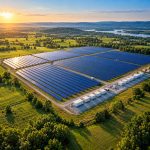
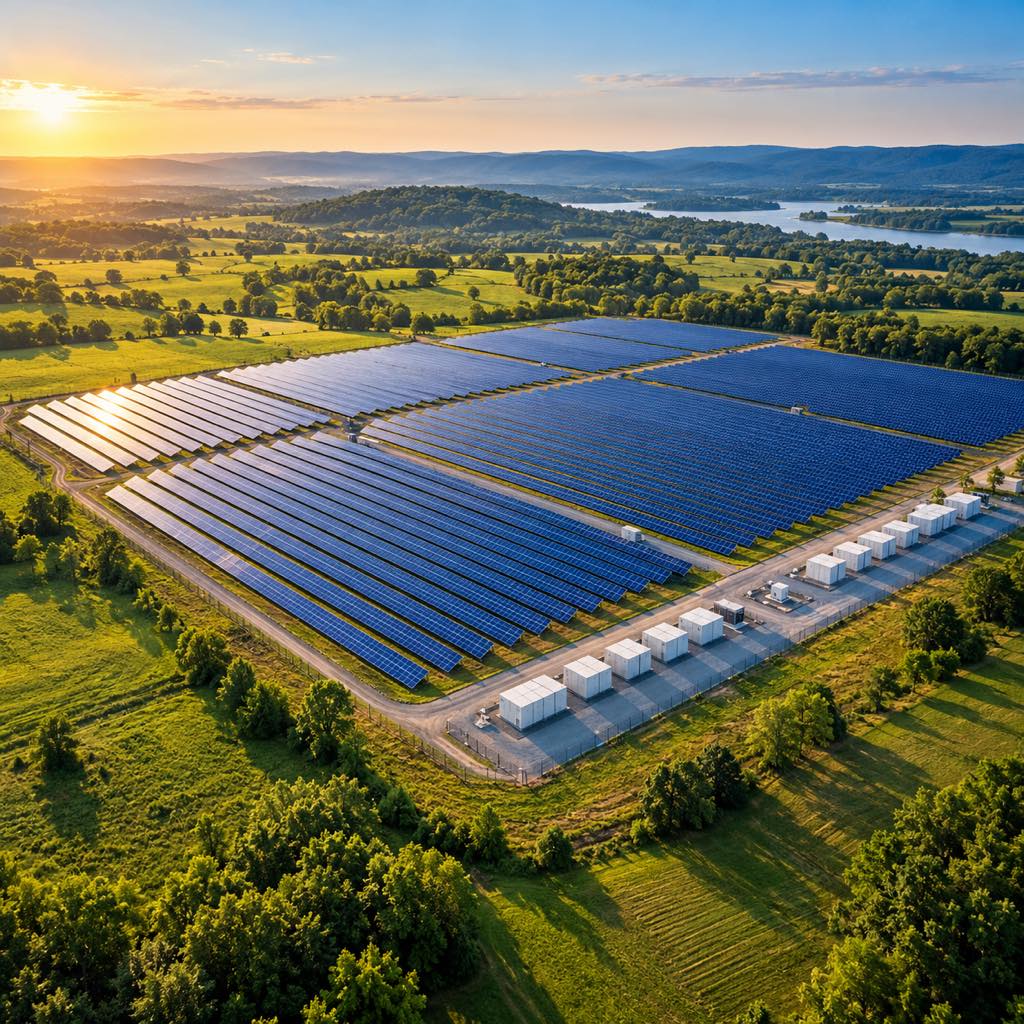
The second phase combines generation, storage and high-voltage delivery. On the generation side, the package includes a 440 MW (ac) solar power purchase agreement from the Big Island solar facility in Mississippi County. To firm up that capacity, it also includes a 1,000 MWh battery system at Driver Solar near Osceola and a 400 MWh system near Hot Springs, both expected online in 2028.
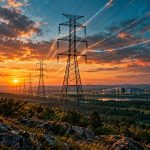
High-voltage network upgrades are built directly into the package. The plan adds expansion of the Galet substation near West Memphis and two new 230 kV transmission lines.
A 20-Year Contract That Shields Ratepayers
What distinguishes the Arkansas structure is who pays for the grid expansion. Google will cover about $600 million in planned infrastructure investment plus the PPA, and will pay the full cost of the resources through the 20-year contract term.
According to the utility, existing electricity customers benefit rather than subsidising the buildout. Entergy says the expansion brings at least $500 million in new customer savings starting in 2028 over 20 years, on top of $1.6 billion identified in the first phase. Before work proceeds to completion, the expansion needs Arkansas Public Service Commission approval, with a 2028 in-service date expected.
Advertisement
What This Means for Algeria
The Algeria hook is indirect: this is a utility contract in Arkansas awaiting state regulatory approval. Yet the commercial mechanism—requiring a large data-centre operator to finance dedicated solar capacity, utility-scale batteries and 230 kV substation upgrades under a 20-year agreement—is directly relevant to Algerian energy and digital planners.
1. Bundle solar generation with utility-scale battery storage in data-centre PPAs
Solar alone does not match round-the-clock server loads. In Arkansas, the 440 MW solar PPA is paired with a 1,000 MWh battery system near Osceola and a 400 MWh system near Hot Springs. Algerian compute projects seeking to tap solar resources should require paired storage in the same procurement package.
2. Require compute tenants to fund substation and transmission upgrades
Google is covering about $600 million in planned infrastructure investment, including expanding the Galet substation and adding two 230 kV transmission lines, across a 20-year contract term. Algerian utilities can use similar cost-recovery terms so industrial grid expansions do not burden public tariffs.
3. Structure long-term contracts that deliver net savings to the national grid
Entergy projects at least $500 million in additional customer savings over 20 years starting in 2028, building on $1.6 billion identified in the first phase. Regulators reviewing large power-intensive investments in Algeria can evaluate proposals by whether they strengthen the wider grid financially.
The Bigger Picture
From the October 2025 announcement of Google’s $4 billion West Memphis investment to the October 2026 second-phase expansion, the pattern is clear: hyperscalers are willing to pay the full cost of solar, battery storage and 230 kV transmission when it secures a 2028 in-service timeline. Jurisdictions that offer clear regulatory pathways for buyer-funded grid infrastructure can add compute capacity without straining household ratepayers.
Frequently Asked Questions
What is included in the second phase of the Entergy Arkansas and Google partnership?
Announced on 19 October 2026, the second phase includes a 440 MW (ac) solar power purchase agreement from the Big Island facility in Mississippi County, a 1,000 MWh battery system at Driver Solar near Osceola, a 400 MWh battery system near Hot Springs, expansion of the Galet substation near West Memphis, and two new 230 kV transmission lines.
Who pays for the new energy and grid infrastructure?
Google will cover about $600 million in planned infrastructure investment plus the solar power purchase agreement, paying the full cost of the resources over the 20-year contract term. Entergy says the expansion brings at least $500 million in new customer savings over 20 years starting in 2028, on top of $1.6 billion identified in the first phase.
When are the new Arkansas facilities expected to come online?
The expansion requires approval from the Arkansas Public Service Commission, with an expected in-service date in 2028 for the battery systems and grid expansion supporting Google’s $4 billion West Memphis data-centre project.
Sources & Further Reading
- Talk Business & Politics — Entergy, Google announce second-phase partnership for West Memphis data centre
- T&D World — Entergy Arkansas, Google expansion to bring additional energy resources to Arkansas grid
- BIC Magazine — Entergy, Google expand Arkansas data-centre power partnership
- Renewable Energy World — Entergy Arkansas will power Google’s $4B data-centre investment
🔗 Related Intelligence
Virginia’s Data Center Power Tax: The First US Per-Kilowatt Levy on Cloud Compute

Google’s 100-Hour Battery: Iron-Air Storage Rewrites Data Center Energy Rules
Africa’s Data Centers Go Green: Solar PPAs and Geothermal Deals Reshape the Power Strategy

Data Centers as Power Catalysts: Africa’s Cloud Boom Modernizes Its Energy Grid