
🧭 Decision Radar
Relevance for Algeria
Medium
▾
Infrastructure Ready?
Partial
▾
Skills Available?
Partial
▾
Action Timeline
12-24 months
▾
MPT, Ministry of Energy, Ministry of Hydraulics, Sonelgaz, Algeria Venture
Decision Type
Strategic
▾
Quick Take: EverWind and Anthropic’s Point Tupper deal shows what a modern AI campus package looks like: C$8 billion for the data centre paired with C$2 billion for wind power, developer-paid grid upgrades, and closed-loop cooling capped at about 100,000 to 500,000 litres of water per day. For water-conscious markets like Algeria, closed-loop cooling and buyer-funded power upgrades should be mandatory baseline requirements.
A C$10 Billion Campus Paired With Onshore Wind
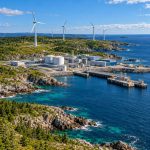
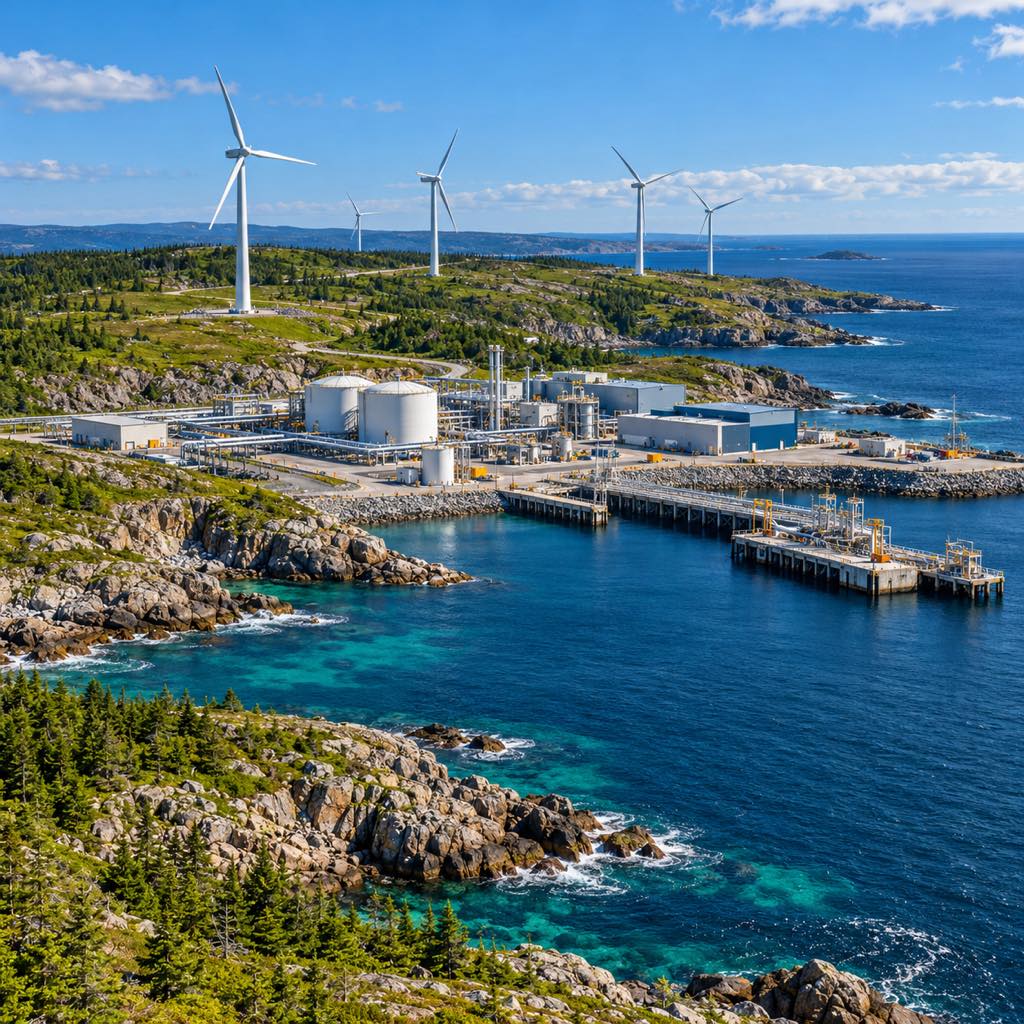
On 16 October 2026, Anthropic signed a lease with EverWind for data-centre capacity at Point Tupper, Nova Scotia, marking the Claude maker’s first data-centre agreement in Canada. To deliver the campus and its power supply, EverWind announced C$10 billion in private investment: about C$8 billion for the data centre and C$2 billion for onshore wind projects. EverWind’s CEO described the commitment as the largest injection of private capital in Nova Scotia history.
The capacity will roll out in stages. According to BetaKit, an initial 95 MW phase is planned for late 2027, followed by a 325 MW expansion in 2028, reaching 420 MW at full build-out. In employment terms, the project is expected to support about 2,000 construction jobs and 215 permanent operating positions.
For Anthropic, the Nova Scotia deal is part of an aggressive infrastructure expansion. Per Reuters, Anthropic spent $7.33 billion on computing and infrastructure last year, roughly triple its 2024 level. Alongside Point Tupper, Anthropic’s other recent leases include a 20-year lease covering 401 MW of critical IT load with TeraWulf in Kentucky.
Ratepayer Protection, Closed-Loop Cooling and Local Compute
Explaining the geographic choice, Anthropic’s Jacob Glick said: “Canadians are using Claude in growing numbers, and we want our infrastructure to be closer to the people who rely on it.”
To address community concerns over electricity bills and water draw, the developer built specific safeguards into the Point Tupper plan. On the grid side, EverWind will fully fund the electricity network upgrades for the project under Canada’s voluntary Responsible Data Centre Development Principles. On the water side, the design uses closed-loop cooling, starting at about 100,000 litres of water per day and averaging about 500,000 litres per day at full build-out.
Advertisement
What This Means for Algeria
The Algeria hook is indirect: this is a Canadian lease in Nova Scotia between Anthropic and EverWind. Even so, the structure of the Point Tupper announcement highlights three practical standards for emerging markets that want to attract international AI compute.
1. Mandate closed-loop cooling with explicit daily water budgets
Water scarcity is a primary constraint across North Africa. At Point Tupper, the design uses closed-loop cooling starting at about 100,000 litres per day and averaging about 500,000 litres per day at full 420 MW build-out. Algerian permitting authorities should require closed-loop cooling and published daily water ceilings for any proposed high-density data centre.
2. Tie data-centre approvals to dedicated renewable buildouts
EverWind paired about C$8 billion for the data centre with C$2 billion for onshore wind projects and committed to fully fund electricity network upgrades. Algerian investment frameworks can similarly link large megawatt allocations to co-funded renewable generation and grid reinforcement.
3. Phase megawatt delivery so grid and cooling scale together
Rather than attempting to energise 420 MW at once, the Point Tupper campus starts with a 95 MW phase in late 2027 before adding a 325 MW expansion in 2028. Phased commissioning gives utilities and developers a realistic path to bring large campuses online.
The Bigger Picture
With Anthropic spending $7.33 billion on computing and infrastructure last year—roughly triple its 2024 level—and signing leases for 420 MW in Nova Scotia and 401 MW in Kentucky, AI labs are diversifying where their models run. Locations that combine dedicated renewable energy, developer-paid grid upgrades and closed-loop water systems are winning those multi-year commitments.
Frequently Asked Questions
What did Anthropic and EverWind announce in Nova Scotia?
On 16 October 2026, Anthropic signed a lease with EverWind for data-centre capacity at Point Tupper, Nova Scotia, its first data-centre agreement in Canada. EverWind announced C$10 billion in private investment, comprising about C$8 billion for the data centre and C$2 billion for onshore wind projects.
How large is the Point Tupper project and when will it open?
The campus is planned to start with an initial 95 MW phase in late 2027, followed by a 325 MW expansion in 2028, reaching 420 MW at full build-out. It is expected to support about 2,000 construction jobs and 215 permanent operating positions.
How does the project manage water use and electricity grid costs?
The facility uses closed-loop cooling, starting at about 100,000 litres of water per day and averaging about 500,000 litres per day at full build-out. Under Canada’s voluntary Responsible Data Centre Development Principles, EverWind will also fully fund the electricity network upgrades required for the project.
Sources & Further Reading
- The Star (Reuters) — Anthropic signs lease for first Canadian data centre
- Global News — EverWind announces C$10 billion Nova Scotia data-centre and wind project
- BetaKit — Anthropic to anchor EverWind’s 420 MW Point Tupper data-centre campus
- W.Media — Anthropic’s data-centre expansion and 401 MW TeraWulf Kentucky lease
🔗 Related Intelligence
Publicly Announced Data Center Projects Now Top $1 Trillion and 68 Gigawatts of Connected Load
AI Racks at 1 MW: How AI Is Forcing a Complete Rethink of Data Center Design
The $25 Billion Month: US Data Center Construction Hits All-Time Record
Nvidia Bets on Powered Land: Inside the Lancium Deal and the New Rules of AI Infrastructure