🧭 Decision Radar
Relevance for Algeria
Medium
▾
Infrastructure Ready?
No
▾
Skills Available?
Partial
▾
Action Timeline
36-60 months
▾
Sonelgaz, ARPT, MPT, Algeria Venture, prospective data center and cloud infrastructure investors
Decision Type
Strategic
▾
Quick Take: Algerian energy and infrastructure planners should note that even in the world’s most capital-rich AI infrastructure market, grid interconnection capacity — not money — is now the practical bottleneck on data center buildout speed, a lesson worth building into any future framework for attracting cloud or data center investment locally.
A Trillion-Dollar, 68-Gigawatt Pipeline
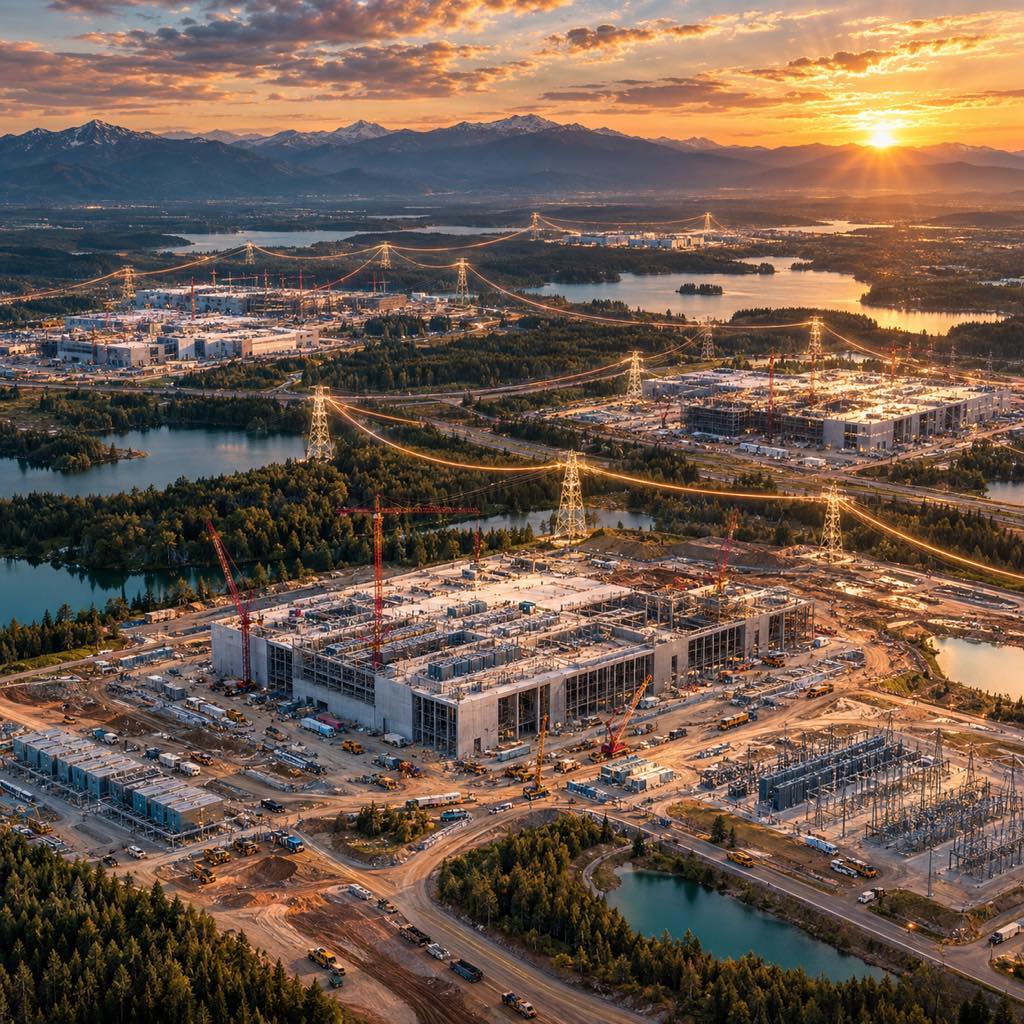
The Edison Electric Institute, the trade association representing US investor-owned electric utilities, has been tracking large-load projects and the tariffs utilities are negotiating to serve them. Its August 2026 list of publicly announced data center projects shows the pipeline has grown to more than $1 trillion in investment and more than 68 gigawatts of connected load — a figure that, as BloombergNEF’s summary of the data notes, represents only a portion of the large-load projects sitting in EEI member utilities’ long-term project pipelines, meaning the true scale of committed and prospective data center demand on the US grid is larger still.
That pipeline sits alongside a sharp rise in capital spending by the companies actually building and operating the largest data centers. BloombergNEF reports that the capital expenditure of the 14 largest publicly owned data center operators globally is nearing $750 billion in 2026, up from a little less than $450 billion in 2025 — a year-over-year jump of well over 60% in the spending of a group of companies that already represented the bulk of global hyperscale construction. The same tracking shows more than 23 gigawatts of data center capacity was under construction globally as of the report’s reference point, with the Americas accounting for roughly 17 GW of that total, underscoring how much of the current buildout is concentrated in the United States even as global demand grows.
Why the Scale of the Number Matters More Than Any Single Project
Individual hyperscaler announcements — a new campus here, a joint venture there — tend to dominate headlines. But the aggregate figures are what reveal the actual shape of the AI infrastructure race: over $1 trillion in publicly disclosed projects and a near-doubling of capex among the largest operators in a single year is a scale of capital concentration that has few precedents in any industry, let alone one still working out its long-term return profile.
1. Use the $1 trillion / 68 GW figure as the reference point for “what serious AI infrastructure investment looks like”
For African and Algerian cloud, hosting, and data center investors, this pipeline is the scale against which any local investment should be benchmarked — not to suggest matching it, but to understand how far the frontier of global AI infrastructure capital has moved, and how much of that capital is chasing power and grid access rather than just server hardware.
2. Watch grid interconnection capacity, not just capital availability, as the binding constraint
With EEI’s own tracking noting its published list understates the true pipeline sitting in utility queues, grid interconnection — not capital — is emerging as the practical bottleneck on how fast this pipeline can actually be built. Any market, including Algeria’s, planning to attract or build significant data center capacity should treat grid capacity and utility coordination as a first-order planning question, not an afterthought to the facility itself.
3. Expect capex concentration among the largest operators to keep accelerating
A near-doubling in combined capex among just 14 companies in one year signals that AI infrastructure investment is concentrating among an increasingly narrow set of hyperscale operators with the balance-sheet capacity to fund gigawatt-scale buildouts — a dynamic smaller regional cloud and hosting providers should factor into their own competitive positioning.
Advertisement
What This Signals for Global AI Infrastructure Capital
The jump from under $450 billion to nearly $750 billion in combined capex among the 14 largest data center operators, layered on top of a trillion-dollar-plus pipeline of publicly announced projects, is the clearest available signal that AI infrastructure spending is not plateauing — it is still accelerating, and doing so at a pace utilities and grid operators are visibly struggling to keep up with. The gap between announced projects and confirmed grid capacity is itself becoming one of the more important variables in how quickly new AI compute can actually come online, regardless of how much capital is available to fund it.
For African markets, the lesson is less about competing at this scale and more about reading the pattern correctly: the constraint that increasingly separates announced AI infrastructure ambition from delivered capacity is power and grid access, not capital or even construction capability — a dynamic worth watching closely as African governments and private investors weigh their own data center and cloud infrastructure strategies.
Frequently Asked Questions
How large is the current global data center investment pipeline?
According to EEI’s tracking as summarized by BloombergNEF, publicly announced data center projects represent more than $1 trillion in investment and more than 68 gigawatts of connected load as of August 2026 — a figure EEI itself notes understates the full pipeline sitting in utility project queues.
How much are the largest data center operators spending in 2026?
BloombergNEF reports the 14 largest publicly owned data center operators’ combined capital expenditure is nearing $750 billion in 2026, up from a little less than $450 billion in 2025 — a year-over-year increase of well over 60%.
What is the real constraint on building this much data center capacity?
The same tracking indicates that grid interconnection and power availability, not capital, are emerging as the binding constraint — EEI’s published pipeline understates the true scale of large-load projects because utilities are still working through interconnection queues faster than they can confirm capacity.
Sources & Further Reading
🔗 Related Intelligence

Data Centers Hit $1 Trillion a Year by 2030: What CFOs Need to Model
AI Racks at 1 MW: How AI Is Forcing a Complete Rethink of Data Center Design
The $25 Billion Month: US Data Center Construction Hits All-Time Record