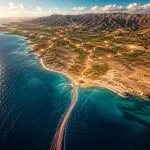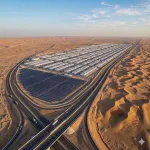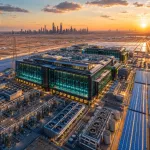
Why the Gulf Is Suddenly Digging Trenches to Europe
For decades, the fastest path for data between Asia, the Gulf and Europe ran under the sea through Egypt — a cluster of submarine cables funneling through the Red Sea and the Suez corridor. In August 2026, that concentration stopped looking like efficiency and started looking like exposure. According to Fortune’s reporting on the Gulf’s data-highway race, Gulf states are now pouring capital into overland fiber corridors precisely because their entire digital economy — and their multibillion-dollar bet on becoming an AI hub — depends on a small number of maritime chokepoints they do not control.
Rest of World counted six overland data-corridor projects racing to connect the Gulf to Europe, threading through Syria, Iraq, Kurdistan, Turkey and the Horn of Africa. The strategic logic mirrors an older Gulf playbook: just as Saudi Arabia’s East-West oil pipeline and the UAE’s Habshan-Fujairah route were built to move hydrocarbons around a vulnerable strait, these fiber lines are being built to move data around vulnerable water. The trigger this year was acute — regional military tension around the Strait of Hormuz put the subsea cables the Gulf depends on within reach of disruption, turning a long-discussed resilience problem into an urgent one.
The Two Anchor Projects: SilkLink and WorldLink
The most concrete of the six is SilkLink. STC — the Saudi telecom operator majority-owned by the Public Investment Fund — signed an $800 million contract on February 7, 2026 to build a 4,500-kilometer (2,800-mile) fiber network spanning Syria to a submarine landing station at Tartus on the Mediterranean, with onward connections to Jordan, Lebanon and Turkey. Rest of World reports the first phase is expected to begin operating within 18 to 24 months. It is a striking bet: routing critical infrastructure through Syria, a country whose earlier terrestrial transit route, JADI, was severed during its civil war and never reconstituted.
A week after SilkLink, an Iraqi-UAE private consortium unveiled WorldLink — a $700 million hybrid subsea-and-terrestrial fiber network running from the UAE to Iraq’s Al-Faw Peninsula, then overland through Iraq and Kurdistan to Turkey. The consortium says the cable would target hyperscalers, international carriers and AI applications, rolling out in phases over roughly five years. Alongside these two sit further initiatives, including Ooredoo-linked subsea work and STC-Ooredoo cooperation, each attacking the same problem from a different geography — evidence that no single operator believes it can solve the chokepoint alone.
Advertisement
The Chokepoint Math That Makes This Urgent
The reason this is a race and not a series of press releases is the concentration risk underneath it. Analysts cited in Fortune’s account note that the overwhelming majority of Europe-Asia data and telecommunications traffic funnels through Egypt and the Red Sea corridor, that annual data volumes keep climbing at roughly 30% a year, and that little net new capacity has been built through these routes in recent years. When traffic growth compounds against a fixed and geographically concentrated pipe, two things happen at once: latency-sensitive workloads get congested, and the whole system becomes fragile to a single cut.
For a region marketing itself to the world’s largest cloud and AI buyers, that fragility is a commercial liability, not just an engineering footnote. A hyperscaler will not anchor gigawatts of AI compute in a jurisdiction whose international connectivity can be knocked out by one incident at a chokepoint. The overland corridors are, in effect, an insurance policy the Gulf is buying to protect a much larger investment — the AI data-center buildout that Saudi Arabia’s HUMAIN, the UAE’s campuses and their hyperscaler partners are financing across the region.
What This Means for Operators and Buyers in the Region
For telecom operators, cloud buyers and governments planning digital infrastructure across MENA — including North African markets like Algeria that sit on the western flank of these routes — the overland race changes the connectivity calculus.
1. Treat route diversity as a procurement requirement, not a nice-to-have
When contracting international bandwidth, ask providers to demonstrate physically diverse paths — not two cables that both surface at the same landing station or transit the same strait. The Gulf is spending over a billion dollars combined precisely because single-path dependency is now understood as an existential risk. Build the same diversity test into your own carrier contracts.
2. Price the multi-year build timeline into any AI capacity plan
None of these corridors is live today. SilkLink’s first phase is 18 to 24 months out; WorldLink is a five-year phased build. If your 2027-2028 roadmap assumes new low-latency Europe-Gulf capacity, treat these completion dates — not the announcement dates — as your binding constraint, and keep a fallback path on existing subsea routes until the new corridors are proven.
3. Watch which corridors actually get energized, not just announced
Six projects were announced; history says not all six will be built on schedule, and Syria’s severed JADI link is a cautionary precedent. Track construction milestones and landing-station progress rather than headline capital figures, and weight your planning toward the operators — like PIF-backed STC — with the balance sheet and state alignment to finish what they start.
4. Read the corridors as a signal about where AI capacity will cluster
Connectivity precedes compute. The countries these cables land in — Turkey as the European on-ramp, Iraq and the Levant as transit — are positioning to capture data-center and edge investment that follows the fiber. If you are siting regional capacity, factor the emerging corridor map into where latency to Europe will be lowest three years from now.
The Bigger Picture: Sovereignty Is Being Rebuilt in Fiber
The overland data race is one of the clearest signals yet that the Gulf’s AI strategy is as much about geography and control as it is about chips and models. The region learned from oil that whoever controls the transit route controls the leverage, and it is applying that lesson to bits. What makes 2026 distinct is that the threat model shifted from commercial congestion to physical vulnerability almost overnight, compressing timelines and loosening purse strings. The projects will take years, several may stall, and routing critical infrastructure through Syria and Iraq carries obvious political risk. But the direction is unmistakable: the Gulf intends to own its path to Europe rather than rent it, and the map of where the world’s AI traffic flows is being redrawn overland, one trench at a time.
Frequently Asked Questions
What are SilkLink and WorldLink?
SilkLink is an $800 million fiber project by STC, the Saudi telecom operator majority-owned by the Public Investment Fund, signed February 7, 2026 to build a 4,500-kilometer network across Syria to a Mediterranean landing station at Tartus, with connections to Jordan, Lebanon and Turkey. WorldLink is a $700 million hybrid subsea-and-terrestrial network from an Iraqi-UAE consortium, running from the UAE through Iraq and Kurdistan to Turkey over a roughly five-year phased build.
Why is the Gulf building overland data routes now?
Almost all of the region’s data traffic to Europe flows through a small number of subsea cables in the Red Sea and Suez corridor. In 2026, military tension around the Strait of Hormuz put those cables within reach of disruption, turning a long-discussed resilience concern into an urgent one for a region that has bet billions on becoming an AI hub. Overland corridors give the Gulf routes it controls rather than chokepoints it depends on.
How many corridor projects are there and when will they be ready?
Rest of World counted six overland data-corridor projects racing to connect the Gulf to Europe through Syria, Iraq, Kurdistan, Turkey and the Horn of Africa. None is live yet: SilkLink’s first phase is expected within 18 to 24 months, while WorldLink is a five-year phased build. Completion dates, not announcement dates, are the realistic timeline for new capacity.
Sources & Further Reading
- The Gulf’s AI boom is driving the race to control the data highways — Fortune
- Gulf states race to build overland data cables to Europe as war threatens submarine routes — Rest of World
- Iran War Threatens Strait of Hormuz Subsea Internet Cables and Gulf AI Boom — Steptoe
- Beneath the Strait: Iran Could Threaten Gulf Data Centers, Undersea Cables — Stimson Center
🔗 Related Intelligence
Gulf States Go Overland: How Alternative Cable Routes Are Rewriting Internet Resilience
Cloud Regions Race Into Emerging Markets: Middle East and Southeast Asia Surge

Algeria-Oman Data Center Pact: Building Sovereign Infrastructure Through Gulf Partnership

Algeria’s Submarine Cable Network: The Invisible Infrastructure Behind Every Connection