A 20,000-Kilometre Bet on Redundancy
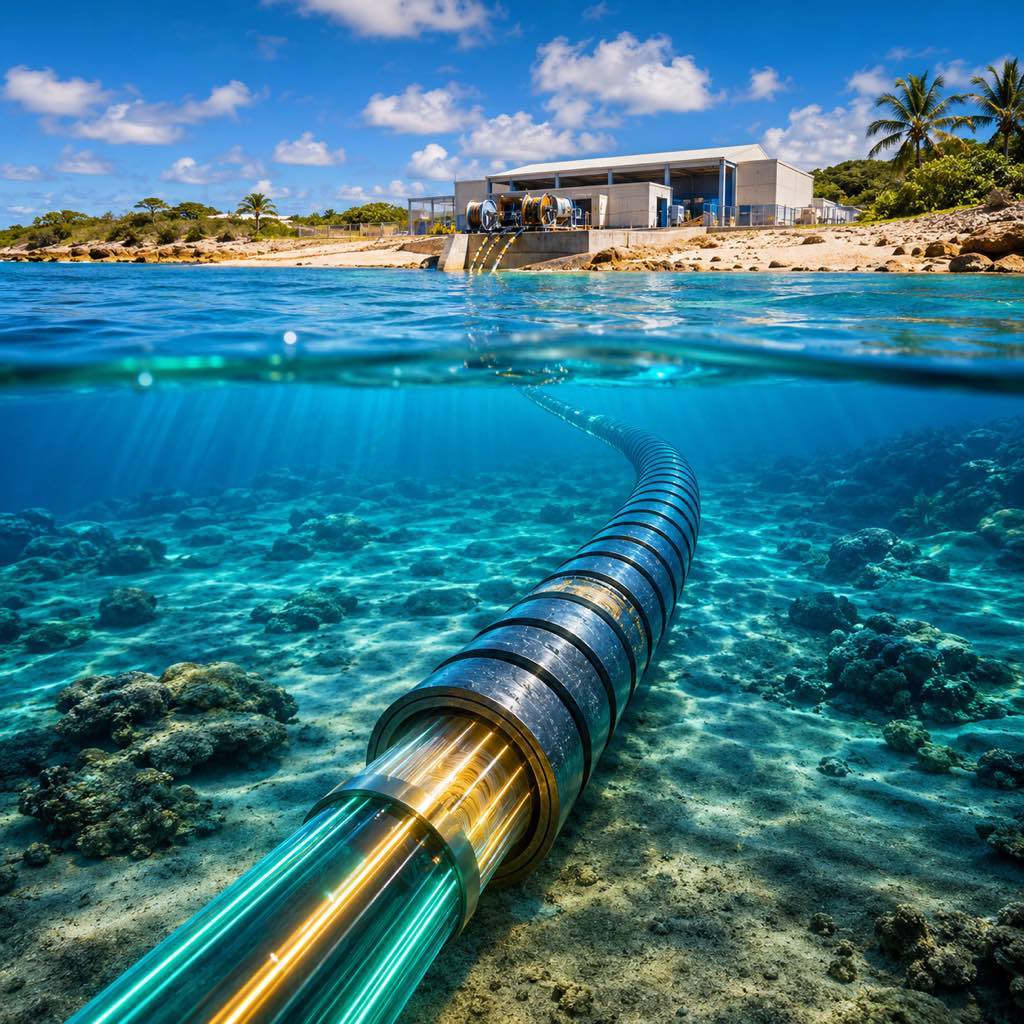
Africa’s connectivity story in 2026 is no longer about scarcity of cables — it is about resilience and routing. The flagship new project makes the point. According to TechCabal’s report on the system, Orange is leading Via Africa, a 20,000-kilometre subsea cable that will connect Nigeria and approximately 19 other countries across Africa and Europe. It was announced on May 12, 2026 at the Africa Forward Summit in Nairobi, with planned landings including Nigeria, Senegal, Guinea, Côte d’Ivoire and Mauritania, and additional landing points expected as more consortium members join.
The rationale is redundancy, stated plainly by the operator. TechCabal quotes Orange Wholesale CEO Michaël Trabbia: “You need different routes to make sure that when you have one or two cable cuts, you still have connectivity.” That is the strategic shift in one sentence. The problem Via Africa is built to solve is not a shortage of capacity but the fragility of concentrated routes — and TechCabal notes that Nigeria already hosts eight submarine cables, the highest number in West Africa, yet still faces fibre cuts and network congestion. More cables on more distinct paths is now the goal, because a single cut on a critical route can black out swathes of the continent.
Orange estimates the project could take three to four years to complete once consortium arrangements are finalized — a timeline allAfrica also reports as “3 to 4 years to complete after consortium plans are finalized” — placing its service date toward the end of the decade, but its competitive effect on the map begins the moment it is committed.
Kenya Is Adding Two Cables Before 2027
Via Africa is the largest new system, but it is far from the only one, and the East African side of the continent shows how fast capacity is multiplying. Per tech Trends Kenya’s reporting, Kenya is set to land two new undersea cables before 2027.
The first is the Daraja cable, a 4,108-kilometre subsea system connecting Oman and Mombasa, developed through a partnership between Meta and Safaricom. The second is Africa-1, a system expected to reach Kenya extending from France through Africa to the Middle East. tech Trends Kenya notes these projects will “add new international routes into East Africa while improving network resilience and expanding the country’s long-term internet capacity” — the same redundancy logic driving Via Africa on the western side. The report also situates Kenya’s position: it already has seven submarine cable landings, behind Egypt, Djibouti, South Africa and Nigeria in Africa’s connectivity ranking.
The pattern across both coasts is identical: multiple operators, multiple new cables, all racing to add diverse routes before 2027. Capacity that was once a bottleneck is becoming abundant, and the competition is shifting to which countries sit on the routes everyone else depends on.
The Continent-Circling Backbone Is Already Live
Underneath the new projects sits a system that has already reset the baseline. tech Trends Kenya references Meta’s continent-circling 2Africa cable, noting the “Meta-Led 2Africa Subsea Cable System Goes Live” in November 2025. 2Africa is the backbone that wraps the entire African continent, and its activation means the raw connectivity floor for much of Africa has risen dramatically even before Via Africa, Daraja and Africa-1 arrive.
The significance is compounding. When a continent-circling backbone is live and multiple new long-haul systems are committed within the same 18 months, the map of who has bandwidth changes from a story of haves and have-nots into a story of routing. The question is no longer whether a country can get international capacity — it increasingly can — but whether the traffic flows through it or around it.
Advertisement
Why Routing, Not Capacity, Is Now the Prize
This is the strategic core for any country with a coastline on a major cable corridor. As bandwidth multiplies across West and East Africa, the durable advantage belongs to the places that sit on the routes and host the interconnection where traffic is exchanged. A transit hub — a country whose landing stations and peering points carry other nations’ traffic — captures economic value, resilience and strategic weight. A country that gets bypassed becomes a mere consumer at the end of someone else’s cable.
The new systems make this concrete. Via Africa is explicitly designed, per TechCabal, to terminate in major data centres and attract cloud providers and hyperscalers. That is the flywheel: cables land where there is interconnection and data center demand, and data centers cluster where there are diverse cables. Land on the routes, host the exchange, and the compute and cloud investment follow. Miss the routes, and the traffic — and the investment that chases it — flows to a better-connected neighbor.
What This Means for Algeria
As West and East African bandwidth multiplies, Algeria’s Mediterranean cable position and peering strategy determine whether it stays a transit hub or gets routed around. The response is about relevance, not just access.
1. Treat Mediterranean landing position as a strategic asset to defend
Algeria’s coastline sits on the Mediterranean corridor between Africa and Europe — the same Africa-Europe traffic that Via Africa and Africa-1 are built to carry on other routes. That position is only valuable if actively maintained with modern landing stations and capacity commitments. Passive geography does not guarantee transit relevance when competitors are actively building diverse new paths that can bypass under-invested routes.
2. Invest in domestic peering and interconnection, not just landings
Cables landing in a country generate value only if traffic is exchanged there. A robust internet exchange and peering ecosystem is what turns a landing point into a genuine hub where regional traffic is aggregated and data centers want to locate. Without local interconnection, a landing station is a pass-through, not a hub — and the economic benefit accrues elsewhere.
3. Pair connectivity with data center demand to trigger the flywheel
The new cables are chasing data center termination points. For Algeria’s cable position to attract long-haul systems rather than be bypassed, it needs the complementary data center and cloud demand that makes landing there attractive. Connectivity strategy and compute strategy are the same strategy — each pulls the other, and neither succeeds alone.
The Transit-Hub Question
The subsea wave of 2026 is, on its surface, a good-news story about African connectivity: more cables, more routes, more resilience, a continent-circling backbone already live. But abundance changes the competition. When international capacity was scarce, simply having a cable was an advantage. When multiple operators are laying diverse new systems across both coasts before 2027, the advantage migrates to the countries that sit on the chosen routes and host the interconnection where traffic is exchanged.
For Algeria, this is the decisive framing. Its Mediterranean position is a genuine asset, but the Via Africa and Kenyan examples show that operators will build diverse paths specifically to avoid dependence on any single route — which means an under-invested corridor can be engineered around. Staying a transit hub is not automatic; it is earned by matching the region’s cable investment with modern landing infrastructure, deep local peering, and the data center demand that makes traffic want to flow through Algeria rather than past it. The cables are being committed now. The window to be on the map, rather than beside it, is closing at the speed of the subsea race.
Frequently Asked Questions
What is the Via Africa subsea cable?
Via Africa is a 20,000-kilometre subsea cable system led by Orange, announced on May 12, 2026 at the Africa Forward Summit in Nairobi. It will connect Nigeria and approximately 19 other countries across Africa and Europe, with planned landings including Nigeria, Senegal, Guinea, Côte d’Ivoire and Mauritania. Orange estimates it could take three to four years to complete once consortium arrangements are finalized. Its purpose is route diversity and resilience against cable cuts.
What other cables are landing in Africa before 2027?
Several. Kenya alone is adding two: the ~4,108 km Daraja cable from Oman to Mombasa, developed by Meta and Safaricom, and Africa-1, a system running from France through Africa to the Middle East. Underneath these, Meta’s continent-circling 2Africa system went live in November 2025. The common thread is adding diverse international routes to improve resilience and expand capacity across both African coasts.
Why does this matter for a country like Algeria?
Because as bandwidth becomes abundant, the strategic advantage shifts from having a cable to sitting on the routes traffic actually flows through. A country whose landing stations and peering points carry regional traffic becomes a transit hub that attracts data centers and cloud investment; a country that gets bypassed becomes a consumer at the end of someone else’s cable. Algeria’s Mediterranean position is an asset only if backed by modern landing infrastructure, local peering and data center demand — otherwise operators can engineer routes around it.