The Lagos Move: What Digital Realty Actually Did
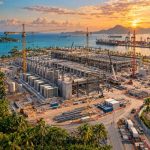
In May 2026, Digital Realty activated a new Internet Exchange Point presence for the Internet Exchange Point of Nigeria (IXPN) at its Lekki facility in Lagos. The facility also serves as a landing point for the 2Africa subsea cable system — the world’s longest subsea cable at over 45,000 km — which connects 33 countries across Europe, the Middle East, and Africa.
The significance of this move is not merely technical. Digital Realty’s Lekki campus is a carrier-neutral colocation facility — meaning any ISP, cloud provider, or enterprise can interconnect there without being locked to a single carrier or cloud vendor. By housing an IXP, the facility becomes a traffic exchange hub: internet traffic destined for Nigerian networks can be handed off locally rather than being routed through Frankfurt or London, dramatically reducing latency for Nigerian users and making the facility attractive to content delivery networks, cloud edge nodes, and regional cloud providers.
This is the formula that has made Teraco in Johannesburg the dominant digital infrastructure hub in sub-Saharan Africa. Teraco became a neutral colocation anchor, then attracted IXPs, then attracted hyperscaler points of presence, then attracted enterprises who wanted to be close to those cloud nodes, then attracted fiber networks who needed to serve those enterprises. The flywheel is well-documented and repeatable.
Lagos is now executing the same playbook. And the Africa data center market data shows why this matters at scale.
The Market Context: Africa’s $11 Billion Colocation Race
The Africa and Middle East data center colocation market is projected to reach $11.1 billion by 2030, up from $4.9 billion in 2026 — a compound annual growth rate of 22.8%. The drivers are AI and GPU workload demand, hyperscaler expansion, and enterprise hybrid cloud adoption. This is not speculative growth; it is growth anchored in $650 billion in hyperscaler AI infrastructure commitments globally that are now beginning to touch the African continent.
The market leaders are predictable: South Africa (Johannesburg) is the most developed, followed by Nigeria, Kenya, and Egypt as secondary tier markets. Algeria is not among the named leaders in any of the major market reports. The Africa Data Center report for 2026 puts Africa’s total active data center capacity at 360 MW, with 238 MW under construction and 656 MW planned — but Algeria’s contribution to that pipeline is marginal compared to South Africa, Nigeria, and Egypt.
The contrast with Nigeria is instructive. Nigeria has a significantly larger domestic tech ecosystem than Algeria in terms of funded startups and venture capital activity, but its basic infrastructure challenges — power grid unreliability — are more severe than Algeria’s. Yet Nigeria is attracting hyperscaler-adjacent investment (2Africa landing, Digital Realty IXP) while Algeria, which has more stable power infrastructure and a Medusa cable landing of its own, has not yet catalyzed equivalent colocation investment.
The gap is not technical. It is structural.
Advertisement
What Makes an IXP a Cloud Economy Catalyst
An Internet Exchange Point is the piece of infrastructure that determines whether a country’s internet traffic is handled locally or routed expensively through hubs in Europe. Every millisecond of additional latency added by routing through London or Amsterdam represents a cost — in application performance, in CDN cache hit rates, in voice quality for collaboration tools — that every Algerian enterprise using cloud services is paying today.
Algeria has a domestic IXP — DZ-IX — and the next growth step is to scale its membership and traffic volume toward the levels seen at JINX (Johannesburg) or IXPN (Lagos). The Medusa subsea cable lands in Algeria, providing the international bandwidth backbone. Building a neutral carrier-class colocation facility positioned to house the IXP, attract hyperscaler edge nodes, and become the traffic handoff point would reduce latency for Algerian cloud users and make the country attractive as a regional interconnection hub.
The Digital Realty Lagos model shows what this looks like in practice: a carrier-neutral facility with colocation capacity, IXP presence, and a subsea cable landing. Each element reinforces the others. The IXP attracts ISPs and CDNs. The subsea cable landing attracts international carriers. The carrier neutrality attracts enterprises who want access to multiple providers in one location. The combination is what creates the colocation anchor.
What Algerian Policymakers and Infrastructure Players Should Do
The Lagos model is not unique to Nigeria’s geography or market size. Algeria has infrastructure advantages — relative power stability, Medusa cable access, a large domestic market — that Lagos did not have when Teraco’s playbook was first being written. The question is sequencing.
1. Establish a Carrier-Neutral Colocation Standard Before the Next Data Center Opens
Algeria’s existing data center infrastructure is dominated by carrier-owned or government-linked facilities, which are inherently non-neutral. A ministry of posts-affiliated data center will not attract AWS or Google Cloud points of presence, because hyperscalers require vendor-neutral colocation as a condition of infrastructure investment. Before the next significant data center project is commissioned — whether by a private operator or through a public-private arrangement — Algerian regulators should establish carrier neutrality as a licensing condition. This is a policy decision that costs nothing to implement and unlocks the entire downstream colocation flywheel.
2. Upgrade DZ-IX Into a Facility-Grade Exchange Anchored in a Neutral Colocation Hub
DZ-IX currently operates as a software-defined exchange without a dedicated neutral colocation anchor. The next phase of development should move the exchange into a carrier-neutral colocation facility with a proper peering LAN, route server infrastructure, and a membership model that includes international CDNs and content providers — not just domestic ISPs. The Lagos IXPN model, now hosted at Digital Realty Lekki, provides the exact blueprint: a facility-grade exchange with an international cable landing. Algeria has the cable; it needs the facility and the membership architecture.
3. Position the Medusa Landing as an Anchor for Regional IXP Membership
The Medusa subsea cable’s Algeria landing point should be actively marketed to international content providers and CDNs as a gateway for routing North African and Sahel traffic through Algiers rather than through Cairo or Marseille. This requires the Ministry of Post and Telecommunications and Algeria Télécom to publish clear interconnection pricing, colocation availability, and technical specifications for the landing station — none of which is currently accessible to international operators evaluating routing topology. Transparency about landing station specifications is a prerequisite for attracting the traffic that makes an IXP commercially viable.
4. Commission an Independent Economic Study on the Colocation Opportunity Cost
Algeria’s absence from the Africa and Middle East data center market growth projections is a quantifiable opportunity cost: every megawatt of colocation capacity that goes to Cairo or Lagos instead of Algiers represents data center tax revenue, high-skilled employment, and hyperscaler investment that does not materialize in Algeria. A Ministry of Digital Transformation-commissioned study that quantifies this opportunity cost — using the South Africa and Nigeria cases as comparators — would create the economic argument needed to accelerate regulatory reform and infrastructure investment approvals.
Where This Fits in Algeria’s 2026 Infrastructure Moment
Algeria is at an infrastructure inflection point. The Medusa cable is live. The government’s all-fiber strategy is accelerating FTTH rollout. The national data center strategy — referenced in the digitization agenda — is being developed. The question is whether these investments will be configured to attract international colocation and cloud investment, or whether they will remain nationally-contained infrastructure that serves domestic public services but does not position Algeria as a regional digital hub.
The Lagos precedent matters because it shows that the window of opportunity is real but not permanent. Nigeria did not become the default West African colocation hub because it was inevitable — it became that hub because Digital Realty, 2Africa, and IXPN made specific infrastructure and governance decisions at a specific moment. Algeria has equivalent or better infrastructure inputs. The missing ingredient is the neutral colocation framework and the IXP upgrade that would allow those inputs to compound into the same kind of digital infrastructure flywheel.
For Algerian infrastructure decision-makers, the structural lesson is that colocation leadership is won through policy sequencing, not just physical infrastructure investment. Carrier neutrality, IXP hosting, and published interconnection standards are the regulatory acts that convert a cable landing into a regional hub — and they cost far less than the megawatts of data center capacity they unlock.
Frequently Asked Questions
What is a carrier-neutral colocation facility and why does it matter?
A carrier-neutral colocation facility is a data center that does not favor any single telecommunications carrier or cloud provider — any ISP, cloud vendor, or enterprise can rent space and interconnect with any other tenant. This neutrality is what makes the facility attractive to hyperscalers like AWS and Google Cloud, which require independence from any single carrier as a condition of establishing a point of presence. Carrier-owned or government-linked facilities cannot offer this neutrality, which is why they do not attract the hyperscaler investment that drives the colocation flywheel.
What is the Africa and Middle East data center colocation market projected to reach?
According to a 2026 market report, the Africa and Middle East data center colocation market is projected to reach $11.1 billion by 2030, up from $4.9 billion in 2026 — a CAGR of 22.8%. South Africa, Nigeria, Kenya, Egypt, UAE, and Saudi Arabia are the leading markets. The growth is driven by AI and GPU workload demand, hyperscaler capacity expansion, and enterprise hybrid cloud adoption. Algeria is not among the named regional leaders in current projections.
How does an IXP reduce cloud costs for Algerian businesses?
When Algerian internet traffic must route through European exchange points (London, Frankfurt, Amsterdam) to reach cloud services or content delivery networks, every packet travels thousands of additional kilometers, adding latency and international bandwidth costs. A well-functioning domestic IXP allows this traffic to be exchanged locally — Algerian ISPs, cloud edge nodes, and CDNs hand off traffic directly within the country, reducing latency to single-digit milliseconds for local exchanges versus 50-100ms for European routing. This directly improves cloud application performance for Algerian businesses and reduces the international bandwidth costs that ultimately appear in ISP pricing.
Sources & Further Reading
- New Data Center Developments May 2026 — Data Center Knowledge
- Africa Middle East Data Center Colocation Market to Reach $11.1 Billion by 2030 — GlobeNewswire
- Africa Data Centre Market 2026: Structural Growth, Energy Constraints and Long-Term Investment Strategy — Zawya
- Data Centres in Africa 2026: The Economic Report — Africa Data Centres Association
🔗 Related Intelligence

Nigeria Signs a Sovereign Cloud Framework as 90% of Its Data Runs Offshore

Africa Data Hub: MTN and a Gulf Data-Centre Tycoon Bet 150MW on the Continent’s AI Future
Sovereign Cloud Rising: How African Nations Are Building Local Data Infrastructure

African Digital Summit: Algeria’s Infrastructure Bet