The Architecture of a Lifelong Digital Skills System
On May 17, 2026, Algeria’s High Commissioner for Digitization Sid Ali Zerrouki announced the launch of the ‘77.7’ national digital skills programme — a structured initiative designed to bring digital literacy to every life stage rather than concentrating resources on a single cohort. The announcement came on World Telecommunications and Information Technologies Day, a deliberate framing that positions Algeria’s push as part of a global commitment to universal digital access.
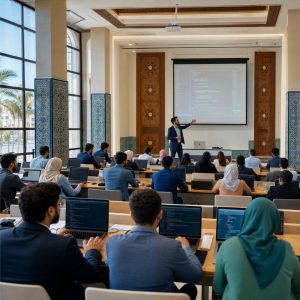
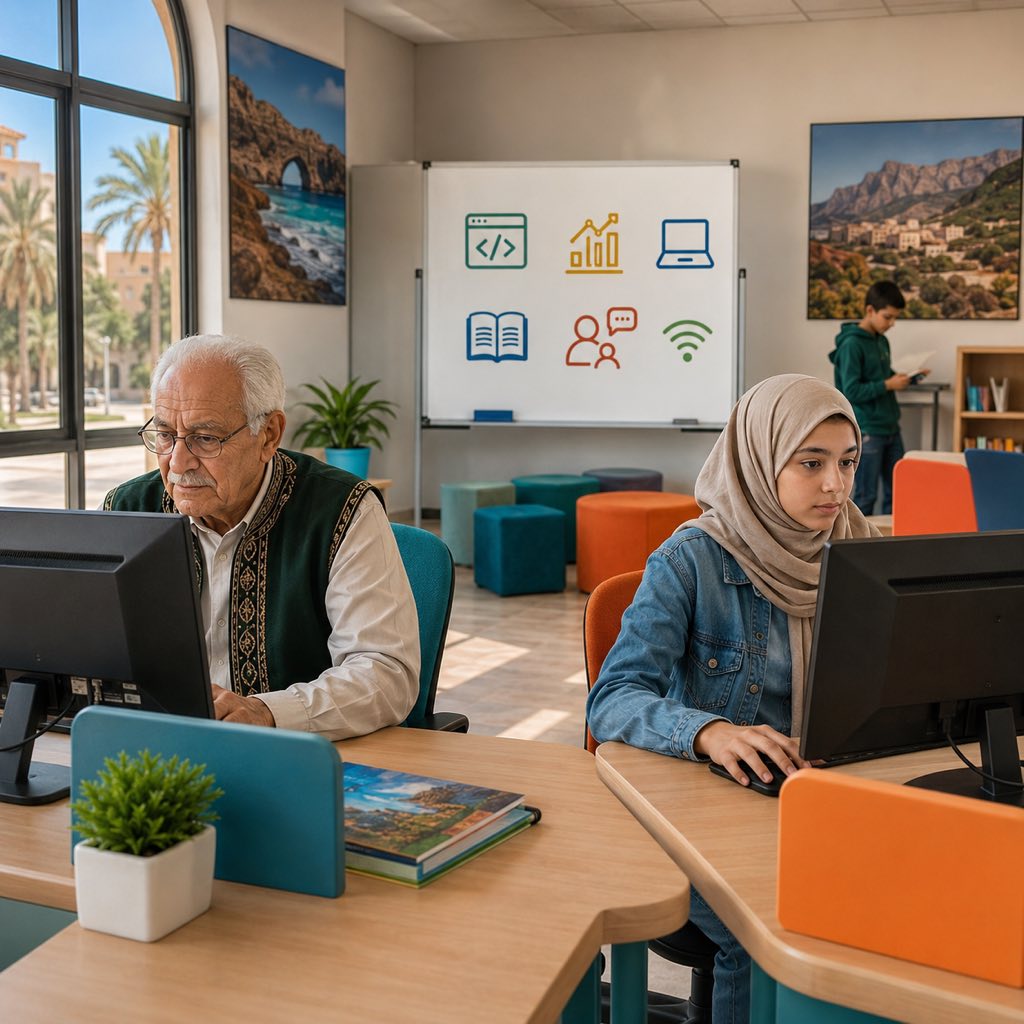
The programme’s architecture is unusual by regional standards: rather than building one large national training hub, the government distributed capacity across seven Skills Centers in geographically distinct wilayas — Algiers, Oran, Annaba, Sétif, Chlef, Saïda, and Adrar. Each center is designed to serve approximately 1,000 learners annually, for a combined first-year target of 25,000 to 30,000 citizens. Critically, each center covers the full age spectrum — from children aged 7 exploring technology basics to seniors aged 77 acquiring digital autonomy — rather than serving a single demographic.
The programme is built in partnership with Algérie Télécom and Mobilis, Algeria’s public telecommunications operators, giving it a built-in infrastructure channel for both in-person delivery and distance learning components. The hybrid model was deliberate: it allows regional centers to serve learners who cannot travel consistently to a physical location — a practical consideration given that Adrar and Saïda are among Algeria’s more remote administrative regions.
Seven Tracks, One Mandatory Baseline
The pedagogical design of 77.7 is segmented into seven tracks aligned with distinct life stages. The youngest cohort — “Technology Explorers” (ages 7–10) — focuses on foundational digital literacy: using devices, navigating the internet safely, and understanding basic digital concepts. Progressively older tracks introduce more advanced capabilities, with the youth and student tracks covering innovation, coding fundamentals, and professional digital tools. Adult tracks address workplace digital competencies, while the “Technology Seniors” track (up to age 77) prioritizes digital autonomy — the skills needed to access government services, banking apps, and health portals independently.
One element is mandatory across all seven tracks: cybersecurity. According to Ecofin Agency’s coverage of the programme, every participant — regardless of age or track — receives training on phishing recognition, online fraud avoidance, misinformation detection, and personal data protection. This reflects a deliberate policy choice: as Algerians across all generations increasingly access banking, e-government services, and e-commerce, cybersecurity awareness cannot be reserved for tech-adjacent professionals.
The broader context matters here. Youth unemployment in Algeria stood at 29.4% in 2024. Algeria’s National Digital Transformation Strategy targets training 500,000 ICT specialists. The 77.7 programme does not replace vocational ICT diplomas — it provides the baseline literacy layer beneath them, ensuring that graduates of more advanced programmes enter with digital confidence rather than from a standing start.
Advertisement
What Algerian Career-Changers Should Do About It
The 77.7 programme is not a fast track to an ICT career. But it is the starting point for Algerians who need structured, regionally accessible entry into the digital economy. For adults considering a career pivot toward tech-adjacent roles — data entry, digital administration, e-commerce operations, or client-facing roles at digitizing enterprises — the programme provides the formal credential that many private employers now require as a baseline.
1. Identify Your Nearest Center and Register Before Cohorts Fill
With seven centers and 1,000 slots each, demand in Algiers and Oran will likely exceed capacity in the programme’s first year. Early registration is critical. Learners in the Chlef, Saïda, and Adrar centers — where local digital training infrastructure was previously limited — should act immediately, as these wilayas receive a dedicated center for the first time. The distance learning component also means learners near (but not in) a host wilaya can participate without daily travel.
2. Treat the Cybersecurity Module as a Career Asset, Not Just Compliance
Every employer conducting digital operations — banks, insurers, e-government contractors, telecom retailers — increasingly values frontline cybersecurity awareness in non-technical staff. The 77.7 cybersecurity curriculum covers phishing, fraud detection, and data protection. Completing this track and being able to articulate it in a job interview signals digital responsibility — a quality that hiring managers at BNA, Mobilis, and public-sector digitization offices actively screen for when filling administrative and client-facing roles.
3. Use the Programme as a Bridge to Advanced Vocational Tracks
The Ministry of Vocational Training integrated 40 new digital specialties into the national vocational curriculum beginning September 2025, ranging from digital marketing to network administration. For adult learners completing the 77.7 tracks, these vocational programmes are the logical next step: they build on the digital literacy baseline with sector-specific, job-ready skills. The 12-week AI training programme launched at El Rahmania Institute in April 2026 is similarly accessible to adults who have first built a foundation through 77.7.
4. Prioritize the Adult Track If You Are a Mid-Career Worker in a Digitizing Industry
Banks, insurance companies, and public-sector institutions across Algeria are in active digital transformation — deploying mobile payment platforms, online service portals, and digital document management. Workers in these sectors who do not upskill risk being sidelined by automation of routine tasks. The adult and professional tracks in 77.7 are designed precisely for this cohort: they focus on workplace digital competencies rather than general literacy, making them directly applicable to roles that are changing rapidly in 2026.
The Structural Lesson
The 77.7 programme signals a meaningful architectural shift in how Algeria approaches digital inclusion. Previous initiatives concentrated resources on high-potential youth cohorts — vocational institutes, ESI students, the 12-week AI programme. The 77.7 design acknowledges that those programmes scale best when the broader adult population is simultaneously building the confidence and literacy to use what graduates produce.
For career-changers and mid-career workers, this is an institutional acknowledgment that digital skills access is no longer limited to the young or the technically trained. The seven regional centers represent a bet that geographic distribution matters as much as content quality — that a center in Adrar is not a consolation prize but a deliberate infrastructure investment in reaching Algeria’s inland regions.
The programme’s success will ultimately be measured not in enrollment numbers but in employment outcomes: how many adult learners convert 77.7 completion into a salary increase, a new role, or a formal digital credential. Tracking that data — and publishing it — will determine whether 77.7 becomes a durable feature of Algeria’s upskilling infrastructure or a well-intentioned first cohort that quietly fades.
For Algeria’s enterprise sector, the 77.7 programme also creates an obligation: HR teams at banks, telecom companies, and public-sector digital projects should recognize 77.7 completion as a formal credential, include it in baseline hiring criteria for administrative and client-facing roles, and actively communicate that recognition to the regional centers. Without employer uptake, the infrastructure investment remains disconnected from the job market it is designed to serve.
Frequently Asked Questions
What is Algeria’s ‘77.7’ digital skills programme and who can apply?
The 77.7 programme is Algeria’s national digital literacy initiative launched May 17, 2026 by the High Commissioner for Digitization. It targets all Algerian citizens aged 7 to 77 through seven age-segmented tracks, delivered at seven regional Skills Centers in Algiers, Oran, Annaba, Sétif, Chlef, Saïda, and Adrar. Each center can train approximately 1,000 learners per year. The programme is free and uses a hybrid in-person/distance learning model, making it accessible across urban and rural areas.
What does the mandatory cybersecurity training in 77.7 cover?
Every participant — regardless of age or track — completes a cybersecurity module covering phishing recognition, online fraud prevention, misinformation detection, and personal data protection. This module is positioned as a baseline for all digital citizenship, not just for tech roles. For adult learners and mid-career workers, completing this module and documenting it creates a verifiable credential that private-sector employers in banking, insurance, and e-government increasingly expect from non-technical staff.
How does 77.7 connect to Algeria’s broader vocational and AI training ecosystem?
The 77.7 programme provides the digital literacy foundation layer. It connects upward to the 40 digital specialties integrated into national vocational training (from September 2025) and the 12-week AI training programme launched at El Rahmania Institute in April 2026. Adult learners who complete a 77.7 track can use that foundation to enroll in more advanced ICT vocational programmes targeting the 500,000 ICT specialist pipeline under Algeria Numérique 2030.
Sources & Further Reading
- Algeria Launches ‘77.7’ National Digital Skills Programme — We Are Tech Africa
- Algeria: Seniors Join the Digital Classroom — L’Economiste Maghrébin
- Algeria Launches National AI Training Program to Build Digital Skills — Ecofin Agency
- Algeria Integrates 40 Digital Specialties into Vocational Training — We Are Tech Africa
- Algeria’s 500 Digital Projects: Mid-Year Progress — MENA Tech Watch
🔗 Related Intelligence

From 7 to 77: Inside Algeria’s ‘77.7’ National Digital Empowerment Programme

Algeria’s 77.7 Programme: Seven Digital Tracks Across Seven Age Groups

Algeria’s 7 Skills Centers: Free AI, Cloud, Cybersecurity Training Network Across Seven Provinces Builds the ICT Talent Pipeline

Algeria’s First National EdTech Centre: New Career Skills for the Virtual-Teaching Era