The $650 Billion Spend Hitting a $40 Million Hardware Wall
The AI infrastructure investment cycle of 2025-2026 is unlike any previous technology buildout. TrendForce data puts the combined capex of the world’s top nine cloud service providers — AWS, Google, Meta, Microsoft, Oracle, ByteDance, Tencent, Alibaba, and Baidu — at approximately $830 billion for 2026 alone, representing 79% year-over-year growth. Microsoft alone is projected at $190 billion (130% growth); AWS exceeds $230 billion (50%+ growth); Google spends $180-190 billion (100%+ growth).
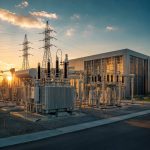
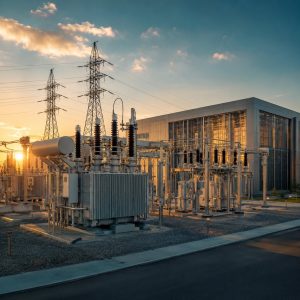
But the hyperscalers are discovering that money cannot compress supply chains for physical hardware. The critical bottleneck is not GPUs, not network switches, not real estate — it is high-voltage power transformers and electrical switchgear. These are industrial components that step electricity down from grid voltage (typically 115-230 kV) to the voltage data centers can use, and they are manufactured in a global supply chain that has not scaled to match the AI infrastructure appetite.
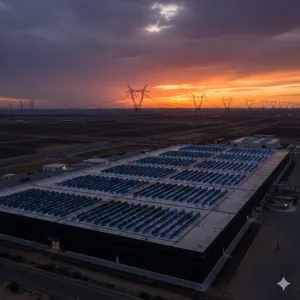
According to reporting from Bloomberg and EnergyNewsBeat, more than half of planned 2026 US data centers now face delays or cancellation. Of the roughly 12-16 GW of US data center capacity slated for 2026, only about one-third is actively under construction. The reason is straightforward: you cannot power a $2 billion AI campus without the electrical infrastructure to connect it to the grid, and that infrastructure now takes 3-5 years to procure. As one analysis from dig.watch notes, electrical infrastructure represents less than 10% of total data center cost — but it is the schedule-critical bottleneck that prevents the other 90% from going operational.
Why Transformer Lead Times Exploded from 2 Years to 5 Years
Understanding the bottleneck requires understanding what high-power transformers are and why they are difficult to manufacture at speed. A large power transformer for a data center campus is a custom-built piece of industrial equipment weighing hundreds of tons, manufactured with specialized steel, copper windings, and insulating oil. There are no commodity-grade substitutes and no 3D-printing shortcuts. Lead times before 2020 were 24-30 months; they now stretch to as long as five years for large power transformers.
Several factors drove the explosion. First, US electricity infrastructure has been chronically underinvested for decades — the transformer fleet that powers the American grid is aging, and utilities have been replacing it on a maintenance schedule, not an expansion schedule. When the AI infrastructure wave arrived, it found a supply chain oriented toward slow replacement cycles, not rapid capacity additions. Second, China controls approximately 60% of global transformer manufacturing capacity. US imports of Chinese high-power transformers surged from fewer than 1,500 units in all of 2022 to over 8,000 through October 2025 — a dramatic escalation that reflects how dependent the US buildout has become on a geopolitically contested supply chain. Third, the concentration of capital among a handful of hyperscalers has created simultaneous demand spikes across the US power equipment market that manufacturers simply cannot absorb without multi-year lead times.
Data centers currently consume 3-4% of US electricity. That figure is projected to reach 10% by 2028 — a 2.5x expansion in three years, faster than any previous energy demand surge in the digital era. The grid infrastructure that supports that expansion cannot be willed into existence faster than manufacturing and permitting timelines allow.
Advertisement
What Enterprise and Infrastructure Leaders Should Do About It
The transformer shortage is not an abstract hyperscaler problem. It affects cloud pricing, AI compute availability, and strategic decisions for any enterprise that depends on cloud infrastructure at scale.
1. Re-evaluate AI Project Timelines Using Infrastructure Lead Times, Not Vendor Promises
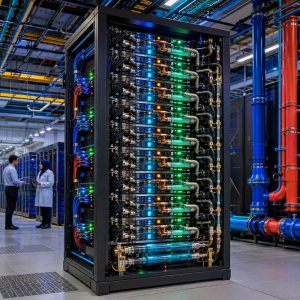
Enterprise CIOs building AI capacity plans that depend on new cloud region capacity, new co-location facility availability, or new on-premises GPU infrastructure should verify that the underlying electrical infrastructure is actually under construction — not just contracted. Hyperscalers including Microsoft have already committed to closed-loop liquid cooling systems and custom chip architectures (Azure Maia 100, Cobalt 100 CPUs) that require specific power delivery infrastructure. When a cloud provider announces a new region, ask your account team: what is the projected power-on date, and has the transformer been ordered? A data center campus announced today with no transformer order is likely 3-5 years from being power-on-capable.
2. Price Long-Term GPU and Cloud Contracts Against Infrastructure Constraint Risk
The transformer shortage creates upward pressure on cloud compute pricing for GPU-intensive workloads. When supply of new data center capacity is constrained by electrical equipment lead times, hyperscalers have pricing power over the AI compute market. Enterprises signing multi-year GPU cloud commitments — AWS GPU reserved instances, Azure AI infrastructure contracts — should model scenarios in which new capacity is delayed 12-24 months beyond announced dates. In those scenarios, spot pricing for GPU compute could spike significantly relative to reserved pricing locked in today. Hedging with reserved contracts now, before the supply constraint tightens further, is the lower-risk position for enterprises with committed AI workloads.
3. Treat On-Premises Electrical Infrastructure as a Strategic Asset, Not a Cost Center
For enterprises considering private AI infrastructure — on-premises GPU clusters for inference, private cloud for sensitive AI workloads — the electrical infrastructure question is now the first question, not an afterthought. A 1 MW on-premises GPU cluster requires a 2-3 MW power connection (accounting for cooling overhead), and the transformer or switchgear for that connection carries the same supply chain constraints as hyperscaler infrastructure. Enterprises that have electrical infrastructure already in place — particularly those with industrial facilities, large campuses, or existing data center footprints — have a structural advantage in deploying on-premises AI infrastructure that companies starting from scratch do not. Audit your power capacity before you buy the GPUs, not after.
The Structural Lesson: Physical Limits in a Software-First World
The transformer shortage is a reminder that the AI economy is constrained by physical world manufacturing cycles in ways that the software-first technology industry has spent 20 years pretending it is not. You can deploy software globally in hours; you cannot deploy electrical infrastructure in years if the components take five years to manufacture.
The hyperscaler response — pre-ordering transformers years in advance, building on-site gas turbine generation, signing small modular reactor (SMR) deals, and developing proprietary switchgear to bypass standard lead times — reflects a recognition that the traditional “lease a rack, plug in a server” model of cloud expansion has hit a physical bottleneck that capital alone cannot solve. Global installed data center power capacity is expected to reach approximately 155 GW in 2026, up 29% year-over-year. AI servers are projected to surpass general-purpose servers in total electricity consumption by 2026. These are numbers that describe a structural transition in the physical infrastructure of computing, not a temporary inventory problem.
For enterprise leaders, the strategic implication is simple: infrastructure lead times are now as important as software delivery timelines in AI project planning. The enterprise that treats electrical infrastructure as an IT procurement detail will find its AI roadmap constrained by the same power hardware shortage that is delaying half the US data center pipeline.
Frequently Asked Questions
Why can’t hyperscalers just manufacture their own transformers to bypass the shortage?
High-power transformers require specialized manufacturing capabilities — custom-wound copper coils, specialty steel cores, large-scale industrial facilities, and highly skilled labor — that hyperscalers do not have and cannot build quickly. Some hyperscalers are developing proprietary switchgear (a related but less specialized component), and a few are exploring modular power architectures that use multiple smaller transformers instead of single large units. However, the core constraint — the manufacturing capacity for large power transformers — is in the hands of a small number of global industrial companies and cannot be rapidly expanded through hyperscaler investment alone.
How does the transformer shortage affect cloud pricing for enterprise users?
When new data center capacity is delayed by electrical equipment lead times, the supply of GPU compute and high-performance cloud infrastructure grows more slowly than demand. This gives hyperscalers pricing power in the AI compute market. The effect is most visible in GPU spot pricing and in the growing premium between reserved and on-demand GPU instances. Enterprises that have not locked in reserved GPU commitments are increasingly exposed to spot price spikes when demand surges and constrained new supply cannot absorb the load.
Are there geographic markets where the transformer shortage is less severe?
The shortage is global but most acute in the US, where the simultaneous hyperscaler buildout has concentrated demand. Europe has somewhat longer planning cycles and more distributed demand, but faces similar manufacturing constraints for large transformers. Singapore has invested in electrical grid infrastructure specifically to support data center growth and has shorter permitting timelines — making it the most-cited alternative for capacity that cannot be built in the US on the required timeline.
—
Sources & Further Reading
- North American AI Data Center Expansion Drives 2026 CapEx of Top Nine CSPs to US$830 Billion — TrendForce via PR Newswire
- More Than Half of Data Centers May Be Delayed Due to Lack of Transformers — EnergyNewsBeat
- Power Hardware Shortages Are Delaying AI Data Centre Expansion — dig.watch
- Hyperscalers in 2026: What’s Next for the World’s Largest Data Center Operators — Data Center Knowledge
- AI Demand Is Resetting 2026 Data Center Capacity Forecasts — DataCenters.com
🔗 Related Intelligence
Grid Transformer Shortage: The 5-Year Bottleneck Stalling AI Data Centers in 2026

Data Center Power Crisis: Grid Delays, PPAs, and SMRs Race to Keep AI Online
AI Racks at 1 MW: How AI Is Forcing a Complete Rethink of Data Center Design
The 49GW Shortfall: How Cloud Operators Are Solving the AI Power Grid Bottleneck