Algeria’s Grid is at an Energy Turning Point
Algeria’s electricity system has been powered almost entirely by natural gas for decades — gas supplied 99% of electricity generation as of 2022, according to Enerdata’s Algeria Energy Market Report. The country’s national power utility Sonelgaz operates 23.8 GW of total generation capacity, but the installed renewable share sat below 600 MW entering 2025, a fraction of the 15,000 MW target the government has set for 2035.
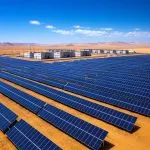
That is about to change materially. Algeria’s Ministry of Energy and Renewable Energies confirmed the commissioning of nine photovoltaic power plants with a combined capacity of 1,480 MW by August 2026, as part of a first-phase program targeting 3,200 MW of total renewable capacity. According to the ministry’s spokesperson Khalil Hedna, two 200 MW facilities at El Ghrous (Biskra) and Tendla (El M’Ghair) were expected to begin operations by late January 2026, marking the first large-scale domestic photovoltaic additions Algeria has seen in years.
The significance of this wave is not just kilowatts of clean power — it is the structural shift in Algeria’s energy economics that it implies for the digital infrastructure sector. Until recently, colocation operators and enterprise data centers in Algeria have managed power procurement the same way they have managed it for two decades: pay the Sonelgaz tariff, maintain diesel generators for backup, and accept that energy cost is a relatively fixed and non-negotiable operational line item. The arrival of utility-scale domestic solar changes the first and potentially the second of those assumptions.
What the Solar Wave Means for Data Center Power Costs
Algeria’s industrial electricity tariff has remained near DZD 3,000 per MWh since 2016, according to Enerdata’s Algeria profile. This subsidized pricing has made Algeria’s electricity cheap relative to global benchmarks — but the subsidy has also suppressed investment in grid-side demand management and renewable integration, and peak-demand spikes have led some industrial facilities to install battery backup and generators to avoid costly outages.
The addition of 1,480 MW of photovoltaic capacity changes the supply-side dynamics on the Sonelgaz grid in three ways that matter for data center operators.
First, it reduces curtailment pressure on gas-fired generation during daylight hours, freeing capacity for nighttime data center workloads that currently represent the highest-cost peak. Algerian data centers run high-density compute for banking, insurance, and government workloads that cannot be time-shifted; better daytime renewable coverage means less gas combustion overall, which matters for the carbon accounting that enterprise clients are increasingly requiring.
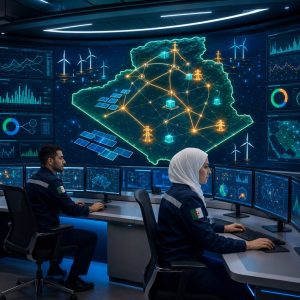
Second, Algeria’s plan to introduce SCADA (Supervisory Control and Data Acquisition) grid management — Algeria’s upgrade would make it the first country in North Africa to adopt this system, according to PVknowhow — is a precondition for balancing the intermittent solar supply at scale. A SCADA-enabled Sonelgaz grid is a more stable grid, and grid stability directly reduces the frequency with which data centers must fall back to diesel — reducing operational carbon intensity and generator maintenance costs simultaneously.
Third, the precedent creates a pathway for power purchase agreements (PPAs) that today do not exist at scale in Algeria. In mature markets, colocation providers negotiate PPAs directly with renewable generators, locking in multi-year electricity pricing below spot rates and enabling renewable energy certificates (RECs) for green data center claims. Algeria’s regulatory framework does not yet permit private-sector wheeling of electricity across the Sonelgaz network, but the rapid buildout of renewable capacity creates the political economy for that regulatory change — because without it, Algeria’s new solar plants will be underutilized during peak-generation hours.
Advertisement
What Data Center Operators and IT Leaders Should Do
The 1,480 MW commissioning wave is an infrastructure event, not just an energy story. It changes the strategic calculus for anyone who makes procurement, siting, or contracting decisions about Algerian data center capacity.
1. Model your power cost exposure against the new grid mix by Q3 2026
Most Algerian data center operators have not updated their long-term power-cost models since the 2016 Sonelgaz tariff revision. As the renewable share of the national grid increases from under 3% to a projected 10-15% by end-2026, the risk profile of peak-grid dependency changes. Operators running above 1 MW of average draw should commission an updated power cost analysis that models three scenarios: continued flat-tariff dependence; a Sonelgaz tariff adjustment tied to renewable energy cost-recovery (which regulators in comparable markets have implemented within 18-24 months of major renewable additions); and a prospective PPA scenario assuming regulatory clearance within 36 months. The output of this analysis informs your generator replacement schedule, your next colocation contract negotiation, and your capital allocation between owned and leased capacity.
2. Upgrade your diesel generator strategy now, before the regulatory window opens
There is a counterintuitive short-term implication of the solar wave for data center operators: the period between now and a functioning PPA market is a window where diesel dependency remains but grid reliability is improving. This is the ideal window to transition from diesel-only backup to a hybrid diesel-plus-battery storage configuration. Battery storage handles grid micro-outages (sub-30-minute events that consume the most diesel per kilowatt-hour because generators cycle on and off) while diesel handles extended outages. In markets where Sonelgaz has upgraded grid management, the frequency of sub-30-minute outages drops significantly — which means a hybrid storage configuration will reduce diesel consumption by 40-60% in typical Algerian data center environments without adding grid-power risk. The capital cost of industrial lithium-ion storage for a 500 kW facility has dropped below DZD 40 million, a 3-4 year payback at current diesel prices.
3. Incorporate energy sourcing into your next colocation RFP as a scored criterion
Enterprise clients tendering for Algerian colocation capacity in 2026-2027 should add power sourcing as a scored criterion in the request-for-proposals process. Ask vendors to disclose: what percentage of their power procurement is grid versus generator; whether they have applied for or are modeling a PPA; and whether they track and report carbon intensity per kilowatt-hour of IT load. The majority of Algerian colocation providers currently cannot answer these questions. But those who can will be better positioned for the wave of European-linked Algerian enterprises (banks, insurance companies, logistics firms) that are beginning to report Scope 2 emissions to parent-company ESG boards. Requiring energy transparency in your RFP creates a market signal that accelerates the supply-side upgrade.
Algeria’s Digital Infrastructure: The Bigger Energy Picture
The 1,480 MW commissioning wave is a significant milestone, but it is the smallest unit in Algeria’s energy transition story. The first phase targets 3,200 MW of renewable capacity. The national goal is 15,000 MW of solar by 2035. Algeria has some of the highest solar irradiance in the world — the Sahara’s potential is measured in terawatts — and the government’s ambition is to export green hydrogen and renewable electricity to Europe via planned interconnectors.
For digital infrastructure, the strategic implication is directional: Algeria is moving from a single-fuel grid (gas) to a multi-source grid (gas + solar), and the pace of that transition is accelerating. Algeria’s Industrial Information website reports a 15 GW solar target by 2035, sustained by a pipeline of projects that extends well beyond the current nine-plant wave.
Data center operators, cloud providers, and enterprise IT planners who treat Algeria’s renewable buildout as an “energy story” separate from their infrastructure strategy will miss the upstream implication: the cost, reliability, and carbon profile of Algerian compute is changing, and the change will compound annually through 2030. The firms that position their infrastructure strategy around the new energy economics — rather than the energy economics of 2016 — will build facilities that are cheaper to operate, easier to certify for international clients, and more resilient when the PPA regulatory framework finally arrives.
The question for CIOs and data center managers is not “should we care about Algeria’s solar buildout?” The question is whether to engage with the emerging renewable energy procurement ecosystem now, or wait until it is fully formed — and pay the late-adopter premium.
Frequently Asked Questions
Will Algeria’s 1,480 MW solar wave make data center electricity cheaper in 2026?
Not immediately through a direct tariff cut — Algeria’s subsidized industrial electricity tariff at DZD 3,000/MWh has been stable since 2016, and the regulatory mechanism for passing renewable energy savings to industrial consumers does not yet exist in Algerian law. The short-term benefit is improved grid stability, which reduces the frequency of generator fallback events and the associated diesel cost. The medium-term benefit (2-4 years) is the opening of a PPA market that allows direct renewable procurement below current grid tariffs — if the regulatory framework advances at the pace comparable markets have shown after major renewable additions.
What is a power purchase agreement (PPA) and does Algeria permit them for data centers?
A PPA is a direct long-term contract between an electricity buyer (such as a data center) and a renewable energy generator, typically fixing a price per kilowatt-hour below grid spot rates for 10-20 years. Algeria’s current regulatory framework requires that all electricity be wheeled through the Sonelgaz distribution network, preventing direct private-to-private electricity contracts. However, the rapid buildout of renewable capacity creates political-economy pressure for a PPA enabling regulation — because without it, peak solar output cannot be efficiently absorbed into the grid. Several North African governments have unlocked PPA frameworks within 24 months of reaching comparable renewable penetration thresholds.
Should Algerian enterprises locate data center capacity near the new solar plants?
Not necessarily. The El Ghrous (Biskra) and Tendla (El M’Ghair) facilities are in the south, while major enterprise demand is concentrated in Algiers, Oran, and Constantine. Grid transmission connects these regions, so the renewable energy benefit flows through the national grid rather than requiring physical proximity. The more relevant siting factor for data centers remains latency to major enterprise users — which points to northern urban locations — while the energy story plays out at the grid level regardless of facility location.
—
Sources & Further Reading
- Nine Solar Plants to Go Online in Algeria in 2026 — Renewables Now
- Algeria to Commission 1.48 GW of Solar Capacity by August — ESI Africa
- Algeria 1,480 MW Solar Plants Expected in 2026 — Solar Now / Africa News Agency
- Algeria SCADA Grid Upgrade — PVknowhow
- Algeria Energy Market Report — Enerdata
- Algeria Accelerates Solar Ambitions: 15 GW by 2035 — Industrial Info Media
- Algeria Renewable Energy — U.S. Commercial Guide, Trade.gov
🔗 Related Intelligence
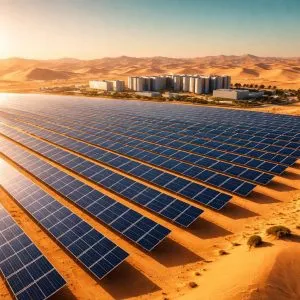
Algeria Solar Week 2026: 1,480 MW of Clean Energy Meets Digital Infrastructure Ambitions
Algeria’s 1,480MW Solar Push: Nine Plants Powering the Digital Economy
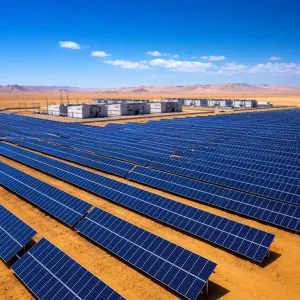
M’Sila Solar and Algeria’s Data Centers: A Sustainable Digital Bet

Algeria Data Centers: Solar PPAs as the Backbone of a Clean Cloud Strategy