From Import Dependency to Digital Factory Floor
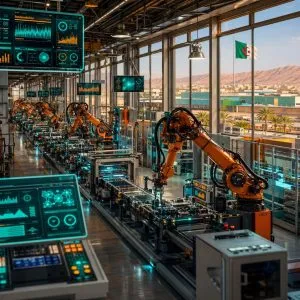
Algeria’s pharmaceutical sector has spent two decades on a structural transformation. Between 2010 and 2025, the country grew from a largely import-dependent drug market into Africa’s largest pharmaceutical manufacturing base, with 218 operating plants and a domestic production coverage rate now approaching 80%. That foundation is remarkable. The question facing the sector in 2026 is whether the next transformation — from volume manufacturing to intelligent manufacturing — can happen with the same urgency.
Maghreb Pharma Expo 2026, held at the Safex Exhibition Palace in Algiers from April 21 to 23, provided the clearest industry snapshot yet. The 12th edition of the event drew approximately 300 exhibitors from 20 countries — a participation pool spanning Europe, the Americas, Asia, and the Arab world — and attracted an estimated 5,000 visitors, a 10% increase over the previous edition. Among the 95 Algerian exhibitors, the conversation had shifted. Quality compliance and capacity expansion were no longer the primary themes. AI-driven process optimization, serialization and traceability, and supply chain digitalization had moved to center stage.
What the Expo Floor Revealed About Algeria’s Digitalization Gap
The Maghreb Pharma Expo is not a startup showcase. It is a procurement event — a place where factory directors, production engineers, and quality managers evaluate real tools for real lines. The technology exhibited in April 2026 fell into four categories that collectively define where the sector must invest to remain competitive.
Serialization and traceability: Algerian manufacturers face mounting regulatory pressure to implement end-to-end traceability on all drug units. The Algerian Ministry of Industry has aligned local requirements with international standards including the EU Falsified Medicines Directive serialization model, which mandates unique identifiers and tamper-evidence at the pack level. Multiple exhibitors at the expo presented AI-enabled serialization platforms that go beyond barcode generation — linking production data, batch records, and cold-chain events into a single audit trail.
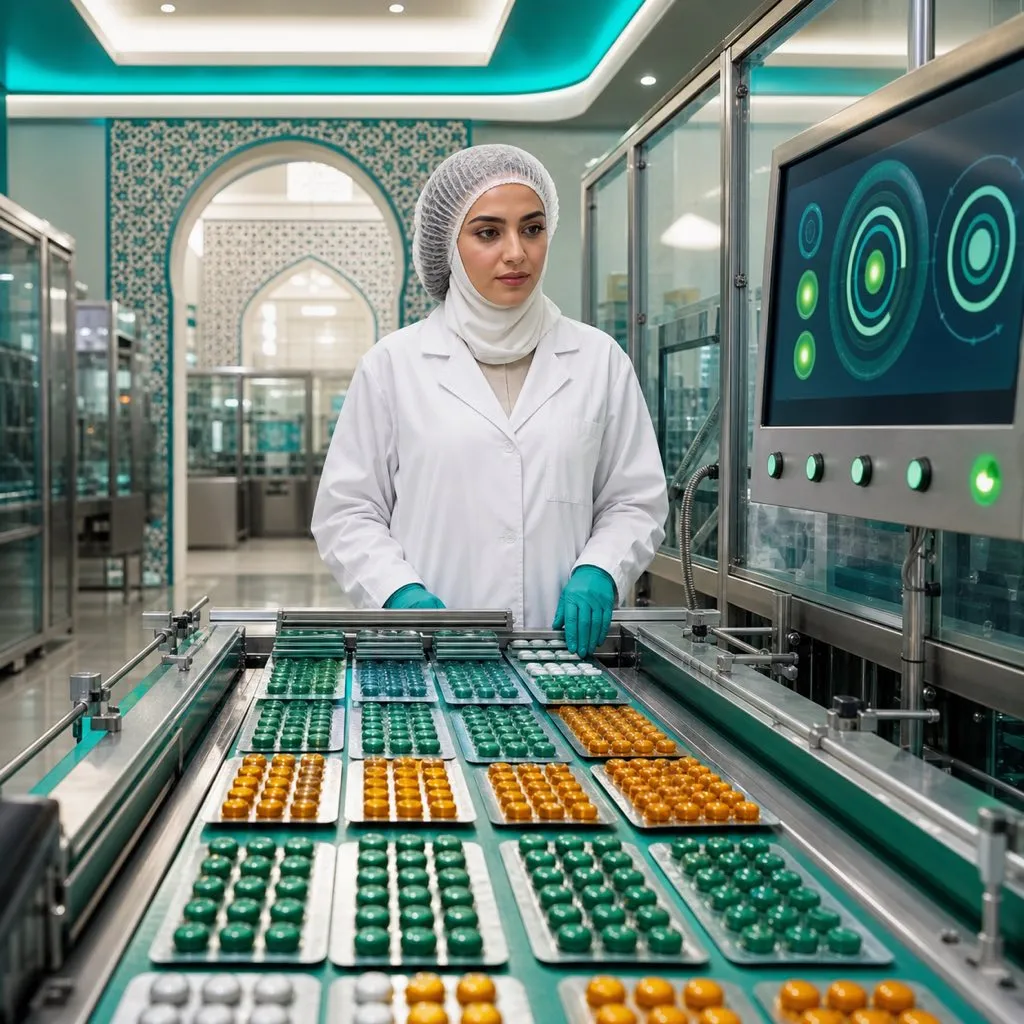
Quality control automation: AI-based vision systems for tablet and capsule inspection were among the most-discussed exhibits. These systems, deployed by global equipment suppliers at their Algerian distribution partners’ stands, analyze thousands of units per minute for dimensional defects, color anomalies, and contamination — replacing manual sampling processes that catch at best 2–5% of a batch. For a market where Saïdal and its peer manufacturers produce in the tens of millions of units monthly, the accuracy uplift is substantial.
Smart supply chain management: Algeria’s pharmaceutical supply chain — from active pharmaceutical ingredient (API) import to pharmacy shelf — involves multiple ministries, bonded warehouses, cold-chain logistics, and a national pharmacovigilance database (MOPI’s pharmaceutical information system). The integration gap between these layers is where AI-based supply chain orchestration tools are finding their first local customers.
Biotechnology and biosimilars R&D support: A smaller but strategically important segment of the expo focused on AI-assisted drug development, particularly for biosimilars and innovative biologics. Algeria has identified biosimilar production as a priority export vector, and several exhibitors demonstrated computational tools for formulation screening and stability modeling.
Advertisement
What Algerian Pharmaceutical Directors Should Do Now
The expo revealed a clear readiness gradient across the sector: multinational subsidiaries in Algeria tend to operate with enterprise-grade manufacturing execution systems (MES) already in place, while a significant cohort of mid-sized Algerian-owned manufacturers is still running paper-based or Excel-driven quality records. The gap matters because new regulatory requirements and export ambitions will raise the technical floor.
1. Treat GS1 Serialization Compliance as the First AI Entry Point
Rather than attempting a broad “AI transformation,” pharmaceutical directors should treat serialization compliance as a scoped, fundable, and immediately necessary project that also serves as an on-ramp to broader digitalization. GS1 DataMatrix codes — the global standard for pharmaceutical serialization — require only a modest hardware investment per line and create the structured data layer that all subsequent AI quality and supply chain tools depend on. The estimated cost for line-level serialization on a mid-sized Algerian plant runs between DA 8 million and DA 20 million per production line, depending on speed and existing infrastructure. That is a tractable investment relative to the risk of losing export eligibility for African markets that are moving toward serialization mandates.
2. Pilot AI Vision Inspection on Your Highest-Volume Line First
AI-based optical inspection systems do not require a full MES rollout to deliver value. Directors should identify the single highest-volume line in their facility — typically an oral solids line for generics — and run a structured pilot with one of the global inspection OEMs that now have Algerian distribution partners (several of which exhibited at Maghreb Pharma Expo). A well-scoped pilot of 6–8 months produces defensible quality data and builds the internal technical literacy needed for a broader rollout. Avoid the common mistake of selecting a pilot line based on ease of deployment rather than scale of impact — the ROI calculation changes entirely.
3. Integrate with MOPI’s National Pharmaceutical Information System Before Your Competitors Do
Algeria’s Ministry of Industry operates a national pharmaceutical information system (MOPI) that digitizes import and production schedules. Manufacturers who integrate their production data directly with MOPI’s platform gain faster import authorization approvals and cleaner audit trails during ANDS (Agence Nationale des Produits Pharmaceutiques) inspections. Several software vendors at the Maghreb Pharma Expo 2026 were offering MOPI-compatible modules. Manufacturers who move early on this integration will be in a structurally better position when ANDS inspection protocols evolve — and when export certifications to sub-Saharan African markets require regulatory clearance documentation.
4. Build an Internal AI Literacy Layer Before Deploying Production Systems
The most consistent failure mode in Algerian industrial AI deployments is not technology — it is the absence of internal staff who can configure, validate, and troubleshoot AI systems after the integrator leaves. A practical approach: identify 2–3 production engineers per facility for a structured 12-week AI for Manufacturing program (the same Sidi Abdallah-based curriculum now available through the Ministry of Vocational Education). Build this internal capacity before signing a full deployment contract. The vendors will still be there; the window to build internal know-how at minimal cost may not be.
The Bigger Picture: Algeria’s Pharmaceutical Sovereignty Ambition
The Maghreb Pharma Expo’s significance extends beyond any single technology category. The expo is a barometer for the sector’s collective ambition, and the April 2026 edition read clearly: Algeria intends to move from being Africa’s largest pharmaceutical manufacturer by volume to being a regional exporter of both medicines and manufacturing expertise.
That ambition has a timeline pressure. The $230 billion global pharmaceutical patent cliff between 2025 and 2030 will create a surge in demand for generic and biosimilar manufacturing capacity globally — and Algeria’s 218-plant infrastructure positions it well to capture part of that demand, provided the plants can meet international quality and traceability standards. AI is not the only enabler of that transition, but it is the one that shortens the timeline most visibly: from manual sampling to automated inspection, from spreadsheet batch records to AI-monitored process deviations, from reactive quality to predictive compliance.
The directors who attended Maghreb Pharma Expo 2026 and walked the serialization and vision inspection aisles with procurement intent — not just technical curiosity — are the ones positioning their companies for that window.
Frequently Asked Questions
What is Maghreb Pharma Expo and why does it matter for Algeria’s pharmaceutical industry?
Maghreb Pharma Expo is Algeria’s flagship pharmaceutical trade exhibition, held annually at the Safex Exhibition Palace in Algiers. The 2026 edition (12th) drew 300 exhibitors from 20 countries and an estimated 5,000 visitors. It matters because it is a procurement event — factory directors attend to evaluate real production and quality technologies, making it a reliable indicator of where the sector’s investment is heading.
How advanced is Algeria’s pharmaceutical manufacturing compared to other African countries?
Algeria operates 218 pharmaceutical plants, more than any other country in Africa, and covers nearly 80% of its domestic medication needs through local production. The country ranks as the continent’s largest pharmaceutical manufacturing base. However, a significant share of mid-sized Algerian-owned plants still rely on manual quality processes, creating a gap relative to multinational subsidiaries operating in Algeria.
What is the estimated cost of implementing AI-based serialization in an Algerian pharmaceutical plant?
Line-level GS1 serialization — the global standard for pharmaceutical traceability — typically costs between DA 8 million and DA 20 million per production line for a mid-sized Algerian plant, depending on line speed and existing infrastructure. This is considered the most accessible and immediately fundable AI entry point for the sector, as it also satisfies regulatory requirements and enables export eligibility for African markets adopting serialization mandates.
—
Sources & Further Reading
- Maghreb Pharma Expo 2026 — Opening of the 12th Edition in Algiers — Algérie Éco
- Maghreb Pharma Expo 2026 — Vitrine des Avancées du Secteur Pharmaceutique — Express DZ
- Pharmaceuticals Sector: With 218 Plants, Algeria Reinforces Its Position as African Leader — Maghreb Pharma
- Algeria Pharmaceutical Industry Overview — U.S. International Trade Administration
- Maghreb Pharma Expo Official Website