What Crunchbase actually counted in March
Crunchbase’s April 21, 2026 report tallies 37 new entrants on the Unicorn Board for March, the highest monthly count since mid-2022. Robotics led with six new billion-dollar startups, three of them based in China. Frontier AI labs added four, including two focused specifically on robotics models. AI infrastructure added four more, focused on data center technology and capacity provisioning. The remaining additions spread across crypto, fintech, biotech, and quantum computing.
The geographic split is concentrated. Twenty of March’s new unicorns are US-based, and 11 of those are in the San Francisco Bay Area. China contributed six. The United Kingdom added four, and France, the Netherlands, and Belgium minted one each. The most valuable newcomer was Seychelles-headquartered crypto exchange OKX at a $25 billion valuation. The largest individual funding round was a $1 billion raise by Paris-based Advanced Machine Intelligence, the new frontier lab founded by Yann LeCun after his departure from Meta’s chief AI scientist role.
Two months earlier, in February 2026, Crunchbase had already flagged the pattern: robotics and semiconductor startups led the unicorn count even as OpenAI’s record fundraising dominated the headlines. The March numbers confirm that the shift toward physical AI and compute infrastructure is the durable trend, not a one-month spike.
Why robotics and AI infrastructure are getting most of the money
The sector mix matters more than the headline count. Robotics, frontier labs, and AI infrastructure are capital-intensive categories with long product cycles, hardware supply chains, and large engineering payrolls. Investors are not pricing them like the consumer-app unicorns of the 2020-2021 cycle. They are pricing them like industrial platform plays where the winner controls scarce inputs: model weights, training compute, fabrication capacity, hardware design, or the operational data needed to refine physical systems.
Crunchbase’s separate Q1 2026 funding report puts the trend in scale. Global venture funding hit roughly $300 billion in the first quarter, a record level driven by AI-related rounds. Foundational AI startup funding in Q1 alone matched all of 2025. North American funding surged across all stages to record levels, with mega-rounds dominating the late stage and AI infrastructure crowding the early stage. The unicorn count is downstream of those flows: when the largest checks in the market go to frontier labs and physical AI, billion-dollar marks follow quickly.
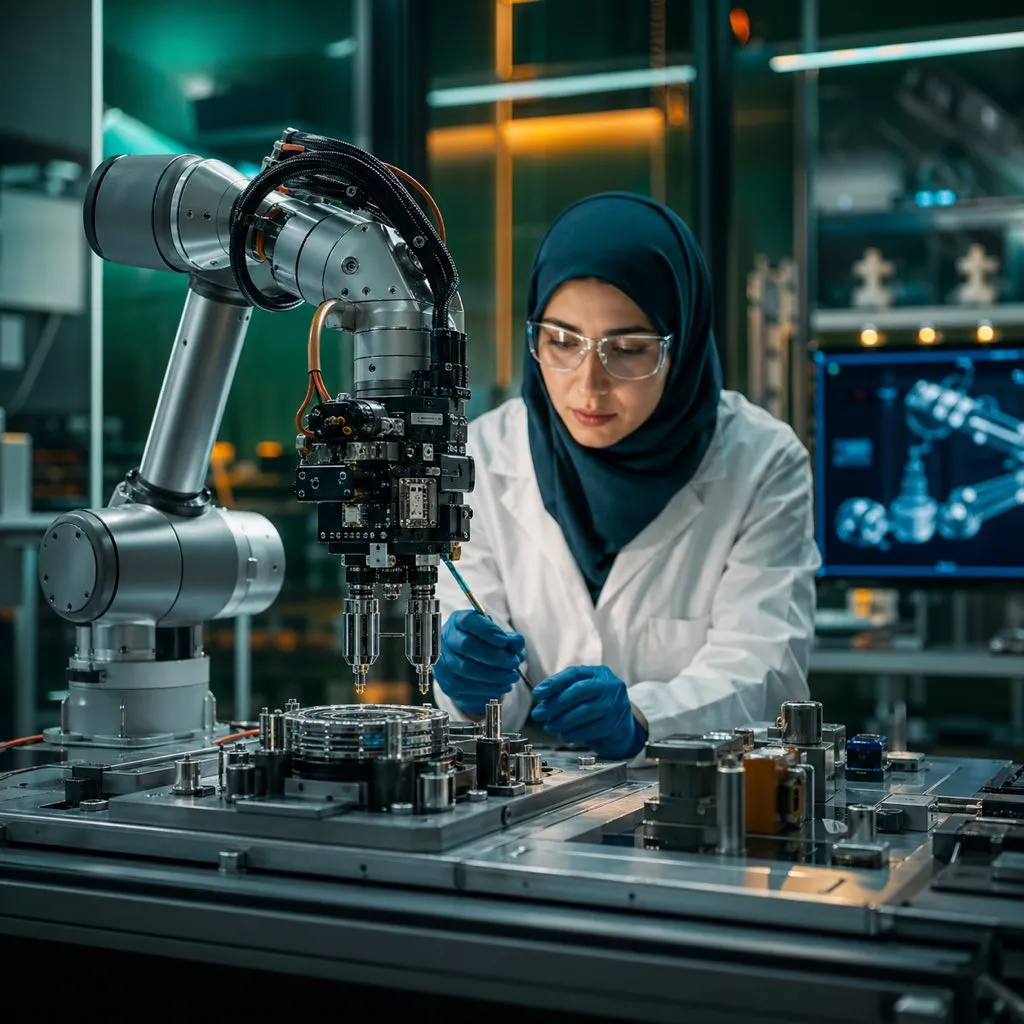
The robotics sub-trend deserves a closer look. The six new robotics unicorns split between humanoid platforms, industrial automation, and warehouse logistics. Three of the six are Chinese, reflecting Beijing’s continued push into humanoid robotics as an industrial policy priority. The two frontier labs that focus on robotics models suggest that vertical model specialization is becoming a venture category in its own right, distinct from general-purpose foundation models.
Speed-to-unicorn is compressing in dangerous ways
The age distribution is the most striking number in the Crunchbase report. Eighteen of March’s 37 new unicorns were less than three years old, and five had not yet celebrated their first anniversary. That speed-to-unicorn compression has happened before, most notably in 2021, but the underlying logic is different. In 2021, fast valuations rewarded distribution and growth-stage gross merchandise value. In 2026, fast valuations reward technical optionality: investors are paying to own a position in markets they believe will define a future layer of the AI stack, before the technical or commercial proof points exist.
That can produce strong outcomes when the category-defining bet is right and the team can execute. It can also produce a vintage of startups whose valuations are reset hard if the technical bet does not pay off, or if larger incumbents catch up faster than expected. The 2021-2022 unicorn cohort offers a cautionary base rate: roughly half of those companies have either flat-rounded, down-rounded, been acquired below their peak, or quietly slipped off the active list.
For founders and investors looking at the 2026 wave, the practical question is which categories combine genuine scarcity with durable defensibility. Frontier compute, foundation model training, advanced fabrication, and operational robotics data have plausible cases. Wrapper businesses that depend on third-party model APIs, even if they raised at unicorn valuations, do not.
Advertisement
What this means for ecosystems outside Silicon Valley
The geographic concentration is also a signal. Eleven of March’s unicorns came from the Bay Area; another nine came from outside the United States combined. For ecosystems building AI and robotics startups outside the dominant clusters, the lesson is to focus on niches where local advantage compounds: industrial verticals, specific data assets, applied robotics for regional industries, or AI infrastructure services that do not require frontier-scale compute.
Algeria and similar markets will not produce a $1 billion frontier lab in the near term. They can build category-defining companies in applied robotics for agriculture, logistics, energy, and manufacturing, in vertical AI services tied to local industry data, and in AI infrastructure middleware that extends global platforms into regional markets. The 37-unicorn March is not a template to copy; it is a map of where global capital is willing to take risk, and a clue about which adjacent niches will follow.
Four Signals Hidden in the March 2026 Unicorn Data
The 37-unicorn count matters less than the structural patterns underneath it. The four signals below decode what the March cohort actually reveals about category formation, vintage risk, and the niches that will attract capital next.
Signal 1: Robotics Leadership Is a China-US Duopoly Signal, Not a Global Opportunity
Six of March’s new robotics unicorns were minted in Q1 2026, three of them in China. That geographic split is not random. Beijing has identified humanoid robotics as a national industrial policy priority, with state-backed funds mandated to back Chinese robotics platforms across factory automation, warehouse logistics, and elder care. The US robotics cluster in the Bay Area benefits from proximity to the frontier-model labs that produce the foundational locomotion and manipulation models. Founders in markets outside these two clusters should not read the robotics unicorn count as evidence that building a humanoid robot from scratch is viable in their geography. The realistic interpretation is narrower: applied robotics applications — software layers, sensor integration, operational-data pipelines, and vertical workflow automation — that connect to hardware built in those clusters are the buildable adjacent position. Crunchbase’s data on Asimov, the W26 YC company building human-movement data for robotics training, illustrates the picks-and-shovels opportunity that does not require owning robot hardware.
Signal 2: Speed-to-Unicorn Compression Carries a Hidden Vintage Risk
Eighteen of March’s 37 new unicorns were under three years old, and five were under one year. The 2021-2022 cohort of fast-valued unicorns offers a base rate worth keeping in mind: roughly half of those companies have since flat-rounded, down-rounded, been acquired below peak, or quietly declined. The mechanism is the same in both cycles — investors paying for technical optionality before commercial proof points exist. In 2021 the optionality bet was on distribution and GMV; in 2026 it is on AI infrastructure control. The bet may be right in more cases this time because the underlying technical moats are more durable than the distribution moats of 2021, but the pattern of compressed valuations compressing equally fast in a reversal is real. Founders and investors who assume that a 2026 unicorn mark is a floor rather than a reference point should look at the 2022 cohort’s outcomes carefully before drawing conclusions about portfolio durability.
Signal 3: AI Infrastructure Is Becoming Its Own Category, Distinct From Application AI
Four of March’s unicorns were explicitly categorised as AI infrastructure — data center technology, capacity provisioning, and model serving. This is a new phenomenon at scale. In the 2020-2023 cycle, “AI startup” meant application AI: a product that used AI as a feature or a core functionality. The emergence of AI infrastructure as a distinct unicorn-producing category reflects the industrial scale of compute demand that foundational labs and enterprise deployments are creating. For founders evaluating where to build, this signals that the picks-and-shovels opportunity in the AI cycle — the compute capacity, orchestration tooling, data labeling, evaluation infrastructure, and model serving optimization layer — is large enough to produce billion-dollar companies independent of any single application. Crunchbase’s Q1 2026 broader data shows AI infrastructure crowding the early stage, meaning the next wave of AI infrastructure unicorns is forming now at seed and Series A, not at late stage.
Signal 4: The Bay Area Premium Is Back — and It Is a Skills Signal
Eleven of March’s 37 unicorns were headquartered in San Francisco proper; another nine were elsewhere in the Bay Area. That 54% Bay Area concentration echoes the 2021 peak and reflects a specific dynamic: hardware-intensive categories (humanoid robotics, AI infrastructure, frontier labs) require physical co-location that software-only startups can avoid. Engineers who work on robot manipulation systems need robots in the room; engineers who optimize GPU cluster utilization need access to GPU clusters. For ecosystems outside the Bay Area, this is a skills signal rather than a geographic barrier. The specializations that produce robotics and AI infrastructure unicorns — embedded systems, FPGA design, CUDA optimization, operational robotics data collection — are learnable but require deliberate investment in university research programs, national lab infrastructure, and industry-academia partnerships. Ecosystems that make those investments now will have the human capital to capture the next adjacent wave; ecosystems that do not will continue to build application-layer companies on rented infrastructure.
Where This Fits in 2026’s Ecosystem
The March 2026 unicorn surge is a downstream consequence of capital decisions made 18 to 24 months earlier. The frontier-lab mega-rounds of 2024 funded the foundational model research and compute infrastructure that is now powering robotics locomotion models, AI infrastructure tooling, and the specialist evaluation frameworks that turn general-purpose AI into vertically deployable products. Crunchbase’s month-by-month unicorn data confirms this: the shift toward robotics and physical AI that was flagged in February 2026 was already visible in January’s seed and Series A deal flow. The 37-unicorn March is the inflection point that press coverage notices, but the structural pattern was set much earlier.
That lag matters for founders and investors who want to position for the next wave. The categories producing unicorns in 2028 and 2029 are being seeded at the early stage in 2026. Advanced Machine Intelligence’s $1 billion raise for 3D world-generation models — the largest individual round of March 2026 — is a signal that synthetic-environment generation for robotics training is a frontier category, not yet a unicorn category. Yann LeCun’s departure from Meta to found a Paris-based frontier lab underscores that the European cluster is attempting to build foundational infrastructure capacity outside the Bay Area duopoly. For ecosystems that are investing in university robotics programs, national AI research institutes, and GPU access infrastructure today, the 2028 unicorn cohort is the compounding return on those decisions. The March 2026 count is not the destination — it is the map of where the next starting line is.
Frequently Asked Questions
What was notable about the March 2026 unicorn count?
Crunchbase counted 37 new unicorns in March 2026, the highest monthly total in close to four years. Robotics led with six, frontier labs added four, and AI infrastructure added four. Twenty newcomers were US-based, six Chinese, and four British. The most valuable newcomer was crypto exchange OKX at $25 billion; the largest individual round was Advanced Machine Intelligence’s $1 billion raise.
Why are robotics and AI infrastructure attracting high valuations?
These are capital-intensive categories where investors believe the winner controls scarce inputs: model weights, training compute, fabrication capacity, hardware design, or operational robotics data. Crunchbase’s Q1 2026 data shows global venture funding hit roughly $300 billion and that foundational AI startup funding in Q1 alone matched all of 2025. The unicorn count follows those mega-rounds.
What can Algerian founders learn from this unicorn wave?
Treat the 37-unicorn surge as a signal of where global capital takes risk, not a template. The realistic Algerian opportunities are applied robotics for agriculture, logistics, energy, and manufacturing; vertical AI services tied to local industry data; and AI infrastructure middleware that extends global platforms into regional markets. The 18-of-37 share of unicorns under three years old also warns that fast valuations carry vintage risk if technical bets do not pay off.
Sources & Further Reading
- The new unicorn count reached a 4-year high in March — Crunchbase
- Q1 2026 shatters venture funding records as AI boom pushes startup investment to $300B — Crunchbase
- Sector snapshot: Venture funding to foundational AI startups in Q1 was double all of 2025 — Crunchbase
- While OpenAI Shattered Records, Robotics and Semiconductor Startups Quietly Added the Most New Unicorns in February — Crunchbase
- North America Q1 funding surges across stages to record level — Crunchbase