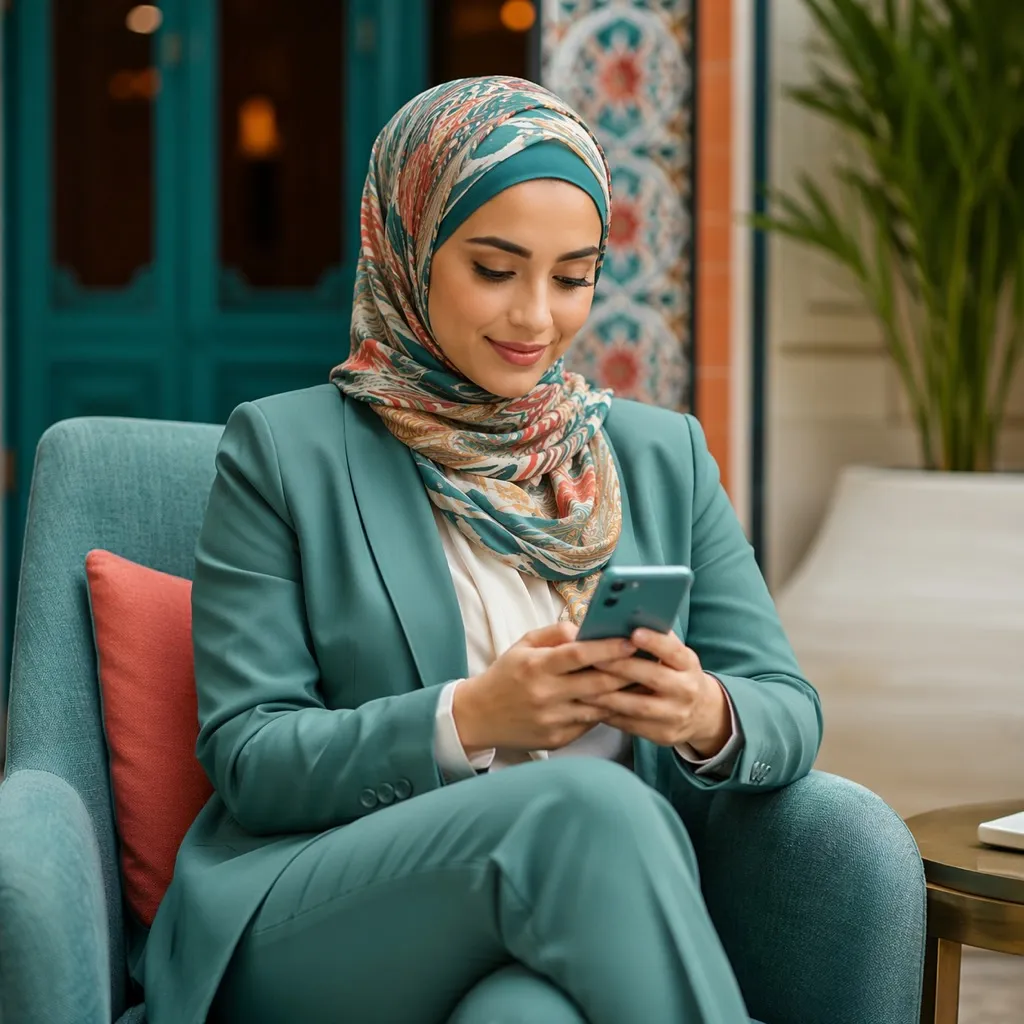
The Number That Reframes the Fintech Opportunity
World Bank data reported in 2025 put a precise number on a long-known gap: 71% of Algerian women do not have access to basic transaction accounts to send and receive payments safely and efficiently. The overall adult figure is 57%. For the African Women’s Inclusion Index 2025 (ACET), Algeria ranks 22nd among African countries, scoring 36.5 out of 100 on women’s financial inclusion. Academic research confirms the structural gap: being a woman reduces the probability of holding a financial institution account in Algeria by roughly 21.5 percentage points.
The optimistic framing: this is not a small niche — it is roughly half the adult population. Any fintech product that can bring even five percent of them into the formal financial system generates scale most Algerian startups can only dream of.
Why the Gap Persists — And Why It Is Now Addressable
Three structural reasons historically kept Algerian women out of formal finance:
- Documentation and identification barriers — account-opening friction at traditional bank branches, particularly for rural women.
- Cultural and household dynamics — accounts are often in the name of a male household member, even when the woman runs the economic activity.
- Relevance and trust — products built for salaried urban men, not self-employed women running informal businesses.
What makes 2026 different is that the core enablers have arrived:
- DZMobPay interoperability — 15 banks interconnected for mobile payments in 2026 (see our separate coverage of the Switch Mobile rollout), making bank-agnostic QR payments possible.
- Baridi Pay — launched June 2025 by Algérie Poste, which already has Algeria’s widest branch footprint and the highest trust among women customers.
- Digital KYC frameworks — the groundwork laid under the national Fintech Strategy 2024-2030 to enable remote account opening with digital identity verification.
- Integrated microfinance platforms — ANGEM (National Agency for Microcredit Management) embedding digital training and digital product access into its microcredit pipeline.
The Fintech Players and Platforms Targeting Women
Algeria’s fintech ecosystem is small — around 30 to 35 startups operate across digital payments, mobile banking, financial infrastructure, and crypto-enabled services. Within that, a women-focused thesis is emerging along three lines:
1. Microcredit digitization. ANGEM historically provided non-collateralized microcredit to women entrepreneurs, particularly in handicrafts and artisanal trades, but the workflow was paper-based and branch-dependent. Digitizing the loan application, disbursement, and repayment cycle is one of the clearest fintech opportunities. Partnerships with ANGEM give startups access to an existing cohort of tens of thousands of women borrowers.
2. Merchant-facing tools for informal entrepreneurs. The World Bank/We-Fi program has trained nearly 120 Algerian women artisans in e-commerce, with over 74% integrating online platforms into their businesses. These women are prospective fintech customers — they need payment acceptance (QR codes tied to their own accounts, not a husband’s), inventory-linked credit, and simple bookkeeping tools. A fintech that packages these together has an obvious product-market fit.
3. Pure consumer wallets. Baridi Pay, BaridiMob, and bank-app wallets are competing for the ~20 million Algerian women who, even without a savings account today, have smartphones and WhatsApp. The first product does not have to be a full account — it can be a simple wallet for receiving remittances, topping up a phone, or paying Chifa (social security) contributions. Once that wallet is trusted, deeper products layer on.
Advertisement
The Training Pipeline
One of the quieter but most strategically important shifts for 2026 is ANGEM’s training multiplier. Starting in early 2025:
- 25 master trainers (one in each of 25 targeted wilayas) received advanced e-commerce and digital finance training.
- Each master trains 12 local trainers — a pool of 300 trainers.
- Those trainers mentor new entrepreneurs, targeting roughly 27,500 promoters reached by end of 2025.
That is the kind of distribution backbone fintech platforms cannot build themselves. A fintech that integrates its onboarding flow into the ANGEM training curriculum taps into a ready audience of women who have already received training, certification, and microcredit capital.
CNAM (National Chamber of Handicraft and Skilled Trades) provides a parallel channel for artisans specifically, and the two networks combined cover most of the country’s informal-but-economically-active women.
The National Fintech Strategy 2024-2030
Algeria’s National Fintech Strategy 2024-2030 explicitly targets digital payments expansion, financial innovation, and technological entrepreneurship in financial services. In 2026, the strategy’s financial-inclusion workstream converges with:
- The DZMobPay interoperability rollout (15 banks).
- The Algerian Startup Fund’s capital availability for fintech startups.
- The 2025 amendment to Law 18-07 creating a clearer data framework for digital account onboarding.
- New 2026 micro-importation and self-entrepreneur regulations that make informal women’s businesses easier to formalize (and therefore to bank).
The convergence matters. Past fintech inclusion pushes in Algeria stalled because any one missing enabler (payment rails, data regulation, institutional distribution) broke the whole chain. In 2026, multiple enablers are present simultaneously for the first time.
What a Winning Product Looks Like
Based on patterns from successful women-focused fintechs in Kenya, Indonesia, Egypt, and elsewhere, the likely shape of an Algerian winner:
- Mobile-first, language-localized. Arabic primary, French secondary, with a voice-driven onboarding option for customers with lower literacy.
- No-document minimum account. Using digital KYC and tiered limits — a low-limit wallet openable with just a national ID number, upgradable on verification.
- Community distribution. Agents in souks, ANGEM training centers, and CNAM artisanal hubs, not bank branches.
- Integrated micro-credit. Small, short-duration loans linked to transaction history once the account is active for 3–6 months.
- Remittance hook. Many Algerian women receive money from husbands working abroad or in other wilayas; being the easiest way to receive that money pulls the wallet into daily use.
- Joint-control features. Accounts with flexible authorization models — fully owned by the woman, but with optional notifications or limits that address household dynamics rather than pretend they don’t exist.
Why This Matters
Financial inclusion is not a CSR line. For Algeria, closing the women’s account gap means bringing millions of informal economic actors into the formal economy — expanding the tax base, unlocking credit for small-business growth, and creating new collateral for a more diverse financial sector. The country’s macro-economic resilience depends on it.
For fintech founders, it is also the single largest addressable market left in the country. Payments-for-men is competitive; payments-for-women is wide open. Build the product that 21 million Algerian women actually want to use, and the business case looks after itself.
Frequently Asked Questions
Why is the women’s financial inclusion gap in Algeria so large?
World Bank data from 2025 shows 71% of Algerian women and 57% of adults overall lack access to basic transaction accounts. The causes are structural: documentation and branch-access barriers, household dynamics where accounts default to male members, and financial products designed for salaried urban men rather than self-employed women running informal businesses.
How does ANGEM fit into the fintech opportunity?
ANGEM (National Agency for Microcredit Management) provides non-collateralized microcredit to women entrepreneurs, particularly in handicrafts and artisanal trades. Its digitization push includes 25 master trainers across targeted wilayas, each training 12 local trainers, reaching roughly 27,500 promoters by end of 2025. Fintech platforms that plug into this training curriculum tap into a ready audience with capital and mentorship.
What does a winning women-focused Algerian fintech product look like?
Mobile-first and Arabic-primary with a voice-driven onboarding option, a no-document tiered wallet openable with just a national ID, community distribution through souks and ANGEM training centers rather than bank branches, integrated micro-credit linked to transaction history, a remittance hook for inter-wilaya and diaspora money movement, and optional joint-control features that address real household dynamics.
Sources & Further Reading
- How Women Entrepreneurs in Algeria Are Going Digital — World Bank
- Algeria’s Fintech Ecosystem in 2026: Building Momentum — The Fintech Times
- Inclusion financière des femmes : le classement des pays africains en 2025 — Agence Ecofin
- L’Inclusion Financière en Algérie : Déterminants et Contraintes — ASJP CERIST
- How digital financial services can provide a path toward economic recovery in Algeria — World Bank Blog
- The Global Findex Database 2025 — World Bank