Foundation Stone Marks a Strategic Milestone
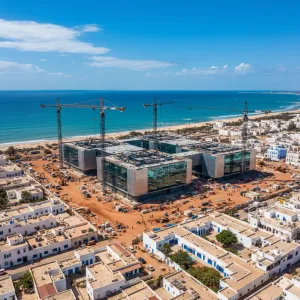
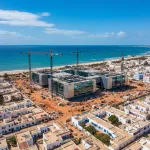
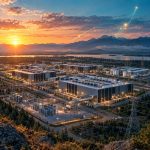
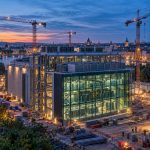
On March 16, 2025, Minister of Post and Telecommunications Sid Ali Zerrouki laid the foundation stone for Algeria’s first AI-dedicated data center in Oran’s Akid Lotfi district. The facility represents a strategic step toward digital sovereignty — providing the country with domestic high-performance computing (HPC) capabilities that currently require Algerian researchers and companies to rely on foreign cloud infrastructure.
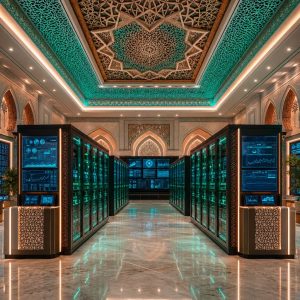
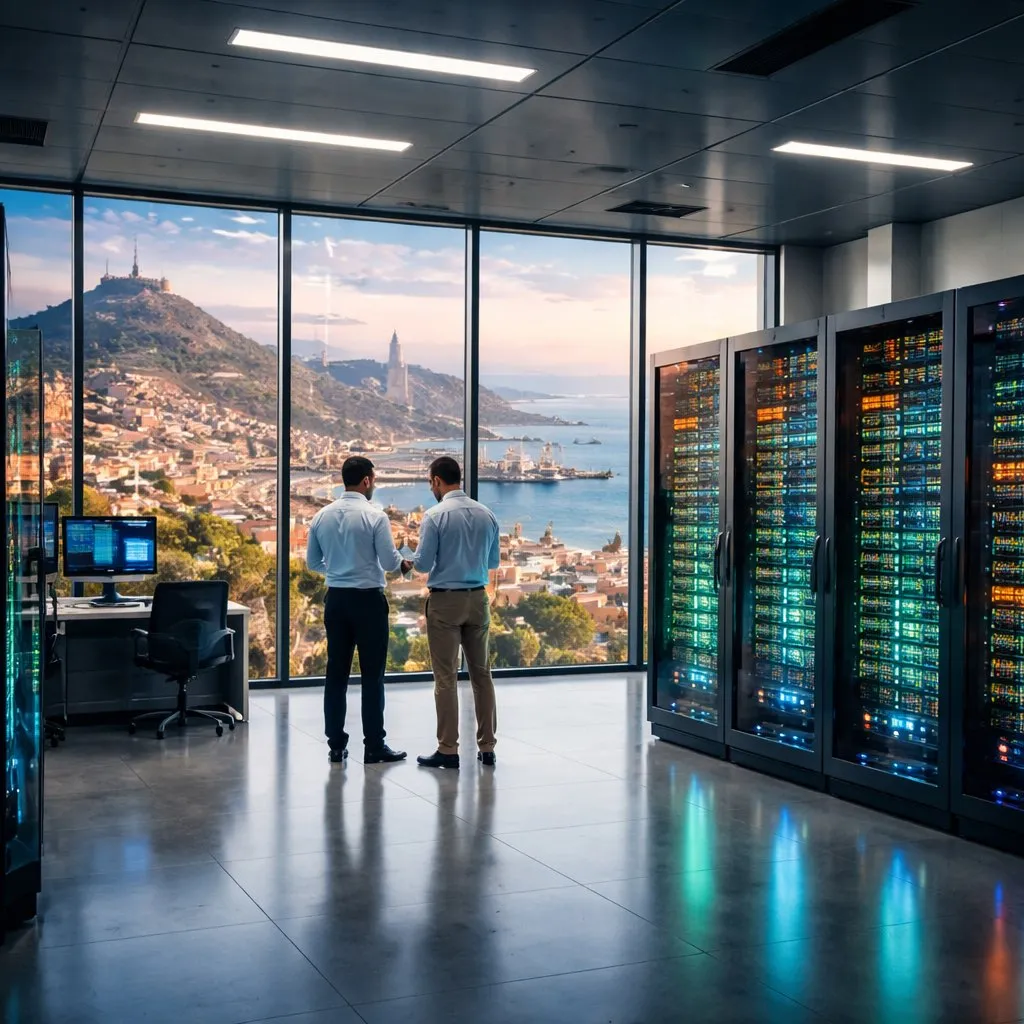
The center is explicitly designed around GPU clusters for AI workloads, not general-purpose data hosting. This distinction matters: training machine learning models, running inference at scale, and processing large datasets for AI applications require specialized GPU hardware (typically NVIDIA A100 or H100 accelerators) that consume more power, generate more heat, and need different cooling infrastructure than traditional CPU-based data centers.
The government has stated it expects AI to contribute seven percent to Algeria’s GDP by 2027 — an ambitious target that requires domestic compute infrastructure to become reality. Without local HPC capabilities, Algerian AI development remains constrained by cloud computing costs, international payment barriers, and data sovereignty concerns that arise when sensitive datasets must be processed on foreign servers.
GPU Clusters and Target Capabilities
The center will be fitted with latest-generation GPU hardware, enabling intensive computing capabilities across four priority domains: healthcare AI for medical imaging analysis, drug discovery support, and epidemiological modeling; industrial AI for predictive maintenance, quality control, and process optimization; cybersecurity AI for threat detection, anomaly analysis, and national infrastructure protection; and smart city applications for traffic management, energy optimization, and urban planning.
For Algeria’s research community, the center addresses a critical bottleneck. University labs at USTHB, ESI, and research centers like CERIST currently lack the GPU resources needed to train competitive AI models. Researchers working on Arabic natural language processing, computer vision for satellite imagery analysis, and climate modeling must either use constrained cloud budgets or accept severe limitations on model size and training duration.
Startups building AI products face similar constraints. Without affordable access to GPU compute, Algerian AI companies cannot train models that compete with well-funded international competitors. The Oran center is designed to level this playing field by providing shared HPC resources at subsidized or accessible rates.
Strategic Location: Why Oran?
Oran’s selection as the center’s location reflects several strategic considerations. As Algeria’s second-largest city and a major economic hub, Oran offers proximity to the country’s expanding telecom and fiber-optic infrastructure, a growing tech workforce anchored by the University of Science and Technology of Oran (USTO), a Mediterranean port that facilitates hardware importation, and distance from the capital that supports the national policy of distributing technology infrastructure across the territory.
The choice also aligns with the broader Oran development trajectory. The city has seen significant infrastructure investment since hosting the 2022 Mediterranean Games, including upgraded transportation, hospitality, and telecommunications networks. Adding an AI data center to this infrastructure creates a technology cluster effect — attracting talent, startups, and investment that compound each other’s impact.
Advertisement
Algeria’s Compute Gap in Context
To understand the significance of the Oran center, consider the compute gap. Morocco’s Mohammed VI Polytechnic University operates a supercomputer that ranks among Africa’s most powerful HPC systems. Egypt has invested in national data center infrastructure. South Africa, Kenya, and Nigeria have multiple colocation and cloud facilities.
Algeria, despite being Africa’s largest country by area and having the continent’s third-largest economy, has lacked dedicated AI computing infrastructure. Researchers and startups have relied on international cloud providers — primarily Google Cloud, AWS, and Azure — accessed through complex payment workarounds due to Algeria’s restrictions on international credit card transactions and foreign currency transfers.
The Oran center will not immediately match the capabilities of hyperscaler cloud regions. But it will provide something that no cloud provider can: data residency within Algeria’s borders, processing under Algerian legal jurisdiction, and sovereignty over the computing infrastructure that powers the country’s AI applications.
Power and Cooling Challenges
AI data centers are energy-intensive operations. A modern GPU rack can consume 40-70 kilowatts, compared to 7-15 kilowatts for traditional server racks. Cooling GPU clusters — which generate enormous heat density — requires advanced thermal management systems including liquid cooling.
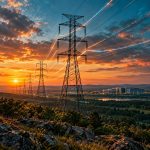
Algeria’s power grid, while expanding, faces challenges. The country generates most electricity from natural gas, with solar capacity growing through the national renewable energy program. For the Oran center, reliable power supply with redundancy (backup generators, UPS systems) is a baseline requirement. Water cooling systems must account for Oran’s semi-arid climate.
The solar expansion underway — including the 1,480 MW of solar capacity commissioned in 2025-2026 — could eventually provide clean energy for data center operations, but initial operations will rely primarily on gas-fired generation.
Timeline and Operational Questions
While the foundation stone ceremony marks political commitment, several operational questions remain. The specific GPU hardware vendor and configuration have not been publicly detailed. The governance model — whether the center will be operated by a government agency, a public-private partnership, or contracted to an international operator — remains to be finalized. And the pricing structure for compute access by researchers, startups, and enterprises will determine whether the facility achieves its stated goal of democratizing AI infrastructure.
International benchmarks suggest that government-operated HPC centers succeed when they combine reliable infrastructure with clear access policies, technical support staff who understand AI workloads, and sustainability planning that ensures operations beyond initial government funding.
Sources & Further Reading
- Algerian Government Breaks Ground on AI Data Center in Oran — Data Center Dynamics
- Algeria to Build First AI-Dedicated Data Center in Oran — Algerian News Gate
- First High-Performance Computing Center Focused on AI in Algeria — AMAN Alliance / APS
- Algeria Breaks Ground on New AI Data Center in Oran — MeaTechWatch
- First High-Performance Computing Center Focused on AI: Strategic Step Toward Digital Sovereignty — Horizons
Frequently Asked Questions
When will the Oran AI data center be operational?
The foundation stone was laid on March 16, 2025. While a specific operational date has not been publicly announced, construction of comparable facilities typically takes 18-30 months, suggesting potential operations in 2026-2027.
What will the center be used for?
The center will provide GPU computing resources for AI development in healthcare, industry, cybersecurity, and smart cities. It will serve researchers, startups, and enterprises who currently lack access to domestic high-performance computing.
Why does Algeria need its own AI computing center?
Currently, Algerian researchers and companies must use foreign cloud providers for AI workloads, facing high costs, payment barriers due to currency controls, and data sovereignty concerns. Domestic infrastructure eliminates these constraints and keeps sensitive data within national borders.