From Solar Panels to Server Racks
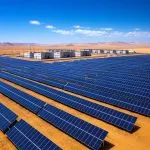
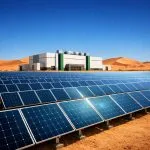
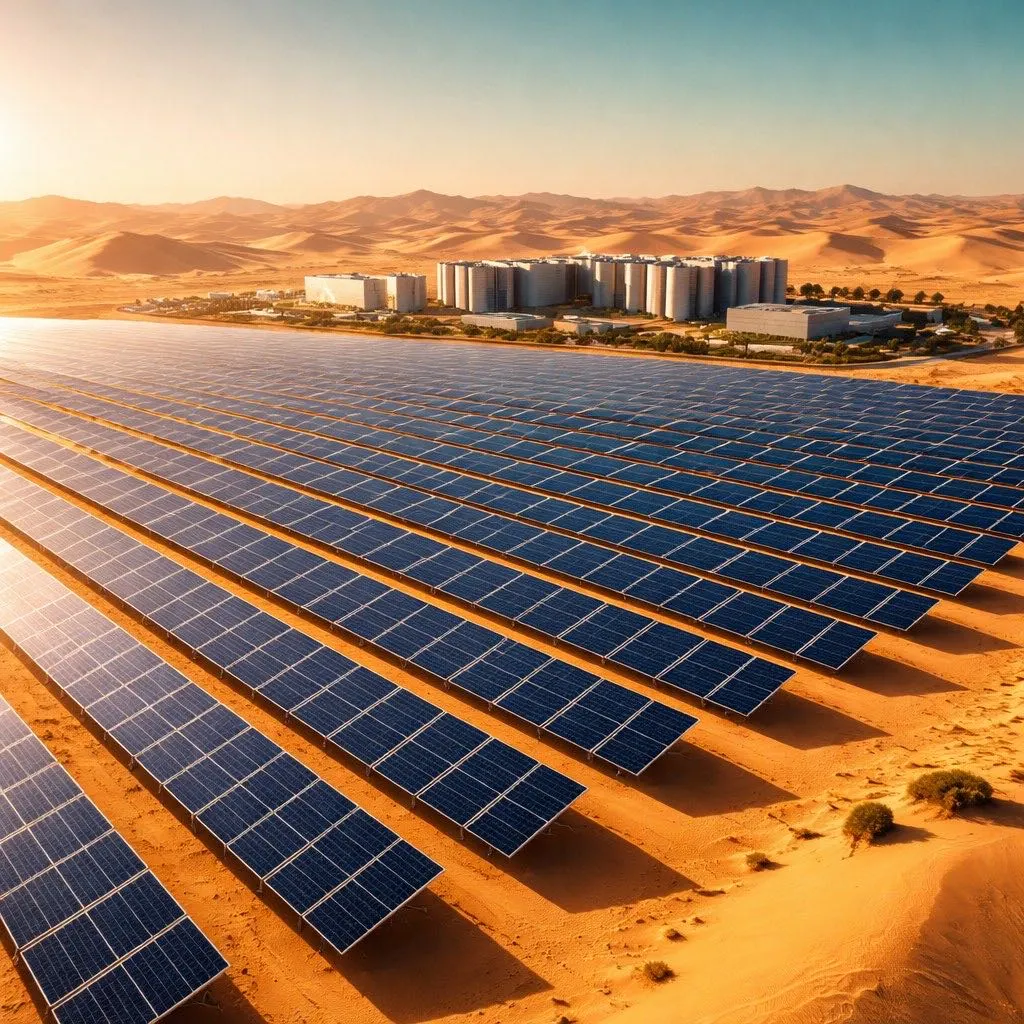
Algeria’s energy transition is no longer theoretical. Nine photovoltaic power plants with a combined capacity of 1,480 MW are on track for commissioning by August 2026, representing the first phase of a national programme targeting 3,200 MW of renewable capacity. The scale is significant: Algeria’s total installed solar capacity was approximately 437 MW as of September 2024, meaning the 2026 additions will more than quadruple the country’s solar generation base in a single year.
This buildout matters for technology professionals and digital economy stakeholders because modern digital infrastructure is energy-hungry infrastructure. Every data center, every cloud deployment, every AI training cluster requires reliable, affordable, and increasingly clean power. Algeria’s solar expansion is not just an energy story. It is an enabler for the country’s digital transformation ambitions.
The Solar Week Platform
The third edition of Solar Week Algeria 2026, held in Algiers in late January, served as the convening platform for the ecosystem driving this transition. The event brought together policymakers, research institutions, utilities, developers, EPCs, investors, financiers, and technology providers to align on pathways for accelerating solar deployment, integrating energy storage, and strengthening grid resilience.
Two thematic panels anchored the discussions. The first examined scaling Algeria’s utility-scale solar programme, focusing on investment frameworks, financing structures, grid readiness, and the emerging role of green hydrogen in supporting large-scale solar development. The second explored decentralized energy, analyzing regulatory enablers, business models, and financing approaches to scale commercial and rooftop solar adoption across the country.
For digital infrastructure planners, the decentralized energy track is particularly relevant. Edge computing deployments, regional data centers, and telecom tower sites can all benefit from on-site or near-site solar installations that reduce dependence on centralized grid supply and lower operating costs.
The Nine Plants: Geography and Scale
The commissioning schedule spans multiple wilayas, distributing generation capacity across Algeria’s solar-rich southern and highland regions:
The two most advanced facilities, at El Ghrous in Biskra (200 MW) and Tendla in El M’Ghair (200 MW), were nearing completion by early 2026, with construction progress at 86 percent and 93 percent respectively. Additional plants are planned across Bechar, Laghouat, Touggourt, Djelfa, El-Bayadh, Ghardaia, and Ouargla.
The flagship project is the 1,000 MW M’Sila solar plant, a joint venture between China Petroleum Engineering and Construction Corp (CPECC) and the Algerian Energy Company (AEC). With $1.2 billion in secured financing, the M’Sila facility is set to become one of the largest solar installations in North Africa, with an estimated annual output of 2 TWh and a mid-2026 launch target.
The geographic distribution is strategic. Rather than concentrating all capacity in a single location, the programme distributes generation across twelve wilayas covering 8,000 hectares. This approach reduces transmission losses, improves grid stability, and positions renewable capacity closer to both industrial demand centers and potential digital infrastructure sites.
Advertisement
Grid Modernization: The SCADA Upgrade
Solar capacity is only as useful as the grid’s ability to absorb and distribute it. Recognizing this, Sonelgaz is deploying a new SCADA (Supervisory Control and Data Acquisition) system to modernize Algeria’s power grid, making the country the first in North Africa to adopt this generation of grid management technology.
The SCADA upgrade is designed to be fully operational by 2026, synchronized with the solar commissioning timeline. For digital infrastructure, a modernized SCADA system delivers several benefits: real-time monitoring of grid conditions, faster fault detection and response, and the ability to manage the variable output inherent in solar generation. These capabilities are prerequisites for the kind of grid reliability that data center operators and cloud service providers require before committing capital to a market.
The Digital Infrastructure Opportunity
Algeria’s digital transformation agenda has produced concrete targets: more than 500 digital projects underway, with 80 percent of essential public services targeted for digitization by 2026. Algeria Telecom’s deployment of a 400 Gbps optical network backbone, in partnership with Huawei, provides the connectivity layer. What has been missing is the energy layer, specifically clean, affordable, and scalable power generation that can support compute-intensive workloads without the carbon footprint that increasingly concerns international partners and investors.
The 1,480 MW solar programme begins to fill that gap. Several scenarios emerge:
Sovereign cloud infrastructure. As Algeria develops domestic cloud capacity, solar-powered data centers in sun-rich southern wilayas could offer both cost advantages and sustainability credentials. International cloud providers evaluating North African expansion increasingly weigh power source composition in their site selection criteria.
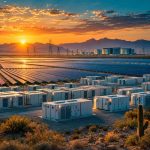
Green hydrogen computing. Solar Week’s focus on green hydrogen integration points to a longer-term possibility: using excess solar generation to produce hydrogen for fuel cells that can provide backup power to data centers, replacing diesel generators with a zero-emission alternative.
Telecom infrastructure. Algeria’s 4G expansion and eventual 5G deployment require thousands of base stations, each consuming power. Solar-powered base stations are already commercially proven in markets with comparable solar irradiance, and Algeria’s renewable buildout makes this approach increasingly viable at scale.
From 1,480 MW to 22,000 MW
The 2026 commissioning programme is the opening chapter. Algeria’s National Renewable Energy Program (PNER) 2030 targets 22,000 MW of renewable capacity by decade’s end, with solar as the dominant technology. If the current pace holds, the combined output of solar projects could cover an estimated 20 percent of Algeria’s projected national electricity demand by the end of 2026.
For technology leaders and digital economy strategists, this trajectory changes the calculus on Algeria as a location for energy-intensive digital operations. A country that can offer abundant, affordable solar power alongside a modernized grid and expanding fiber connectivity presents a compelling proposition for regional data center investment, AI compute hosting, and digital service delivery.
The solar panels going up across nine wilayas are not just generating electricity. They are generating the preconditions for Algeria’s next phase of digital growth.
Frequently Asked Questions
How much solar capacity is Algeria adding in 2026 and where?
Algeria is commissioning 1,480 MW of solar capacity across nine photovoltaic plants by August 2026, more than quadrupling its installed solar base from approximately 437 MW. The plants are distributed across twelve wilayas including Biskra (200 MW at El Ghrous), El M’Ghair (200 MW at Tendla), and the flagship 1,000 MW M’Sila facility. The geographic distribution reduces transmission losses and positions generation closer to potential digital infrastructure sites.
Why does solar energy matter for Algeria’s tech sector?
Modern digital infrastructure is energy-hungry: data centers, cloud deployments, and AI training clusters all require reliable, affordable, and increasingly clean power. International cloud providers weigh power source composition in site selection, and sustainability-conscious investors prioritize markets with renewable energy access. Algeria’s solar expansion provides the energy foundation for sovereign cloud infrastructure, solar-powered telecom base stations, and eventually green hydrogen backup power for data centers.
What is the SCADA grid upgrade and why does it matter?
Sonelgaz is deploying a new SCADA (Supervisory Control and Data Acquisition) system to modernize Algeria’s power grid, making it the first in North Africa to adopt this generation of grid management technology. The upgrade enables real-time grid monitoring, faster fault detection, and the ability to manage variable solar output. These capabilities are prerequisites for the grid reliability that data center operators and cloud providers require before committing capital investment.
Sources & Further Reading
- Nine solar plants to go online in Algeria in 2026 — Renewables Now
- Algeria to commission 1.48 GW of solar capacity by August — ESI Africa
- The Solar Week Algeria 2026 Concludes with High Impact Dialogue — Solar Quarter
- Algeria Solar Energy: Impressive Plant Expansion by 2026 — PVknowhow
- Top 5 Solar Projects to Watch in Algeria — Energy Capital & Power
- Algeria SCADA Upgrade: Essential Grid Modernization by 2026 — PVknowhow