Why a State Bank Built a Consumer Fintech App
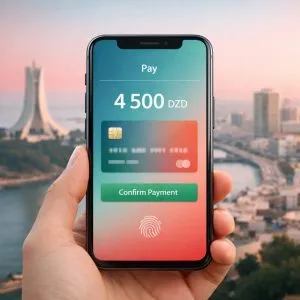
When Banque Nationale d’Algerie (BNA) launched Wimpay in 2021, it broke an unspoken rule in Algerian banking: state-owned institutions do not build consumer fintech products. Yet BNA, one of Algeria’s six largest public banks, partnered with local fintech firm BEYN to develop a QR-code-based mobile wallet that lets users pay merchants, transfer money via phone number, and settle utility bills — all from a single app.
The bet reflected a structural reality. Algeria’s economy runs on cash. Despite having approximately 19 million active payment cards in 2025 (including CIB interbank cards and Algeria Post cards), the vast majority of daily transactions still happen in physical currency. BNA’s answer was not to digitize the card system, but to bypass it entirely with smartphone-native QR payments that require no POS terminal on the merchant side.
By 2024, Wimpay had attracted approximately 137,228 users, compared to 106,231 e-banking customers at BNA overall — meaning the mobile app already outpaces the bank’s traditional online banking channel in adoption.
What Wimpay Actually Does
Wimpay’s feature set targets the specific friction points that keep Algerians using cash. The app currently supports:
- QR-code merchant payments across the Wimpay merchant network, settled in under 10 seconds
- Peer-to-peer transfers using only a mobile phone number (no IBAN required)
- Bill payments for SONELGAZ electricity, Algeria Telecom (ADSL, fiber, 4G LTE), Mobilis and Djezzy mobile recharges, and AADL housing installments
- Request-to-pay functionality, allowing users to request money from contacts
- Bill splitting for shared expenses
The version 4.0.0 update, released in February 2025, refined the user experience and expanded service coverage. The app is available on both Android and iOS.
What distinguishes Wimpay from a simple banking app is its merchant-facing design. Rather than requiring retailers to invest in card terminals, Wimpay merchants only need a printed QR code. This dramatically lowers the barrier to digital payment acceptance, particularly for small businesses and informal vendors who constitute the backbone of Algeria’s retail economy.
From Bank Silo to National Interoperability
Wimpay’s most significant evolution came not from a feature update but from a policy shift. In January 2025, Algeria’s GIE Monetique (the interbank payment authority) launched DZMobPay, a national mobile payment interoperability platform that connects multiple banks through a unified QR-code standard.
Seven banks plus Algerie Poste joined the platform at launch: BNA (via Wimpay), CPA, BDL, BEA, CNEP-Banque, Algeria Gulf Bank, Al Salam Bank, and Algerie Poste via its BaridiMob application. By November 2025, the platform had grown to 79,130 registered users and 11,873 merchants.
The practical impact is substantial. Before DZMobPay, a Wimpay user could only pay Wimpay merchants. Now, any customer of a participating bank can pay any DZMobPay-connected merchant by scanning a single QR code, regardless of which institution holds their account.
Two additional banks — BADR and Fransabank Algerie — were expected to join by end of 2025, with the total rising to 15 participating banks by 2026.
Advertisement
The Regulatory Tailwind
Algeria’s central bank has made its intentions clear. The Bank of Algeria governor has publicly stated the goal of achieving a cashless economy by 2028. Three regulatory developments reinforce this trajectory:
PSP licensing framework (August 2025): The Bank of Algeria issued Instruction No. 06-2025, Algeria’s first formal regulation for Payment Service Providers. It establishes a three-tier digital wallet system — Level 1 allows balances up to approximately $740 with basic ID, Level 2 up to $3,700 with income verification, and Level 3 up to $7,400 requiring video interview verification. All services must operate exclusively in Algerian dinars.
Foreign fintech interest: South African fintech Loop filed the first foreign PSP license application under the new framework in September 2025, signaling that Algeria’s payment market is attracting international attention.
Infrastructure expansion: The number of POS terminals grew from 68,140 to 78,774 in 2025 (a 15.6% increase), while ATMs expanded by 737 units to reach 4,679 nationwide.
How Algeria’s Numbers Compare
Algeria’s mobile payment adoption is accelerating from a low base. The 939 billion dinars in e-payment volume recorded in 2025 represents a 46% jump from the prior year. Internet payments alone surged 179% to 145 billion dinars, driven by 27 million online transactions — with December 2025 alone hitting 3.6 million transactions worth 65.27 billion dinars, largely due to AADL 3 housing program payments processed exclusively online.
Peer-to-peer transfers through mobile platforms reached 26.2 million transactions worth 354.8 billion dinars in just the first seven months of 2025, demonstrating that Algerians are rapidly adopting phone-based money movement once infrastructure exists.
Yet DZMobPay’s 79,130 users represent a fraction of Algeria’s 47.1 million population. Scaling to the millions will require merchant network density, consumer trust-building, and continued regulatory support.
What Comes Next: SoftPOS and Beyond
The next frontier is SoftPOS technology, expected by end of 2026, which will transform any NFC-enabled smartphone into a payment acceptance terminal. Instead of scanning a printed QR code, merchants could accept contactless payments directly on their existing phones — eliminating the last hardware barrier to digital payment acceptance.
For Wimpay specifically, the path forward depends on how well BNA navigates the shift from proprietary app to interoperable platform participant. The bank’s early-mover advantage in mobile payments could translate into ecosystem leadership, or it could be diluted as 15+ banks compete on the same DZMobPay rails.
The broader question is whether Algeria’s bank-led approach to mobile payments — where state institutions build the consumer products — can deliver the speed and user experience that a population of 36 million internet users expects. The 939 billion dinars flowing through digital channels in 2025 suggest that demand is not the constraint. Distribution and trust are.
Frequently Asked Questions
How does Wimpay differ from BaridiMob, Algeria’s other major mobile payment app?
Wimpay is bank-issued (by BNA, a state-owned commercial bank) and was designed specifically for QR-code merchant payments and peer-to-peer transfers. BaridiMob is operated by Algerie Poste and primarily serves the 20+ million CCP (postal account) holders. BaridiMob has a larger user base because of Algerie Poste’s massive account network, but Wimpay pioneered the merchant QR-code payment model that DZMobPay now standardizes. Under DZMobPay, both apps can pay the same merchants — interoperability levels the playing field.
What is the PSP licensing framework and who can apply?
Instruction No. 06-2025, issued by the Bank of Algeria in August 2025, creates Algeria’s first regulatory framework for non-bank Payment Service Providers. It allows fintechs to operate digital wallets with three tiers based on KYC levels (up to approximately $7,400 balance at the highest tier). Both Algerian and foreign companies can apply — South African fintech Loop filed the first foreign application in September 2025. All services must operate in Algerian dinars only.
Can Algeria realistically achieve a cashless economy by 2028?
The 2028 target is aspirational rather than literal. “Cashless” in the Algerian context likely means a significant reduction in cash dependency rather than its elimination. The 46% year-over-year growth in e-payments to 939 billion dinars shows momentum, and DZMobPay’s interbank platform provides the technical foundation. However, scaling from 79,130 DZMobPay users to millions requires merchant network density that does not yet exist, trust-building among a population accustomed to cash, and SoftPOS technology to eliminate hardware barriers for small vendors.
Sources & Further Reading
- BNA launches the first mobile payment application — Algeria Invest
- E-payments: 939 billion dinars in 2025, up 46% — Algeria Invest
- Mobile payments: 15 banks soon to be linked by QR code — Algeria Invest
- Algeria Opens for Fintech: New PSP Rules — LaunchBase Africa
- Algeria to become cashless society by 2028 — Diplomatic Courier
- Algeria’s Fintech Ecosystem in 2026 — The Fintech Times
- Top 9 Mobile Payment Apps in Algeria — EzeePayment