A Joint Move to Lower the Barrier
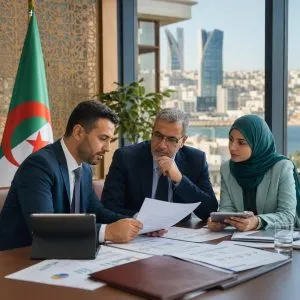
On February 1, 2026, three institutions that collectively govern Algeria’s capital markets announced a measure with no precedent in the country’s financial history. The Commission d’Organisation et de Surveillance des Operations de Bourse (COSOB), the Societe de Gestion de la Bourse des Valeurs (SGBV), and Algeria Clearing jointly unveiled a full exemption from IPO fees for labeled startups listing on the Algiers Stock Exchange.
The specifics of the waiver are comprehensive. Under the scheme, eligible startups are fully exempt from fees linked to:
- Regulatory approval of offering documents (the COSOB “visa”)
- Stock market admission (the SGBV listing fee)
- Administration, custody, and management of securities (Algeria Clearing’s post-listing fees)
The measure applies to companies listing through the exchange’s Growth segment — a market compartment specifically designed for high-potential companies. It covers fundraising operations capped at 500 million DZD (approximately $3.85 million) and is valid for all transactions initiated between 2026 and 2028.
For a startup contemplating a public listing, these fees represent a meaningful upfront cost that can deter companies at a stage where every dollar of capital is allocated toward growth rather than administrative overhead. By eliminating them entirely, Algeria’s regulators have removed one of the most tangible barriers to startup participation in public capital markets.
Why This Matters: Algeria’s Stock Exchange in Context
To appreciate the significance of this fee waiver, it helps to understand just how small and underdeveloped the Algiers Stock Exchange has been historically.
As of mid-2025, the exchange had just eight listed companies: Alliance Assurances, Biopharm, El Aurassi, Saidal, Credit Populaire d’Algerie (CPA), AOM Invest SPA, the Local Development Bank (BDL), and Moustachir. The total market capitalization reached 745.4 billion dinars (approximately $5.73 billion) at the end of June 2025 — a 43% increase from the start of the year, driven primarily by the BDL and Moustachir listings. Total trading volume hit 4.5 billion DZD in the first half of 2025, up 235% from 1.35 billion DZD in the same period of 2024.
For a country with a GDP approaching $290 billion and Africa’s largest land mass, eight listed companies is remarkably few. By comparison, Tunisia’s stock exchange lists 81 companies, Egypt’s lists over 220, and even smaller economies in Sub-Saharan Africa often have more developed public markets. The Algiers Stock Exchange has been, for most of its existence, a marginal institution — respected in theory but largely irrelevant to how companies actually raise capital.
The fee waiver is part of a deliberate strategy to change this. By targeting startups specifically — companies that are digital-native, growing rapidly, and often unable to access traditional bank lending — the regulators are attempting to create a new constituency of listed companies that can bring liquidity, visibility, and dynamism to an otherwise sleepy market.
Moustachir: The Proof of Concept
The fee waiver announcement arrived just weeks after the Algiers Stock Exchange had its first real taste of startup energy, courtesy of Moustachir SPA.
Moustachir, a digital consulting platform founded in 2022, became the first Algerian startup to complete an IPO on the Algiers Stock Exchange. The company offered 125,000 new shares at 760 DZD each (approximately $5.70) during a subscription period running from December 1 to 31, 2024, aiming to raise 94.44 million DZD (~$707,000) — representing a 25% increase in total capital. Trading on the exchange began on January 14, 2025.
The results exceeded expectations. The IPO was oversubscribed by more than 119%, with participation from 306 shareholders. The investor mix was notable: approximately 40% institutional investors, 50% individual retail investors, and 10% qualified investors. This distribution suggests genuine interest across investor categories — not merely a token gesture by institutional investors fulfilling a policy mandate.
What Moustachir’s Success Demonstrated
Retail investor appetite exists. The fact that individual investors accounted for half of the subscription indicates that there is pent-up demand among Algerian retail investors for growth-oriented investment opportunities beyond real estate, gold, and bank deposits — the traditional investment channels in a country where the stock market has historically been an afterthought.
Startups can navigate the listing process. Despite Algeria’s reputation for bureaucratic complexity, Moustachir secured COSOB regulatory approval, completed the subscription period, and began trading on the exchange. The process worked.
The Growth segment is functional. Moustachir listed on the exchange’s Growth segment — the same compartment targeted by the new fee waiver. The segment’s lighter listing requirements compared to the main market proved appropriate for a company of Moustachir’s size and stage.
Post-IPO ambitions are real. Since listing, Moustachir has set revenue targets of over 55 million DZD for 2025, with projections exceeding 187 million DZD by 2028. The company has also expanded into Middle Eastern markets including Oman and the UAE, suggesting that the IPO provided not just capital but also credibility and visibility.
ANVREDET: Building the IPO Support Infrastructure
Recognizing that startups need more than fee waivers to navigate a stock market listing, COSOB accredited ANVREDET (the National Agency for the Promotion of Research and Technological Development Results) as an official stock market promoter on January 16, 2026.
ANVREDET, founded in 1998 as a public industrial and commercial establishment (EPIC), has a core mission focused on promoting the commercialization of scientific research outcomes, facilitating technology transfer, supporting innovative projects and startups, and strengthening cooperation between research institutions and businesses.
As a stock market promoter, ANVREDET will provide upstream support to startups preparing for IPO, including:
- Structuring the listing project and defining the fundraising strategy
- Preparing the admission document and prospectus required for COSOB regulatory approval
- Post-listing assistance for five years, during which the promoter ensures that listed companies comply with financial disclosure requirements and market regulations
This is a crucial piece of the puzzle. One of the biggest barriers to startup IPOs is not the listing fees (now waived) but the complexity of preparing the legal, financial, and regulatory documentation required. Most startup founders have no experience with securities law, prospectus drafting, or ongoing financial disclosure obligations. By accrediting ANVREDET — an agency that already works closely with technology startups and research-driven companies — COSOB has created a dedicated support pathway.
ANVREDET joins a list of COSOB-accredited stock market promoters that already includes RMGC Advices & Solutions, Grant Thornton Algeria, Finabi Conseil, and Invest Market SPA. The addition of a public agency with a specific mandate for innovation and technology adds capacity for the types of companies most likely to benefit from the fee waiver.
Advertisement
The Pipeline: Who Could List Next?
With fee waivers in place, ANVREDET accredited, and Moustachir’s success as a reference point, the question becomes: which companies are next?
Confirmed Pipeline Candidates
In December 2025, COSOB president Youcef Bouzenada stated that the Algiers Stock Exchange should see two or three new listings in 2026. He named specific candidates:
Ayrade, an information technology services company specializing in data hosting, cloud computing, cybersecurity, and enterprise management systems, submitted an IPO application in March 2025. The company is seeking to finance the construction of data centers — infrastructure that Algeria increasingly needs as cloud adoption accelerates.
INSAG Education Group, a major private higher education provider operating specialized institutes in management, marketing, finance, and technology, announced its stock market intentions in October 2025.
A pharmaceutical laboratory was also mentioned as a possible listing candidate, though no specific company was named.
Diar Dzair
Among startups specifically, the most publicly advanced candidate is Diar Dzair, an e-commerce platform specializing in consumer products sold through Islamic financing mechanisms. Founded in 2020, the company reported a revenue surge from $3.9 million in 2023 to $18.5 million in 2024. Diar Dzair announced plans to IPO on the Algiers Stock Exchange before the end of 2025, with COSOB reviewing its listing application as of mid-2025. The company also has expansion plans for Tunisia and Senegal.
The Broader Pool
Algeria now has approximately 2,300 companies holding the official Startup Label out of more than 7,800 registered on the startup.dz platform. While most are too early-stage for a public listing, the fee waiver’s 500 million DZD cap (~$3.85M) targets a sweet spot: companies that have achieved meaningful revenue but need growth capital beyond what the venture capital market currently provides.
The Stock Exchange as a Funding Channel: Opportunities and Limitations
The Bull Case
For startups that qualify, a stock market listing offers several advantages that neither VC funding nor government grants can match.
Non-dilutive alternatives. Unlike venture capital, where founders exchange equity for cash at a negotiated valuation, an IPO allows founders to raise capital by selling a minority stake at a market-determined price. Moustachir sold 25% of its capital — retaining 75% control while raising ~$707,000.
Liquidity for early investors. For companies that received ASF or angel investment, an IPO provides a clear exit pathway. The ASF’s 3.35x exit from VOLZ happened through a private Series A in December 2025, but an IPO could provide similar liquidity for investors in other portfolio companies.
Brand credibility. Being a publicly listed company confers a level of credibility and transparency that can help in contract negotiations, partnership discussions, and talent recruitment. In Algeria’s business culture, where trust is built slowly and formal credentials carry weight, this matters.
Access to retail capital. Algeria has significant idle savings — trillions of dinars sit outside the formal banking system. A stock exchange listing gives retail investors a regulated way to invest in growth companies, potentially redirecting some of this capital toward productive use.
The Challenges
Market depth and liquidity. With only eight listed companies and total trading volume of 4.5 billion DZD in the first half of 2025, the Algiers Stock Exchange lacks the depth and liquidity that institutional investors require. A startup listing may face thin trading, volatile pricing, and limited secondary market activity.
Regulatory burden. Even with fee waivers, being a public company imposes ongoing disclosure requirements, audit obligations, and governance standards that many startups are not structured to meet. The transition from a lean startup operating model to public company compliance is non-trivial.
Valuation expectations. In the absence of comparable listed companies and a mature analyst community, pricing startup IPOs on the Algiers exchange is challenging. Moustachir’s 760 DZD per share pricing was based on the company’s own projections and the promoter’s assessment — but without a robust ecosystem of comparable transactions, there is limited market discipline on valuations.
The 500 million DZD cap. While $3.85 million is meaningful for an early-stage startup, it is relatively modest by international standards. Companies that have already raised significant private capital — such as those backed by international VC firms — may find the cap too low to make a public listing worthwhile. This positions the exchange as a funding channel primarily for locally funded companies in the pre-Series A to Series A range.
Investor education. Many Algerian retail investors have limited experience with equities. The concept of owning shares in a startup — with the associated risks of loss, illiquidity, and volatile returns — requires a level of financial literacy that the market is still developing. Moustachir’s 119% oversubscription is encouraging, but it is not yet clear whether this enthusiasm will sustain across multiple offerings or was partly driven by the novelty of the first startup listing.
The Bigger Architecture: VC, Stock Exchange, and Grant Funding
The fee waiver is best understood not in isolation but as part of an evolving architecture of startup funding in Algeria. Each channel serves a different stage and purpose.
Government grants and programs (the Startup Label, NESDA support, incubator programs) provide the earliest-stage funding and validation, getting companies from idea to minimum viable product.
The Algerian Startup Fund (ASF) provides pre-seed and seed capital — $30,000 to $1 million — for labeled startups with demonstrated traction. VOLZ’s 3.35x exit in December 2025 proved this model can work.
Private venture capital (FCPRs) — now enabled by the new regulatory framework under COSOB Regulation No. 24-02, with Afiya Investments as the first approved fund managed by Tell Markets — provides growth capital from private investors in sectors like healthcare, pharma, and renewable energy.
The Algiers Stock Exchange offers an alternative path: public market fundraising for companies that have achieved sufficient revenue and governance maturity to meet listing requirements. The fee waiver through 2028 reduces the financial barrier; ANVREDET’s accreditation reduces the complexity barrier.
Private M&A and international VC remain the ultimate scaling channels for companies targeting regional or global markets — as demonstrated by Yassir’s $150 million Series B in 2022, the largest funding round in North African history at the time.
The question is whether these channels can develop quickly enough and with sufficient depth to retain Algeria’s best startups. A country that produces founders capable of building VOLZ, Moustachir, and Yassir also produces founders who can leave for Paris, Dubai, or Singapore where capital is more abundant and exit paths more established.
Lessons from Other Small Markets
Algeria is not the first country to attempt to use stock exchange incentives to attract startup listings. Several smaller markets have experimented with similar approaches, and their experiences offer useful lessons.
Tunisia’s BVMT has listed 81 companies on a market that serves a country of 12 million people — significantly more companies per capita than Algeria’s eight listings for 45 million people. Tunisia’s success was built partly on a regulatory framework that was more accommodating to SMEs and startups, and partly on a business culture where IPOs were viewed as a legitimate growth strategy rather than an extraordinary event. Algeria’s fee waiver is a step toward normalizing the IPO pathway, but cultural change will take longer than regulatory change.
Singapore’s Catalist board (which replaced the SESDAQ in 2007) offers a relevant model for technology startup listings. Singapore created a sponsor-supervised framework where approved sponsors take responsibility for guiding companies through the listing process and ensuring ongoing compliance. COSOB’s accreditation of ANVREDET and the other promoters follows a conceptually similar approach, though the regulatory details differ significantly.
Egypt’s NILEX (Nile Exchange), a dedicated SME compartment within the Egyptian Exchange, was specifically designed for SMEs and startups in the MENA region. It offered reduced listing fees, relaxed disclosure requirements, and a dedicated market segment — much like Algeria’s Growth segment. Egypt’s experience shows that fee reductions alone are insufficient; success requires a critical mass of listings to generate liquidity, investor interest, and analyst coverage. With only one startup currently listed, Algeria needs to move quickly toward the projected two to three listings in 2026 to build momentum.
The common thread across these examples: fee waivers and reduced requirements can catalyze initial listings, but long-term success depends on building a self-sustaining ecosystem of listed companies, active investors, informed analysts, and reliable market infrastructure.
What Algerian Startup Founders Should Do Now
For founders leading startups with meaningful revenue (over 50 million DZD annually), established governance structures, and growth ambitions that require capital in the 100-500 million DZD range, the fee waiver creates a time-limited window.
Evaluate eligibility. The waiver applies to labeled startups listing on the Growth segment. If your company holds the Startup Label and meets the Growth segment’s listing criteria, you qualify.
Engage a promoter early. Contact ANVREDET or one of the other accredited stock market promoters (RMGC, Grant Thornton Algeria, Finabi, Invest Market) well before you plan to list. The documentation process takes months, not weeks.
Study the Moustachir playbook. Moustachir’s IPO — the share structure, pricing methodology, subscription period design, and investor mix — is a concrete reference for how a startup IPO works on the Algiers exchange.
Consider timing. The fee waiver expires in 2028. Companies that begin the process in 2026 have the benefit of the exemption plus the momentum and attention generated by Moustachir’s success. Waiting until 2028 may mean more competition for regulatory attention and potentially less market excitement.
The Algiers Stock Exchange is not going to become the NASDAQ overnight. But for the first time in Algeria’s history, it is a realistic funding option for startups — and the government is making it as affordable as possible to find out whether it works.
Frequently Asked Questions
What specific fees did COSOB, SGBV, and Algeria Clearing waive for startups listing on the Growth segment through 2028?
The three capital market regulators jointly waived all IPO-related fees covering: regulatory approval of offering documents (the COSOB “visa”), stock market admission (the SGBV listing fee), and administration, custody, and management of securities (Algeria Clearing’s post-listing fees). The waiver applies to labeled startups listing on the Growth segment for fundraising operations capped at 500 million DZD (approximately $3.85 million) and is valid for transactions initiated between 2026 and 2028.
How did Moustachir’s IPO — oversubscribed by 119% with 306 shareholders — demonstrate the viability of startup listings?
Moustachir, a digital consulting platform founded in 2022, offered 125,000 new shares at 760 DZD each during December 2024, raising 94.44 million DZD (~$707,000) representing a 25% increase in total capital. The IPO attracted a diverse investor mix: approximately 40% institutional, 50% individual retail, and 10% qualified investors. The 119% oversubscription with 306 shareholders proved that retail investor appetite exists for growth-oriented investments beyond traditional channels like real estate and gold, and that the Growth segment listing process is functional for startups.
Which companies are in the pipeline for the next Algiers Stock Exchange listings after COSOB projected two to three new IPOs in 2026?
COSOB president Youcef Bouzenada named Ayrade, an IT services company specializing in data hosting and cybersecurity that submitted an IPO application in March 2025, and INSAG Education Group, a private higher education provider that announced stock market intentions in October 2025. Additionally, Diar Dzair — an e-commerce platform whose revenue surged from $3.9 million in 2023 to $18.5 million in 2024 — announced plans to IPO before end-2025 and had its listing application under COSOB review. An unnamed pharmaceutical laboratory was also mentioned as a candidate.
Sources & Further Reading
- Algeria Opens Stock Market Access to Startups With Fee Waivers Through 2028 — Ecofin Agency
- Algeria Waives IPO Fees for Startups Until 2028 — We Are Tech Africa
- Algeria Waives Stock Listing Fees to Boost Startup Funding — TechAfrica News
- COSOB Accredits ANVREDET as Stock Market Promoter to Support IPOs and Innovation — TrendsNAfrica
- Algiers Stock Exchange Plans Up to Three New Listings in 2026 — Ecofin Agency
- Algiers Stock Exchange Sees 43% Market Cap Surge in H1 2025 — African Markets
- Moustashir: Leading the Charge on Algerian Stock Exchange — WAYA Media
- Algeria’s Startup Diar Dzair Plans to Sell Shares on Local Bourse — Zawya
- Algeria to See Up to Three More IPOs in 2026, Regulator Says — Bloomberg
- Algeria Moves to Ease Stock Market Access for Startups — WAYA Media