From Niche Gateway to 10,000 Merchants
For most of the last decade, accepting cards online in Algeria has been an exercise in friction. A merchant wanting to sell digitally had to navigate slow bank onboarding, limited card coverage and an ecosystem that treated online payments as an exception rather than a default. SofizPay, founded as a 100% Algerian digital payment platform, has spent that window building the opposite stance: a gateway designed around Algerian cards first, with onboarding and merchant tooling closer to what international SaaS operators expect.
By 2026, SofizPay publicly states that its platform has joined more than 10,000 merchants accepting Dahabia and CIB card payments online. Reaching five-figure merchant density in Algeria's online acceptance market is the kind of number that shifts the conversation from "can you accept cards on a website?" to "which gateway do you standardise on?"
What SofizPay Actually Does
The merchant page and Algeria payment gateway page spell out the core stack:
1. Card acceptance. Dahabia (issued by Algérie Poste) and CIB (Interbank) card acceptance are the baseline — the two domestic schemes that together cover the vast majority of Algerian card-issuing banks.
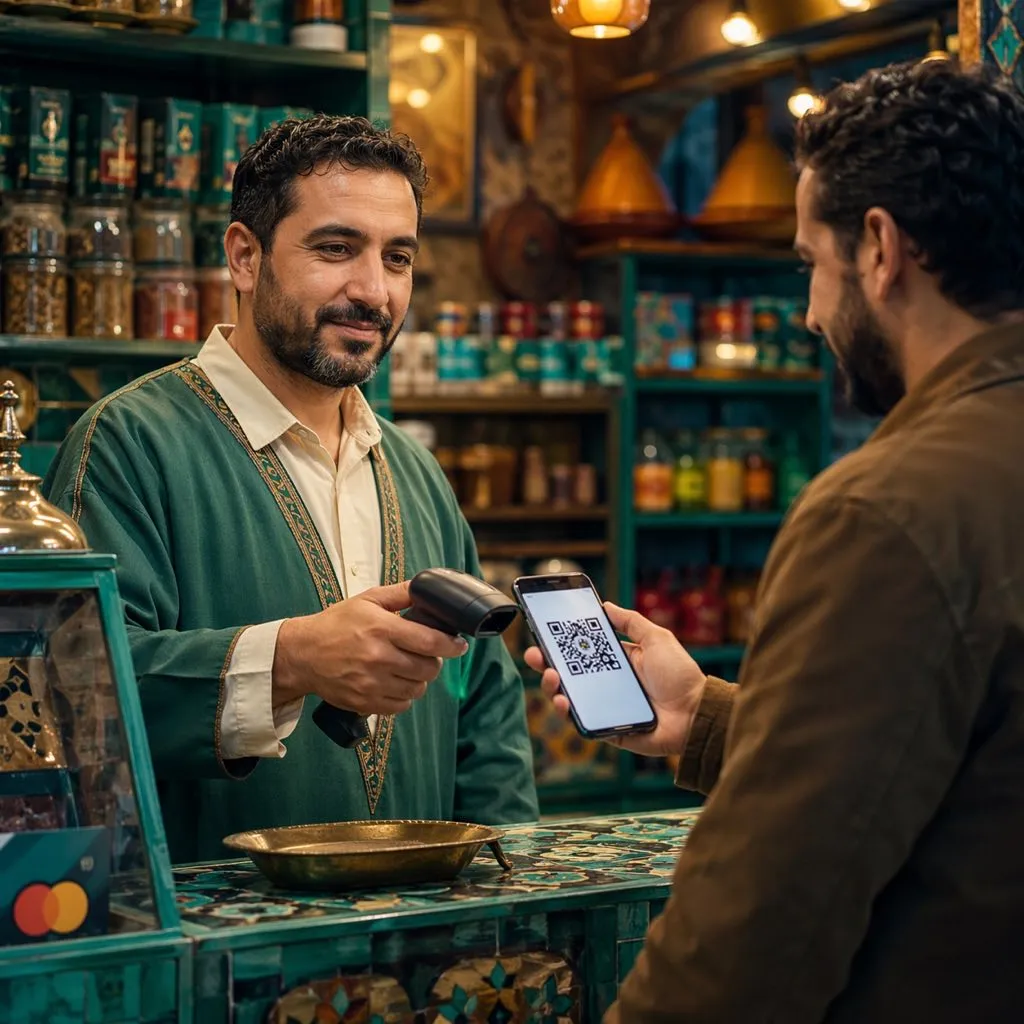
2. Payment links and invoices. Merchants can generate a secure payment link, invoice or QR code instantly, turning any device into a point of sale without a dedicated terminal.
3. QR payments and instant transfers. Recent feature launches added QR payments and instant transfers, aligning SofizPay with the national instant payment switch Algeria went live with in early 2025.
4. Baridimob integration. Integration with Algérie Poste's Baridimob app opens acceptance to the largest mobile banking footprint in the country.
5. Payouts and withdrawals. Payout tooling handles fund transfers back to merchants with an emphasis on speed and reconciliation.
6. Services layer. Beyond acceptance, the services catalogue covers mobile recharge, bill payments and digital products — the same adjacent revenue lanes that other Algerian fintechs are chasing.
SofizPay also leans into Web3-era positioning, experimenting with blockchain-based transaction integrity and a dinar-denominated token concept — but the core of the 10,000-merchant number is the day-to-day Dahabia and CIB gateway.
Advertisement
Why Scale Changes the E-Commerce Equation
Algeria's e-commerce market is at an inflection point. According to Statista's market forecast, the market is projected to grow at around 9.6% CAGR through 2029, reaching roughly $2.05 billion in volume by the end of that window. Merchant acceptance has historically been the choke point: without a dense gateway layer, even well-designed Algerian storefronts default to cash-on-delivery, which shifts cost and risk to logistics rather than payments.
A gateway with 10,000 merchants crossing through it does two things. First, it normalises online acceptance for a new generation of Algerian SMBs — the "if X uses them, we can too" effect. Second, it creates a pool of reconciled transaction data, fraud signals and merchant behaviour that larger players (banks, regulators, other fintechs) cannot easily replicate from scratch.
Where SofizPay Sits in the Stack
SofizPay is one of several Algerian fintechs staking different parts of the chain. Baridi Pay is expanding QR-based street acceptance through Algérie Poste. Gifty is building a consumer super-wallet. UbexPay is positioning around a multi-bank API. The Fintech Times' 2026 overview treats the category as converging: different entry points, overlapping end states.
SofizPay's distinctive layer is merchant-side acceptance at scale — the plumbing that lets Algerian e-commerce and digital services actually get paid. The 10,000-merchant milestone is important less because of the round number and more because it signals that an Algerian-built gateway can credibly be a default option rather than a secondary choice.
What the Milestone Does Not Solve
Scale does not eliminate the structural issues. Algeria's cash economy still dominates, merchant discoverability outside major cities remains uneven, and the Bank of Algeria's evolving rules under Instruction 06-2025 and the Finance Act 2025 will reshape how payment service providers are licensed and supervised. SofizPay's 2026 push will be judged on how it holds up as regulation tightens and as Algérie Poste, banks and international players press harder into the same acceptance layer. For merchants, though, the immediate message is simpler: the Algerian online payment gateway market is no longer thin — it has a domestic default at scale.
Frequently Asked Questions
How many merchants now accept Dahabia and CIB through SofizPay?
SofizPay publicly states that more than 10,000 merchants are now using its platform to accept Dahabia and CIB card payments online, putting it at a scale that makes it a credible default gateway for Algerian e-commerce. That number is one of the clearest indicators that online card acceptance in Algeria has moved from niche to mainstream.
What can Algerian merchants do with SofizPay beyond accepting cards?
Merchants can generate payment links, invoices and QR codes on demand, accept instant transfers, integrate with Baridimob, and manage payouts through a unified dashboard. SofizPay also provides a services layer covering mobile recharge, bill payments and digital products, so merchants can offer value-added revenue streams alongside their core e-commerce checkout.
Why does 10,000 merchants matter for Algeria's digital economy?
Merchant density is the choke point for online commerce — without a deep gateway layer, Algerian stores default to cash-on-delivery, which shifts risk onto logistics. Hitting 10,000 active merchants signals that Algerian-built gateways can operate at national scale, which in turn accelerates e-commerce growth, improves fraud data, and reduces the country's dependence on foreign payment providers.
Sources & Further Reading
- SofizPay — Algeria Payment Gateway — Official site
- SofizPay for Merchants — Accept Payments & Manage Your Business
- SofizPay — Accept Dahabia & CIB Payments
- SofizPay Services — Mobile Recharge, Bills & Digital Products
- Algeria's Fintech Ecosystem in 2026 by Building Momentum — The Fintech Times
- eCommerce Market in Algeria — Statista Market Forecast