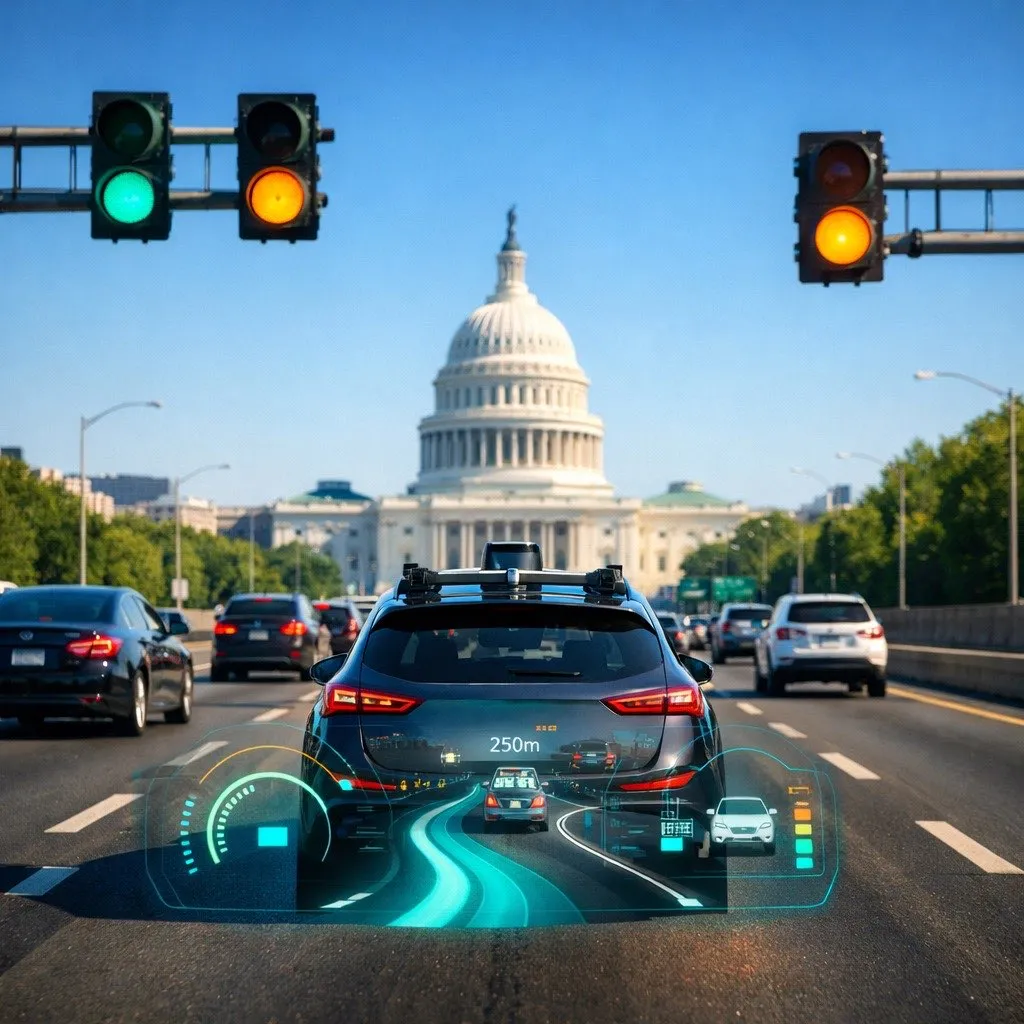
A Decade of Failed Attempts Ends With H.R.7390
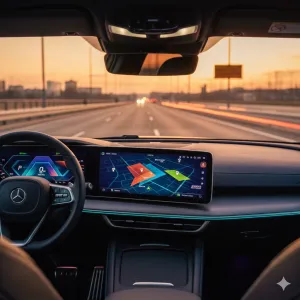
After nearly a decade of stalled efforts, Congress is making its most serious move yet to regulate autonomous vehicles at the federal level. The SELF DRIVE Act of 2026 (H.R.7390) — formally the Safely Ensuring Lives Future Deployment and Research In Vehicle Evolution Act — was introduced on February 5, 2026 by Representatives Bob Latta (R-OH) and Debbie Dingell (D-MI). If enacted, it would be the first federal statute dedicated to the safety of autonomous vehicles.
The bill is the third iteration of the SELF DRIVE Act, following failed versions in 2017 (H.R.3388) and 2021 (H.R.3711). Unlike its predecessors, this version intentionally includes autonomous trucks and defines a path for commercial freight operations during testing — provisions that have dramatically raised the stakes for both supporters and opponents.
The legislation covers SAE automation levels 3, 4, and 5, marking the first time federal law would incorporate the automation levels published by SAE International.
Mandatory Safety Cases and a National Crash Repository
At the core of H.R.7390 is a requirement that every manufacturer develop and document a safety case — a concept borrowed from aviation’s FAA certification process. Each safety case must present engineering data and evidence demonstrating that an automated driving system can operate safely before entering interstate commerce.
The bill also directs the Department of Transportation to establish a National Automated Vehicle Safety Data Repository by September 30, 2026. This centralized database would collect crash and incident reports from all ADS manufacturers, bringing standardized reporting to an industry that has operated largely without it. NHTSA must finalize the broader safety standards by September 30, 2027.
On cybersecurity, the act mandates that manufacturers include written cybersecurity plans as part of their safety case submissions. These plans must detail policies for detecting and responding to cyber attacks, unauthorized intrusions, and false vehicle control commands. Separately, the Secretary of Commerce must review connected vehicle supply chain security rules — particularly those concerning foreign adversary hardware and software — and brief Congress within 180 days.
Advertisement
The Preemption Fight: Federal Standards vs. State Authority
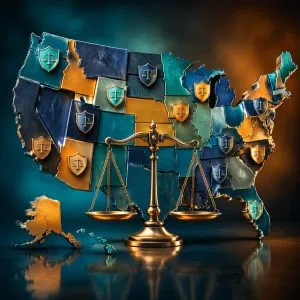
The most contentious provision is federal preemption. Currently, more than 35 states have enacted their own AV regulations, and lawmakers in 25 states introduced 67 new AV-related bills in 2025 alone. The resulting patchwork means a vehicle legal to operate autonomously in Phoenix might be illegal or require entirely different permits in San Francisco.
The SELF DRIVE Act would override state and local regulations that prohibit or partially prohibit deployment of autonomous vehicles, provided manufacturers develop a safety case. States would retain authority over registration, licensing, and insurance, but could no longer set their own performance standards for automated driving systems.
The National Governors Association has pushed back forcefully, arguing the bill creates a “safety vacuum” by expanding federal preemption beyond traditional vehicle design standards into vehicle operation — territory historically governed by states. The NGA warns that the preemption language creates confusion about federal and state roles, particularly since the bill simultaneously acknowledges state authority over registration while blocking states from regulating ADS performance.
Consumer advocacy groups, including NACA, have raised additional concerns about forced arbitration clauses and the loss of state-level consumer protections.
Autonomous Trucks Spark the Loudest Debate
Unlike the 2017 and 2021 versions, the 2026 bill explicitly covers autonomous heavy-duty trucks — and this inclusion has generated the fiercest opposition. The legislation gives the Secretary of Transportation authority to allow manufacturers and fleets to engage in limited commercial operations while under testing permits, defining for the first time a federal path for autonomous rigs to transport freight commercially during evaluation.
The Owner-Operator Independent Drivers Association (OOIDA) has mounted the most vocal opposition, warning that H.R.7390 would allow deployment of driverless 80,000-pound trucks based on manufacturer self-certification without independent federal verification. OOIDA notes that while companies must develop a safety case, there is no requirement that the government verify these plans before deployment.
OOIDA has also flagged cybersecurity gaps, pointing out that the bill lacks any requirement for public disclosure of cyber intrusions or a mandate to suspend operations after a cyber incident. The association draws a direct comparison to the Electronic Logging Device mandate, where self-certification without third-party validation produced devices documented as vulnerable to cyberattacks.
Where the Bill Stands — and What Comes Next
The SELF DRIVE Act passed the House Energy and Commerce Subcommittee on a narrow 12-11 vote along largely party lines. It now moves to the full committee, though no date has been set for a chamber-wide vote.
The Autonomous Vehicle Industry Association has praised the legislation, and both Tesla and Waymo executives have testified before the Senate urging faster deployment. Meanwhile, a separate draft bill from Chairman Guthrie proposes raising the current FMVSS exemption cap from 2,500 vehicles per year to 90,000 and extending exemption periods from one year to five — changes that would dramatically accelerate commercial deployment if adopted.
The legislation could also be folded into the broader Surface Transportation Reauthorization expected in 2026, which would give it a stronger legislative vehicle. Transportation Secretary Sean Duffy has signaled that NHTSA will continue advancing its own AV framework regardless of whether Congress acts.
Frequently Asked Questions
What is the SELF DRIVE Act and why is it significant?
The SELF DRIVE Act (H.R.7390) is proposed federal legislation that would create the first U.S. statute specifically governing autonomous vehicles. It is significant because it replaces the current patchwork of 35+ different state regulations with a single national framework, requiring manufacturers to submit documented safety cases and cybersecurity plans before deploying autonomous vehicles commercially.
Does the SELF DRIVE Act allow driverless trucks on public roads?
Yes, unlike previous versions of the bill, the 2026 SELF DRIVE Act explicitly includes autonomous heavy-duty trucks. It authorizes the Secretary of Transportation to permit limited commercial freight operations during the testing phase. However, critics like the Owner-Operator Independent Drivers Association warn that the bill’s self-certification model allows deployment of 80,000-pound driverless trucks without independent federal verification of safety claims.
How does the bill address cybersecurity risks in autonomous vehicles?
The act requires every manufacturer to include a written cybersecurity plan in their safety case submission, detailing policies for detecting and responding to cyber attacks, unauthorized intrusions, and false vehicle control commands. The Secretary of Commerce must also review connected vehicle supply chain security rules within 180 days. However, opponents note the bill lacks requirements for public disclosure of cyber intrusions or mandatory operational shutdowns after a cyber incident.
Sources & Further Reading
- H.R.7390 SELF DRIVE Act of 2026 Full Text — Congress.gov
- The SELF DRIVE Act Returns: Why Congress Is Taking Another Shot at AV Regulation — Upstream Security
- 2026 AV Bill a Game Changer for Heavy Trucking — FreightWaves
- OOIDA Warns Against Driverless-Truck-Tech Self-Certification — Overdrive
- Members of Congress Propose a New Bill to Regulate Autonomous Vehicles — Sidley
- SELF DRIVE Act Concerns — National Governors Association
- NHTSA AV Framework Plan to Modernize Safety Standards — NHTSA