Three Laws, Three Philosophies
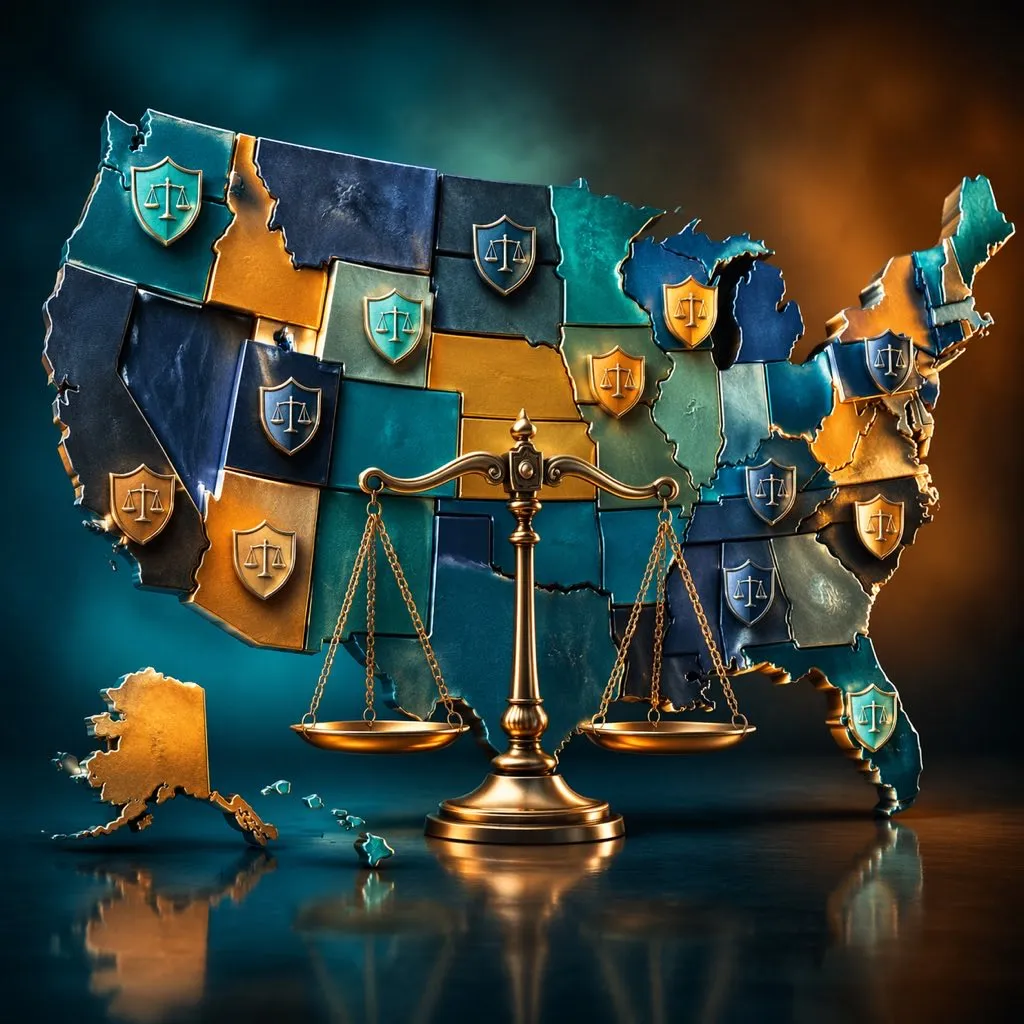
The three most consequential state AI laws in 2026 illustrate how differently US states have chosen to regulate artificial intelligence.
California's Transparency in Frontier Artificial Intelligence Act (TFAIA / SB 53), signed by Governor Newsom on 29 September 2025 and effective 1 January 2026, is the first US frontier-model regulation. It applies to developers of foundation models trained with more than 10^26 integer or floating-point operations — a threshold chosen to capture frontier labs like OpenAI, Anthropic, Google DeepMind, and Meta. Large frontier developers must publish a frontier AI framework on their website, report critical safety incidents to the California Office of Emergency Services within 15 days, and protect whistleblowers who disclose substantial danger to public health or safety. The California Attorney General can levy penalties of up to $1 million per violation.
Texas's Responsible Artificial Intelligence Governance Act (RAIGA / HB 149), signed by Governor Abbott on 22 June 2025 and effective 1 January 2026, takes a more innovation-friendly posture. It applies broadly to any AI system used by Texas residents or developed/deployed in Texas. It prohibits intentional development or use of AI for a list of restricted purposes, adopts a higher "intent" standard for algorithmic discrimination than comparable laws, includes several safe harbors, and — critically — preempts local AI regulation within Texas. This was Texas's answer to the worry that counties and cities would pile on additional rules.
Colorado's AI Act (SB 24-205), originally set to take effect 1 February 2026, was delayed to 30 June 2026 after Governor Jared Polis signed SB 25B-004 on 28 August 2025. The Colorado AI Act is the most comprehensive of the three, requiring developers of high-risk AI systems to use reasonable care to protect consumers from known or reasonably foreseeable risks of algorithmic discrimination. The five-month delay gave lawmakers nearly a full regular session in 2026 to negotiate revisions before implementation locks in.
The Enforcement Timeline Companies Should Actually Plan Around
For any company with US customers, three dates now sit on the 2026 compliance calendar.
1 January 2026: California TFAIA and Texas RAIGA both became effective. Frontier model developers must have a published framework and a 15-day incident reporting pipeline. Companies using AI in Texas for employment, lending, healthcare, or other covered categories must document intent-based controls and keep compliance evidence under the RAIGA regime.
30 June 2026: Colorado AI Act takes effect. Developers and deployers of high-risk AI systems must have implemented reasonable-care programs and algorithmic impact assessments.
Ongoing 2026: A cohort of additional state laws takes effect on related AI topics — the California GAI Training Data Transparency Act (AB 2013), the California AI Transparency Act (SB 942), and AI-specific healthcare laws in multiple states. The practical effect is that any company shipping a consumer-facing AI product in the US is now managing a matrix of state-by-state obligations.
Advertisement
The Federal Preemption Wildcard
On 11 December 2025, President Trump signed an executive order that casts doubt on the enforceability of state AI laws and proposes a uniform federal policy framework that would preempt state laws deemed inconsistent with federal policy. Legal analyses project that the resulting Secretary's report will identify comprehensive state frameworks — California's, Colorado's, and potentially Texas's — as "onerous" and in conflict with federal direction.
The executive order does not itself repeal state laws. It sets up a policy process that could lead to: administrative challenges, targeted litigation funded by industry associations, Congressional preemption bills, and conditional federal funding that pushes states away from enforcement. Legal scholars generally agree the cleanest preemption outcome would require congressional action — which is harder than an executive order but not impossible given the bipartisan concern about AI regulation fragmentation.
For companies, the rational posture is to comply with state laws as written today, while tracking the federal preemption docket. Treating state compliance as optional because federal rules "might" override them is legally risky: state attorneys general can enforce during the federal process, and a failed preemption attempt leaves companies exposed to retroactive liability.
What the Patchwork Really Costs
The practical cost of the patchwork is not filing fees — it is engineering. A single consumer AI product shipped across California, Colorado, and Texas now faces:
- A frontier-scale model obligation (California, if training threshold crossed)
- A high-risk system documentation regime (Colorado, if deployed at volume)
- An intent-based restricted-purpose check (Texas, for any covered use)
- Incident-reporting pipelines with different 15-day, 60-day, and 90-day clocks
- Algorithmic impact assessments in multiple formats for multiple attorneys general
Mid-market US AI companies report spending 3-5% of engineering capacity on state-law compliance infrastructure in 2026 — a number that has grown roughly 10x since 2023 and is still climbing. The counter-pressure creates the federal-preemption political coalition that the Trump executive order is riding.
The Global Lesson
The US state patchwork is the most visible real-world experiment in what happens when jurisdictional AI regulation outpaces harmonization. The lessons are exportable: having a clearly-scoped frontier rule (California's 10^26 FLOPs threshold) is cleaner than broad high-risk enumeration (Colorado's model). Preemption clauses (Texas) prevent additional local fragmentation but not national fragmentation. Five-month implementation delays (Colorado's SB 25B-004) are more politically palatable than scrapping laws outright.
For non-US regulators — Algeria, the EU member states finalizing AI Act national implementations, the UK drafting its own AI Bill — the US experience is a cautionary tale about getting the federal coordination right before state-level rules proliferate.
Frequently Asked Questions
Which US state AI laws are actually effective in 2026?
Three laws are most consequential. California's TFAIA (SB 53) took effect 1 January 2026, covering frontier foundation model developers. Texas's RAIGA (HB 149) also took effect 1 January 2026, covering AI systems used by Texas residents. Colorado's AI Act (SB 24-205) takes effect 30 June 2026 after a five-month delay signed by Governor Polis in August 2025. Additional state laws on AI transparency, training data, and healthcare use are also effective in 2026.
Will federal preemption override these state AI laws?
Possibly, but not immediately. On 11 December 2025, President Trump signed an executive order proposing a federal policy framework that would preempt inconsistent state laws. The order does not itself repeal state laws and would likely require Congressional action or sustained litigation to override them fully. Companies should comply with state laws as written while tracking the federal docket — treating state rules as optional is legally risky.
How much does the US state AI law patchwork cost companies?
Mid-market US AI companies report spending 3-5% of engineering capacity on state-law compliance infrastructure in 2026, a figure that has grown roughly 10x since 2023. The cost is driven by divergent incident-reporting timelines, algorithmic impact assessment formats, and restricted-purpose checks across California, Colorado, Texas, and other states. This is one of the primary forces behind the federal preemption political coalition.
Sources & Further Reading
- New State AI Laws are Effective on January 1, 2026 — King & Spalding
- California enacts landmark AI transparency law: TFAIA — White & Case
- Texas Enacts Responsible AI Governance Act — Baker Botts
- Colorado Postpones Implementation of Colorado AI Act, SB 24-205 — Akin Gump
- SB24-205 Consumer Protections for Artificial Intelligence — Colorado General Assembly
- AI Enforcement Accelerates as Federal Policy Stalls — Morgan Lewis
- US State AI Laws Tracker 2026 — Glacis