The Federal Moratorium Proposal
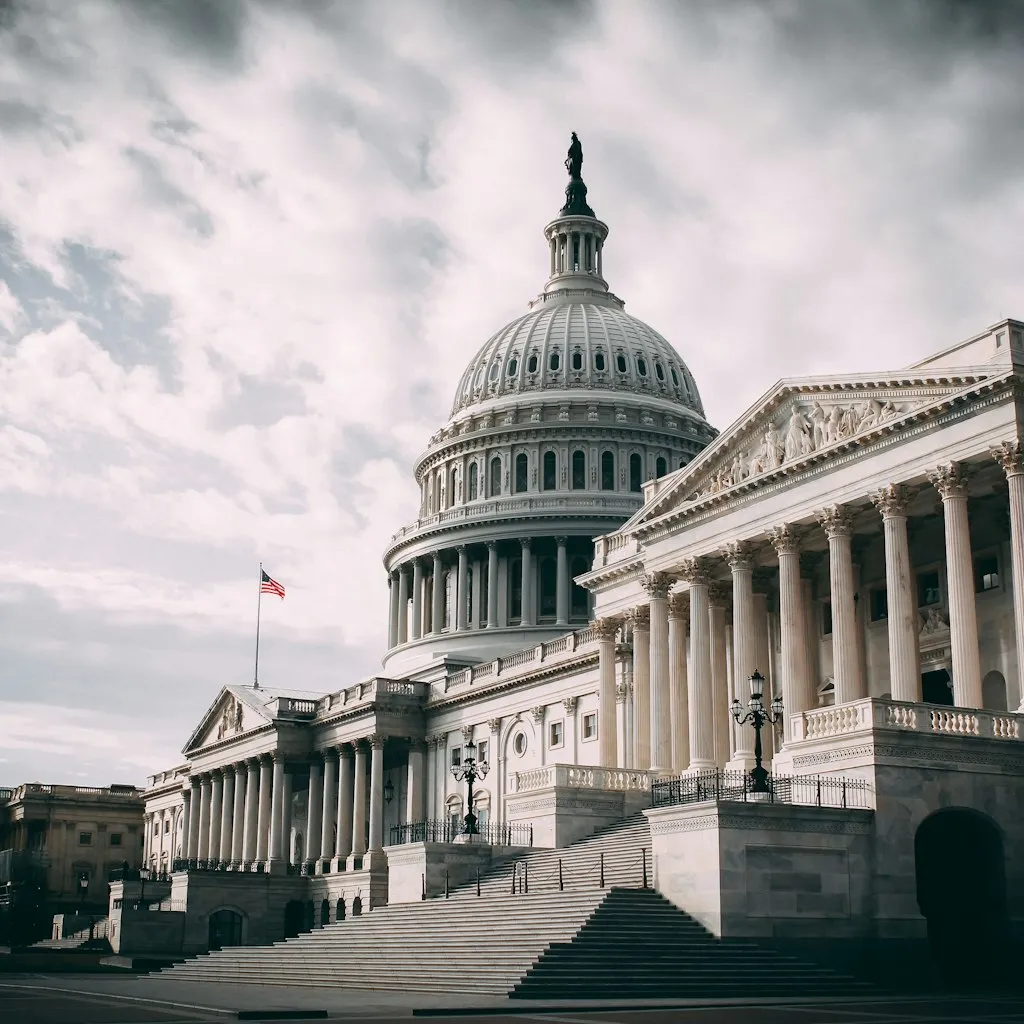
On March 25, 2026, Senator Bernie Sanders (I-VT) and Representative Alexandria Ocasio-Cortez (D-NY) introduced the AI Data Center Moratorium Act, legislation that would impose an immediate federal pause on the construction of new AI data centers exceeding certain electricity thresholds. The moratorium could only be lifted after Congress passes comprehensive AI legislation establishing protections for workers, consumers, and the environment.
The bill goes beyond domestic construction. It would also ban US exports of AI computing infrastructure to countries that lack equivalent safeguards, adding an international dimension to the proposed restrictions. While the legislation is unlikely to advance in either chamber, it formalizes at the federal level what has been brewing in communities across the country for over two years: deep resistance to the unchecked expansion of AI infrastructure.
The $64 Billion Grassroots Revolt
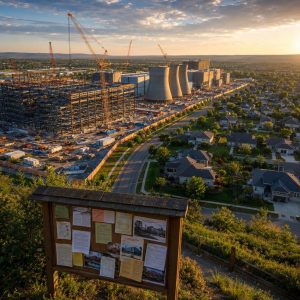
The Sanders-AOC bill did not emerge in a vacuum. According to Data Center Watch, community opposition has already blocked $18 billion and delayed $46 billion in US data center projects, totaling $64 billion in affected investment. The research identifies over 188 organized opposition groups spanning 40 states, representing a bipartisan coalition of rural conservatives concerned about property values and progressive environmentalists worried about emissions and water consumption.
The opposition has produced concrete results. Tract’s $14 billion project in Arizona was withdrawn in May 2024 after residents pressured local authorities to reject the required rezoning. In Warrenton, Virginia, voters ousted every town council member who had supported Amazon’s proposed data center in the November 2024 election, installing an entirely opposition-aligned council. In St. Charles, Missouri, the city became one of the first in the nation to ban data center construction for a year in August 2025.
States Lead Where Congress Stalls
While the federal moratorium faces long odds, state-level action is accelerating. According to Good Jobs First and MultiState, at least 12 states have filed data center moratorium bills in the 2026 legislative session, including Georgia, Maryland, Michigan, New Hampshire, New York, Oklahoma, South Carolina, South Dakota, Vermont, Virginia, and Wisconsin.
The most significant breakthrough came in April 2026 when Maine’s House of Representatives gave initial approval to LD 307, a bill that would ban construction of data centers exceeding 20 megawatts until November 2027. The bill passed 82-62. While no state has yet enacted a statewide moratorium, the Maine vote demonstrates that legislative action is possible and that the political calculus is shifting.
Local moratoriums have gained even more traction. Three counties in Indiana have suspended data center developments. Fulton County, Indiana, issued a temporary construction ban in March 2026. DeKalb County, Georgia, has pushed off new developments through June 2026. These local actions may lack the scale of federal legislation, but they create a patchwork of restrictions that complicates site selection and financing for data center developers.
Advertisement
The Energy Equation Driving Opposition
The core concern fueling opposition is energy. Data center power demand is projected to reach 75.8 gigawatts in 2026 and nearly triple to 134.4 GW by 2030, according to S&P Global. AI operations alone could consume over 40% of global data center power by 2026.
The financial impact on consumers is already measurable. In the PJM electricity market stretching from Illinois to North Carolina, data centers accounted for a $9.3 billion price increase in the 2025-26 capacity market. Carnegie Mellon University estimates that data centers could increase the average US electricity bill by 8% by 2030, with the figure potentially exceeding 25% in high-demand markets like northern Virginia.
Maine constituents, where electricity bills already run hundreds of dollars monthly, view the prospect of a large data center drawing power from their grid as irresponsible. The concern extends to water: large data centers consume millions of gallons annually for cooling, competing with residential and agricultural water supplies in areas where water stress is increasing.
The Environmental Coalition
The opposition is not limited to local NIMBY concerns. Over 200 environmental organizations have demanded a halt to new US data center construction. Food & Water Watch endorsed the Sanders-AOC bill, framing data center expansion as incompatible with climate goals.
The environmental argument centers on timing. Many of the planned data centers will run on fossil fuel-generated electricity for years or decades, even if their operators have long-term renewable energy commitments. Building gigawatts of new electricity demand before clean generation capacity exists to serve it locks in emissions at precisely the moment they need to decline.
Industry Response and the Path Forward
The data center industry argues that moratoriums threaten US competitiveness in AI. The Data Innovation Center contends that the Sanders-AOC proposal would push AI infrastructure investment overseas, ceding technological leadership to China and other competitors without reducing global emissions.
This tension between infrastructure growth and community impact is unlikely to resolve through a single legislative act. The more probable outcome is a proliferation of local and state regulations that create differentiated environments: some jurisdictions will welcome data centers with tax incentives, while others will impose moratoriums or strict conditions. For the AI industry, this fragmented regulatory landscape adds cost and uncertainty to what was previously a straightforward site-selection process.
Frequently Asked Questions
What does the Sanders-AOC AI Data Center Moratorium Act propose?
Introduced on March 25, 2026, the bill would impose an immediate federal pause on new AI data center construction exceeding certain electricity thresholds. The moratorium can only be lifted after Congress passes comprehensive AI legislation with worker, consumer, and environmental protections. It also bans US exports of AI computing infrastructure to countries without equivalent safeguards.
How much data center investment has been blocked by local opposition?
According to Data Center Watch, community opposition has blocked $18 billion and delayed $46 billion in US data center projects, totaling $64 billion. Over 188 organized opposition groups across 40 states are driving the backlash, with concerns centered on rising electricity bills, water consumption, noise, and property value impacts.
How much electricity do AI data centers consume?
Data center power demand is projected to reach 75.8 GW in 2026 and 134.4 GW by 2030. AI operations alone could consume over 40% of global data center power. Carnegie Mellon estimates data centers could increase average US electricity bills by 8% by 2030, with impacts exceeding 25% in high-demand markets like northern Virginia.
Sources & Further Reading
- Sanders, Ocasio-Cortez Announce AI Data Center Moratorium Act — Sanders.senate.gov
- Sanders and AOC Unveil Data Center Moratorium Bill — Axios
- $64 Billion of Data Center Projects Blocked or Delayed — Data Center Watch
- Data Center Moratorium Bills Are Spreading in 2026 — Good Jobs First
- Data Centers Are Spreading. Now Bans Are Too — CNN
- State Data Center Moratoriums and Local Success — MultiState