The Scale of the Problem
The use of AI-generated content to manipulate elections is no longer a theoretical threat. According to Surfshark’s research, 38 countries have experienced election-related deepfake incidents since 2021, influencing populations totaling 3.8 billion people. Among the 87 countries that held elections from 2023 onwards, 33 experienced deepfake incidents. Researchers identified 82 deepfakes targeting public figures across 38 countries between July 2023 and July 2024 alone.
The 2024 election cycle was a watershed. India’s election saw an estimated $50 million spent on AI-generated political content, exposing millions of voters to synthetic media. In the United States, voters in New Hampshire received robocalls featuring an AI-generated voice of President Biden falsely urging Democrats to skip the primary. In Germany, the Russian-linked “Storm-1516” network established over 100 AI-powered websites to distribute deepfake videos targeting politicians.
The Philippines’ May 2025 midterms and Indonesia’s 2024 election both saw widespread deepfake attacks targeting candidates across party lines. The technology is no longer the domain of sophisticated state actors; consumer-grade AI tools have democratized deepfake creation to the point where campaign operatives with modest budgets can produce convincing synthetic media.
The 2026 US Midterms: Deepfakes Go Mainstream
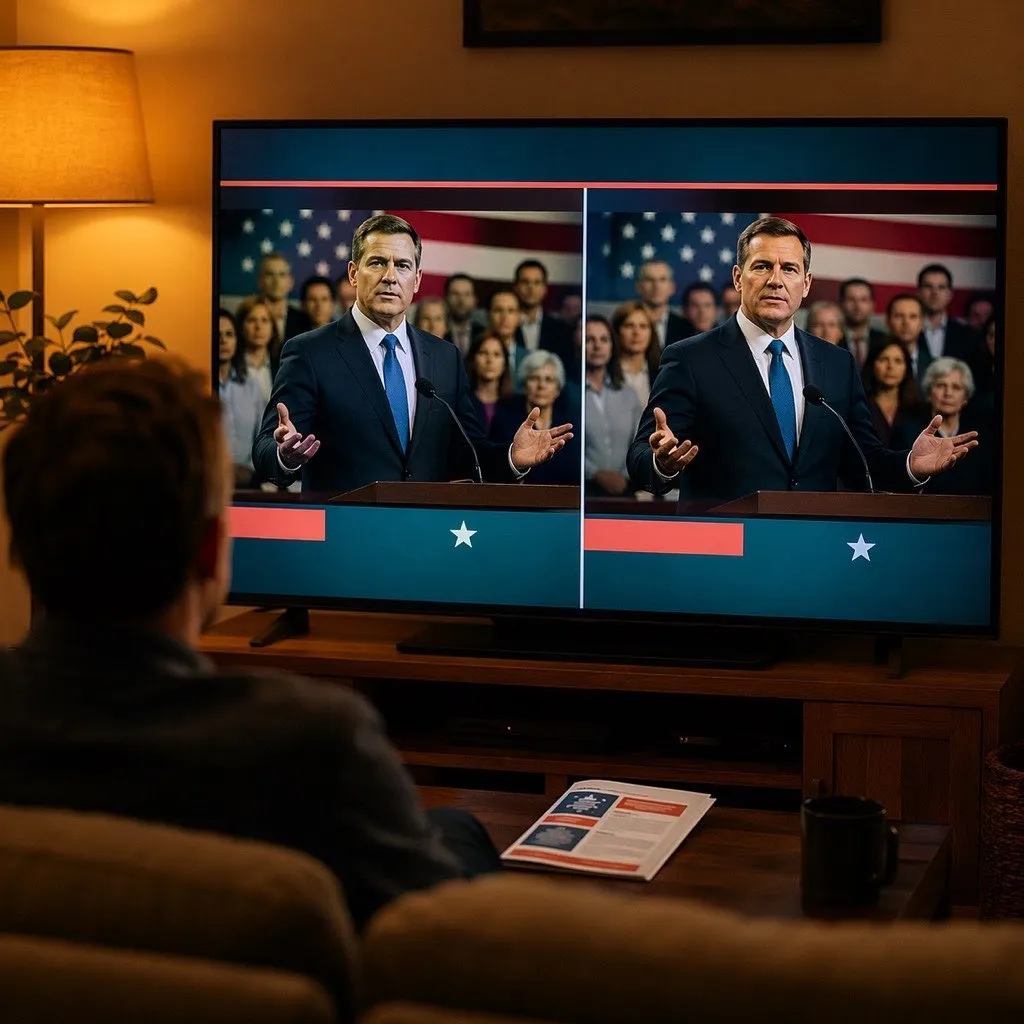
The 2026 US midterm elections have made deepfake political ads an explicit campaign strategy. In March 2026, the National Republican Senatorial Committee released an online ad featuring a fabricated version of Democratic Senate candidate James Talarico in Texas, appearing to speak directly into the camera for over a minute. The ad used AI to generate a convincing facsimile of Talarico making statements he never made.
The deployment was not isolated. According to Reuters reporting and CNN analysis, at least five confirmed deepfake incidents have appeared across the 2026 midterms in Texas, Georgia, and Massachusetts. Republicans have used the technology more frequently than Democrats in this cycle, though both parties have used AI to generate campaign imagery and audio.
The evolution is significant. In 2024, deepfakes in US elections were largely anonymous, low-quality, and distributed through fringe channels. By 2026, they are being produced and distributed by official party campaign organizations, used in polished ads, and deployed in competitive races at scale. The line between legitimate AI-assisted campaign communication and deceptive synthetic media is blurring in real time.
The Regulatory Patchwork
There is no federal law constraining the use of AI-generated content in political messaging. This leaves regulation to a patchwork of state laws that vary widely in scope and enforcement. According to Public Citizen’s tracker, approximately 28 states have passed legislation addressing AI in political ads. Most focus on disclosure requirements rather than outright bans, mandating that AI-generated content carry labels identifying it as synthetic.
Texas offers the most aggressive approach: a 2019 law makes it a criminal misdemeanor, punishable by up to a year in jail, to create and distribute a deepfake video within 30 days of an election if it is created with intent to deceive and influence election results. However, the law has rarely been tested in court, and the Talarico deepfake suggests enforcement is either lagging or the legal boundaries remain unclear.
Efforts to strengthen regulation face constitutional headwinds. A federal judge struck down portions of California’s deepfake law, ruling that key provisions conflicted with Section 230 of the Communications Decency Act. Free speech concerns create a persistent tension between protecting electoral integrity and restricting political expression.
Advertisement
The EU’s Approach: Mandatory Labeling
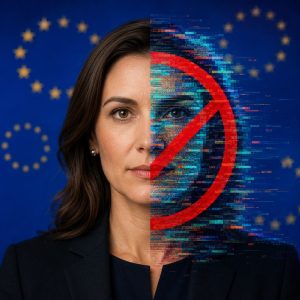
The European Union’s AI Act offers a contrasting model. Article 50 requires labeling of all AI-generated and deepfake content and mandates disclosure of synthetic interactions. The provision becomes enforceable in August 2026 with fines up to 6% of global revenue for non-compliance.
This approach, while not election-specific, creates a broad framework that captures political deepfakes within its scope. The revenue-based penalty structure gives it significantly more deterrent power than the misdemeanor penalties in most US state laws. However, enforcement across 27 member states with different media landscapes and election cycles remains untested.
Detection and Platform Responsibility
The technology for detecting deepfakes exists but remains imperfect. Automated detection systems can identify many synthetic media artifacts, but the quality of AI-generated content is improving faster than detection capabilities. A study by the Knight First Amendment Institute at Columbia University examined 78 election deepfakes and concluded that political misinformation is fundamentally a distribution problem, not a technology problem: the damage occurs when synthetic content reaches voters through trusted channels before it can be debunked.
Looking ahead to the remainder of the 2026 cycle and beyond, lawmakers are expected to broaden their approach beyond punishing individual deepfake creators to include entities that enable production and distribution, including AI platforms, cloud providers, and social media companies. The question is whether legislation can keep pace with a technology that is improving exponentially while the legislative process moves incrementally.
What Makes This Moment Different
Previous waves of election manipulation relied on out-of-context real footage or crude visual edits that were relatively easy to debunk. AI-generated deepfakes are fundamentally different: they create content that never existed, featuring real people saying things they never said, with a level of visual and audio fidelity that makes casual identification nearly impossible. When official campaign organizations use these tools, the resulting content enters the political information ecosystem with a veneer of institutional legitimacy.
The convergence of three factors, improved generation quality, reduced production costs, and official party adoption, means that deepfake political ads are no longer an edge case. They are becoming a standard tool in the political communications arsenal, and the regulatory response remains a generation behind the technology.
Frequently Asked Questions
How widespread are deepfake political ads in elections globally?
Since 2021, 38 countries have experienced election-related deepfake incidents affecting populations totaling 3.8 billion people. Notable examples include India’s 2024 election ($50 million spent on AI political content), AI-generated Biden robocalls in the US, and Russian disinformation networks using AI in German elections. The 2026 US midterms have already produced at least five confirmed deepfake incidents.
What laws exist to regulate deepfake political content?
There is no US federal law regulating AI in political messaging. Approximately 28 states have laws, most requiring disclosure rather than banning deepfake content. Texas has the strictest approach, criminalizing deceptive deepfakes within 30 days of elections. The EU AI Act’s Article 50, enforceable from August 2026, requires labeling of all AI-generated content with fines up to 6% of global revenue.
Can deepfake detection technology keep pace with AI-generated political content?
Current detection systems can identify many synthetic media artifacts, but generation quality is improving faster than detection capabilities. Researchers note that political misinformation is fundamentally a distribution problem: the damage occurs when synthetic content reaches voters through trusted channels before it can be debunked. Effective responses require a combination of detection technology, platform policies, and legal frameworks.
Sources & Further Reading
- 38 Countries Have Faced Deepfakes in Elections — Surfshark
- Republicans Release AI Deepfake of James Talarico — CNN
- Deepfake Ads Deployed in 2026 Midterm Campaigns — Detroit News
- How AI-Generated Content Laws Are Changing — MultiState
- Tracker: State Legislation on Deepfakes in Elections — Public Citizen
- How Cognitive Manipulation and AI Will Shape Disinformation in 2026 — World Economic Forum