The Largest Cable in the Mediterranean
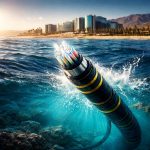
The Medusa Submarine Cable System is, by every measure, the most ambitious undersea telecommunications project the Mediterranean has ever seen. Spanning over 8,700 kilometers with landing points across multiple countries on both shores of the Mediterranean, Medusa is creating a continuous high-capacity digital ring around the Mediterranean basin — connecting the Atlantic coast of Portugal to the eastern Mediterranean shores of Cyprus and Egypt, with North Africa fully integrated at every segment.
The project is developed by AFR-IX Telecom, a Barcelona-based infrastructure operator specializing in African connectivity, and manufactured by Alcatel Submarine Networks (ASN), a subsidiary of Nokia. The construction contracts, awarded to ASN and the Italian marine cable specialist Elettra Tlc, entered into force on July 3, 2023, with manufacturing and deployment proceeding in phased segments since then.
The total investment is estimated at EUR 342 million ($374 million), exclusive of the planned Medusa Africa extension that will eventually carry the system southward along Africa’s Atlantic coast. This makes Medusa one of the most capital-intensive telecommunications infrastructure projects currently underway in the Euro-Mediterranean region.
Technical Architecture: 24 Fiber Pairs at 20 Tbps Each
Medusa’s technical specifications place it firmly in the next generation of submarine cable systems. The cable carries 24 fiber pairs per segment, each capable of 20 Tbps throughput, yielding a total system capacity of 480 terabits per second. To put that in perspective, 480 Tbps is enough to carry approximately 100 million simultaneous HD video streams — more than the entire population of Algeria, Tunisia, and Libya combined streaming at the same time.
The system employs Nokia’s 1830 GX Series platform with ICE7 coherent optics, enabling transmission of tens of terabits per second per fiber pair with low latency and high energy efficiency. This is the same optical technology used in the most advanced transoceanic cables connecting North America and Europe.
Medusa also serves as the deployment platform for the PSI Project (Protection and Predictive maintenance of Submarine cable Infrastructures), a research initiative funded by the Spanish Ministry of Science and Innovation and the EU’s NextGenerationEU program. The PSI project uses High-Fidelity Distributed Acoustic Sensing (HDAS) technology — a fiber-optic sensing technique that uses the cable itself as a continuous sensor, detecting acoustic vibrations along its length. This enables detection of potential threats including anchor strikes, seismic activity, and vessel proximity, supporting predictive maintenance that can address problems before they cause service interruptions.
Landing Points: A Mediterranean Ring
Medusa’s landing points form a near-complete ring around the Mediterranean, connecting both shores:
Northern Mediterranean (Europe):
- Lisbon, Portugal
- Barcelona and Zahara de los Atunes, Spain
- Marseille, France
- Mazara del Vallo, Italy
- Tympaki, Greece (Crete)
- Yeroskipou, Cyprus
Southern Mediterranean (North Africa and Middle East):
- Nador and Tetouan, Morocco
- Algiers and Collo (Skikda province), Algeria
- Bizerte, Tunisia
- Misrata and Benghazi, Libya
- Port Said, Egypt
- Tartous, Syria (added in 2025)
The system has expanded since its original design, with the official project timeline reflecting agreements signed with landing partners across the Mediterranean. Malta is expected to join at a later stage, and a strategic extension toward Aqaba, Jordan — providing access to the Red Sea and Saudi Arabia via a partnership with Etihad Salam — was announced in October 2025.
For Algeria, the two landing points — Algiers and Collo — are strategically significant. Algiers provides direct high-capacity connectivity to the capital and its concentration of government, financial, and corporate users. Collo, located in the eastern province of Skikda, provides a geographically diverse landing that adds physical resilience (a cable cut at one location does not disable both) and reduces latency for users in eastern Algeria, particularly in Constantine, Annaba, and the industrial centers of the east.
The 2025-2026 Deployment Timeline
Medusa’s deployment is proceeding in phased segments:
October 2025 — Marseille: The first landing occurred on October 8, 2025, at Orange’s cable landing station in Marseille. Marseille is already the largest submarine cable hub in the Mediterranean, hosting landings for multiple major systems connecting Europe to Africa and Asia.
November 2025 — Bizerte, Tunisia: The second landing followed on November 1, 2025, at Bizerte on Tunisia’s northern coast. Orange Tunisia and Tunisie Telecom are the landing partners, with Tunisie Telecom acquiring a dedicated fiber pair. The Marseille-Bizerte segment — a 1,050-kilometer link known as “Via Tunisia” — was among the first segments to become commercially operational in early 2026.
December 2025 — Nador, Morocco: The third Phase 1 landing completed the initial deployment triangle, with a 1,416-kilometer link connecting Nador directly to Marseille. Orange Morocco and inwi served as landing partners.
2026 — Algeria and the Eastern Mediterranean: Algeria’s Minister of Post and Telecommunications confirmed during a visit to the Collo landing station site in Skikda that the Medusa fiber optic submarine cable will enter service at the Collo landing point by the end of 2026. The eastern section of the system — encompassing the Algeria, Libya, and Egypt segments — is expected to be operational by late 2026, with the complete Mediterranean ring reaching full operational status by early 2027.
Algeria’s Current Submarine Cable Position
To appreciate what Medusa adds, it is necessary to understand Algeria’s existing international bandwidth infrastructure. The country currently connects to the global internet through several submarine cable systems:
Alval/Orval (commissioned December 2020): The Alval (Algiers-Valencia) and Orval (Oran-Valencia) cable system connects Algeria to Spain via two routes totaling 770 km, with a total capacity of 40 Tbps using 100×100 Gbps DWDM technology across two fiber pairs per route. This is currently Algeria’s highest-capacity international link and was a transformative upgrade when it entered service.
SeaMeWe-4: This legacy system runs from Singapore through South Asia, the Middle East, and North Africa to France, with Algeria as one of its landing points. While still operational, SeaMeWe-4 is a mature system with significantly lower per-fiber-pair capacity than newer cables.
Med Cable Network and Alpal-2: Additional Mediterranean cables providing supplementary international bandwidth.
Algeria’s total installed international bandwidth capacity stands at approximately 10.2 terabits per second across all systems, with approximately 5.4 Tbps in active use — representing around 52% utilization. The government has explicitly stated its intention to double this capacity — an ambition that Medusa’s arrival directly serves.
With Medusa’s 24 fiber pairs each offering 20 Tbps, even a modest allocation to Algeria’s landing points could multiply the country’s available international bandwidth several times over. The exact capacity available to Algeria will depend on commercial agreements between AFR-IX Telecom, Algerie Telecom, and other purchasers of Medusa capacity, but the magnitude of the potential increase is enormous.
Advertisement
Africa-1: The Second Cable Arriving in 2026
Medusa is not the only submarine cable system scheduled to land in Algeria. The Africa-1 cable, a separate system spanning 10,000 km built by Alcatel Submarine Networks, will land at Bejaia on Algeria’s eastern coast. Africa-1 consists of 8 fiber pairs with a design capacity of 96 Tbps, equipped with ASN 1620 Softnode transmission equipment featuring advanced coherent XWAV line cards supporting 200/300/400 Gbps wavelengths. The cable connects France through the Mediterranean to East Africa, the Middle East, and South Asia, with a consortium that includes Etisalat, G42, Mobily, Pakistan Telecommunication Company, and Telecom Egypt.
While offering less total capacity than Medusa, Africa-1 adds another dimension of diversity to Algeria’s international connectivity. Having submarine cable landings at four distinct geographic locations — Algiers, Oran (Alval/Orval), Collo/Skikda (Medusa), and Bejaia (Africa-1) — distributes risk and provides routing alternatives that enhance overall network resilience.
The simultaneous arrival of two submarine cable systems in a single year is unprecedented for Algeria and will constitute the largest single-year expansion of the country’s international bandwidth in its telecommunications history.
The EU Global Gateway Dimension
Medusa is not merely a commercial telecommunications project. It is the European Commission’s first digital Global Gateway project — a flagship initiative within the EU’s strategy to invest in sustainable infrastructure connecting Europe with partner regions around the world.
The EU’s financial backing is substantial. The European Commission, through the Connecting Europe Facility (CEF Digital), has allocated EUR 38.3 million in grants to the project across multiple sub-grants including the ATMED-DG, ATMED Nador, ATMED Malta-DG, and ATMED EAST-DG programs. Additionally, a separate EUR 40 million investment grant was signed between the European Commission, the European Investment Bank (EIB), GEANT, and AFR-IX Telecom — specifically earmarked for supporting research and education (R&E) connectivity across both shores of the Mediterranean. The EIB is also expected to provide up to EUR 100 million in loans for the infrastructure.
The GEANT component is particularly significant for Algeria’s academic and research institutions. GEANT operates the world’s largest research and education network, connecting over 50 million users across 10,000 institutions in Europe. Through a 25-year contract signed with Medusa in 2024, North African universities and research centers — including Algeria’s national research network ARN — will gain high-capacity, low-latency connectivity to this network. This capability has historically been available only to European institutions.
For the EU, Medusa also has an explicit digital sovereignty dimension. The cable provides a reliable, European-backed connectivity network in the Mediterranean that reduces dependence on infrastructure controlled by non-EU entities. This geopolitical motivation — ensuring that Euro-Mediterranean data flows transit through trusted, transparently governed infrastructure — is a significant driver behind the public funding commitment.
At the October 2025 Global Gateway Forum, the EU went further, announcing support for a strategic expansion of Medusa to the Middle East, with Jordan as the initial connection point and a partnership with Saudi Arabia’s Etihad Salam for Red Sea access. If realized, this extension would transform Medusa from a Mediterranean ring into a Euro-Mediterranean-Middle Eastern corridor, with Algeria positioned at a critical junction point.
What Medusa Means for Algerian Businesses and Users
The practical implications of Medusa for Algeria’s technology ecosystem are significant across several dimensions:
Reduced latency to European cloud regions: The majority of Algerian businesses using cloud services connect to data centers in Marseille, Paris, or Frankfurt. Medusa provides a direct, high-capacity fiber path between Algeria and Marseille — potentially reducing round-trip latency to single-digit milliseconds. For applications sensitive to latency (real-time collaboration, financial trading, gaming), this is a material improvement.
Bandwidth headroom for 5G and FTTH growth: Algeria launched commercial 5G in December 2025 with licenses awarded to Mobilis, Djezzy, and Ooredoo, and has surpassed 3 million FTTH-connected homes as of February 2026. Both technologies generate enormous upstream demand for international bandwidth. Without new submarine cable capacity, Algeria’s existing international links would face growing congestion as domestic bandwidth consumption rises. Medusa provides the headroom to absorb years of demand growth without bottlenecking at the international transit layer.
Competitive transit pricing: More submarine cable capacity means more competition among wholesale bandwidth providers, which typically translates to lower per-megabit transit costs for Algerian ISPs and enterprises. Lower transit costs ripple through the value chain, potentially enabling cheaper broadband packages and more competitive pricing for cloud-hosted services.
Disaster resilience: Algeria’s current submarine cable infrastructure, while adequate, concentrates landing points in Algiers and Oran. The addition of Medusa at Collo/Skikda and Africa-1 at Bejaia creates geographic diversity that significantly reduces the risk of a single cable cut — whether from an earthquake, anchor drag, or construction accident — disrupting the country’s international connectivity.
Research and education access: The GEANT-funded capacity on Medusa opens direct connectivity between Algerian universities and the European research network. This enables participation in data-intensive research collaborations, access to high-performance computing resources, and integration into pan-Mediterranean academic networks that have previously been inaccessible due to bandwidth constraints.
The Medusa Africa Extension: A Future Gateway South
The current Medusa system is, by design, only the first phase of a larger ambition. AFR-IX Telecom has announced plans for Medusa Africa, an extension that would carry the cable southward along Africa’s Atlantic coast, connecting West African nations that currently rely on a small number of cable systems for their international bandwidth.
The Medusa Africa extension has already secured backing: AFR-IX Telecom obtained EUR 14.3 million in EU funding and US backing for the project through the CEF Digital program, signaling strong international support for extending the system’s reach. ACE Gabon has already signed on to land the cable in Port-Gentil, Gabon.
For Algeria, the Medusa Africa extension transforms the country’s landing stations from Mediterranean endpoints into potential transit nodes for traffic flowing between Europe and West Africa. This transit positioning — where Algeria’s infrastructure serves not just its own bandwidth needs but also carries traffic for other African nations — creates both revenue opportunities and strategic leverage. Transit fees from carrying West African-bound traffic through Algeria’s landing stations could partially offset the country’s own capacity costs while reinforcing Algeria’s role as a continental connectivity hub.
The Broader Mediterranean Infrastructure Landscape
Medusa is part of a broader wave of submarine cable construction that is fundamentally reshaping Mediterranean connectivity. The region is experiencing what industry analysts describe as a “cable renaissance” — the most intensive period of new submarine cable deployment in the Mediterranean since the late 1990s.
Key systems alongside Medusa include:
2Africa (Meta-backed): At 45,000 km with 46 landing stations across 33 countries, one of the longest submarine cables ever built, circling the entire African continent and connecting to the Mediterranean via Egypt. The core 2Africa system was completed in November 2025, with the 2Africa Pearls gulf extension continuing into 2026. 2Africa adds massive capacity to Africa’s international connectivity but follows a different routing pattern than Medusa, primarily serving Africa’s Atlantic and Indian Ocean coastlines.
Alval/Orval (existing): Algeria’s direct link to Spain, commissioned in December 2020, providing 40 Tbps of capacity across 770 km. This system demonstrated Algeria’s ability to commission and operate modern submarine cable infrastructure.
EIG and AAE-1: Existing systems transiting the Mediterranean between Europe and Asia, with landing points in Egypt that connect to Algeria through terrestrial backhaul.
The cumulative effect of these systems — existing and new — is a Mediterranean region that is transitioning from a relative bandwidth bottleneck to one of the most densely cabled maritime corridors in the world. For Algeria, sitting at the geographic center of the North African coast, this transformation turns geographic position into strategic advantage.
Looking Forward: From Landing to Impact
The physical landing of a submarine cable is a milestone, but the economic impact depends on what happens after the cable is lit. Several factors will determine how effectively Algeria leverages Medusa’s capacity:
Commercial agreements: The terms on which Algerian operators — primarily Algerie Telecom, but potentially also Djezzy and Ooredoo — access Medusa capacity will determine how much bandwidth actually flows through Algeria’s landing points and at what cost.
Terrestrial distribution: A submarine cable landing in Collo benefits users in Constantine and Annaba only if terrestrial fiber connects the landing station to inland population centers. Algeria’s expanding domestic fiber network (now reaching over 3 million FTTH-connected homes) provides the distribution infrastructure, but ensuring adequate backhaul from landing stations to major metropolitan exchanges is essential.
Data center development: High-capacity international connectivity creates the conditions for data center development in Algeria. Hosting content locally — whether through CDN nodes, cloud points of presence, or colocation facilities — reduces latency, keeps data traffic domestic where possible, and creates value-added services opportunities.
Regulatory clarity: Algeria’s telecommunications regulatory framework will need to accommodate the new realities of multi-cable international connectivity, including open access policies at landing stations, transparent interconnection pricing, and spectrum-efficient use of the available capacity.
Content delivery and edge computing: With high-capacity international connectivity, Algeria becomes a more attractive location for content delivery network (CDN) nodes. Major CDN operators — Cloudflare, Akamai, and others — typically deploy edge nodes in locations with strong connectivity and sufficient local demand. Algeria’s combination of over 36 million internet users, 3 million fiber homes, and world-class submarine cable capacity creates the conditions for CDN expansion that would improve performance for all Algerian internet users.
Financial services infrastructure: Real-time payment systems, stock exchange connectivity, and cross-border financial messaging all require low-latency, high-reliability international links. The banking and fintech sectors in Algeria — currently undergoing significant digitization — will benefit from Medusa’s direct, low-latency path to European financial infrastructure hubs in Marseille, Milan, and beyond.
The Medusa submarine cable represents a generational upgrade in Algeria’s position within the global telecommunications architecture. When the Collo landing station goes live by the end of 2026, Algeria will shift from a country with adequate but constrained international bandwidth to one with world-class connectivity to Europe — and through Medusa’s ring architecture, to the entire Mediterranean basin. The question is no longer whether Algeria will have sufficient bandwidth. It is whether the country’s digital economy can grow fast enough to fully utilize the capacity that is about to arrive on its shores.
Frequently Asked Questions
What are the technical specifications of the Medusa submarine cable, and how does its 480 Tbps capacity compare to Algeria’s current bandwidth?
Medusa spans over 8,700 km with 24 fiber pairs, each capable of 20 Tbps throughput, yielding a total system capacity of 480 Tbps. This dwarfs Algeria’s current total installed bandwidth of 10.2 Tbps. The system uses Nokia’s 1830 GX Series platform with ICE7 coherent optics, and the total investment is EUR 342 million ($374 million).
When will Algeria’s Medusa landing stations at Algiers and Collo become operational, and what has been completed so far?
Algeria’s landing stations at Algiers and Collo (Skikda) are scheduled for commissioning by the end of 2026. Phase 1 landings have already been completed: Marseille (October 2025), Bizerte (November 2025), and Nador (December 2025), with the Marseille-Bizerte segment entering commercial service in early 2026.
Who is funding the Medusa cable project, and how does the EU Global Gateway initiative contribute?
The Medusa cable is developed by AFR-IX Telecom (Barcelona-based) and manufactured by Alcatel Submarine Networks (Nokia subsidiary) with Italian marine specialist Elettra Tlc. The EUR 342 million project is backed by EU Global Gateway funding, with the European Investment Bank and GEANT (European research network) signing a EUR 40 million agreement. The EU views Medusa as strategic infrastructure connecting Europe to Africa and the Mediterranean basin.
Sources & Further Reading
- Medusa Submarine Cable System — Official Website
- Medusa — Submarine Networks Technical Profile
- Nokia Selected for Medusa Submarine Cable System — Nokia Newsroom
- Construction of Medusa Submarine Cable System Begins — Orange Newsroom
- Medusa Submarine Cable Lands in Marseille — Medusa Official
- Medusa Cable Lands in Bizerte, Tunisia — Submarine Networks
- Medusa Lands in Nador, Advancing Morocco’s Connectivity — European Commission
- Algeria: Landing Station for the Medusa Submarine Cable Launched in Skikda — Agenzia Nova
- EU and EIB Support Helps Accelerate MEDUSA — European Commission
- GEANT Signs EUR 40 Million Agreement on MEDUSA — GEANT
- Inside Medusa’s Submarine Cable Project — GEANT Connect
- EU Global Gateway Forum: Strategic Expansion of Medusa to the Middle East — European Commission
- PSI Project: Submarine Cable Monitoring — Medusa Official
- Algeria Announces New Undersea Cable Link — Ecofin Agency
- AFR-IX Telecom Secures EU Funding for Medusa Africa — Submarine Networks
🔗 Related Intelligence

Algeria’s Submarine Cable Network: The Invisible Infrastructure Behind Every Connection
Rural Connectivity: Algeria’s Push to Connect 4,500 Areas by 2027

Algeria in Space: Alcomsat-1, ASAL, and the Satellite Communications Infrastructure

Global Africa Tech 2026: Algeria Hosts the Continent’s First Digital Sovereignty and Connectivity Summit