Not Another Chatbot: Japan Builds AI for the Physical World
On April 12, SoftBank, NEC, Sony, and Honda formally established a joint venture called “Japan AI Foundation Model Development” with a singular mission: build a trillion-parameter AI model designed not for conversation, but for controlling machines in the physical world.
The venture is backed by Japan’s New Energy and Industrial Technology Development Organization (NEDO), which has earmarked approximately $6.28 billion (roughly one trillion yen) in funding over five years starting fiscal year 2026. The company plans to hire around 100 AI engineers, with a senior SoftBank executive serving as president.
This is not a typical AI startup. The investor list reads like a cross-section of Japan’s industrial economy: Kobe Steel, Nippon Steel, Mizuho Bank, Sumitomo Mitsui Banking, and MUFG Bank all hold stakes. When steelmakers and banks invest in an AI venture, the signal is clear: this is national infrastructure, not a technology experiment.
Division of Labor Across Japan’s Industrial Giants
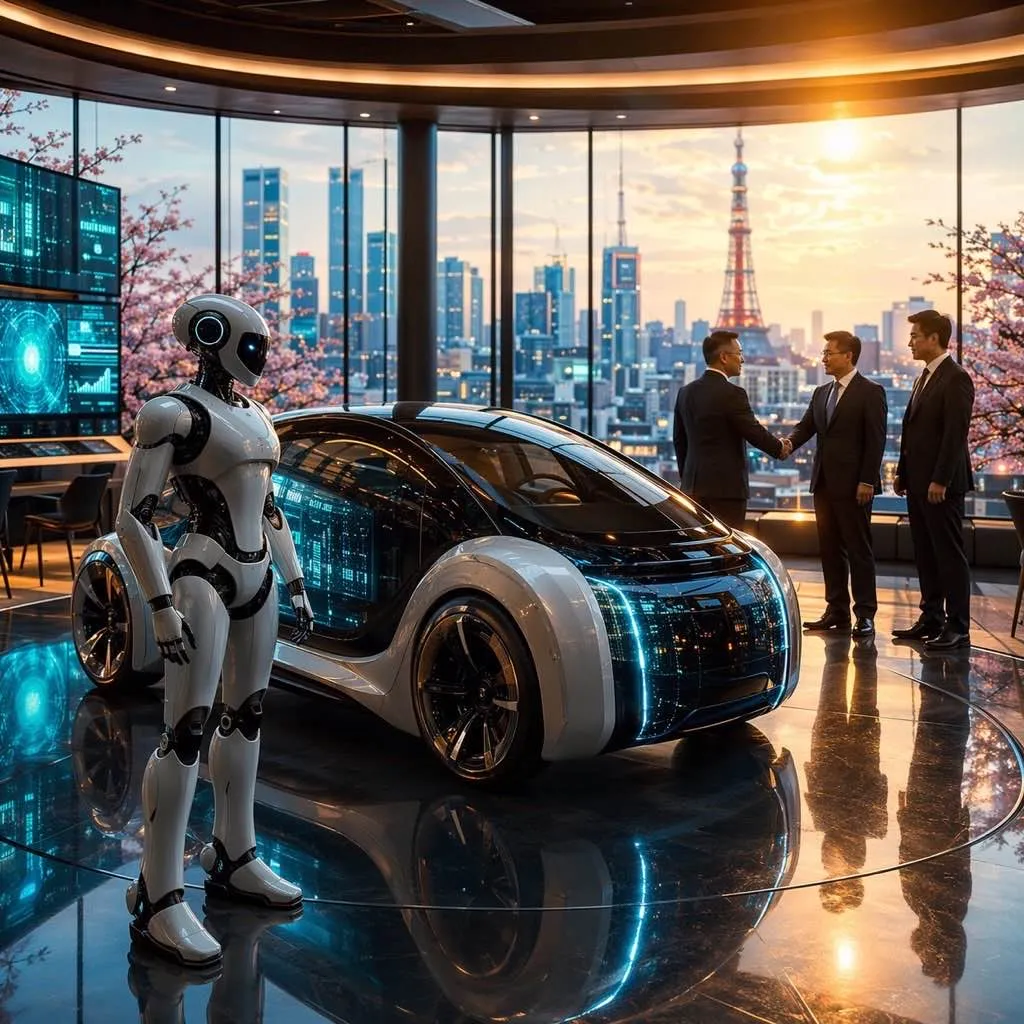
The consortium has divided responsibilities along clear industrial lines. SoftBank and NEC will lead the actual AI model development, building the trillion-parameter foundation model. Honda will be the first deployment partner, integrating the model into its autonomous vehicle platforms. Sony brings robotics and gaming hardware to the table, providing physical platforms for the AI to inhabit.
Preferred Networks, a Tokyo-based AI developer specializing in deep learning and industrial IoT applications, rounds out the technical team. The company already has experience deploying AI in manufacturing environments, giving the consortium a bridge between research and production.
The target for practical physical AI applications is 2030, with Japan’s Ministry of Economy, Trade and Industry setting an ambitious goal of capturing 30% of the global physical AI market by 2040. Japan already holds approximately 70% of the global industrial robotics market, giving the country a manufacturing base that no competitor can replicate quickly.
Sovereign AI: Keeping Data on Japanese Soil
A critical design decision separates this venture from typical multinational AI projects: all training data and processing will remain in Japan. The consortium has explicitly stated that data will not be processed on foreign cloud platforms, aligning with Japan’s broader push for AI sovereignty.
This data sovereignty stance comes as Microsoft committed $10 billion to Japan’s AI infrastructure in early April, partnering with SoftBank and Sakura Internet to offer GPU-based compute services while keeping data within Japanese borders. SoftBank is simultaneously deploying Oracle Alloy in eastern and western Japan data centers during 2026.
The dual approach, building domestic models while leveraging foreign infrastructure under data sovereignty constraints, reflects a pragmatic middle path between full technological independence and reliance on US or Chinese platforms.
Advertisement
The Demographic Engine Behind Physical AI
Japan’s investment in physical AI is not driven by technological ambition alone. It is driven by demographic necessity. Japan’s population has declined for 14 consecutive years, with working-age citizens now representing just 59.6% of the total population, a share projected to shrink by nearly 15 million over the next two decades.
The country faces a projected shortage of 570,000 care workers by 2040. A 2024 Reuters/Nikkei survey found that labor shortages are now the primary driver pushing Japanese companies to adopt AI, surpassing efficiency gains and cost reduction.
As one venture investor put it, the driver has shifted from simple efficiency to industrial survival. Japan faces a physical supply constraint where essential services cannot be sustained due to lack of labor. Physical AI is not an optimization play; it is a prerequisite for maintaining basic social services and industrial output.
What Physical AI Actually Means
The term “physical AI” refers to AI systems that perceive, reason about, and act in the real world rather than operating purely in digital environments. Unlike large language models that process text, physical AI models must integrate sensor data from cameras, lidar, force sensors, and other hardware, then generate motor commands that control robotic limbs, vehicle steering, or industrial machinery.
Building a trillion-parameter model for this purpose is fundamentally different from building one for conversation. Physical AI must operate in real time with safety-critical constraints. A chatbot that produces a suboptimal response is an inconvenience; a robot that misjudges force in a care facility is a catastrophe.
This is why Japan’s consortium structure matters. SoftBank and NEC provide the AI development capacity. Honda provides real-world testing environments with autonomous vehicles. Sony provides robotics platforms. Preferred Networks provides industrial deployment expertise. Each partner contributes a domain where failure has physical consequences, forcing the AI to meet standards that purely digital applications never face.
A Model for Sovereign Physical AI Development
Japan’s approach offers a template for other nations grappling with the same question: how to participate in the AI era without surrendering control of critical infrastructure to foreign platforms. The combination of government funding, industrial consortium structure, data sovereignty requirements, and a clear deployment timeline addresses the four gaps that typically prevent sovereign AI initiatives from succeeding.
Whether the trillion-parameter target is achievable by 2030 remains to be seen. But the industrial backing, government commitment, and demographic urgency behind this venture suggest it will outlast typical corporate AI initiatives that lack either funding or a clear problem to solve.
Frequently Asked Questions
What is physical AI and how is it different from conversational AI?
Physical AI refers to AI systems that perceive, reason about, and act in the real world by integrating sensor data from cameras, lidar, and force sensors to generate motor commands for robots, vehicles, or industrial machines. Unlike conversational AI that processes text, physical AI operates under real-time safety-critical constraints where errors can cause physical harm rather than just suboptimal text responses.
Why is Japan investing $6.28 billion in physical AI specifically?
Japan faces a demographic crisis with its population declining for 14 consecutive years and a projected shortage of 570,000 care workers by 2040. Physical AI is not an efficiency play but a survival imperative, as essential services and industrial output cannot be maintained without robotic labor. Japan already controls 70% of the global industrial robotics market, giving it a manufacturing advantage that positions physical AI as a natural strategic bet.
How does Japan’s sovereign AI approach differ from other national AI strategies?
Japan’s consortium explicitly requires all training data and processing to remain on Japanese soil, rejecting foreign cloud processing. The structure combines $6.28 billion in government NEDO funding with private industrial partners across automotive, electronics, steel, and banking sectors, creating a whole-of-economy approach rather than a purely tech-sector initiative. This distinguishes it from strategies that rely primarily on attracting foreign AI companies.
Sources & Further Reading
- SoftBank and Others Set Up New Firm to Develop High-Performance AI — The Japan Times
- Japanese Tech Giants Launch Joint Venture Targeting Physical AI — SiliconANGLE
- Japan’s Tech Titans Build Trillion-Parameter AI for Machines — Decrypt
- SoftBank, NEC, Honda, Sony Form Japan AI Alliance — Seoul Economic Daily
- In Japan, the Robot Is Filling the Job Nobody Wants — TechCrunch
- Japan’s Labor Crisis Makes the Case for Robots — Fortune